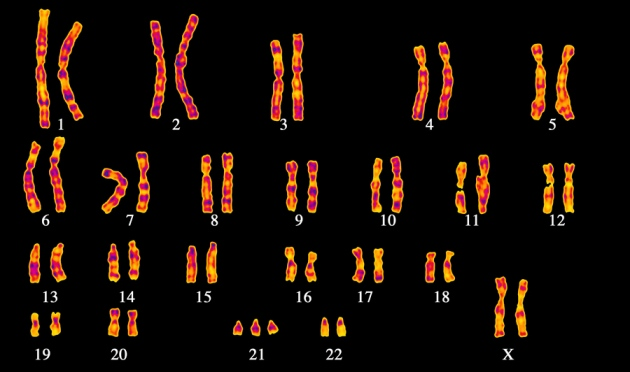
The disorder represented in this karyotype affects almost every organ system and occurs 1:10,000 live births. These children generally do not live more than a few months. Individuals with this affliction often have slow growth before birth (intrauterine growth retardation) and low birth weight. Affected individuals may have heart defects and abnormalities of other organs that develop before birth.
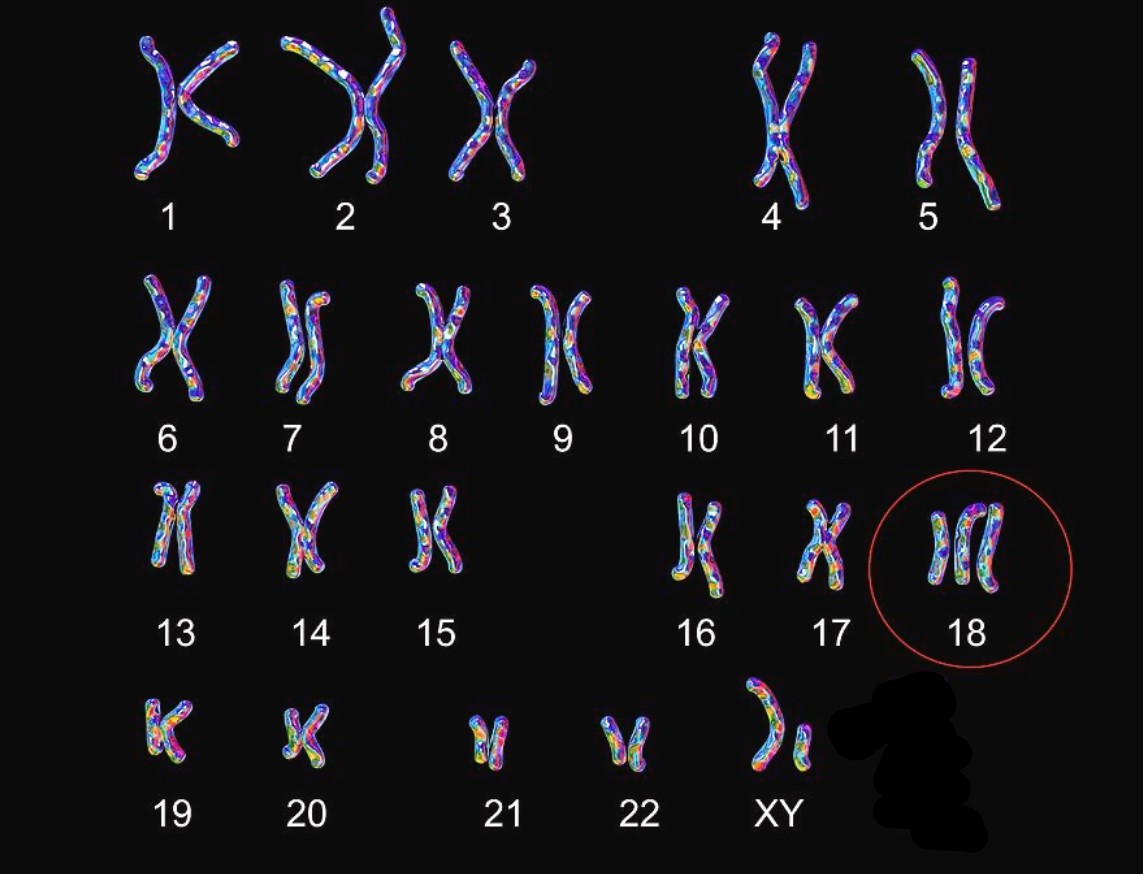
What is the gender of this person?
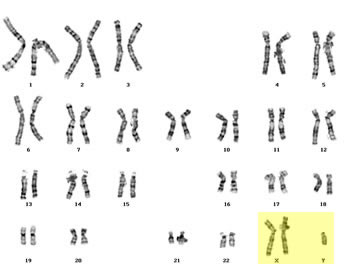
The karyotype below is of a disorder that affects 1:700 children and alters the child's phenotype either moderately or severely. There are three types of this chromosomal condition. People often can’t tell the difference between each type without looking at the chromosomes because the physical features and behaviors are similar.
What is the notation for the karyotype?
Nondisjunction can occur if ______ chromosomes fail to separate during meiosis I.
An egg cell has a(n) chromosome. A sperm has a(n) chromosome.
Normally, an individual receives ______ autosomes (body chromosomes) from each parent.
Using your knowlegde and what we have learned in class...Match the term with its abbreviation.
| Draggable item | arrow_right_alt | Corresponding Item |
|---|---|---|
diploid | arrow_right_alt | 2n+1 |
haploid | arrow_right_alt | 2n-1 |
monosomy | arrow_right_alt | 2n |
trisomy | arrow_right_alt | n |
Notice the abnormal 23rd chromosome. This individual has an extra X chromosome.
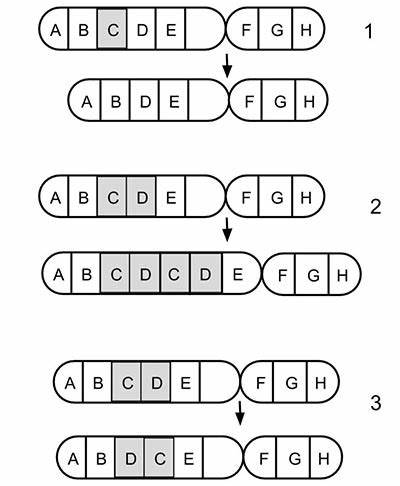
What type of mutation is this?
Which scenario above shows an inversion chromosomal mutation?
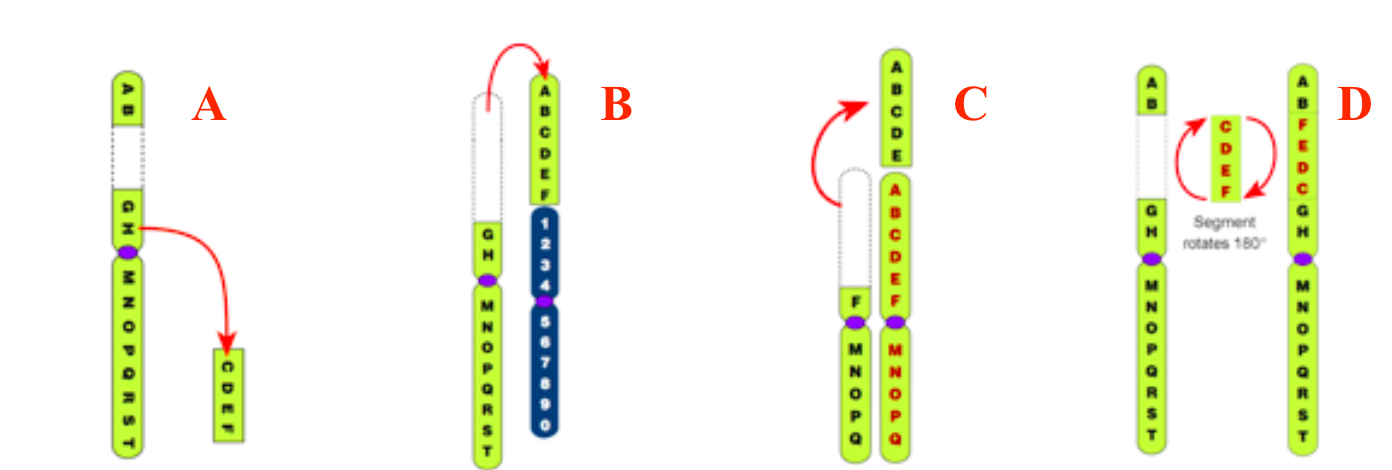
Which example above represents inversion?