1
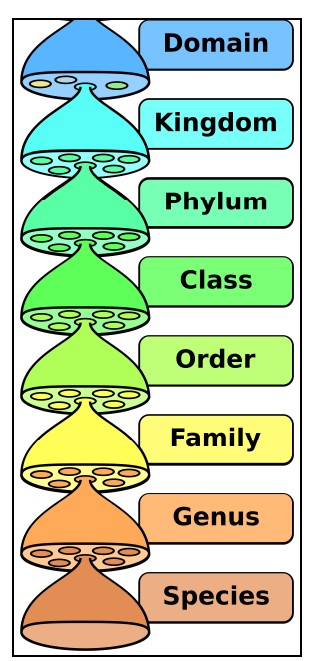
A group of related phyla:
A group of related phyla:
Ɛhia
1
If two organisms are in the same class, they are also in the same .
A large, carnivorous snail in New Zealand has been assigned the scientific name Powelliphanta augusta.
The genus of this scientific name would be .
How is the Powelliphanta augusta snail different from its relative, the Powelliphanta lignaria? How are they similar?
Which of the following correctly describes the the relationship between prokaryotic cells and eukaryotic cells that lead to the development of the eukaryotic cells we see today.
A group of related phyla:
If two organisms are in the same class, they are also in the same .
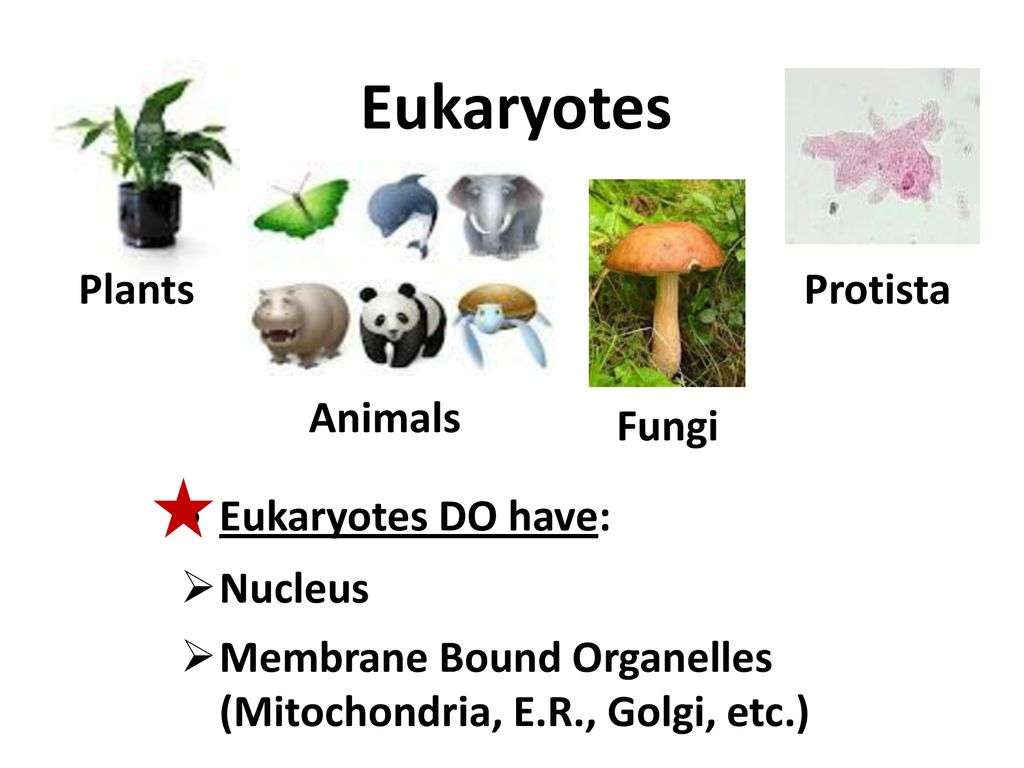
Categorize the following Kingdoms as either Eukaryotic or Prokaryotic.
Eubacteria
Protists
Plants
Animals
Archaeabacteria
Fungi
Eukaryotic
Prokaryotic
Which two organisms below are the most closely related?
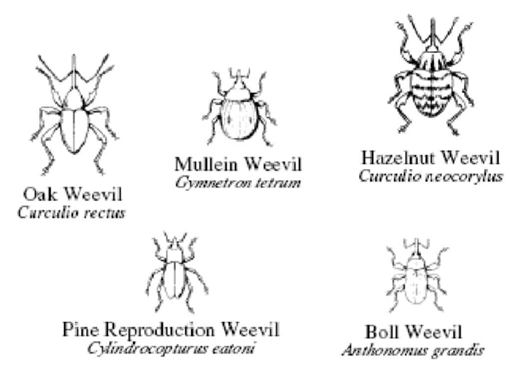
The more traits organisms have in common, the closely related they are
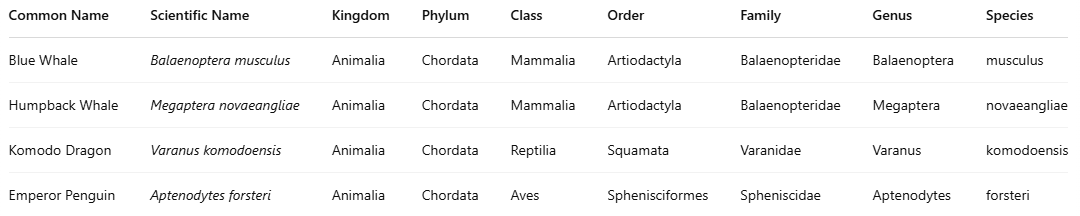
Which two organisms are most closely related based on their taxonomic classification?
Which organism is least closely related to the others based on its class?
If a new whale species were discovered in the genus Balaenoptera, which of the following would it most likely be closely related to?
At what taxonomic level do the Emperor Penguin and Komodo Dragon first differ?
SB4b. Analyze and interpret data to develop models (i.e., cladograms and phylogenetic trees) based on patterns of common ancestry and the theory of evolution to determine relationships among major groups of organisms.
Evolutionary trees depict phylogenies over time. The y-axis (top to bottom) on this tree represents time.
The more recent changes occur at the top. Notice the fork-like pattern of this diagram. The tips of each fork lead to an organism or a group of organisms. The root of each fork leads to a common ancestor. The more closely grouped organisms are, the more closely related they are. This is because they share a most recent common ancestor. The forking between two organisms shows where they diverged into separate species from their common ancestor.
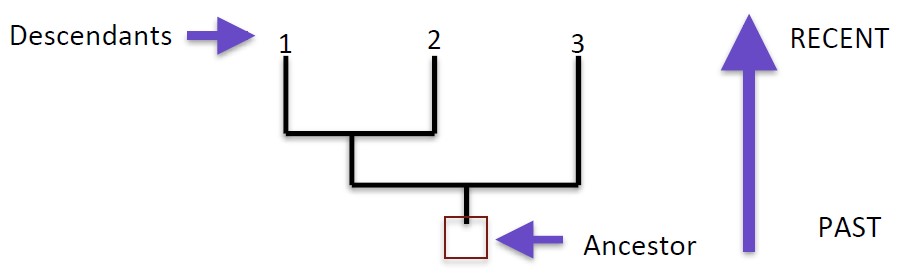
Examine the phylogenetic tree below. Select the location that indicates the common ancestor of organisms 1, 2 and 3.
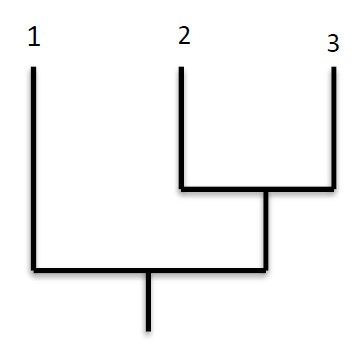
Examine the phylogenetic tree below. Select the location that represents the most recent common ancestor organisms 2 and 3 share.
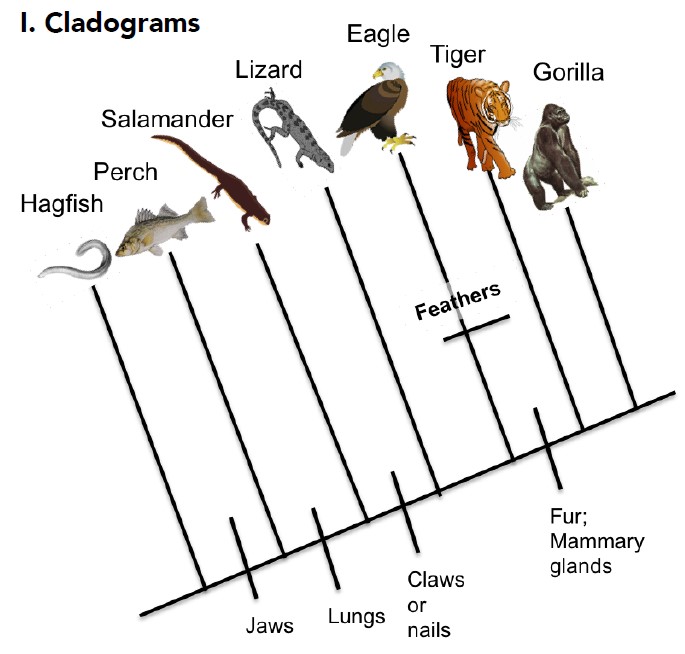
Which of these statements best describes how cladograms are organized?
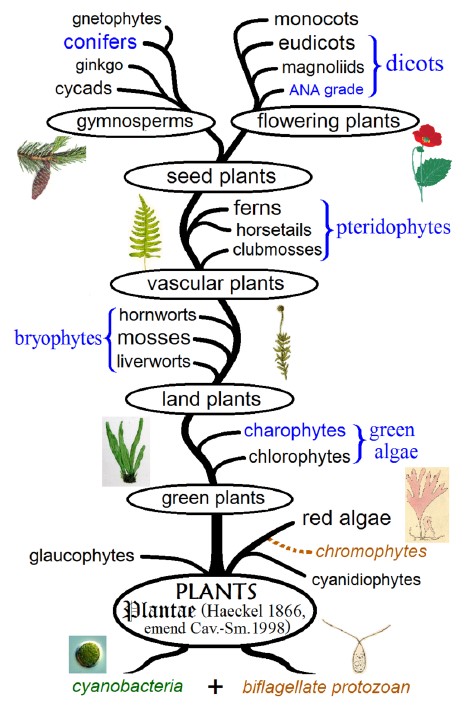
Conifers, such as pine trees, are most closely related to:
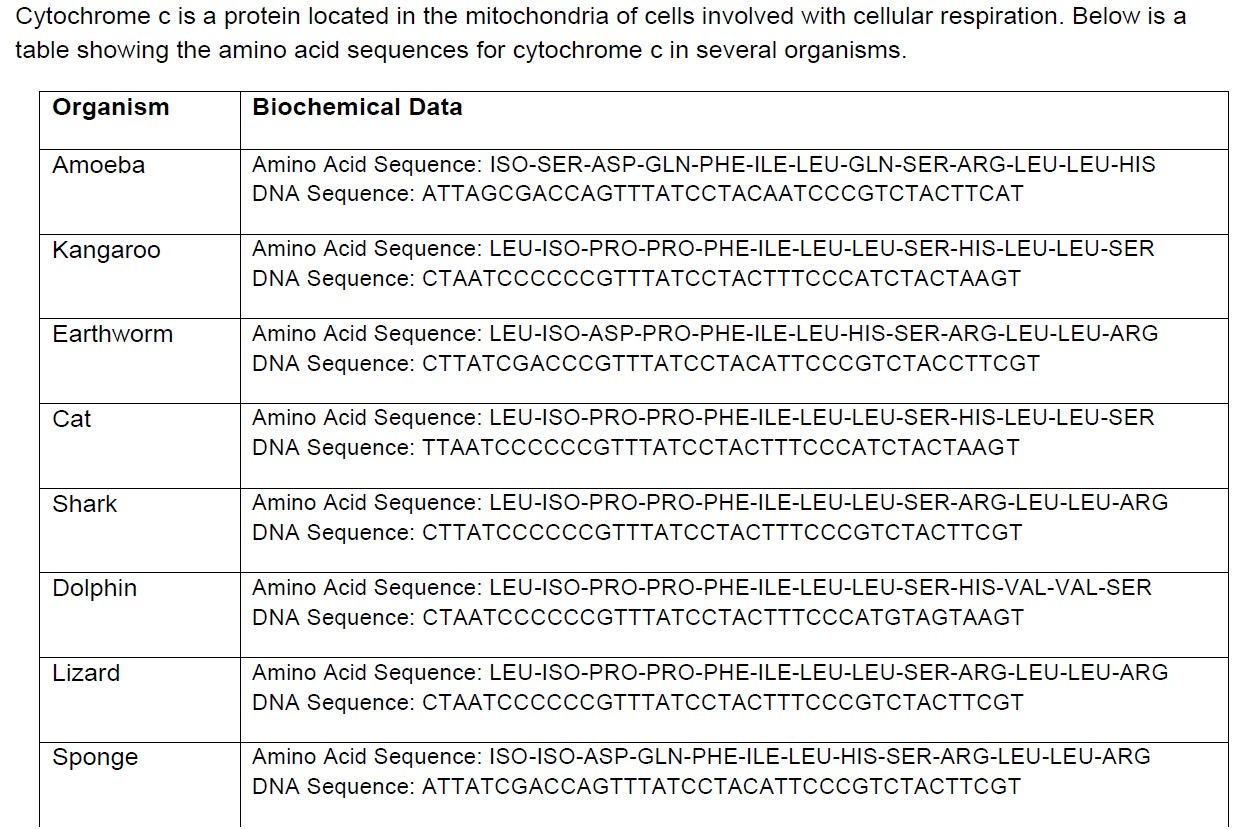
List the number of differences between the Kangaroo and the other organisms listed:
Amoeba:
Earthworm:
Below are a section of DNA sequences for the cytochrome c gene from two organisms — Human (Homo sapiens) and Fruit Fly (Drosophila melanogaster).
1. Human (Homo sapiens) DNA: ATG-GGT-AGA-GGA
Human mRNA sequence:
2. Fruit Fly (Drosophila melanogaster) DNA: ATG-GGC-GAG-GAG
Fly mRNA sequence:
1. Human DNA: ATG-GGT-AGA-GGA
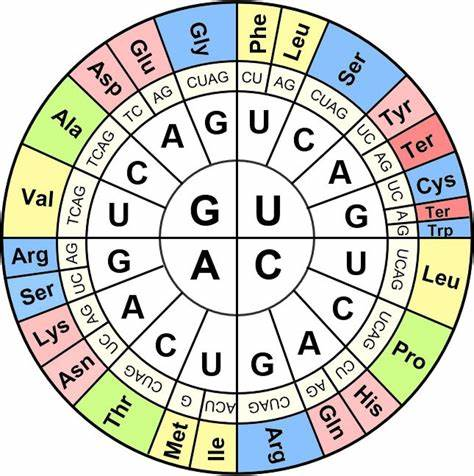
Human mRNA sequence: UAC-CCA-UCU-CCU
Human amino acid sequence:
2. Fruit Fly DNA: ATG-GGC-GAG-GAG
Fruit Fly mRNA sequence: UAC-CCG-CUC-CUC
Fly amino acid sequence:
SB4c. Construct an argument supported by empirical evidence to compare and contrast the characteristics of viruses and organisms.
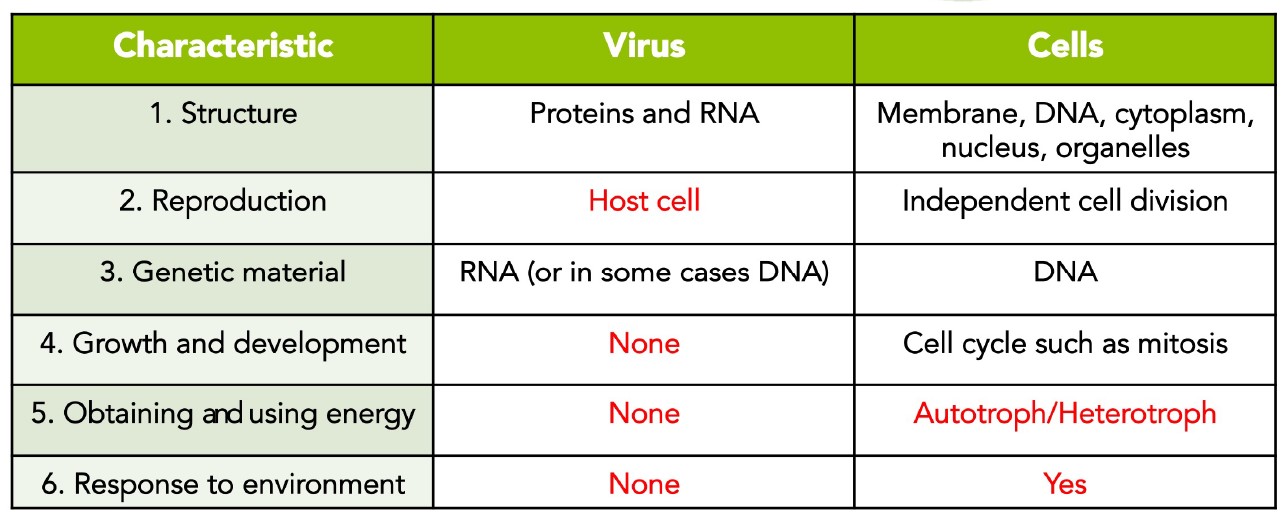
Which of the following characteristics of life do viruses exhibit? Pick 3!
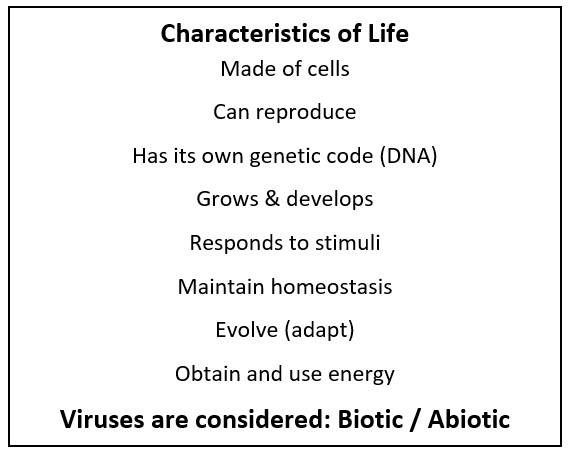
Complete the paragraph below.
Viruses do not share the same structural makeup as cells. Viruses are mainly composed of viral and coat (also known as a capsid).
In order to infect a host cell and , the host cell must have sites that the viral protein shape.
Are viruses alive?
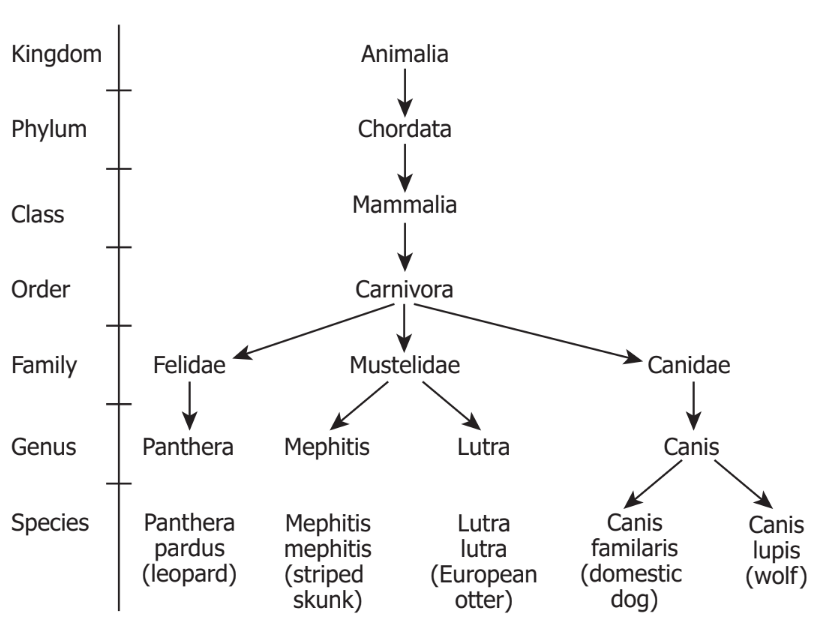
What is the level of classification that all organisms in the chart above have in common?
The domestic dog and the wolf belong to the same ________
What trait do the perch and the gorilla have in common?
Which organism would be considered the outgroup?
A speciation event occurred that produced two types of plants. Based on the diagram, which two plant types appeared as a result?
How many amino acid differences are present between these two sections of DNA?