| Draggable item | arrow_right_alt | Corresponding Item |
|---|---|---|
Carnivore | arrow_right_alt | An animal that eats both plants and animals |
Omnivore | arrow_right_alt | A consumer that eats only plants. |
Herbivore | arrow_right_alt | an animal that feeds on dead organic material |
Detritovore (decomposer) | arrow_right_alt | An animal that eats animals |
| Draggable item | arrow_right_alt | Corresponding Item |
|---|---|---|
Predator | arrow_right_alt | In this relationship, one organism is harmed and one benefits |
Parasitism | arrow_right_alt | Both organisms benefit from this relationship |
Mutualism | arrow_right_alt | In this relationship, one organism benefits and another is not harmed or helped |
Prey | arrow_right_alt | Animal that hunts and eats others for food |
Commensalism | arrow_right_alt | Animal that is hunted and eaten as food |
| Draggable item | arrow_right_alt | Corresponding Item |
|---|---|---|
Biotic factor | arrow_right_alt | An organism that obtains energy by feeding on other organisms |
Abiotic factor | arrow_right_alt | An organism that can make its own food by using energy from its surroundings |
Producer | arrow_right_alt | All the living organisms that inhabit an environment |
consumer | arrow_right_alt | physical factors not derived from living organisms. |
| Draggable item | arrow_right_alt | Corresponding Item |
|---|---|---|
Density independent | arrow_right_alt | a factor that limits a population more as population density increases |
logistic growth | arrow_right_alt | limiting factor that affects all populations in similar ways, regardless of population size |
Density dependent | arrow_right_alt | Growth pattern in which the individuals in a population reproduce at a constant rate |
exponential growth | arrow_right_alt | growth pattern in which a population's growth slows and then stops following a period of exponential growth |
| Draggable item | arrow_right_alt | Corresponding Item |
|---|---|---|
Keystone species | arrow_right_alt |
|
Carrying capacity | arrow_right_alt |
|
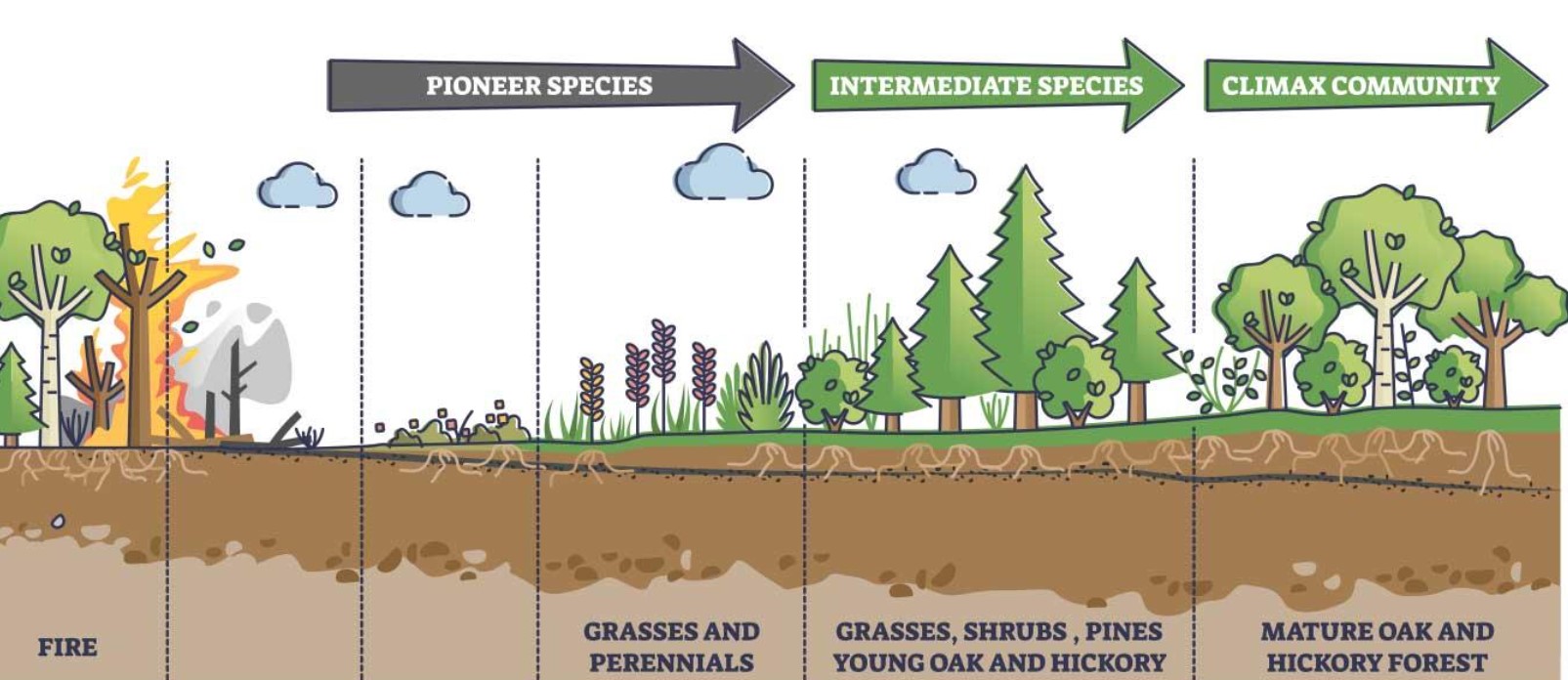
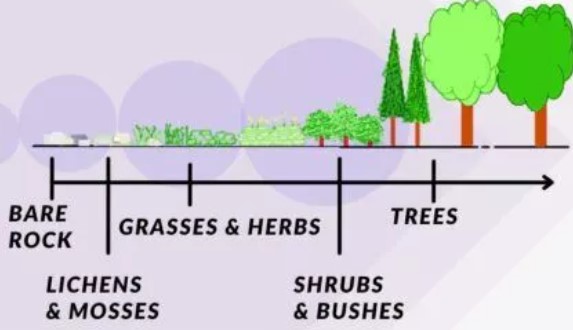
Primary succession | arrow_right_alt | stable, no longer going through major changes |
Climax community | arrow_right_alt | First species to populate an area during primary succession |
Secondary succession | arrow_right_alt | A species that influences the survival of many other species in an ecosystem |
Pioneer species | arrow_right_alt | Max number of organisms that can be supported by an environment |
| Draggable item | arrow_right_alt | Corresponding Item |
|---|---|---|
Biogeochemical cycles | arrow_right_alt | Where an organism lives |
Habitat | arrow_right_alt | An organisms place in the environment |
Niche | arrow_right_alt | The total amount of carbon produced by an organism or location |
Carbon footprint | arrow_right_alt | Process where chemical compounds and other forms of matter are passed through organisms or the biosphere |
Cecropia Trees and Ants
Cecropia trees have hollow trunks, and inside they secrete a sugary liquid that's nutritious to ants. Azteca ants colonize the trees, filling the trunk with millions of ants, who receive shelter and food from the tree. The tree is vulnerable to vines, which can grow on it, weigh it down or choke it. Azteca ants patrol the Cecropia and use their jaws to cut away any vines.
What type of symbiotic relationship is the Cecropia Tree and the Ants?
Legumes and Rhyzobia Bacteria
Plants need nitrogen. It's a vital nutrient, important to healthy growth. However, plants lack the mechanism to extract nitrogen from the air. They can get it from the ground if the ground happens to be fertile, but the supply can be easily depleted. In a perfect example, certain plants have found another species that does have the ability to extract (or "fix") nitrogen from the air. Legumes, a plant family that includes potatoes, peanuts and many others, bond with rhyzobia bacteria. The bacteria actually grow in nodules on the legumes' roots. The legume provides the energy necessary for the rhyzobia to break the strong chemical bonds in free nitrogen, and the rhyzobia produce nitrogen for the plant, plus enough to keep the surrounding soil fertile for years.
What type of symbiotic relationship is the Legumes and Rhyzobia Bacteria?
Horsehair Worm and Grasshopper/Insects
The horsehair worm starts life as an egg laid in a puddle. The puddle dries out and a grasshopper or similar insect comes along and eats the egg, which promptly hatches and burrows through the gut of the insect into its body cavity. Here, surrounded by the nutritious blood of the insect it grows until it reaches adulthood. At that point it starts producing chemicals which take over the brain of the insect and cause the insect to seek out water, which it jumps into. The worm then exits the hopper and lives in the puddle, mating and laying more eggs. The grasshopper, if it doesn't drown, may survive the ordeal.
What type of symbiotic relationship is the Horsehair Worm and the Grasshopper?
Cordyceps Fungus and Ants
The Cordyceps fungus lodges itself inside a variety of ant, and compels it to climb as high as the ant can and then pushes outside of the ant body and allows the fungus to replace the ant’s tissue with its own. This ensures the fungus will grow at an optimal temperature and humidity in its habitat.
What type of symbiotic relationship is the Cordyceps Fungus and the Ants?
Beetle and Pseudoscorpions
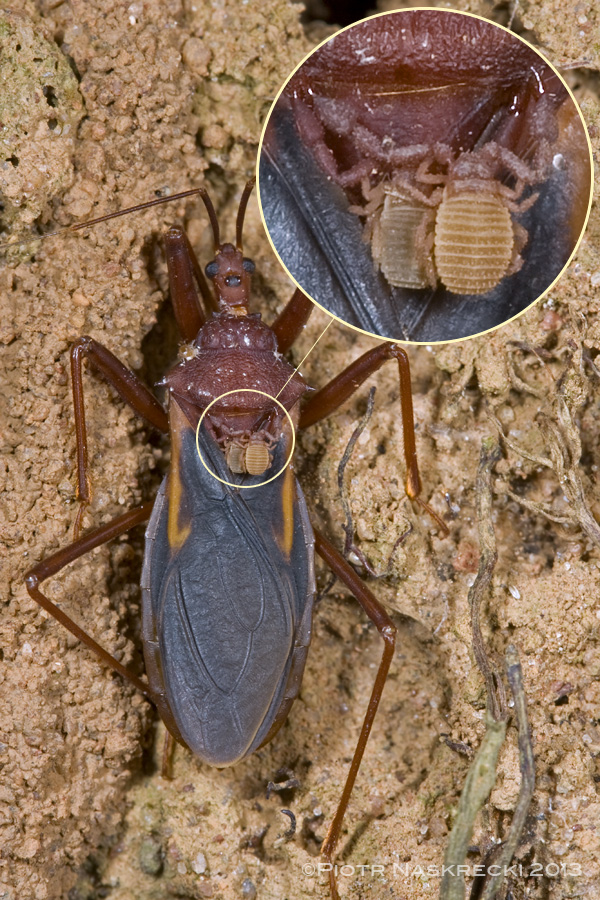
A few species of pseudoscorpions disperse by concealing themselves under the wing covers of large beetles such as the cerambycid beetle shown below. The pseudoscorpions gain the advantage of being dispersed over wide areas while simultaneously being protected from predators.
What type of symbiotic relationship is the Beetle and the Psuedoscorpions?
Dodder Plant and Other Plants
The Dodder plant is often found twined round the stems of clover plants or grasses, which it damages severely. At intervals along the twining stem small root like structures, called haustoria, link the Dodder to another plant and penetrate into its vascular bundles. In this way the Dodder obtains organic nutrients, water and mineral salts directly from the other plant. The other plant cannot receive the maximum nutrients and its growth is stunted.
What type of symbiotic relationship is the Dodder Plant and Other Plants?
Flower and Insects/Bats/Birds
Flowers contain nectar, a sweet, energy-rich material that gives the insect, bat or bird a nutritional benefit. When the animal moves on to the next flower for more nectar, it inadvertently carries pollen there.
What type of symbiotic relationship is the Bee and Flower?