| Draggable item | arrow_right_alt | Corresponding Item |
|---|---|---|
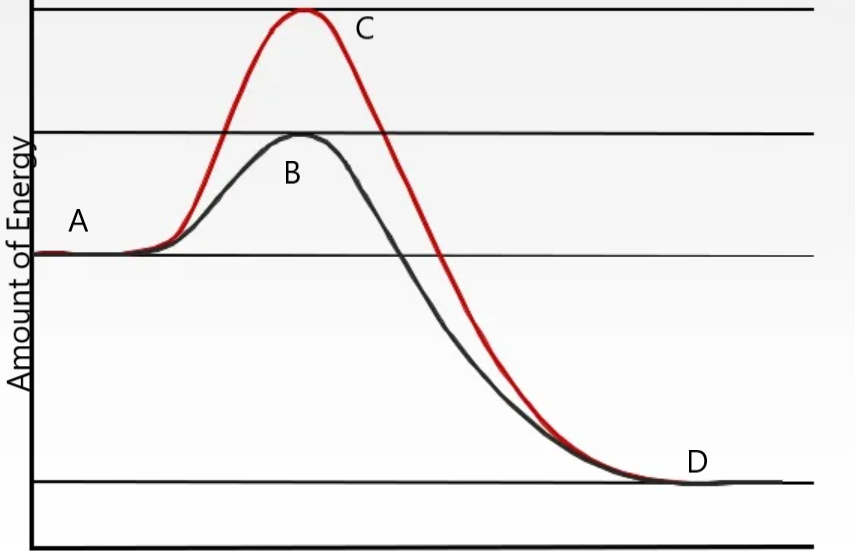
D | arrow_right_alt | reactants |
A | arrow_right_alt | with enzymes |
B line | arrow_right_alt | without enzymes |
C line | arrow_right_alt | products |
| Draggable item | arrow_right_alt | Corresponding Item |
|---|---|---|
D | arrow_right_alt | reactants |
A | arrow_right_alt | with enzymes |
B line | arrow_right_alt | without enzymes |
C line | arrow_right_alt | products |
Is the following graph a depiction of an endothermic or exothermic reaction?


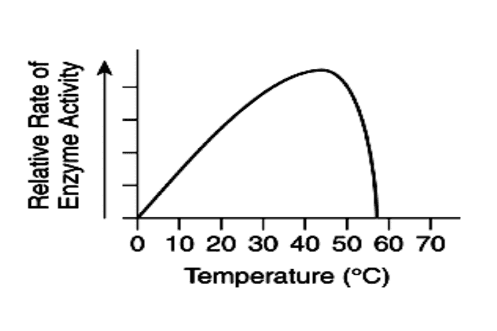
At what temperature do BOTH the human enzyme and thermophilic enzyme have some function? Write the numerical value only.
What point on the graph represents the activation energy?

Which line on the graph represents the reaction with an enzyme?

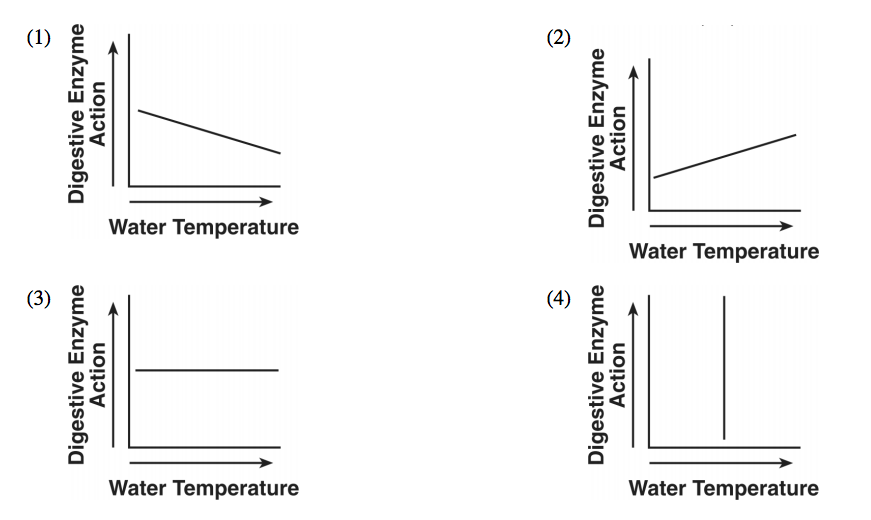
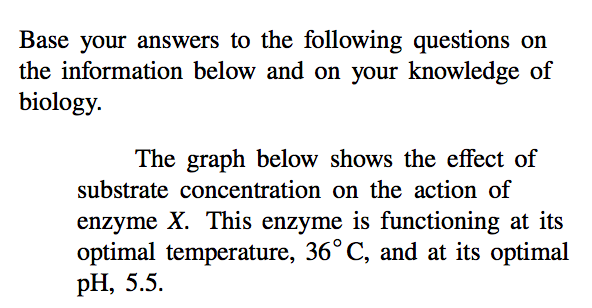
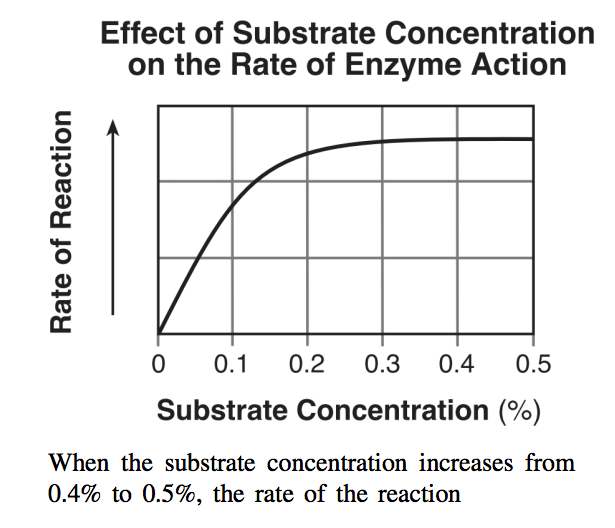

State what would most likely happen to the rate of enzyme action if the temperature were reduced by 10 degrees. Support your answer

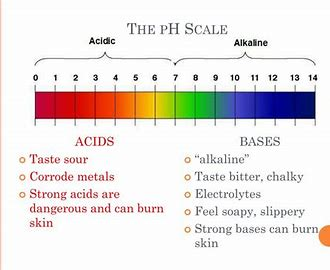
Pepsin works best in which type of environment?
Neither enzyme works at a pH of


What is the optimal temperature for this enzyme?
In class, we did an enzyme lab in which we added hydrogen peroxide, which breaks down cells, to potatoes and observed how the enzyme (A) peroxidase breaks down H2O2 into water and oxygen gas.
We exposed four slices of potatoes to (B) four different conditions: (C) room temperature, freezing, (D) soaking in an acid, and high heat (cooking).
Then we added (E) hydrogen peroxide.
Using what you learned from this lab, answer the following questions.
| Draggable item | arrow_right_alt | Corresponding Item |
|---|---|---|
A | arrow_right_alt | independent variable (IV) |
C | arrow_right_alt | enzyme |
D | arrow_right_alt | substrate |
B | arrow_right_alt | condition would you expect the enzyme to be denatured |
E | arrow_right_alt | condition would you expect the rate of reaction to be the fastest |