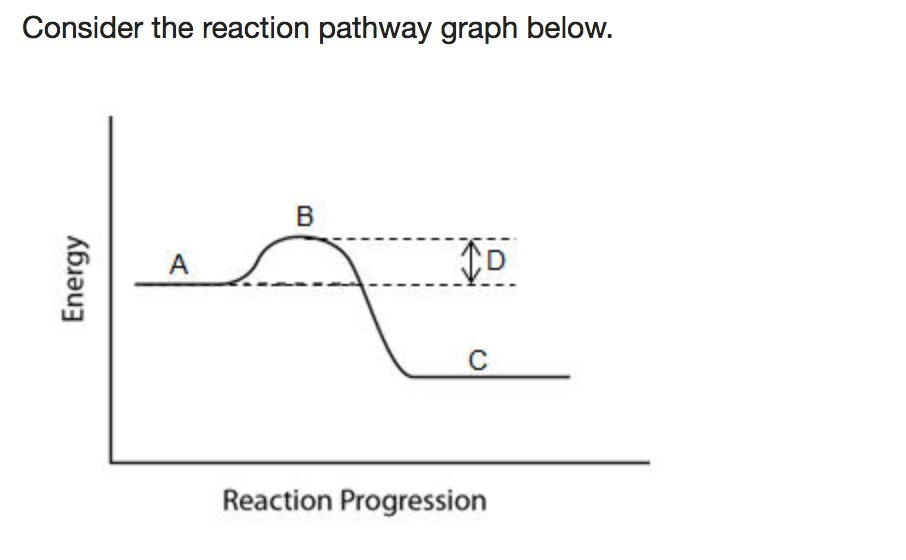
| Draggable item | arrow_right_alt | Corresponding Item |
|---|---|---|
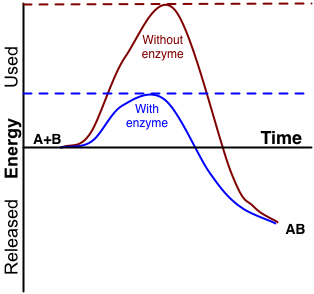
products | arrow_right_alt | A |
activation energy (energy required) | arrow_right_alt | C |
reactants | arrow_right_alt | D |
Enzymes the activation energy required to a chemical reaction. Enzymes are also known as .
| Draggable item | arrow_right_alt | Corresponding Item |
|---|---|---|
products | arrow_right_alt | A |
activation energy (energy required) | arrow_right_alt | C |
reactants | arrow_right_alt | D |
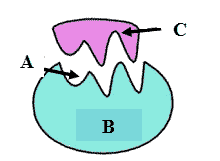
| Draggable item | arrow_right_alt | Corresponding Item |
|---|---|---|
B | arrow_right_alt | active site |
C | arrow_right_alt | enzyme |
A | arrow_right_alt | substrate |
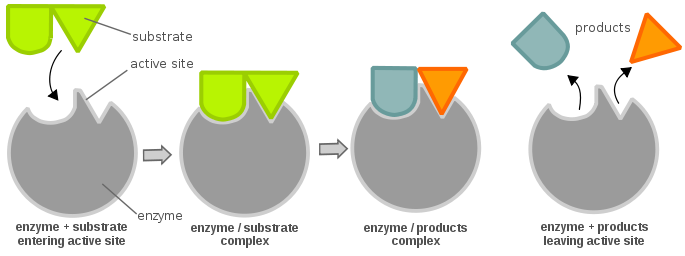
In the enzyme-substrate complex pictured below, what is happening during the third picture?
If the activation energy of a biochemical reaction is lowered with the help of enzymes, then
Reactants bind to enzymes at the . Reactants is another name for the . When the enzyme finishes the reaction with the subtract, the is released.
DNA is a stranded molecule. It is connected at the nitrogen bases by bonds. The nitrogen bases are to each other.
How does DNA serve as a genetic code? What does it code for?
Which part of the DNA specifically codes for traits? (The unique portion that can be different: A, T, C, G)
DNA provides instructions for the physical characteristics of living things. This may include blood type, eye color, bone structure, skin color, etc. How does the DNA within cells determine an organism's traits?
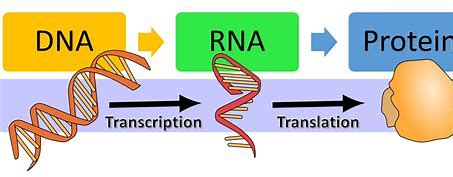
DNA is a acid that includes a series of monomers called that makes up a genetic for making proteins . The DNA is found in the of the eukaryotic cells and the cytoplasm of prokaryotic cells. DNA's genetic code is decoded into messages that are used to produce during a process called protein synthesis. DNA is a double- molecule with sides joined by complementary nitrogen pairs: adenine pairs with and cytosine bonds with .
Occurs in nucleus | Occurs on ribosome | |
|---|---|---|
DNA replication | ||
Transcription | ||
Translation |
Match the following RNA with its description and/or function.
| Draggable item | arrow_right_alt | Corresponding Item |
|---|---|---|
rRNA | arrow_right_alt | carries a copy of the DNA's code outside the nucleus. |
mRNA | arrow_right_alt | helps transfer correct amino acids to make a protein. |
tRNA | arrow_right_alt | a type of RNA that is found within ribosomes and help to link together amino acids during translation. |
Categorize the differences between DNA and RNA.
nitrogen base: thymine
nitrogen base: uracil
single stranded
double helix
cannot leave the nucleus
leaves the nucleus with message to build proteins
DNA
RNA
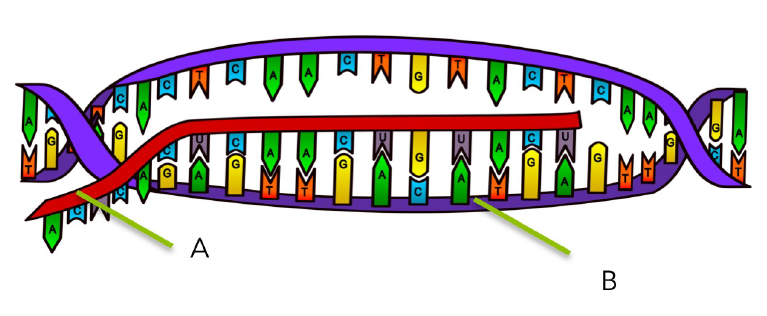
Identify the strands above.
| Draggable item | arrow_right_alt | Corresponding Item |
|---|---|---|
mRNA | arrow_right_alt | B (purple strand) |
DNA | arrow_right_alt | A (red strand) |
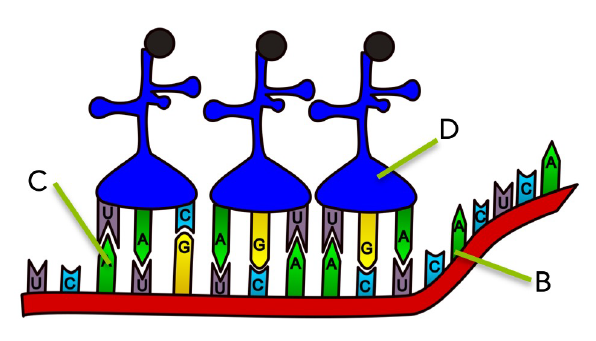
What is the name of the process illustrated above?
| Draggable item | arrow_right_alt | Corresponding Item |
|---|---|---|
C & B | arrow_right_alt | The process occurring here is |
D | arrow_right_alt | Nitrogenous bases on DNA |
Translation | arrow_right_alt | tRNA |
Choose which molecule is created with each of these processes.
mRNA | Polypeptide (Protein) | |
|---|---|---|
Transcription | ||
Translation |
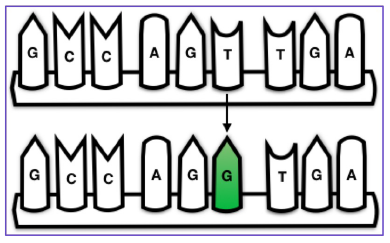
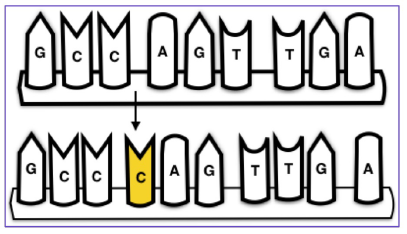
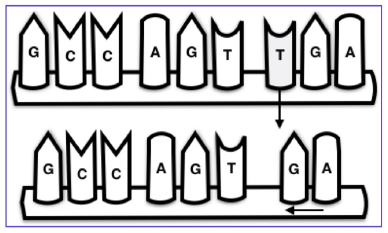
Match the type of gene mutation with its corresponding illustration.
| Draggable item | arrow_right_alt | Corresponding Item |
|---|---|---|
Deletion | arrow_right_alt | |
Substitution | arrow_right_alt | |
Insertion | arrow_right_alt |
In the table below, determine if each type of gene mutation is a frameshift or point mutation.
Frameshift | Point | |
|---|---|---|
Insertion | ||
Deletion | ||
Substitution |
Match the type of gene mutation with correct description.
| Draggable item | arrow_right_alt | Corresponding Item |
|---|---|---|
Substitution | arrow_right_alt | A nucleotide is randomely added to the a sequence. |
Insertion | arrow_right_alt | A nucleotide is deleted from a sequence. |
Deletion | arrow_right_alt | A nucleotide is swapped for a different one. |
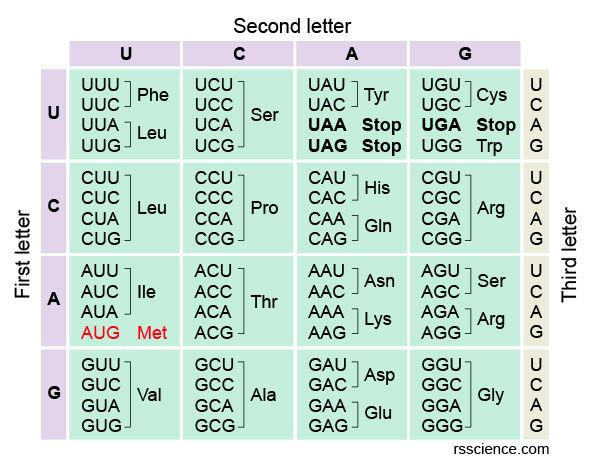
DNA: CGA
RNA:
Protein:
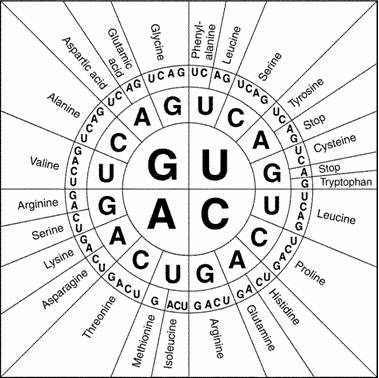
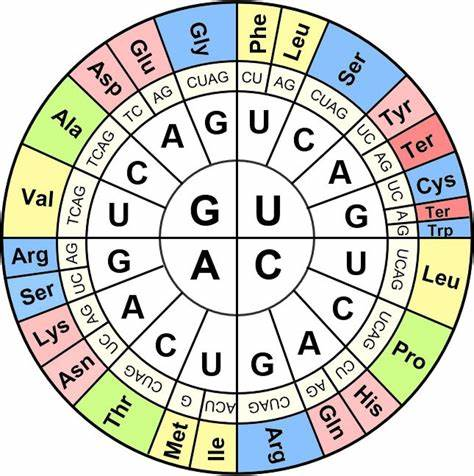
mRNA: CUC AAG UGC UUC
What is the amino acid sequence coded for by the above mRNA ? (First amino acid at the top)
Lys
Leu
Phe
Cys
DNA sequence:
mRNA sequence : CUC - AAG - UGC - UUC
Compare the mutated DNA sequence to the original. Identify the mutation as either an insertion, deletion, or substitution, AND whether it is a frameshift or not
Original DNA Sequence: T A C A C C T T G G C G A C G A C T
Mutated DNA Sequence: T A C G A C C T T G G C G A C G A C T
Compare the mutated DNA sequence to the original. Identify the mutation as either an insertion, deletion, or substitution , AND whether it is a frameshift, missense, nonsense, or silent mutation
Original DNA Sequence: T A C A C C T T G G C G A C G A C T
Amino acid sequence: Methionine - Tryptophan - Asparagine - Arginine - Cysteine
Mutated DNA Sequence: T A C A T C T T G G C G A C G A C T
Amino acid sequence is: Methionine - (Stop codon)
Compare the mutated DNA sequence to the original. Identify the mutation as either an insertion, deletion, or substitution, AND whether it is a missense, nonsense, or silent mutation. (should check 2 boxes)
Original DNA Sequence: T A C A C C T T G G C G A C G A C T
Original Amino Acid Sequence: Methionine - Tryptophan - Asparagine - Arginine - Cysteine
Mutated DNA Sequence: T A C A C C T T A G C G A C G A C T
Mutated Amino Acid Sequence: Methionine - Tryptophan - Asparagine - Arginine - Cysteine
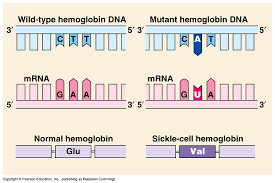
This image illustrates the genetic mutation that causes sickle-cell disease, an inherited blood disorder that affects the hemoglobin protein in a person's blood. Based on the information provided in the illustration, which of the following statements is TRUE about this mutation?
Are all mutations negative? Which statement(s) explains the answer?
A DNA segment codes for the following peptide chain when translated:
Methionine Isoleucine Arginine Tyrosine Threonine
A substitution mutation occurs and causes the DNA segment to change the following:
3' - TAC TAG GCA ATG ACT -5'
What is the new peptide chain when the mutated DNA is transcribed and translated?
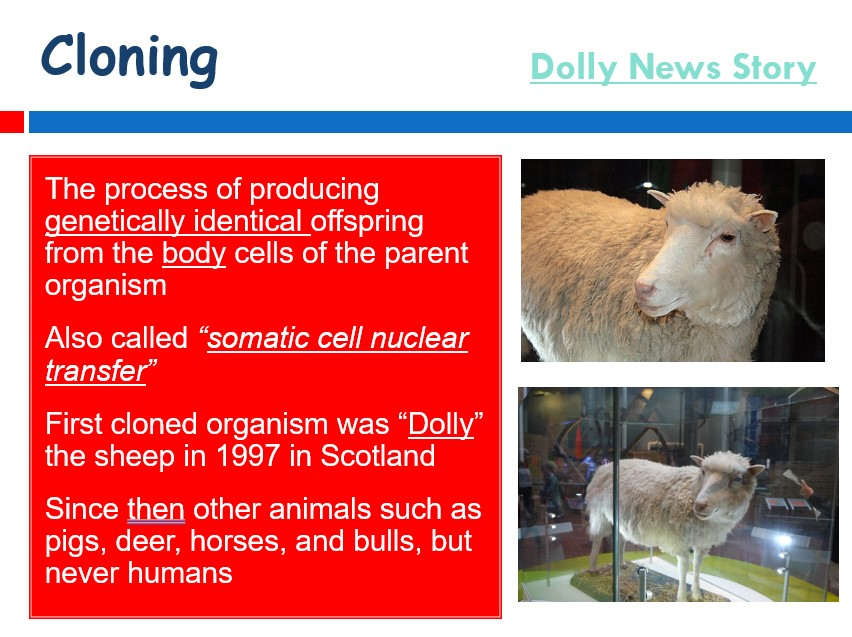
Cloning
Cloning is the process of producing genetically offspring from the cells of the parent organism
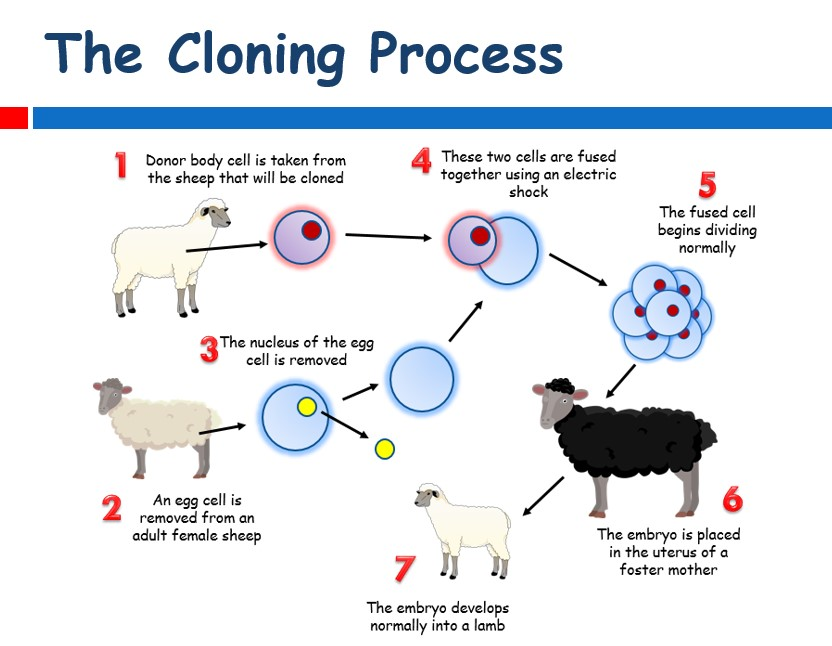
Place the following steps for cloning a sheep in the correct order
First
Last
The embryo is placed in the uterus of the foster mother.
These two cells are fused using an electric shock.
An egg cell is taken from an adult female sheep
The nucleus of the egg cell is removed.
The embryo develops normally into a lamb- Dolly.
A donor cell is taken from a sheep’s udder.
The fused cell begins dividing normally.
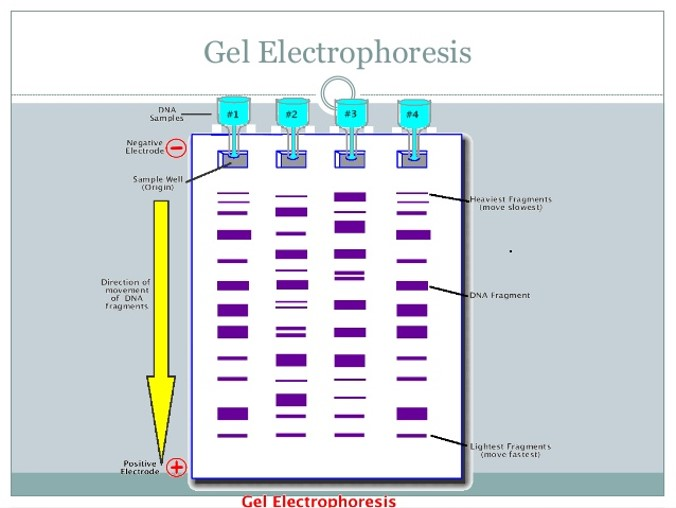
The DNA gel has many little pores that the DNA can move, or migrate, through. When the power is turned on, the DNA moves through these holes. This is why the fragments take longer to move across the gel while the fragments move very quickly.
Before placing the DNA fragments into the wells at the top of the gel, the DNA must be cut up into pieces. What biotechnology is used to cut the DNA at specific sites? (Think DNA scissors)
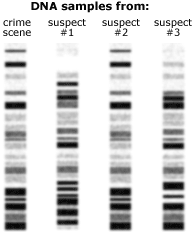
According to the DNA evidence, which suspect is most likely guilty of committing the crime?
DNA: TAC
RNA:
Protein:
DNA: ATA
RNA:
Protein:
DNA: GGG
RNA:
Protein:
DNA: GAT
RNA:
Protein:
DNA: ATG
RNA:
Protein:
Which direction is the DNA moving and why? (3 are correct)