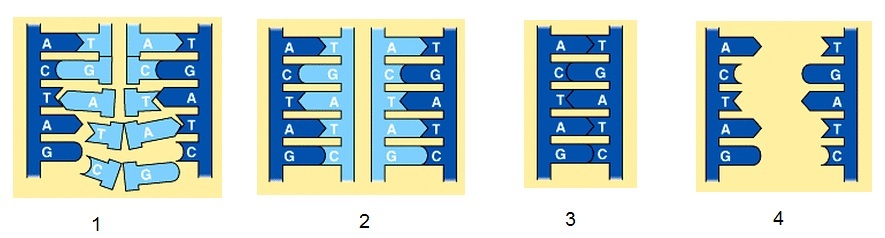
Select the correct order of replication based on the pictures below.
Andre svarmuligheder:
Step 2
Step 4
Step 3
Step 1
Which enzyme is responsible for "gluing" the Okazaki fragments together on the lagging strand?
Where does DNA replication occur?
When does DNA replication occur?
Why is it crucial that living things are able to replicate their DNA?
Match the enzyme on the left with the correct step of DNA replication on the right
| Draggable emne | arrow_right_alt | Korresponderende emne |
|---|---|---|
Ligase | arrow_right_alt | "unzips" the DNA molecule into two separate strands |
Primase | arrow_right_alt | builds the complementary DNA strand by adding free nucleotides to the original strands of nucleotides |
DNA polymerase | arrow_right_alt | bonds DNA fragments together |
DNA helicase | arrow_right_alt | indicates where DNA replication begins |
Select the correct order of replication based on the pictures below.
Order the steps of DNA replication (first step goes at top)
Ligase bonds the new DNA fragments
DNA is unzipped
Polymerase builds complimentary DNA strand
After replication, each strand has new strand(s) & old strand(s). Therefore, DNA replication is said to be
One strand of DNA has the following base sequence (template strand):
CTA TTT CAA CGC TCG GCG TAG CAT
What would be the base sequence on the opposite strand (complementary strand) of DNA?
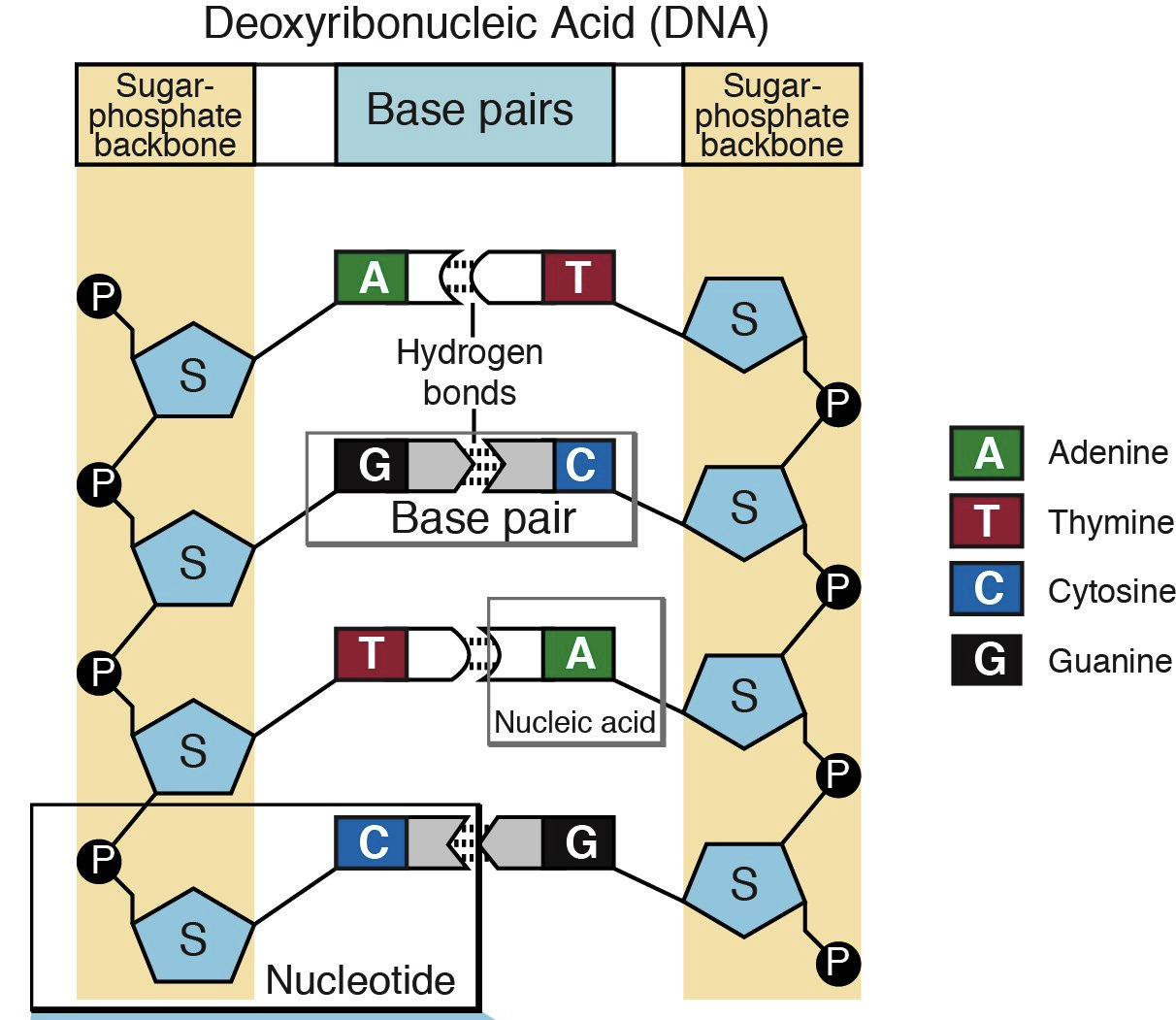
According to the diagram above, what kind of bonds is responsible for linking together nucleotide pairs (base pairs)?
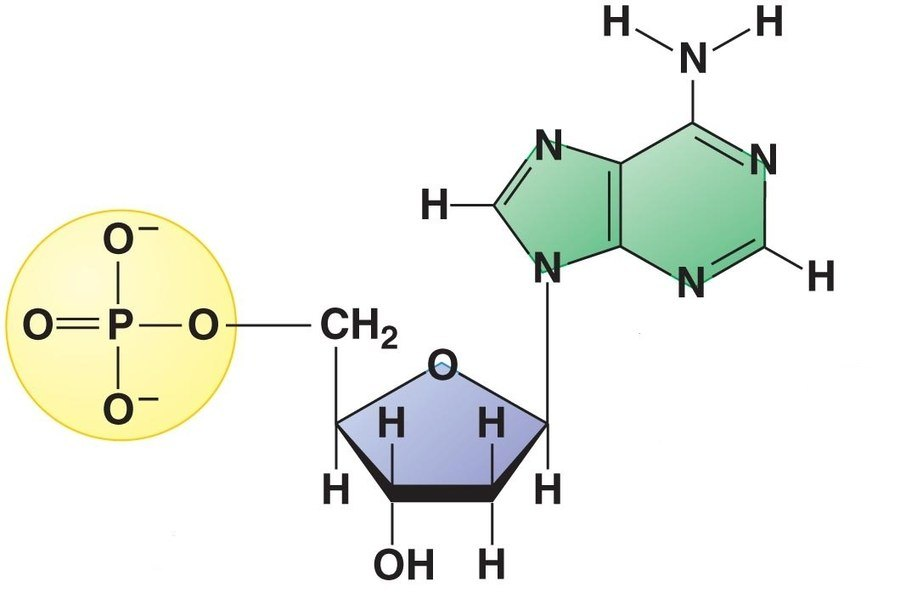
Name this structure above that has a phosphate group, sugar, and nitrogenous base.
Move the characteristics on the left to the correct category on the right.
contains deoxyribose
contains ribose
contains Uracil (U)
contains Thymine (T)
made up of nucleotides
moves into the cytoplasm
found only in the nucleus
BOTH DNA & RNA (1 item)
RNA only (3 items)
DNA only (3 items)