Twa kɔ nsɛm atitiriw so
Log in
Sign up for FREE
arrow_back
Laabri

Unit 3 Genetics Onlevel Exam

star
star
star
star
star
Last updated about 2 hours ago
31 Nsɛmmisa
Ɛhia
1
SB1c
Ɛhia
0
SB1c
Ɛhia
1
SB2a
Ɛhia
1
Ɛhia
1
SB2a
Ɛhia
1
SB2a
Ɛhia
1
SB2a
SB2b
Ɛhia
1
SB2a
Ɛhia
1
SB2a
Ɛhia
1
SB2a
Ɛhia
1
SB2a
Ɛhia
1
SB2a
Ɛhia
1
SB1a
SB2a
Ɛhia
1
SB2a
SB2b
Ɛhia
1
SB2a
SB2b
Ɛhia
1
SB2a
Ɛhia
1
SB1a
SB2a
Ɛhia
1
SB1a
SB1e
Ɛhia
1
Ɛhia
1
SB1c
Ɛhia
0
Ɛhia
1
SB2a
Ɛhia
1
SB1c
Ɛhia
0
SB1e
Ɛhia
1
SB1a
Asemmisa {{asɛmmisaAhyɛnsode}}
1.

The graphs below show the reaction rate for an enzyme across a range of temperatures and pH.
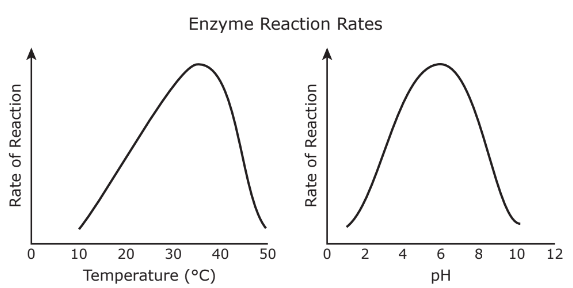
Based on the data, this enzyme functions best at what temperature and pH?
Asemmisa {{asɛmmisaAhyɛnsode}}
2.

Resistance to antibiotics results from variations in the genetic code of Streptococcus pneumoniae. The genetic code for Streptococcus pneumoniae is a

Asemmisa {{asɛmmisaAhyɛnsode}}
3.

Look at the DNA sequence:    GAA-TTC-GCA What do the 'G' and 'A' represent in the DNA sequence?

Asemmisa {{asɛmmisaAhyɛnsode}}
4.

If a DNA molecule has 30% cytosine (C), then it will have:

of guanine

of adenine and thymine combined

For a total of 100% DNA

Mmuae Afoforo a Wobɛpaw:
30%
60%
20%
40%
80%
Asemmisa {{asɛmmisaAhyɛnsode}}
5.

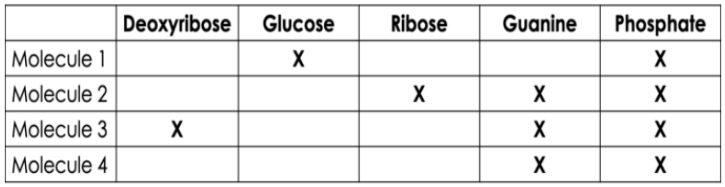
A scientist is doing an experiment to identify different molecules. Some components of these molecules are listed in this table.

Which of the four molecules is DNA, based on the table above?

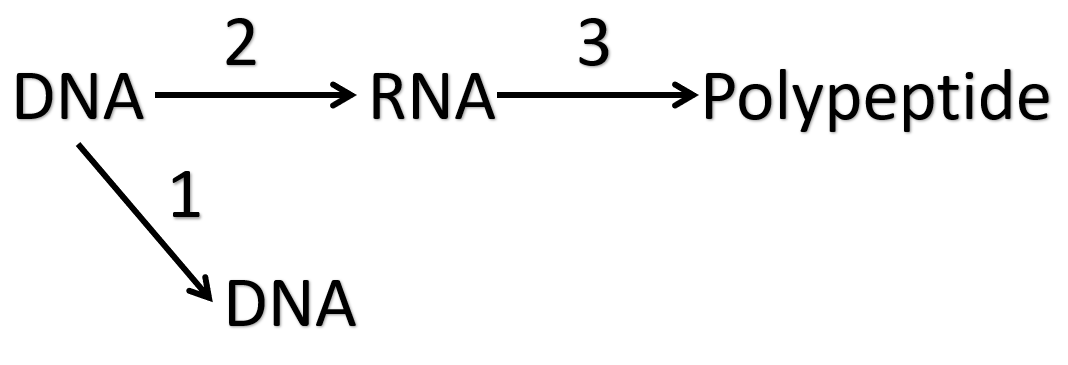
The image below pictures the Central Dogma or flow of information inside of a cell.

Ɛhia
1
Asemmisa {{asɛmmisaAhyɛnsode}}
6.

Which processes shown in this diagram occur in the nucleus?

SB2a
Ɛhia
1
SB2a
Asemmisa {{asɛmmisaAhyɛnsode}}
8.

DNA replication is semiconservative and therefore results in two DNA molecules

Asemmisa {{asɛmmisaAhyɛnsode}}
9.

Four different segments of a DNA molecule are represented below.

There is an error in the complimentary base pairings of DNA in which molecule?

Asemmisa {{asɛmmisaAhyɛnsode}}
10.

Some events that take place during the synthesis of a specific protein are listed below. The correct order of these events is which of the following:

The first step should be at the *top*

  1. DNA serves as a template for RNA production.

  2. Amino acids are bonded together to form polypeptide chain (protein)

  3. Messenger RNA moves from the nucleus through the cytoplasm to attach to a ribosome

  4. Transfer RNA bonds to a specific codon.

Asemmisa {{asɛmmisaAhyɛnsode}}
11.

The DNA code for normal hemoglobin contains the following segment: TGC-GGA-CTC-CTC Which of these is the mRNA code for this segment of DNA?

Asemmisa {{asɛmmisaAhyɛnsode}}
12.

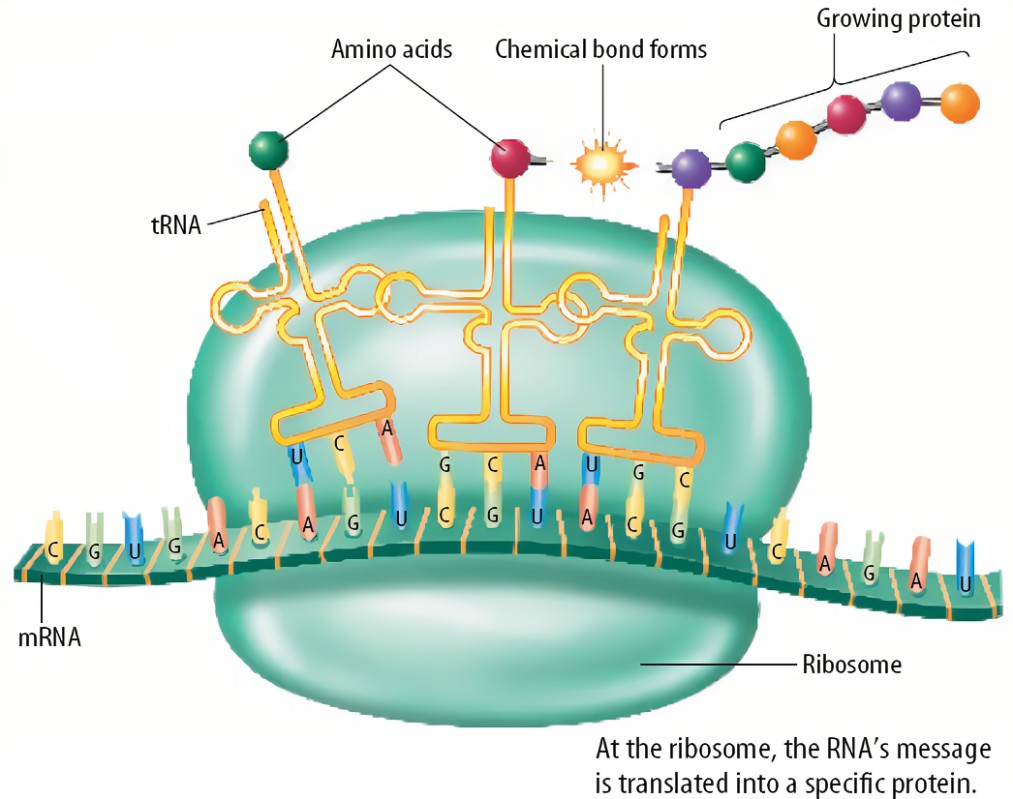
Which statement best describes what is happening in this image?

Asemmisa {{asɛmmisaAhyɛnsode}}
13.

A scientist put nucleotide chains of UUUUUU in a test tube under conditions allowing protein synthesis. Soon the test tube is full of polypeptide chains composed only of the amino acid phenylalanine. What does this experiment indicate?

Asemmisa {{asɛmmisaAhyɛnsode}}
14.

The sequence of DNA below is part of a gene. How many amino acids are coded for by the segment shown below? ATCAGCGCTGGC

Asemmisa {{asɛmmisaAhyɛnsode}}
15.

The process represented in the diagram is most closely associated with the cell organelle known as the

Asemmisa {{asɛmmisaAhyɛnsode}}
16.

The table below illustrates a mutation that occurred during DNA replication. If your DNA went from:

What type of mutation occurred?

Asemmisa {{asɛmmisaAhyɛnsode}}
17.

Which of the following would most likely cause a mutation?

Ɛhia
1
Asemmisa {{asɛmmisaAhyɛnsode}}
18.

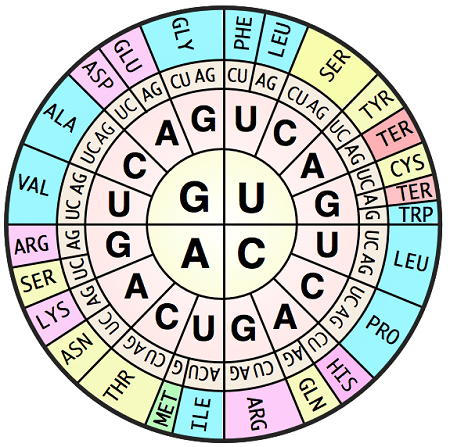
Using the following mRNA template, AUG-CAU-UGC-GAC-UAA, what would be the amino acid sequence coded for by the mRNA?

(First amino acids at the top)

  1. His

  2. Asp

  3. STOP

  4. Cys

  5. Met

SB2a
Ɛhia
1
SB2a
Ɛhia
1
SB2a
SB2b
Asemmisa {{asɛmmisaAhyɛnsode}}
21.

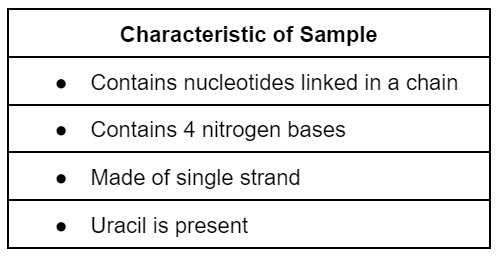
After conducting several tests, a scientist determines that the nucleic acid they are studying has the following characteristics:

What is the BEST conclusion the scientists can make based on the observations above?

Asemmisa {{asɛmmisaAhyɛnsode}}
22.

Pancreatic cells are responsible for producing insulin, a protein that regulates glucose levels in the bloodstream. Many cell organelles are involved in the creation and transport of insulin. Construct an explanation of the interactions that occur between the organelles to produce insulin.

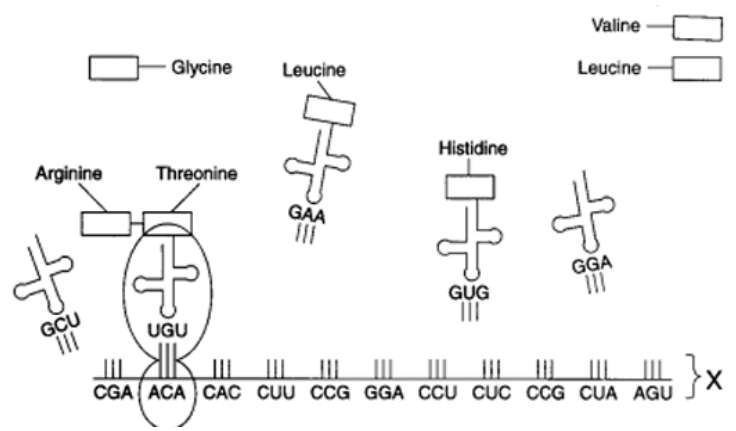
The DNA in the  where insulin is formed. The insulin protein is then folded and transported by the . Here insulin is modified and packaged in the membrane-bound vesicles that travel to the 

SB2c
Asemmisa {{asɛmmisaAhyɛnsode}}
24.

A biologist ground up some plant cells and then purified the mixture. She obtained some organelles from the mixture in the test tube. Upon further analysis, it was found that the organelles took in carbon dioxide (CO2) and released oxygen (O2). The organelles are most likely

Asemmisa {{asɛmmisaAhyɛnsode}}
25.

Active Transport

Passive Transport

Both

solutes moves from high to low concentration

requires ATP

could use a protein pump

Asemmisa {{asɛmmisaAhyɛnsode}}
26.

Amylase assists in breaking down starch into smaller molecules, ultimately yielding maltose, which in turn is cleaved into two glucose molecules by maltase. Both amylase and maltase do this by lowering the activation energy required to start the chemical reaction.

During DNA replication, helicase is used to break the hydrogen bonds between nitrogenous bases while DNA polymerase is used to assemble the nucleotides on the new DNA strand.

Amylase, maltase, helicase and DNA polymerase are all examples of

Asemmisa {{asɛmmisaAhyɛnsode}}
27.

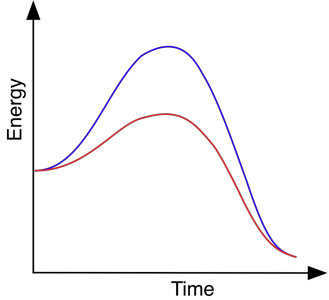
The graph above shows two chemical reactions. The activation energy in order to start the chemical reaction.

Asemmisa {{asɛmmisaAhyɛnsode}}
28.

What is the complement (the other DNA strand) to the DNA strand shown below?

TAT - TAG - ATT - ACA

- - -

Asemmisa {{asɛmmisaAhyɛnsode}}
29.

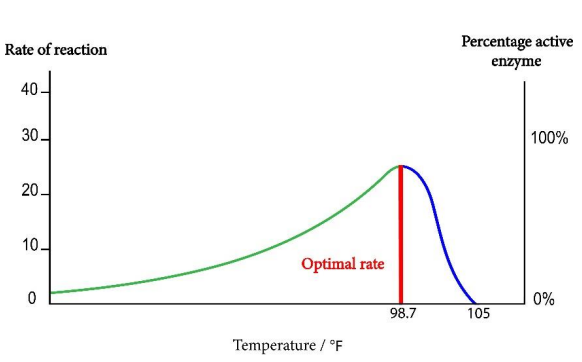
Enzymes in the human body have an optimum temperature around 98.7 degrees Fahrenheit. When a human has a bacterial or viral infection sometimes they run a fever. A fever is designed to assist the immune system in functioning to rid the body of disease. However, when a fever becomes too high there are consequences to the enzymes within the brain. This graph shows that action:

Choose the best argument using evidence for why a fever of 100.7 degrees would not cause an enzyme to cease function.

Asemmisa {{asɛmmisaAhyɛnsode}}
30.

Bromothymol blue (BTB) is a pH indicator that is also used to detect carbon dioxide (CO2). BTB is blue when pH is basic and CO2 is low. BTB is yellow when pH is acidic and CO2 is high. BTB is green when pH is neutral. A group of students are planning to perform an investigation in which they will place either a stalk of the aquatic plant elodea or a snail in a test tube that contains water with a neutral pH of 7 and BTB. The students will also include a test tube that contains elodea and a snail.

Observing color change once the tubes have been placed under a growth light for several hours will allow the students to answer which of the following questions?

Asemmisa {{asɛmmisaAhyɛnsode}}
31.

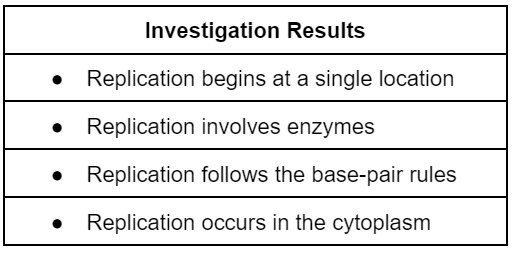
Students are investigating DNA replication in a variety of cells. The record the following observations.

Based on these results, what type of cell are the students studying?

Asemmisa {{asɛmmisaAhyɛnsode}}
7.

Process 2 is known as

Asemmisa {{asɛmmisaAhyɛnsode}}
20.

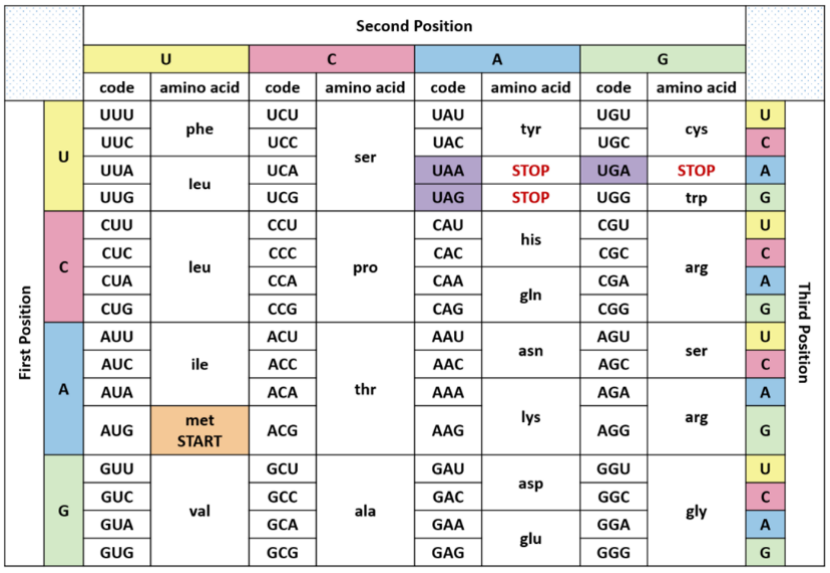
Using the codon chart above, which of the following changes would be expected if a CAUUUG sequence of bases mutated to CAGUUG?