Twa kɔ nsɛm atitiriw so
Log in
Sign up for FREE
arrow_back
Laabri

Unit 1 Intervention (Part A Cells)

star
star
star
star
star
Last updated about 2 hours ago
29 Nsɛmmisa
Ɛhia
1
Ɛhia
1
Ɛhia
1
Ɛhia
3
Ɛhia
5
Ɛhia
5
Ɛhia
1
Ɛhia
1
Ɛhia
5
Ɛhia
1
Ɛhia
1
Ɛhia
1
Ɛhia
1
Question 1
07:48
Question 2
02:00
Question 3
03:37
Question 4
01:14
keyboard_arrow_down
1
Question 5
03:08
keyboard_arrow_down
1
Question 6
07:08
keyboard_arrow_down
1
Question 7
07:45
Question 8
08:04
Question 9
09:01
Asemmisa {{asɛmmisaAhyɛnsode}}
10.

There are 3 items in each category.

  • has a nucleus

  • smaller in size

  • the evolved cell

  • no membrane-bound organelles

  • very simple in structure

  • can be single-celled or multi-celled

  • Prokaryote

  • Eukaryote

Asemmisa {{asɛmmisaAhyɛnsode}}
11.

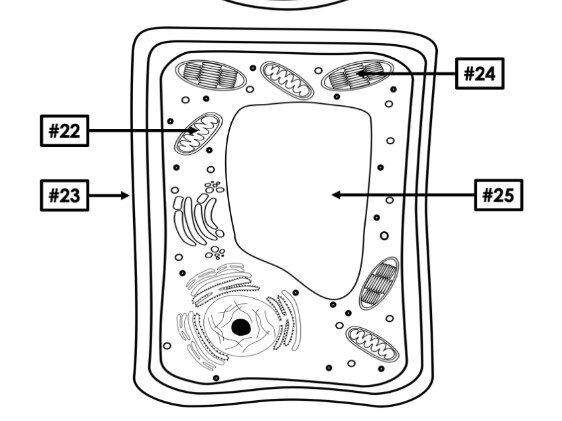
The cell shown above is a , which is a(n) cell.

#25 is the

#23 is the

#22 is the .

#24 is the which converts light to glucose (energy) via photosynthesis. This organelle makes leaves look green because the green color is .

Mmuae Afoforo a Wobɛpaw:
prokaryotic
mitochondria
plant cell
chloroplast
absorbed
cell wall
vacuole
animal cell
eukaryotic
cell membrane
reflected
Asemmisa {{asɛmmisaAhyɛnsode}}
12.

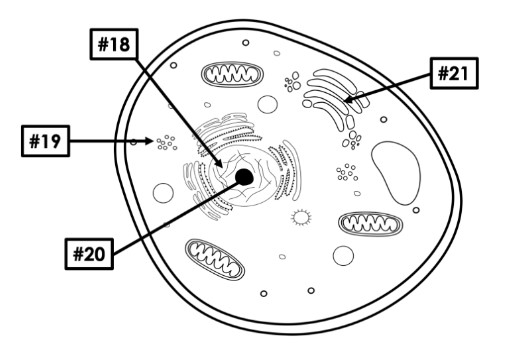
The cell shown above is a , which is a(n) cell.

#20 is the

#21 is the

Mmuae Afoforo a Wobɛpaw:
nucleus
animal cell
prokaryotic
eukaryotic
plant cell
mitochondria
lysosome
ribosomes
golgi apparatus
Asemmisa {{asɛmmisaAhyɛnsode}}
13.

Sort the organelles into the correct category.

  • LARGE central vacuole

  • Cell Membrane

  • Chlorplast

  • Nucleus

  • Mitochondria

  • Cell Wall

  • Plants Only

  • Animals and Plants

Asemmisa {{asɛmmisaAhyɛnsode}}
14.

Match each cell part with the correct description of its function.

Draggable itemarrow_right_altCorresponding Item

Vacuole

arrow_right_alt

Site of cellular respiration, releasing molecules of ATP to make energy immediately available for the cell

Vesicle

arrow_right_alt

Site of photosynthesis, absorbing light and resulting in the production of carbohydrates to store energy

Nucleus

arrow_right_alt

Organelle that stores water, food, and enzymes

Mitochondria

arrow_right_alt

Small organelle that contains and transports materials within the cytoplasm

Chloroplast

arrow_right_alt

Stores the cell's genetic material (DNA)

Asemmisa {{asɛmmisaAhyɛnsode}}
15.

Match each cell part with the correct description of its function.

Draggable itemarrow_right_altCorresponding Item

Smooth Endoplasmic Reticulum

arrow_right_alt

Covered in ribosomes, and therefore involved in the production of proteins

Ribosome

arrow_right_alt

Site of lipid and carbohydrate synthesis

Lysosome

arrow_right_alt

Site of protein synthesis

Golgi Body/Apparatus

arrow_right_alt

Organelle containing enzymes that help break down (hydrolyze) large organic molecules

Rough Endoplasmic Reticulum

arrow_right_alt

Stack of flat membrane enclosures that contain enzymes for processing, sorting, and delivering proteins

Asemmisa {{asɛmmisaAhyɛnsode}}
16.

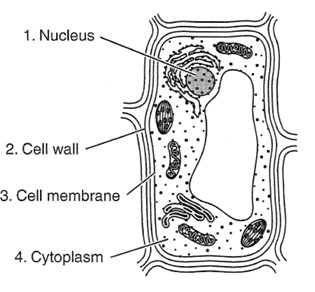
Which numbered part of the plant cell shown above is a liquid-like substance that fills the cell?

Asemmisa {{asɛmmisaAhyɛnsode}}
17.

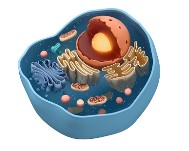
Which type of cell is pictured above?

Asemmisa {{asɛmmisaAhyɛnsode}}
18.

Match the organelle structure with their function

Draggable itemarrow_right_altCorresponding Item

Cell wall

arrow_right_alt

Contains digestive enzymes to break down harmful substances

Cell membrane

arrow_right_alt

Organelle that hugs the nucleus and has ribosomes attached to it.

Lysosome

arrow_right_alt

Serves as a semi-permeable boundary between the cell and its environment.

Rough Endoplasmic Reticulum

arrow_right_alt

Organelle in plants that uses light energy to make glucose in a process called

photosynthesis.

Chloroplast

arrow_right_alt

Firm, fairly rigid structure found outside of plants for support.

Asemmisa {{asɛmmisaAhyɛnsode}}
19.

Cells that use a great amount of energy usually contain numerous ________ because it's the organelle that helps generate more ATP (energy).

Asemmisa {{asɛmmisaAhyɛnsode}}
20.

If the ribosomes of a cell were destroyed, what effect would this most likely have on the cell?

Asemmisa {{asɛmmisaAhyɛnsode}}
21.

Prokaryote

Eukaryote

Both

has genetic material

Ribosomes

Mitochondria

Cytoplasm

has nucleus

Asemmisa {{asɛmmisaAhyɛnsode}}
22.

Cells may have different shapes and different amounts of organelles, depending on their function. Which features do plant cells have that animal cells lack?

Question 23
00:58
Question 24
01:54
Question 25
02:05
Question 26
04:10
Question 27
04:52
Question 28
05:33
Question 29
06:20
Asemmisa {{asɛmmisaAhyɛnsode}}
4.

What is unique about a prokaryote cell?

Asemmisa {{asɛmmisaAhyɛnsode}}
5.

What makes the rough endoplasmic reticulum unique from the smooth endoplasmic reticular?

Asemmisa {{asɛmmisaAhyɛnsode}}
6.

What do plant and animal cells have in common?