The diagram below was created by students to show different types of reproduction. While some of the diagrams are correct, others are now.

*click the image to enlarge
Nødvendig
1
SB1b
Nødvendig
1
SB1b
Nødvendig
1
SB1b
The diagram below was created by students to show different types of reproduction. While some of the diagrams are correct, others are now.
*click the image to enlarge
Fruit flies have a diploid number of 8. How many chromosomes would you expect to find in a gamete of a fruit fly?
The diagram below shows the normal sequence of genes in a particular chromosome.
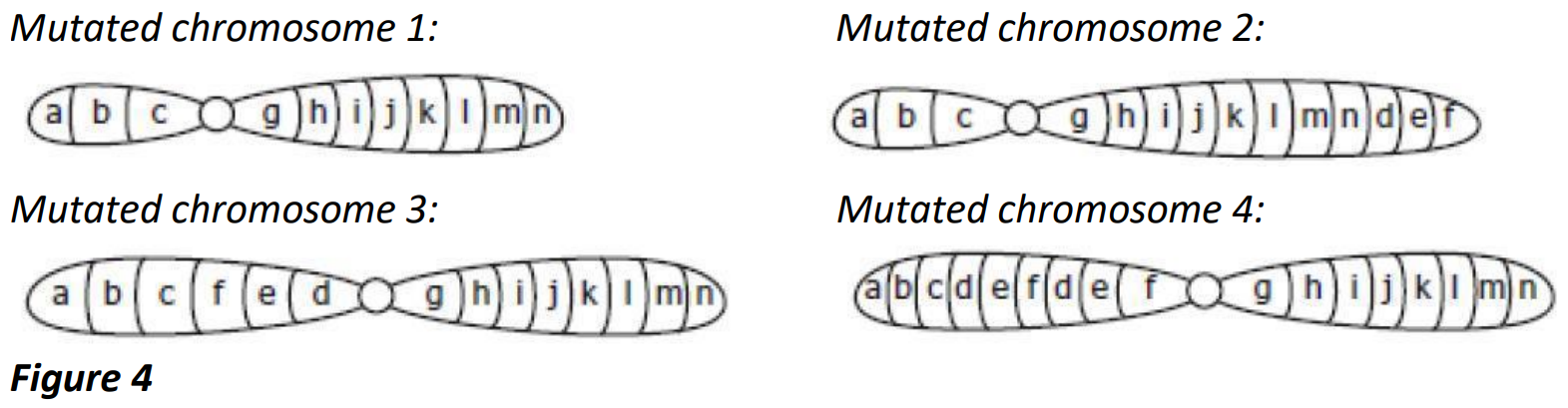
The chromosomes below represent mutated versions of the chromosome above.
*click the images above to enlarge
Which of the mutated chromosomes above could have resulted from a deletion in the original chromosome?
Sexual reproduction requires much more energy use from parents. Which of the following best explains why sexual reproduction is valuable for life despite its large energy investment?
Which of the following types of reproduction is correctly paired with mitosis and meiosis?
Following a mitotic cell division, there are resulting daughter cells, and the number of chromosomes in those cells is the parent cell.
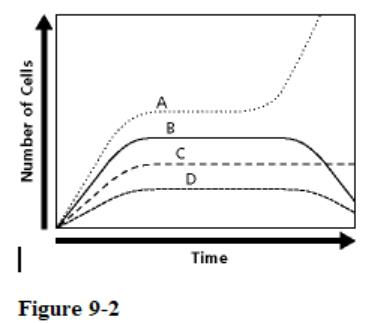
Which of the cells depicted in the line graph in Figure 9-2 are most likely cancerous?
Which of the following phrases best describes cancer?
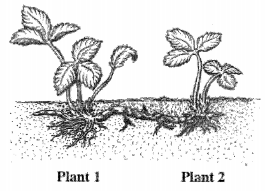
The diagram below shows two strawberry plants.
Plant 2 is produced asexually from Plant 1. If the leaf cells of Plant 2 have 56 chromosomes, how many chromosomes will be found in the somatic cells of Plant 1?
In one type of cell division, a single cell forms two new cells. This process is called mitosis. What is the reason that human skin cells frequently undergo mitosis?
The Gap 1, Gap 2, and Synthesis stages of the cell cycle make up. The Gap 1 and Gap 2 phases provide time for the cell to . During the Synthesis (S) phase, the cell is making .
Why is it necessary for a cell’s DNA to replicate during interphase, prior to mitosis?
A student observing a cell through a microscope concludes that the cell is undergoing mitosis and appears to be in the metaphase stage. Which of the following should she use as evidence in support of her conclusion?
Which of the following images depicts a cell in Anaphase?
A scientist conducted a study of an organism and found that its body cells contained 40 chromosomes. These cells were cultured in the laboratory, and cell division was observed.
What difference, if any, would the scientist expect to observe between body cell division and sex cell division in the organism?
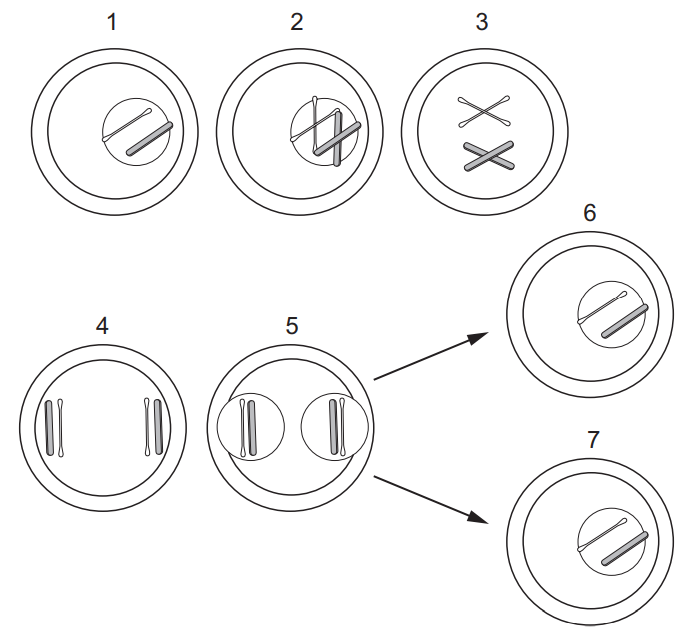
Students created a model (shown in the image above) of mitosis using paper plates, flat wooden sticks, cotton swabs, and construction paper. Which statement correctly uses the model to explain how mitosis maintains genetic continuity?
Colchicine is a poison that binds to the protein that forms spindle fibers, thereby inhibiting the development of spindle fibers. If a cell is exposed to colchicine, what would the most likely outcome be during mitosis?
DNA is a that holds the genetic instructions for making proteins. DNA is a double-stranded helix that is made up of . During cell division, the nuclear membrane breaks down, releasing the cell’s DNA. This is important because DNA is unable to pass through the nuclear membrane easily since DNA is .
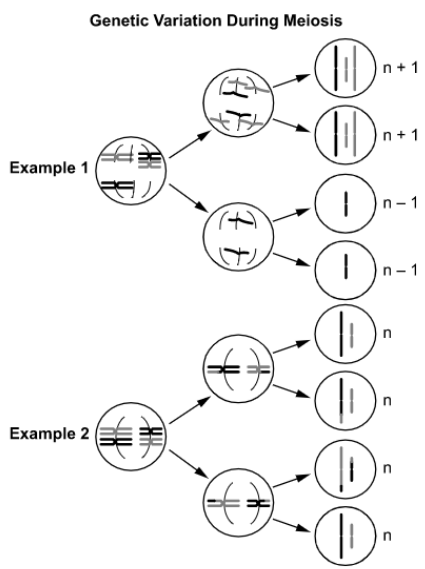
A student is investigating genetic variation in chromosomes. The diagram shows two ways that meiosis can result in genetic variation.
The student makes two claims.
Claim 1: Genetic variation in example 1 is a result of nondisjunction.
Claim 2: Genetic variation in example 2 is a result of crossing over.
Drag and drop the evidence to support each claim. All choices below will be used.
Daughter cells are all haploid but are not genetically identical.
Homologous chromosomes exchange genetic material during meiosis.
Homologous chromosomes separate incorrectly, producing daughter cells with unequal amounts of genetic material.
Daughter cells have too much or too little genetic material.
Evidence that supports Claim 1 (select 2)
Evidence that supports Claim 2 (select 2)
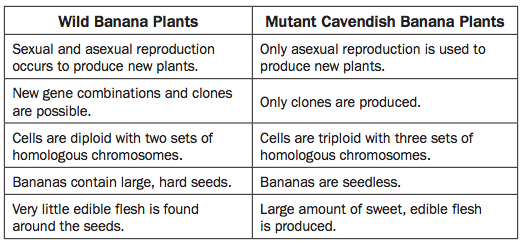
Today, the common type of banana we buy and eat is the Cavendish banana. They arose from chance mutants that were produced sexually from wild banana plants. The Cavendish banana is infertile and can only be produced by cloning from root shoots. Large commercial growers worldwide now plant only the mutant type. Some information about both types of bananas is recorded in the table.
*click table to enlarge
Why are scientists warning that exclusively growing this mutant type by asexual reproduction presents a serious disadvantage?
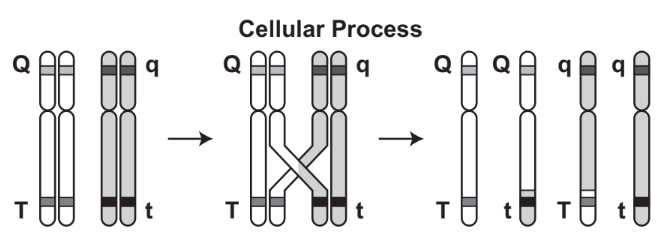
Examine the diagram.
Which process is best explained by the diagram?
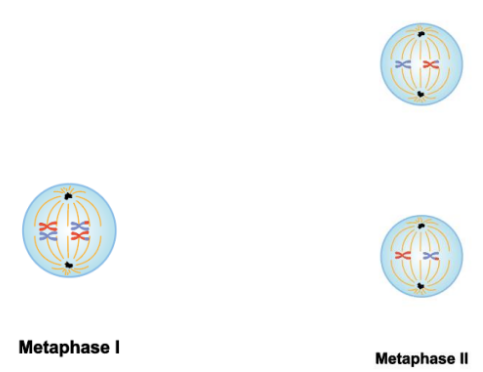
A student group is discussing a model of meiosis and determining what causes reproductive variability. The group decides that the following sets of steps in meiosis are the most important for creating reproductive variability.
The group constructs multiple explanations for their conclusion. Choose the best explanation that uses evidence from the model.
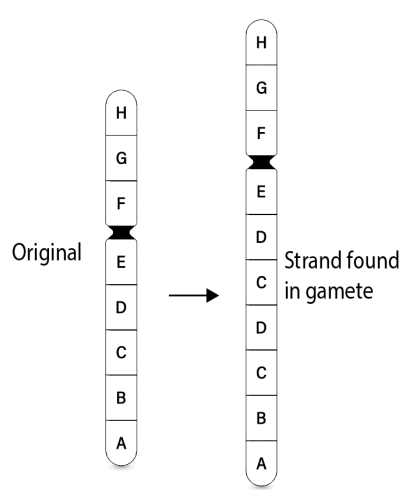
Scientists have been working on genetic sequencing of cattle and have noticed the following change in a gamete within one of the cows.
The original strand is what is found in almost every cow studied. However, the gamete’s chromosome is on the right.
Choose the best argument for this being an inheritable trait that will lead to genetic variation.
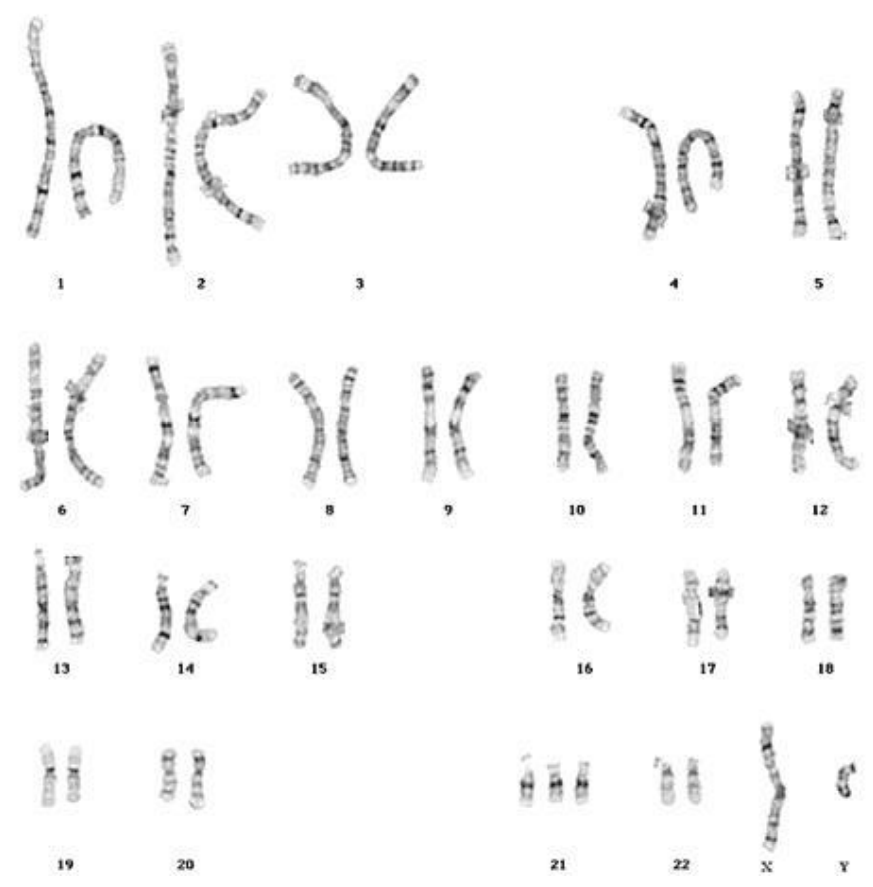
Use the karyotype below to answer the following questions.
*click image to enlarge
What is the sex of the person who provided this karyotype?
A scientist is examining a cell under a light microscope and notices it has no nucleus. What feature could the scientists look for to determine whether it is a eukaryotic cell undergoing mitosis or a prokaryotic cell?
Both the initiation and completion of DNA synthesis and mitosis are energy-dependent. In eukaryotic cells, which organelle is responsible for converting food into usable energy known as ATP?
Which of the diagrams in the figure shown represents meiosis?
Which of the diagrams in figure shown represents mitosis?
Which of the diagrams in the figure shown represents fertilization?
Which of the mutated chromosomes above could have resulted from a duplication in the original chromosome?
Growers on large banana plantations that supply food commercially have chosen to limit their plantings exclusively to Cavendish banana plants. What advantage is likely cited by the growers for continued planting of these asexually produced crops year after year?
There is a mutation on chromosome 21. What is the most likely cause of this mutation?