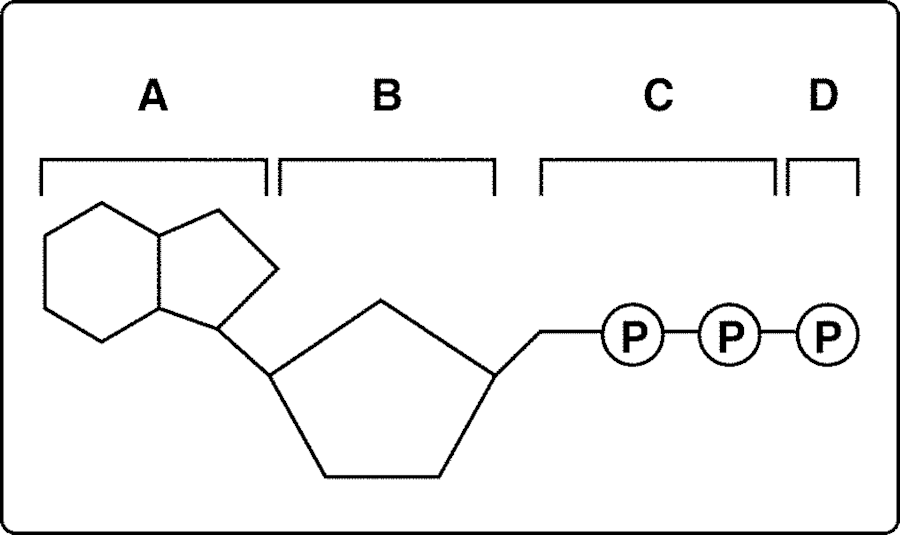
Structure of ATP
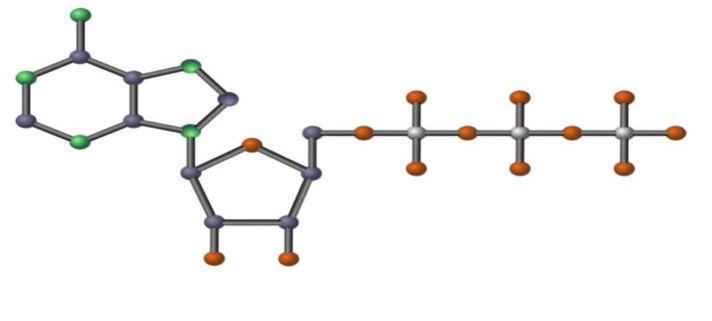
Mmuae Afoforo a Wobɛpaw:
Adenosine
Ribose
Phosphates
Structure of ATP
ATP - ADP Cycle
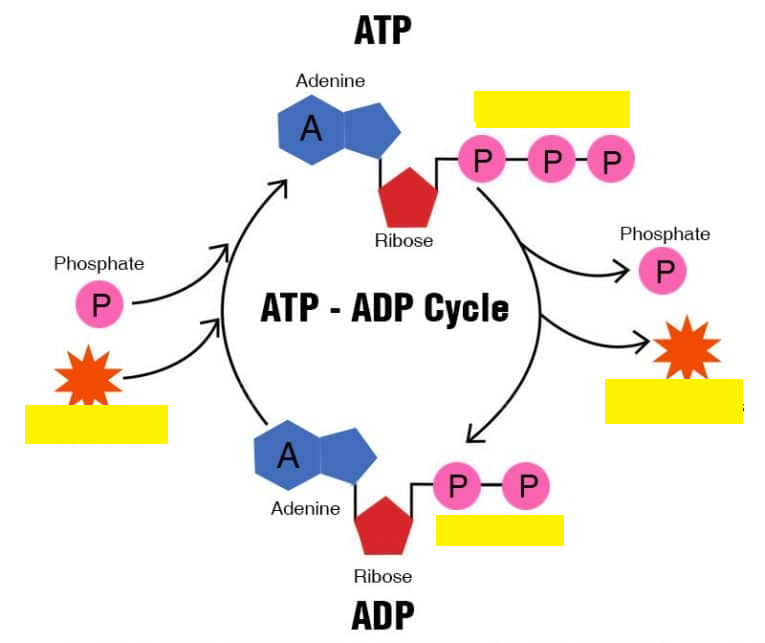
ATP - ADP Cycle
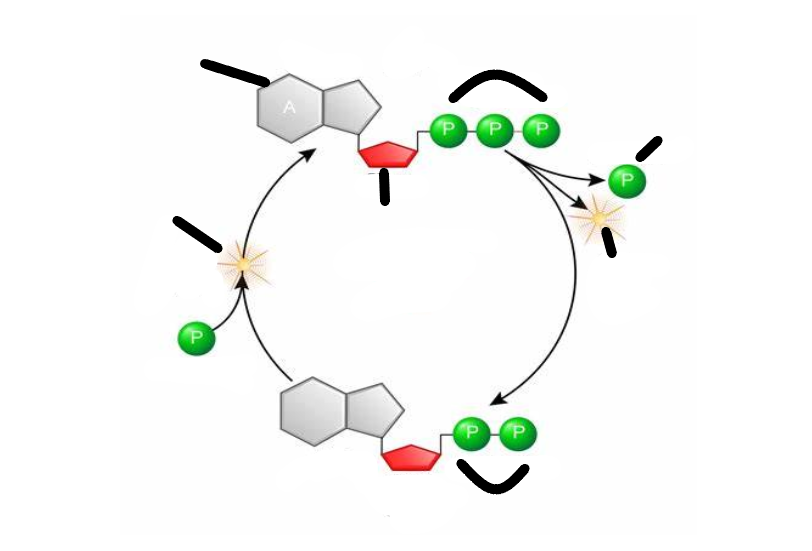
Energy is released from an ATP molecule for cellular processes when it
What are the parts of the ATP molecule shown in the picture?
Part A:
Part B:
Part C & D:
Sort the items below based on Reactants vs Products for Photosynthesis.
glucose
water
carbon dioxide
oxygen
Reactants
Products
Identify the reactants in this reaction: 6H2O + 6CO2 ----> C6H12O6 + 6O2
During photosynthesis, different gases move in and out of plant cells. Which phrase best represents the net flow of gases involved in photosynthesis?
Cellular respiration is the process our bodies use to break down and turn it into .
Pink circles represent locations. Purple boxes represent processes.
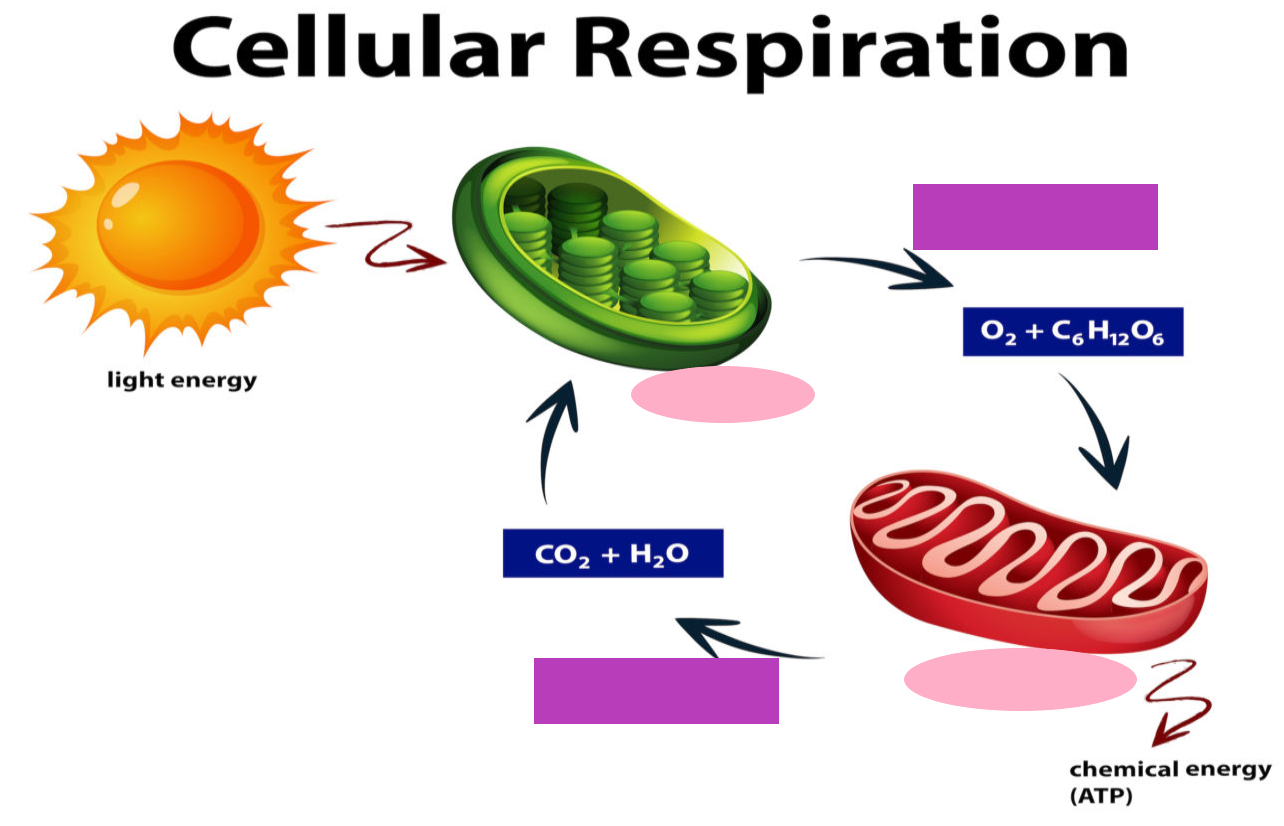
Use the Video Notes to match each step of the cellular respiration process with the correct location and product.
produces: H20 and about 26-34 ATP
occurs in inner mitochondrial membrane
produces: 2 pyruvate, 2 ATP, 2 NADH
produces: CO2, 2 ATP, 2 FADH2, 6 NADH
occurs in mitochondrial matrix
occurs in cytoplasm
Glycolysis - 1st step
Krebs Cycle - 2nd step
Electron Transport Chain - 3rd step
In the Electron Transport Chain, what is the final acceptor of the electrons that NADH and FADH2 carry?
Cellular Respiration generates about how much ATP in total?
At the beginning of cellular respiration occurs, where glucose is broken down into pyruvate and ATP. This step does not require any oxygen. Therefore, glycolysis is done in aerobic and anaerobic respiration. This means that glycolysis occurs in organisms. The step of glycolysis generates ATP molecules.
Compare characteristics for photosynthesis and cellular respiration
energy is required
energy is released
occurs in chloroplasts
occurs in mitochondria
light is essential
light is not required
glucose is a reactant
glucose is a product
Photosynthesis
Cellular Respiration
Photosynthesis | Cellular Respiration | |
|---|---|---|
Occurs in all cells on Earth | ||
Light & Dark Reactions (Calvin Cycle) | ||
Glycolysis, Citric Acid Cycle, and Electron Transport Chain | ||
Energy is stored (glucose created) | ||
Glucose is broken down to release energy |
Note: The zigzag lines represent the gas exchanges.
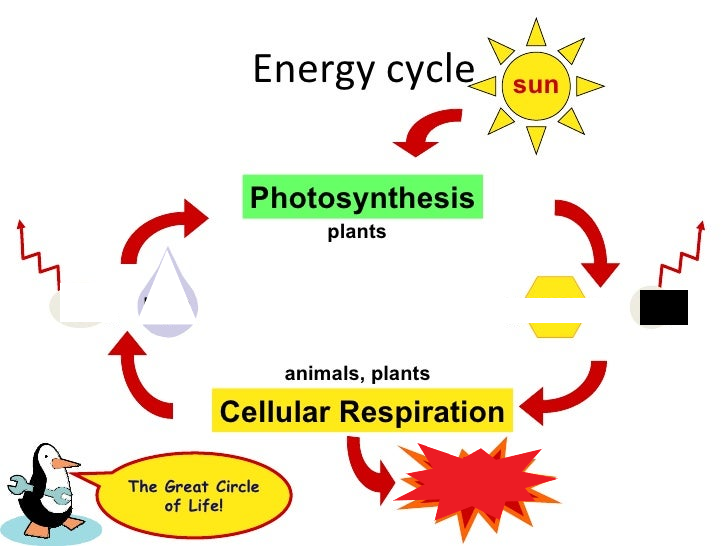
H2O
O2
CO2
occurs in thylakoids
occurs in stroma
needs sunlight
also known as "Calvin Cycle" & "Dark Reaction"
does not require sunlight
Light Dependent Reaction
Light Independent Reaction
products: glucose
reactants: ATP, Carbon Dioxide, & NADPH
products: oxygen, ATP, NADPH
reactants: light and water
Light Dependent Reaction
Light Independent Reaction
Cellular (Aerobic) Respiration generates about how much ATP?
Photosynthesis | Cellular Respiration | |
|---|---|---|
Releases energy in glucose | ||
occurs in animal cells | ||
releases oxygen | ||
releases carbon dioxide |
| Draggable item | arrow_right_alt | Corresponding Item |
|---|---|---|
Fermentation in yeast | arrow_right_alt | product = lactic acid |
Fermentation in muscles | arrow_right_alt | products = carbon dioxide and ethanol |
Indicate whether the following are a part of Aerobic Respiration, Anaerobic Respiration or Both
Aerobic | Anaerobic | Both | |
|---|---|---|---|
Releases more ATP | |||
requires oxygen | |||
Glycolysis occurs | |||
breaks down glucose |