Entire species, populations, and individual organisms are directly and indirectly dependent on their environment. Thus, if environmental conditions change, the changes will affect the animals and plants living there. There are generally two types of environmental change, short-term and long-term. Short-term environmental changes, like floods, don’t give populations time to adapt to change and force them to move or die. These changes typically occur over days to hundreds of years. Long-term environmental changes, such as climate change, occur slowly over time and affect organisms traits over generations. These changes occur over thousands to millions or even billions of years.
Which of the following are short-term environmental changes?
Which of the following are long-term environmental changes?
Organisms can adapt to the changes, but this process requires time and successful reproduction of many generations.
Organisms can migrate to a new area that meets its current needs.
Organisms can perish due to inability to survive or escape current conditions.
Bank swallows are birds that make their nests on the edges of rivers but can’t swim or breathe underwater. They feed on flying insects and in the spring, they lay four or five eggs. What change in these birds will likely be brought about by flooding in their habitat?
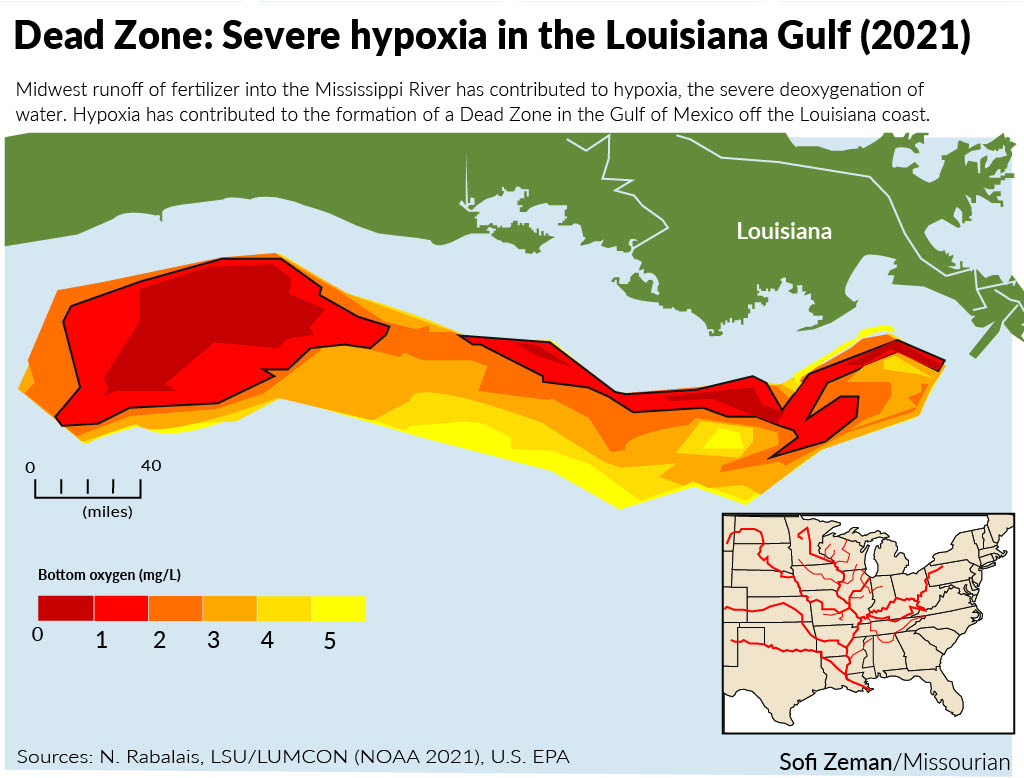
Every year, a region of the Gulf of Mexico experiences low oxygen levels due to heightened algae growth from excess runoff from the Mississippi River. Which of the following statements best describes the likely impacts of reduced oxygen on aquatic organisms?
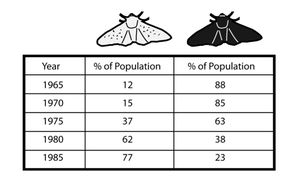
The peppered moth (Biston betularia) has two forms, a white-bodied and a dark-bodied form. The table provided shows the percentages of each type in a moth population over several years' time.
What environmental change would lead to these changes in the population of peppered moths?
Robins migrate south during the winter months to avoid harsh conditions and then return north during the summer. What environmental condition are the robins most likely responding to in order to determine when the seasons are changing?
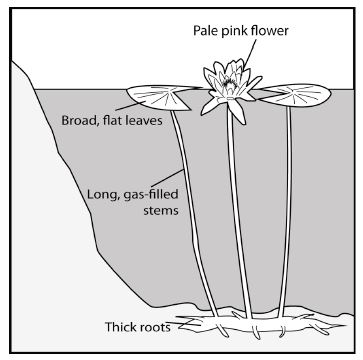
An illustration of a water lily is provided.
If annual rainfall increased and caused ponds in this habitat to become deeper, how might the traits of these water lilies change after many generations?
Koalas live almost entirely on leaves from eucalyptus trees and they are native exclusively to Australia. Destruction of the Koalas’ habitat will most likely lead to -
The Resurrection Fern (Selaginella lepidophylla) can shrivel up into a ball and remain that way for many years. When moisture is available, the dry leaves absorb the water and unroll. The plant will then turn green and grow. Under which environmental conditions did this ability develop?
The population of an organism will likely decrease if there is an increase in -
The Grey Mangrove tree (Avicennia marina) grows in the salty, coastal regions of South America, Africa, and Australia. Mangrove forests are found in areas where high tide brings in salt water and then the tide recedes, leaving the soil behind very salty. Which of the following traits would be found in populations of Mangroves living in this environment?