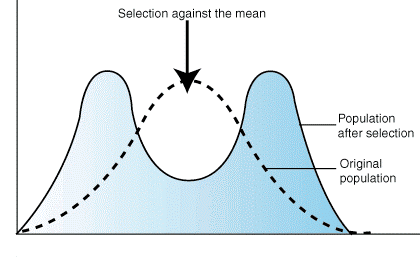
The graph shown above represents
The graph shown above represents
After watching the video on the different types/patterns of natural selection read each scenario and determine the pattern. Answer Directional, Disruptive, or Stabilizing.
After watching the video on the different types/patterns of natural selection read each scenario and determine the pattern. Answer Directional, Disruptive, or Stabilizing.
Starlings produce an average of five eggs in each clutch. If there are more than five, the parents cannot adequately feed the young. If there are fewer than five, predators may destroy the entire clutch. As a result, five eggs becomes the most common clutch size.
Seed cracker birds have either large beaks or small beaks. They do not have medium sized beaks because medium sized beaks do not allow for adequate cracking of seeds.
A population of Madagascar hissing cockroaches lives in a woodpile. The cockroaches are eaten by lizards. Because the lizards have small heads, the lizards are unable to eat the very largest adult cockroaches, and instead prey upon small and medium sized adults. Over time, only the large headed lizards survive.
The graph shown above represents
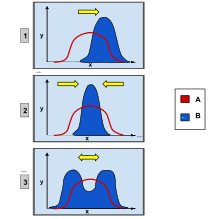
In the graphs above, the red line represents the original population and the change in the population overtime is shown in blue. Which graph best represents a population of light brown snails that became dark brown overtime?
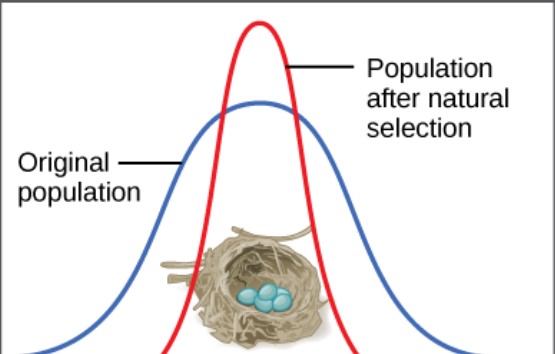
The type of selection found in this graph.
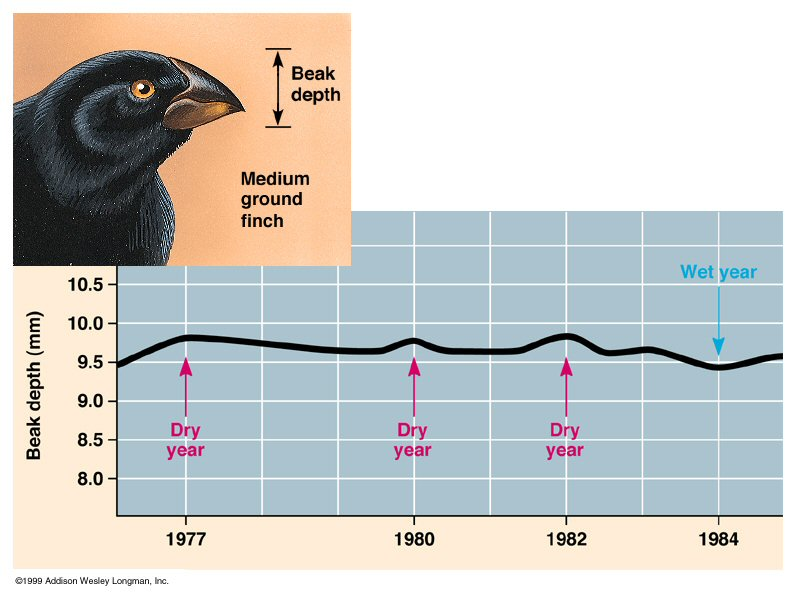
A biologist spent many years researching the rate of evolutionary change in the finch populations of a group of islands. It was determined that the average beak size (both length and mass) of finches in a certain population increased dramatically during an intense drought between 1981 and 1987.
During the drought, the number of plants producing thin-walled seeds decreased, limiting the availability of this easier-to-eat food source. As a result, finches with larger, stronger beaks had a survival advantage because they could more effectively crack open the tougher, thick-walled seeds that remained. Over time, this selective pressure led to an increase in the average beak size (both length and mass) within the population. This is an example of natural selection, where individuals with traits better suited to their environment are more likely to survive and reproduce.
Which of the following statements might best explain the increase in average beak size in the finch population during the drought?
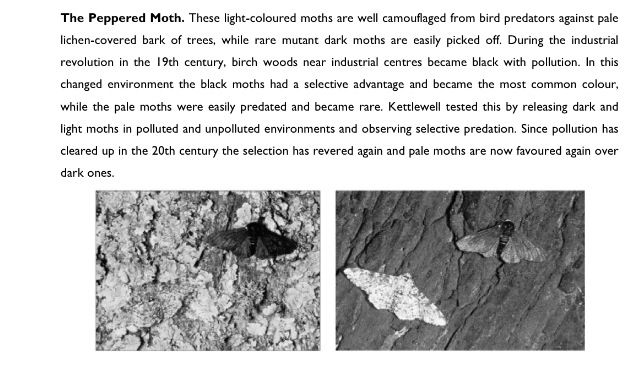
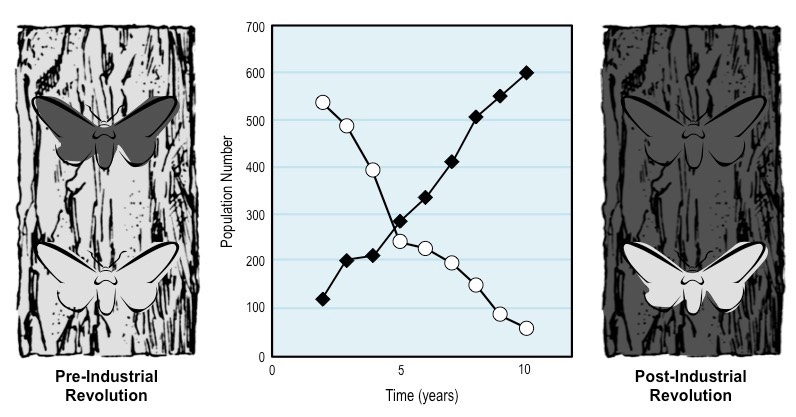
Explain what factor influenced the shift in population differences of the color of the peppered moth.
Based on the graph above, in which year were both population sizes of moths almost equal?
The biologist discovered that from 1988 to 1993, the average beak size declined to pre-1981levels. The reversal in beak size from 1988 to 1993 was most likely related to which of the following events?