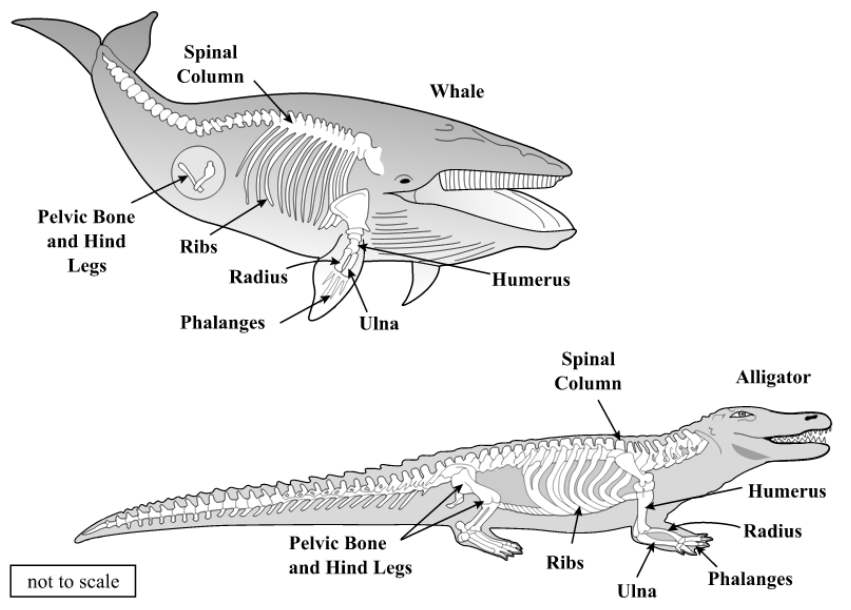
The scientific theory of evolution is supported by different types of evidence. The diagrams above show the skeletons of two different animal species. How does comparing the skeletons of these animals provide support for the scientific theory of evolution?
When Darwin first proposed his theory of evolution by natural selection, the field of genetics did not yet exist. In what way does genetic science now contribute to the study of evolution?
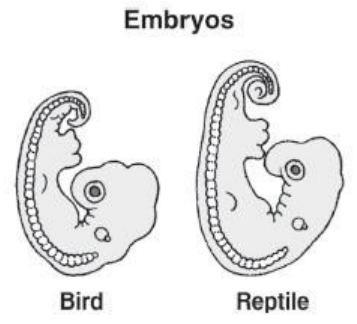
The diagram above illustrates an embryonic stage of two organisms. Using the diagram as evidence, which of the following conclusions is best supported?
A small population of chimpanzees lives in a habitat that undergoes no changes for a long period. How will genetic drift probably affect this population?
Theodosius Dobzhansky discovered that successful species tend to have a wide variety of genes, some of which do not seem useful in their current environment. How does this finding contribute to our understanding of genetics and evolutionary change in species over time?
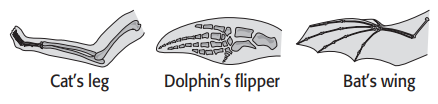
The pictures above show similarities among the forelimbs of three mammals. These similarities provide evidence in support of which of the following hypotheses?
How does drug resistance evolve in bacteria?
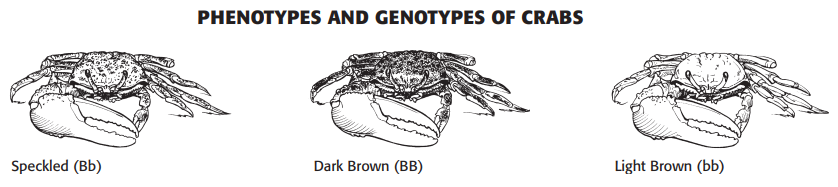
A population of crabs living on a sandy beach exhibits three colors: dark brown, light brown, and speckled, as shown above. The genotypes for these colors are BB for dark brown, bb for light brown, and Bb for speckled. The speckled color blends in extremely well with the color of the sand on the beach. The pattern appears to provide the speckled crabs with some protection from predatory birds.
Which of the following conclusions can be drawn from the information above?
Genetic drift states that the random effects of everyday life can cause differences in the survival and reproduction of individuals. What is one effect of genetic drift on evolution?
At first, a mutation may make no difference to an individual. Even if the mutation results in a nonfunctional protein, the body’s cell may have a functional copy of the gene as its second allele. However, this new nonfunctioning version could be passed on as a recessive allele. This kind of mutation is the probable origin of many recessive disorders. Only characteristics that are expressed can be targets of natural selection. Therefore, natural selection cannot operate against recessive alleles, even if they are unfavorable. What does this explain?
Ruby-throated hummingbirds are found throughout eastern North America. They are omnivores, feeding on nectar, pollen, tree sap, insects, and spiders. They get all the water they need from nectar. Most nests are in forested areas, citrus groves, marshes, and scrubland. The hummingbirds breed in the spring and the summer, and females raise one to three broods per breeding season. Most of the hummingbirds migrate to Mexico or Central America for the winter. Many fly nonstop for 20 hours to cross the Gulf of Mexico. However, increasing numbers of the hummingbirds have begun to winter north of the gulf. Researchers have documented that the hummingbirds’ winter range has expanded northward by about 300 kilometers in recent years.
Which explanation BEST predicts the ability of the hummingbirds to survive their first winter in this new environment?
The ribosome of the bacterium E. coli includes the ribosomal protein L4 (rpl4). The rpl4 gene carries the instructions for making rpl4 protein. Which of the following arguments provides support for the claim that E. coli has a common ancestor with all other organisms?
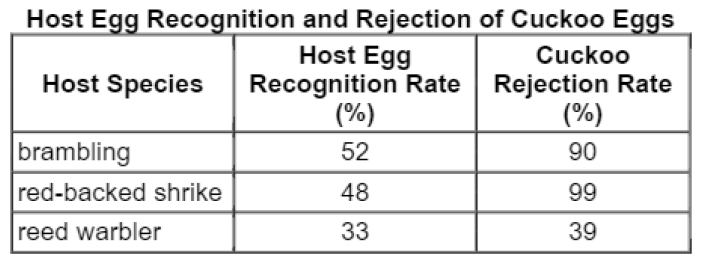
The common cuckoo is a parasite bird that lays its eggs in the nests of host birds. The cuckoo's ability to copy the marking patterns on host birds' eggs has evolved over time. However, the egg patterns of host bird species have also evolved, making them harder to copy and easier for parents to recognize. When host birds do not recognize an egg in their nest, they push it out of the nest. When host birds fail to reject a cuckoo egg, they care for the extra egg, and when it hatches, the baby cuckoo pushes the host bird's eggs out of the nest. The table shows the rate at which three host species recognize their own eggs and the rate at which it rejects cuckoo eggs.
Based on the data, the has coevolved with cuckoos over the longest period of time. This is because it has a developed ability to produce recognizable eggs.