Twa kɔ nsɛm atitiriw so
Log in
Sign up for FREE
arrow_back
Laabri

Unit 6 optional NOTES

star
star
star
star
star
Last updated about 2 hours ago
8 Nsɛmmisa

OPTION 3

Fill in the video sheets with the correct video.

IMPORTANT: If the videos do not work, you need to change browsers to Microsoft Edge. Not sure why but sometimes Google doesn't load them.

1
1
1
1
5
6
6
1

OPTION 1

Unit 7 Notes_MORE PICTURES

OPTION 2

Evolution PPT 2022 flattened.pptx

Asemmisa {{asɛmmisaAhyɛnsode}}
1.

The change in populations over time.

Asemmisa {{asɛmmisaAhyɛnsode}}
2.

Evolution occurs in......

Asemmisa {{asɛmmisaAhyɛnsode}}
3.

What is the term for a feature that allows an organism to survive better in its enviroment?

Asemmisa {{asɛmmisaAhyɛnsode}}
4.

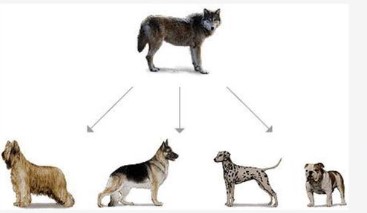
The process of directed breeding to produce offspring with desired traits

(AKA Selective Breeding).

Asemmisa {{asɛmmisaAhyɛnsode}}
5.

Match the evidence of evolution with its description.

Draggable itemarrow_right_altCorresponding Item

Comparative anatomy

arrow_right_alt

Study of nucleic acids (DNA) and proteins (amino acids) to show evolutionary relationships.

Fossil record

arrow_right_alt

The study of embryological development in vertebrates that supports the theory of common ancestry among vertebrates.

Biochemistry (Genetics)

arrow_right_alt

The remains or imprints of organisms from earlier geological periods preserved in sedimentary rock.

Embryology

arrow_right_alt

The study of the physical distribution of organisms around the world.

Biogeography

arrow_right_alt

Study of body structures to provide evidence of evolution.

Asemmisa {{asɛmmisaAhyɛnsode}}
6.

Match the correct structure to the definition.

Draggable itemarrow_right_altCorresponding Item

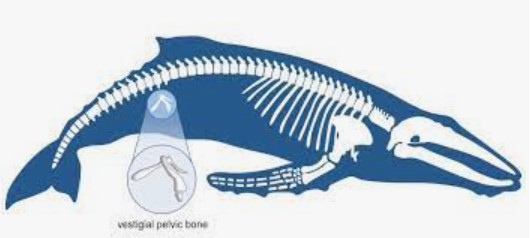
Vestigial structures

arrow_right_alt

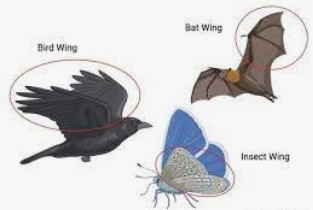
Structures that are similar in function, but not in structure. Organisms are not related.

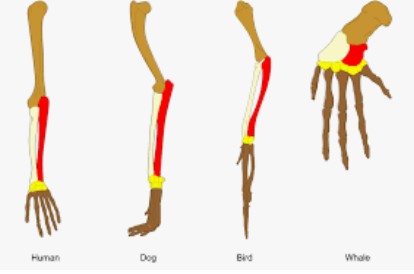
Homologous structures

arrow_right_alt

Structures that were once useful for ancestrial organism, but no longer needed for the modern organism.

Analogous structures

arrow_right_alt

Structures that do not have the same function, but have similar physical structure.

Asemmisa {{asɛmmisaAhyɛnsode}}
7.

Match type of evolution with the correct definition.

Draggable itemarrow_right_altCorresponding Item

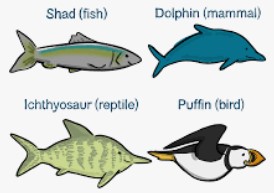
Divergent evolution

arrow_right_alt

With two unrelated organisms evolve in response to each other.

Coevolution

arrow_right_alt

Process by which unrelated organisms evolve similar structures, traits or features due to similar environments.

Convergent evolution

arrow_right_alt

When related species develop unique traits due to different environments or selective pressures and become increasingly different from each other over time.

Asemmisa {{asɛmmisaAhyɛnsode}}
8.

Match the correct mechanism of evolution to the definition.

Draggable itemarrow_right_altCorresponding Item

Gene Flow (Migration):

arrow_right_alt

This process occurs when individuals with advantageous traits are more likely to survive and reproduce, passing those traits to the next generation. Over time, these traits become more common in the population.

Natural Selection:

arrow_right_alt

Random changes in DNA can introduce new genetic variations. Some mutations can be beneficial, harmful, or neutral, contributing to the diversity of traits within a population.

Mutation:

arrow_right_alt

This mechanism involves random changes in allele frequencies within a population, particularly in small populations. It can lead to the loss of genetic variation and can cause traits to become more or less common purely by chance.

Sexual Selection:

arrow_right_alt

The transfer of genes between populations can introduce new alleles and increase genetic diversity. This can happen when individuals migrate from one population to another.

Genetic Drift:

arrow_right_alt

This is a form of natural selection where certain traits increase an individual's chances of attracting mates. This can lead to the development of pronounced traits that may not necessarily be advantageous for survival.