8.3 Interactions Lesson
star
star
star
star
star
Last updated 20 days ago
18 Nsɛmmisa
1
1
Ɛhia
1
Ɛhia
1
Ɛhia
1
Ɛhia
1
Ɛhia
1
Ɛhia
1
Ɛhia
1
Ɛhia
1
Ɛhia
1
Ɛhia
1
Ɛhia
1
Ɛhia
1
Ɛhia
1
Ɛhia
1
Ɛhia
1
Ɛhia
1
Symbiotic Relationships
| Draggable item | arrow_right_alt | Corresponding Item |
|---|---|---|
mutualism | arrow_right_alt | only the bacteria will benefit; human host is not harmed |
parasitism | arrow_right_alt | both the bacteria and the human host will benefit |
Commensalism | arrow_right_alt | only the bacteria benefits; the human host is harmed |
Match the example with the correct type of species interaction
| Draggable item | arrow_right_alt | Corresponding Item |
|---|---|---|
A flea feeds on a mouse’s blood and the mouse is harmed. The mouse acts as a host for the flea. | arrow_right_alt | mutualism |
A bird eats a worm. | arrow_right_alt | Commensalism |
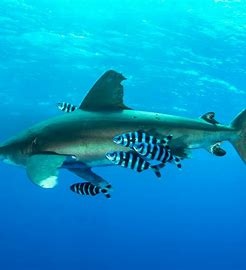
Remoras attach themselves to a shark’s body. They then travel with the shark and feed on the left-over scraps from the shark’s meals. | arrow_right_alt | Parasitism |
Wrasse fish feed on the parasites found on the black sea bass’s body. The black sea bass is glad to get rid of the parasites. | arrow_right_alt | Predation |
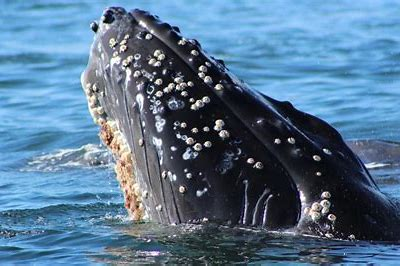
Whales and Barnacles
Barnacles adhering to the skin of a whale or shell of a mollusk: Barnacles are crustaceans whose adults are sedentary. The motile larvae find a suitable surface and then undergo a metamorphosis to the sedentary form. The barnacle has a habitat where nutrients are available. (In the case of lodging on the living organism, the barnacle is transported to new sources of food.) The presence of barnacle populations does not appear to hamper or enhance the survival of the animals carrying them.
What type of symbiotic relationship are the whale and barnacles?
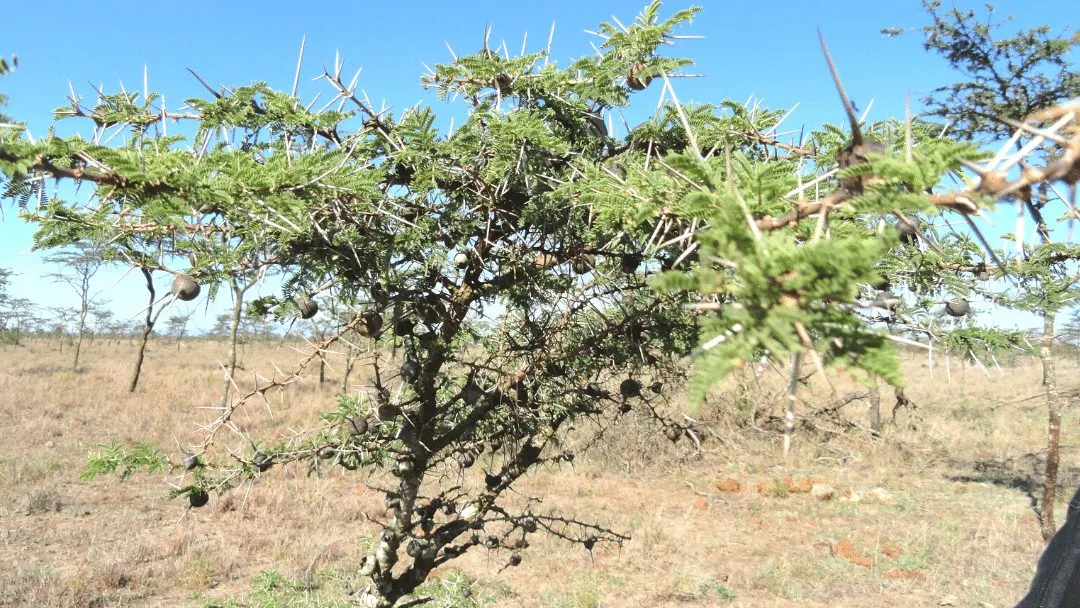
Acacia Tree and Ants
The Acacia Tree is partially protected by large thorns, but it gets extra protection from Acacia Ants. The plant does 3 things to lure in the ants. First, the large thorns are hollow and provide a place for the ants to live. Second, the plants have swollen glands, which produce a sugary solution the ants drink. The third thing the plant does is to produce Beltian bodies, small structures which the ants bite off and eat; the Beltian bodies are rich in protein and supplement the sugars provided. In return for the room and board the ants chase off herbivores, kill and eat herbivorous insects, and destroy any plants that try to compete with the acacia.
What type of symbiotic relationship is the Acacia tree and ants?
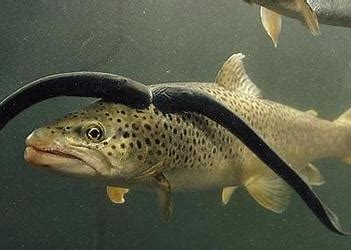
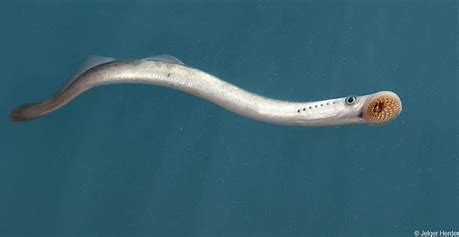
Sea Lamprey and Fish
The Sea Lamprey latches onto a fish and uses its teeth to hold on to the skin of a fish, leaving an open wound for the lamprey to feed on. It drops off, usually without killing the fish. Sea Lampreys are not specific on any species of fish; they will latch onto any living thing and try to feed.
What type of symbiotic relationship is the Sea Lamprey and fish?
Pilot fish and other fish
There are many examples of fish that helpfully clean the parasitic bacteria and fungi from the bodies (or even from inside the mouths) of other fish. The pilot fish, client fish, cleaner wrasse and seniorita fish all eat parasites from other species, gaining a nice meal. The other fish gain protection from the damage these parasites would cause if left unchecked. They not only halt aggressive behaviors to allow cleaner fish to do their work but they have also been known to go out of their way to visit them.
What type of symbiotic relationship is the Pilot fish with other fish?
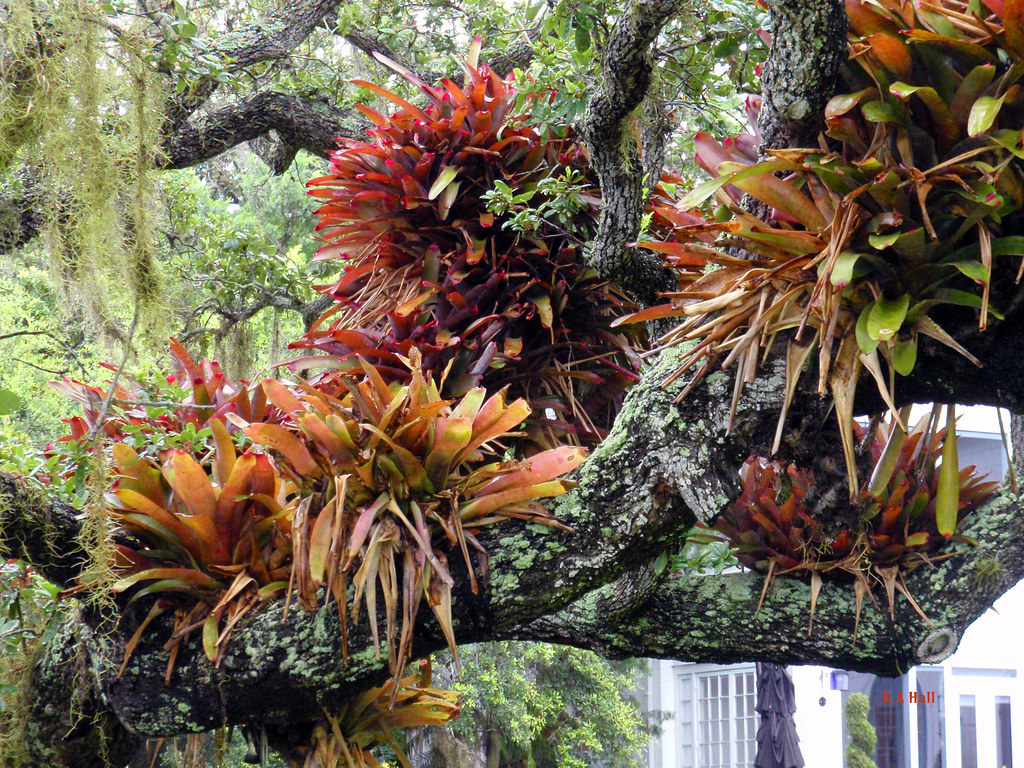
Bromeliads and Tree
Bromeliads avoid the hassle of creating a trunk to lift their leaves above the forest floor and closer to the sun. They simply grow on the branches of trees. The bromeliads don't take any nutrients from the trees.
What type of symbiotic relationship are the Bromeliads and Tree?
Tapeworms and Animals
Tapeworms are segmented flatworms that attach themselves to the insides of the intestines of animals such as cows, pigs, and humans. They get food by eating the host's partly digested food, depriving the host of nutrients.
What type of symbiotic relationship is the tapeworm and animals?
Honeyguide Bird and Ratel
A species of bird called the honeyguide prefers to eat beeswax and bee grubs. However, it isn't large enough to break open bee hives. To accomplish this, it finds a nearby mammal, sometimes a badger-like creature called a ratel. It then hops around to get attention and then leads its "assistant" to the hive. The assistant wants the honey, so it breaks open the hive to eat it, exposing the wax and grubs to the honeyguide.
What type of symbiotic relationship is the Honeyguide and the Ratel?
Wasps and Insects
Several species of wasp, immobilize another insect by stinging it. The female then carries the insect to a burrow, where she lays eggs within its body. After the female’s eggs hatch, the larvae consume the living tissues of the insect, this will eventually kill it.
What type of symbiotic relationship is the Wasp and Insects?
Remora and Whale
Remora sharks are endowed with an adhesive disk on the dorsal surface of their heads. They use this adhesive disk to “hitch a ride” on larger animals, usually whales, which tend to be sloppy eaters. When food floats away from the whale’s mouth, the remora can unhitch itself and collect the scraps of food floating by.
What type of symbiotic relationship is the Remora and Whale?
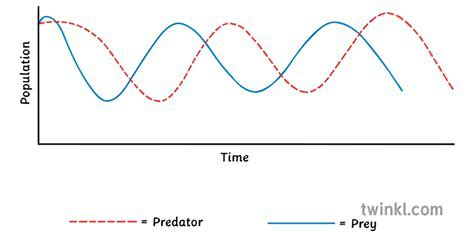
The numbers of predators and prey for certain ecosystems such as the Canadian Lynx (wild cat) and hare have been recorded over many years and found to change in a regular cycle. A similar example is shown in the graph below and shows characteristic repeating patterns called predator-prey cycles.
As shown in the graph above, the population for prey and predator never reaches zero. However, if one of the populations did reach zero, what would likely occur?
In a healthy, balanced ecosystem the numbers of predators and prey remain fairly constant. They can go up and down during each year but generally over the years, these increases and decreases remain fairly constant.
If numbers of either predators or prey increase or decrease it could be due to a change in the abiotic factors, like water or sunlight, or biotic factors, like a new predator or pathogen. This would result in a less healthy, balanced ecosystem.
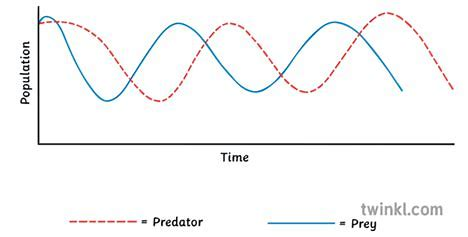
The numbers of predators and prey for certain ecosystems such as the Canadian Lynx (wild cat) and hare have been recorded over many years and found to change in a regular cycle. A similar example is shown in the graph above and shows characteristic repeating patterns called predator-prey cycles.
Which answer does not correctly describe the predator-prey relationship as shown in the graph?
In a healthy, balanced ecosystem the numbers of predators and prey remain fairly constant. They can go up and down during each year but generally over the years, these increases and decreases remain fairly constant.
If numbers of either predators or prey increase or decrease it could be due to a change in the abiotic factors, like water or sunlight, or biotic factors, like a new predator or pathogen. This would result in a less healthy, balanced ecosystem.
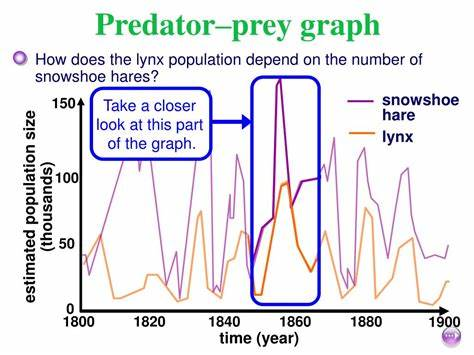
The numbers of predators and prey for certain ecosystems such as the Canadian Lynx (wild cat) and hare have been recorded over many years and found to change in a regular cycle. A similar example is shown in the graph above and shows characteristic repeating patterns called predator-prey cycles.
Which answer does not correctly describe the predator-prey relationship as shown in the graph?
In a healthy, balanced ecosystem the numbers of predators and prey remain fairly constant. They can go up and down during each year but generally over the years, these increases and decreases remain fairly constant.
If numbers of either predators or prey increase or decrease it could be due to a change in the abiotic factors, like water or sunlight, or biotic factors, like a new predator or pathogen. This would result in a less healthy, balanced ecosystem.
The numbers of predators and prey for certain ecosystems such as the Canadian Lynx (wild cat) and hare have been recorded over many years and found to change in a regular cycle. A similar example is shown in the graph above and shows characteristic repeating patterns called predator-prey cycles.
Which answer does not correctly describe the predator-prey relationship as shown in the graph?
Select all of the relationships that are only negative.