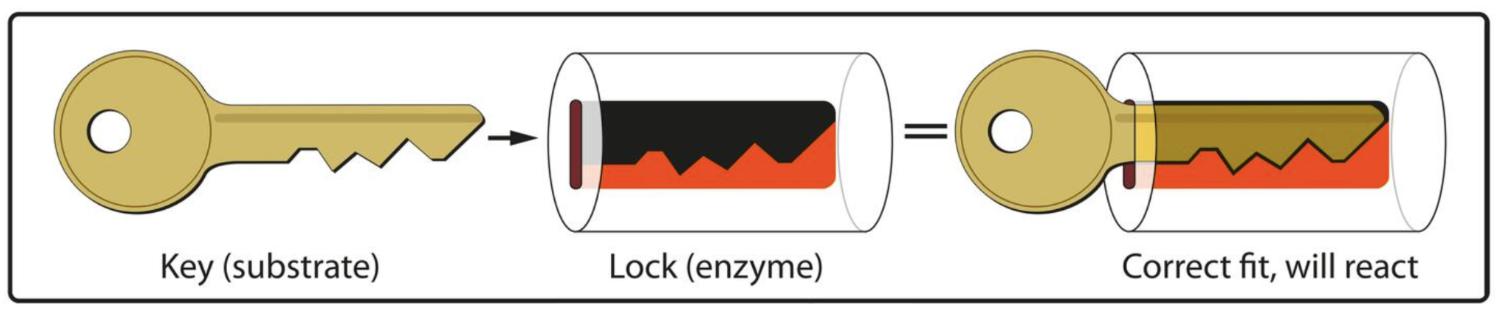
Enzymes are special found in our bodies that help (speed up)
chemical reactions. If an enzyme and substrate have a shape, a reaction will occur.
Enzymes are special found in our bodies that help (speed up)
chemical reactions. If an enzyme and substrate have a shape, a reaction will occur.
A catalyst is something that speeds up a process. Read the examples below and decided which example is NOT a catalyst
Label the diagram components below.
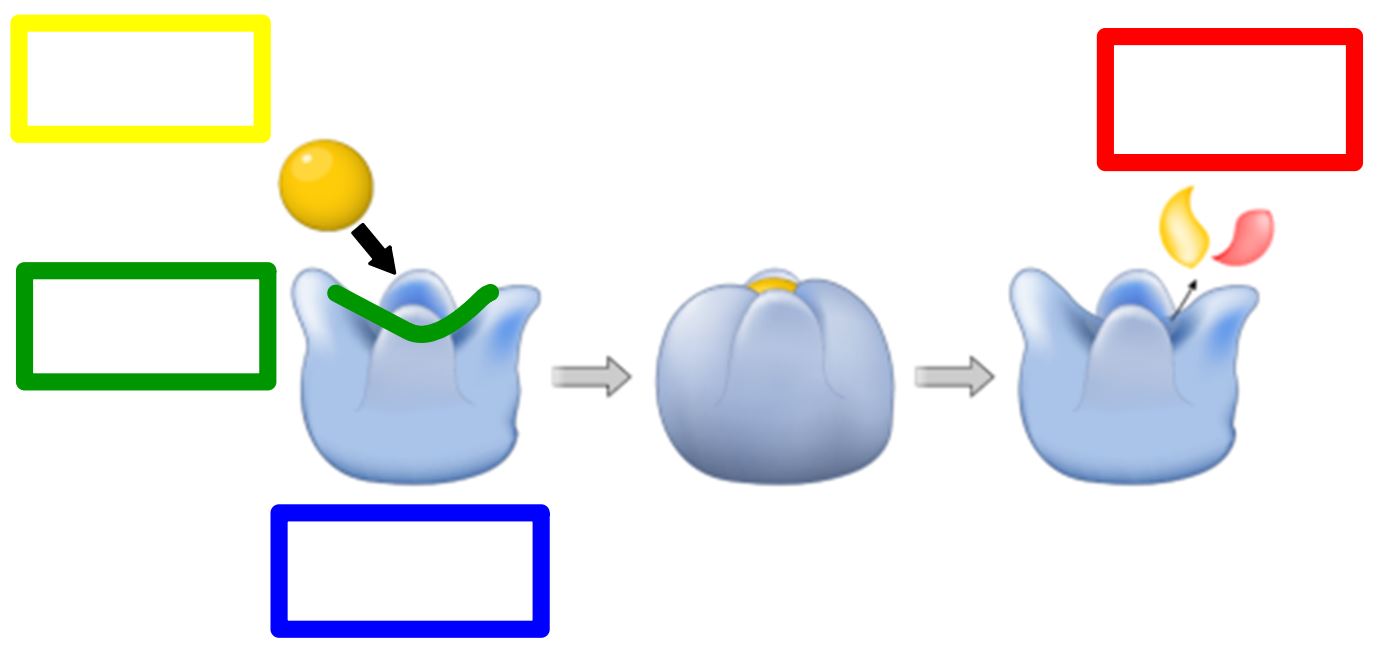
Enzyme
DNA
Active Site
Substrate
RNA
Product
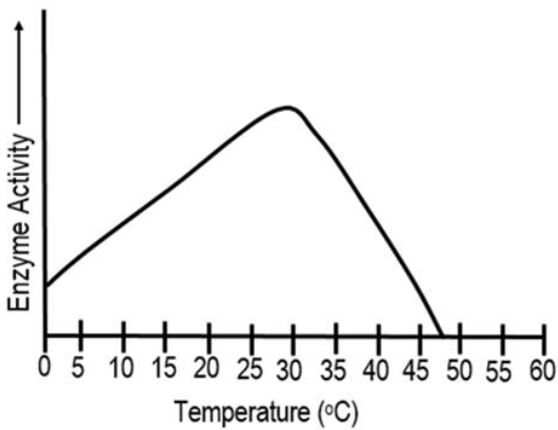
Identify the optimal temperature of the enzyme below.
Select your answer on the number line.
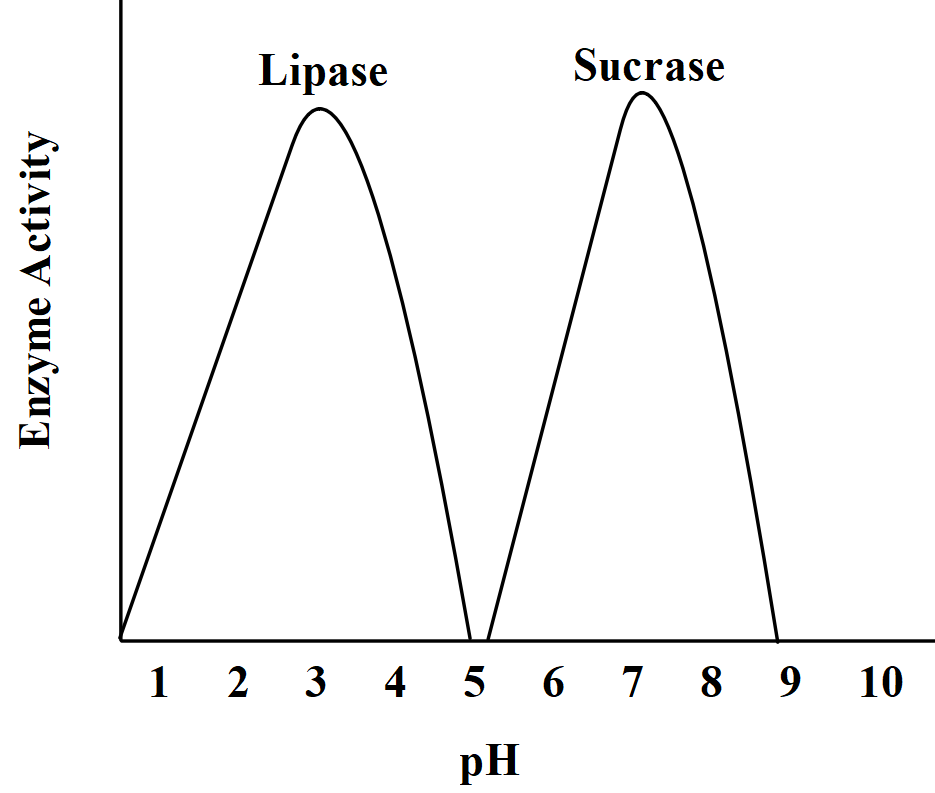
The enzyme Lipase works optimally at a pH of . The enzyme Sucrase works optimally at a pH of .
7
3
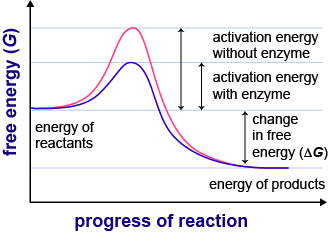
Enzymes catalyze (speed up) reactions by activation energy.
increasing
not changing
decreasing
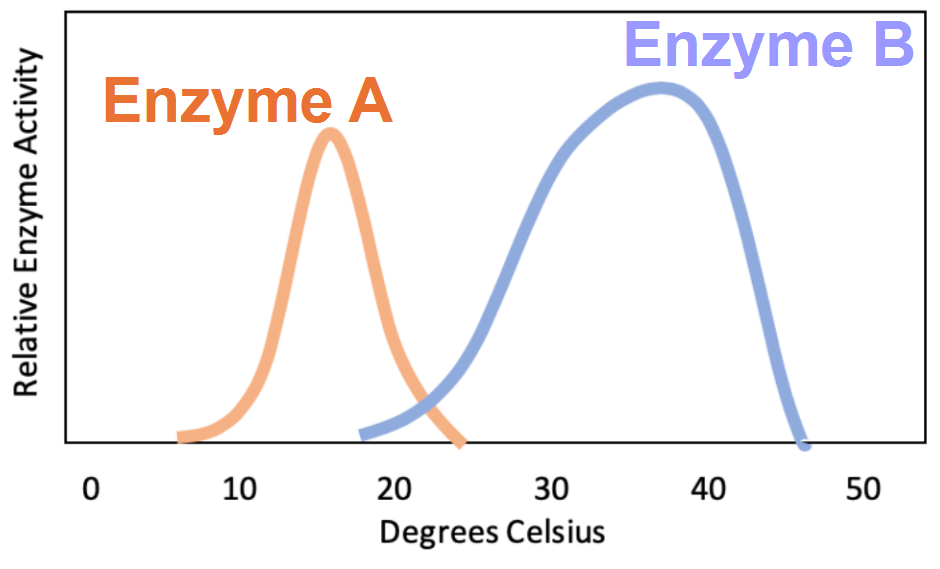
The graphs below show the reaction rate for two enzymes across a range of temperatures.
Based on these data, what do we know about the optimal function of the enzymes?
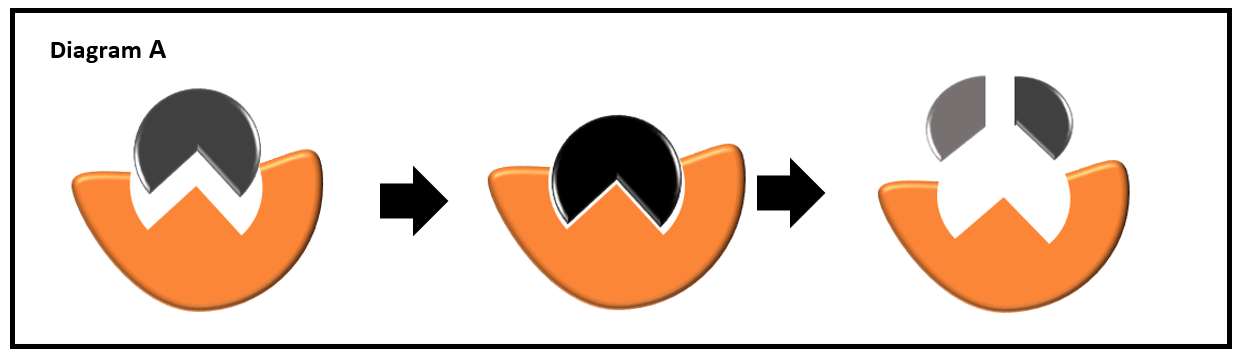
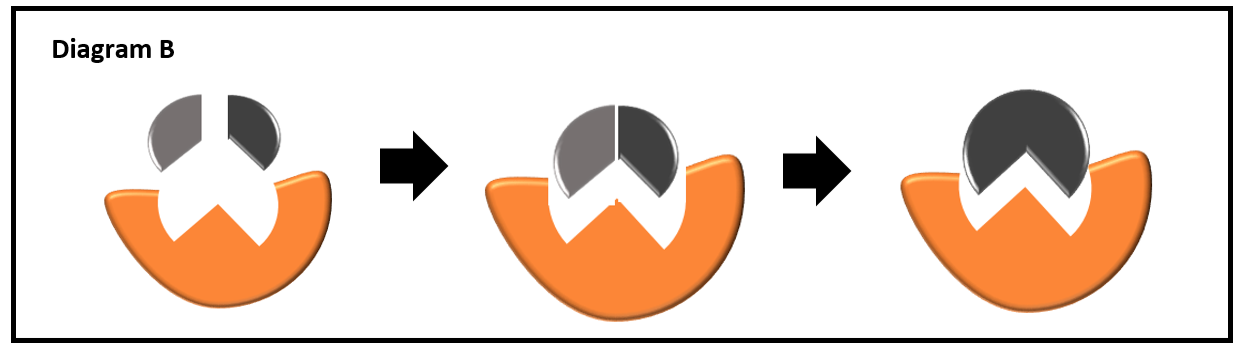
Match the scenarios to the picture that best represents what is happening.
During transcription, the enzyme RNA polymerase, builds mRNA
An enzyme that breaks things apart
During DNA replication, the enzyme helicase, breaks apart the hydrogen bonds that hold the nitrogen base pairs together. This creates 2 single strands of DNA ready that are ready for replication
An enzyme that puts things together
Protease is an enzyme found in our digestive system that helps break down proteins we eat like meat