Voting Rights and the Constitution How amendments expanded who can vote
1) What is an amendment?
An amendment is a change or addition to the U.S. Constitution.
Main idea: Amendments are used to fix problems, protect rights, or update rules.
2) The amendment process (simple refresher)
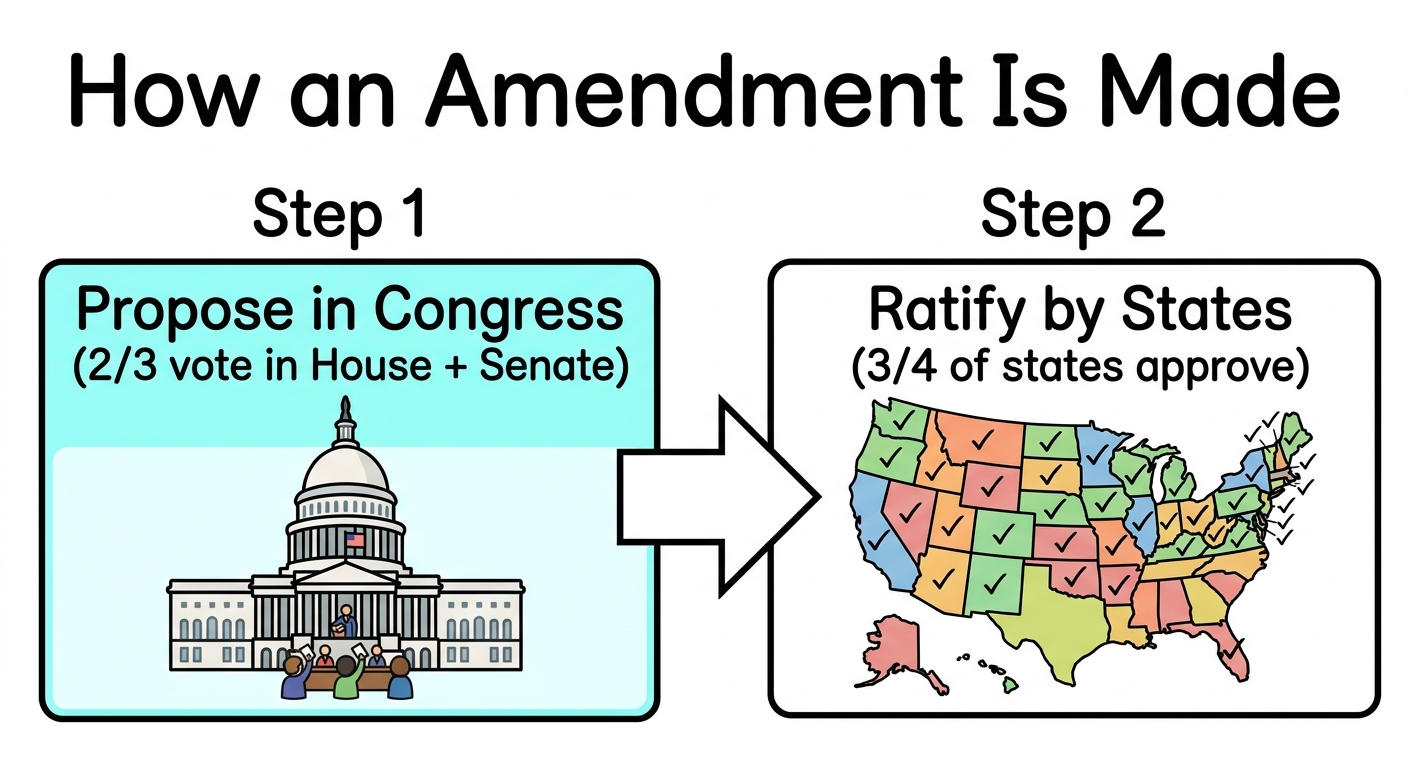
There are two big steps: propose and ratify.
Step 1 — Propose (suggest)
Most amendments are proposed by Congress.
Step 2 — Ratify (approve)
After an amendment is proposed, the states must agree.
Look at Diagram 1 to review these steps.
3) Word Box (text feature)
Propose: to suggest a new amendment
Ratify: to officially approve an amendment
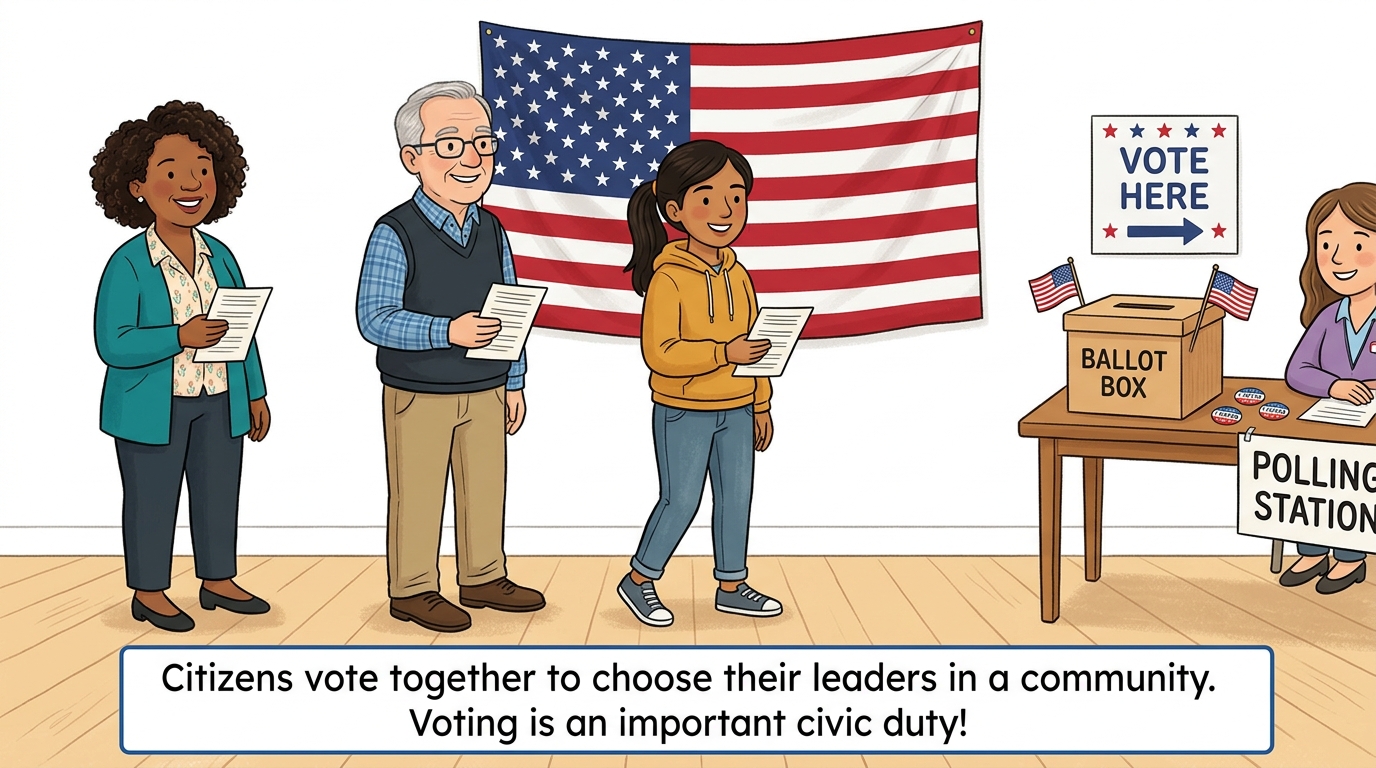
Representative democracy/republic: people choose leaders to make laws
Poll tax: a fee some people had to pay to vote
4) Timeline (text feature): Voting rights amendments
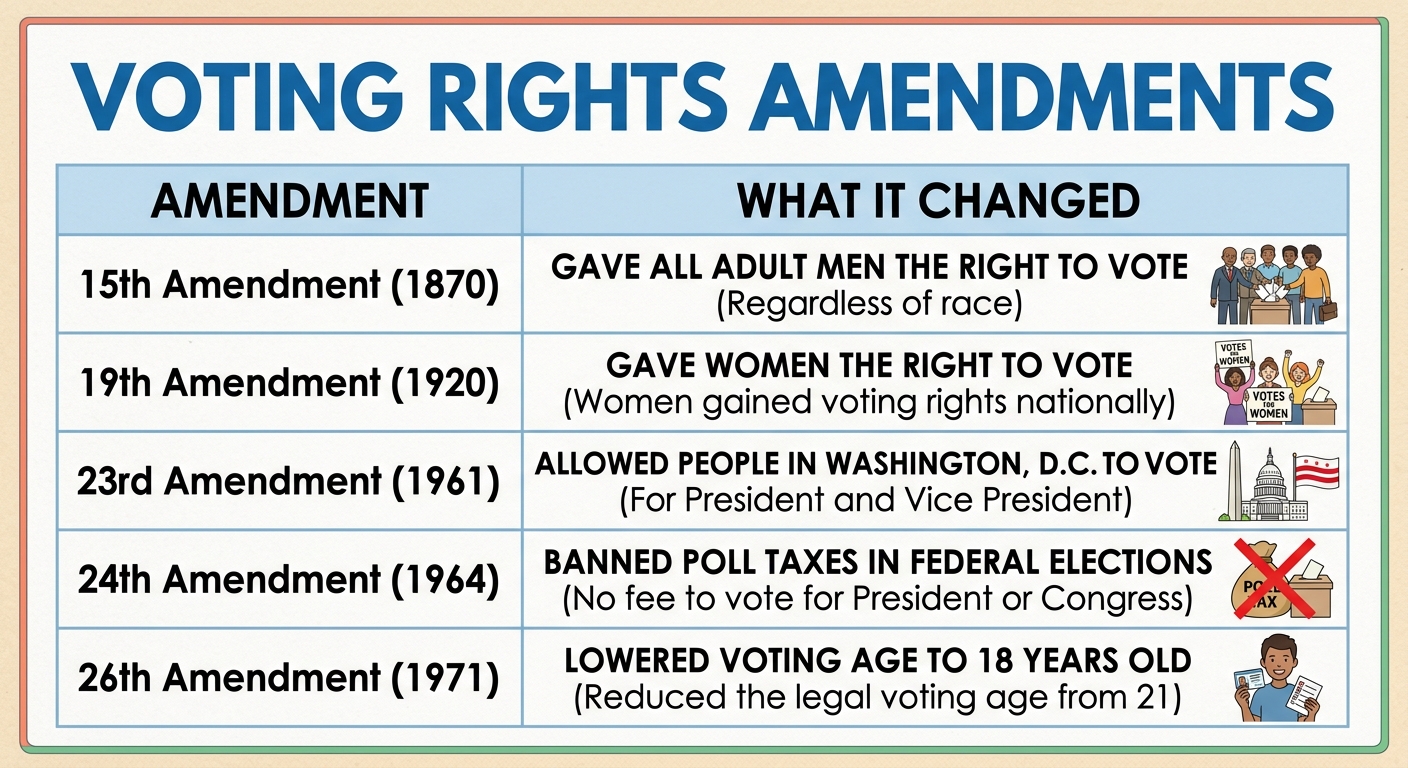
1870 — 15th Amendment
1920 — 19th Amendment
1961 — 23rd Amendment
1964 — 24th Amendment
1971 — 26th Amendment
5) How each amendment expanded voting rights
15th Amendment (1870)
Main idea: Voting rights cannot be denied because of race.
19th Amendment (1920)
Main idea: Voting rights cannot be denied because of sex (women’s voting rights).
23rd Amendment (1961)
Main idea: People living in Washington, D.C. can vote for President.
24th Amendment (1964)
Main idea: Poll taxes are not allowed in federal elections.
26th Amendment (1971)
Main idea: The voting age is 18.
Look at Chart 1 to compare these quickly.
6) Data Box (text feature): Quick facts
Amendments can protect rights.
Voting rights expanded over time.
Communities can push for change, but it takes agreement across the country.
7) Cause/Effect Chart (text feature)
Cause: Some groups were blocked from voting.
Effect: Amendments were added to protect voting rights for more people.
Caption (text feature)
A timeline helps readers see the order that voting rights expanded over time.
Big takeaway
The amendment process allows the Constitution to be improved. Several amendments expanded voting rights, helping the United States become more representative.