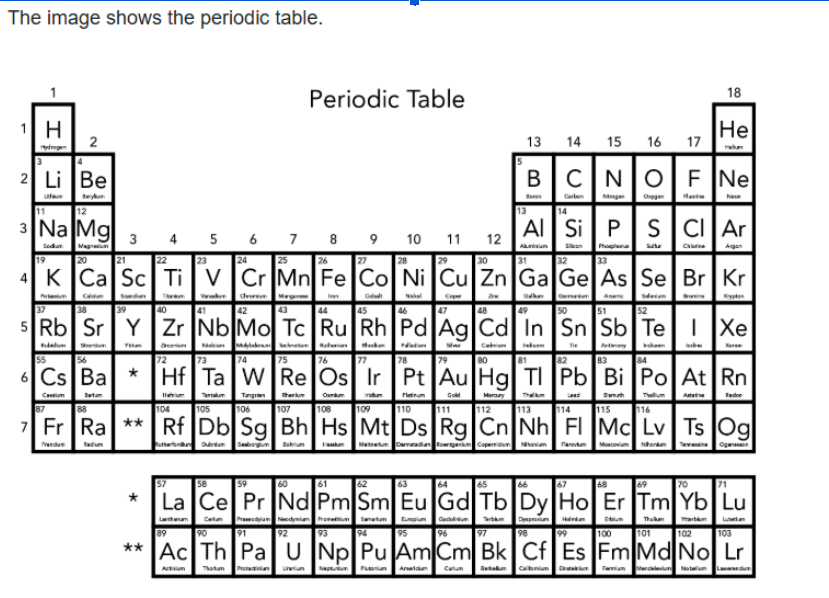
Use the periodic table to identify the elements and numbers of atoms in the compound CO2.
Use the periodic table to identify the elements and numbers of atoms in the compound CO2.
Use the periodic table to identify the elements and numbers of atoms in the compound CO2.
Which statement correctly compares elements and compounds in terms of their atoms?
A student combines baking soda and vinegar and notices that the new substance has a lot of bubbles and is a different color.
Based on evidence from the student’s observation, what type of change is occurring?
A student has 100 ml of hot water in a beaker and 100 ml of cold water in another beaker. They put 20 g of salt in each beaker and wait for one minute.
An element and a compound are shown below.
Helium (He) | Water (H2O) |
How do these examples show the difference between elements and compounds?
A student makes two changes to matter in the classroom. The student observes what happens to the matter and records the data in the table.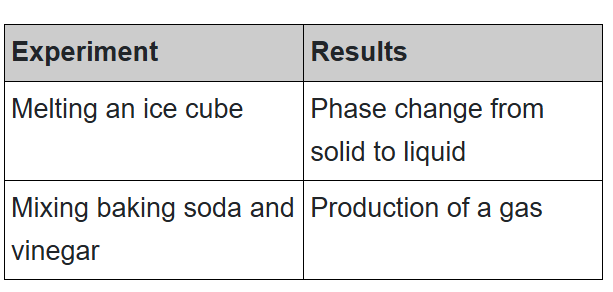 Are the experiments examples of physical changes, chemical changes, or both?
Saltwater is an aqueous solution because it is composed of salt and water. How would increasing the solute affect the solution?
How does the chemical formula CO2 compare to the chemical formula H2O in terms of composition?