Twa kɔ nsɛm atitiriw so
Log in
Sign up for FREE
arrow_back
Laabri

Chapter 1 - The First Humans Assessment (Fall 2026)

star
star
star
star
star
Last updated about 1 hour ago
10 Nsɛmmisa

Check Your Knowledge! Complete the quiz questions below using your chapter 1 notes and your big Homo Saipan Saipan brain!

Part 1
Ɛhia
2
6-8.REP.4
6.1.1
Ɛhia
3
6-8.CST.1
6-8.HI.4
+2
Ɛhia
1
6-8.CST.2
6.1.2
3
6-8.CST.2
6.1.3
Ɛhia
1
6-8.REP.2
6-8.REP.4
6.1.1
Part 2
Ɛhia
1
6.1.1
6.1.2
3
6.1.1
6.1.2
Ɛhia
1
Part 3
2
6.1.1
6.1.2
6.1.3

Read about the following technological developments to answer the final question.

3
6.1.1
6.1.2
6.1.3
Asemmisa {{asɛmmisaAhyɛnsode}}
1.

Select two reasons why early humans made cave paintings.

Asemmisa {{asɛmmisaAhyɛnsode}}
2.

Select three ways of studying Pre-History.

Asemmisa {{asɛmmisaAhyɛnsode}}
3.

When was the Paleolithic Era?

Asemmisa {{asɛmmisaAhyɛnsode}}
4.

What effect did the Ice Age have on the planet?

Connect the cause on the left to the effect on the right. Bolded words are hints.

Draggable itemarrow_right_altCorresponding Item

The entire world grew colder with winters starting earlier and ending later.

arrow_right_alt

Humans and animals from Asia walked across the Bering Strait and a frozen Pacific Ocean to reach North America.

Sea levels fell across the world and oceans froze.

arrow_right_alt

Early humans were forced to migrate South away from growing glaciers into East Asia and South America.

Europe, Asia, and North America experienced deep freezes and glaciation.

arrow_right_alt

Homo Neanderthals evolved to resist the cold. Homo Sapiens began to compete against Homo Neanderthals for limited resources. Eventually Homo Neanderthals went extinct.

Asemmisa {{asɛmmisaAhyɛnsode}}
5.

Which of the following pictures is a Paleolithic object?

Asemmisa {{asɛmmisaAhyɛnsode}}
6.

Based on the map, in which climate zone did early human migration originate in East Africa (marked by the red circle)?

Asemmisa {{asɛmmisaAhyɛnsode}}
7.

As early humans migrated north across 30°N latitude into North America, Europe, and Asia, which climate zones (from the map key) did they encountered along their routes?

Asemmisa {{asɛmmisaAhyɛnsode}}
8.

True or False?

According to the map, early human migration routes were restricted to regions between the 30°N and 30°S latitude lines.

Asemmisa {{asɛmmisaAhyɛnsode}}
9.

Read the following and answer the question in your own words, in at least two sentences.

Provide evidence either from the reading, the map, your notes/classwork, or what you've learned in your answer.

Question: What do you think drove multiple groups of early humans to migrate to the Americas?
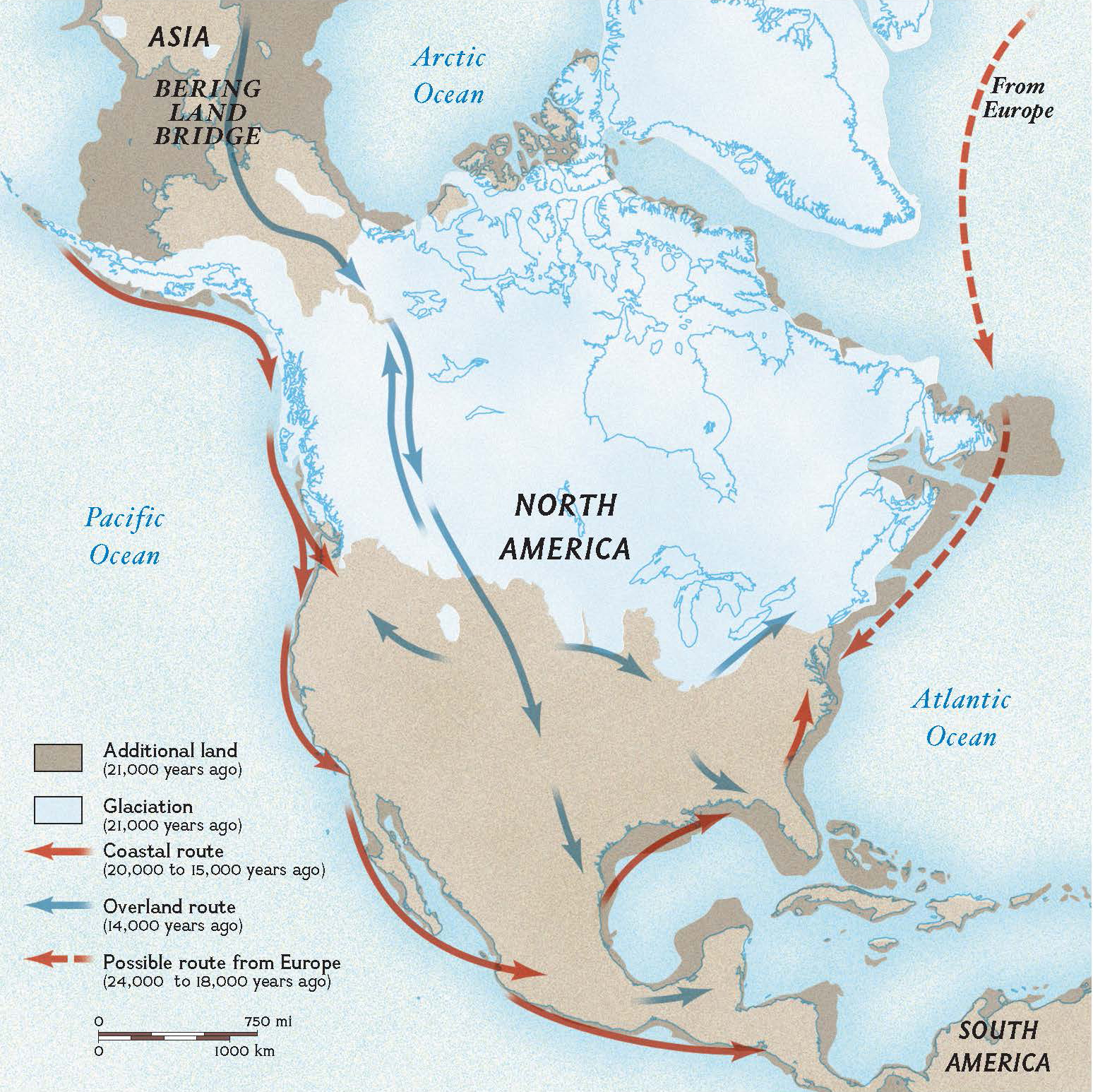
Bering Land Bridge

This map shows how a land bridge connected the continents of Asia and North America when the most recent ice age lowered sea levels. Scientists once theorized that the ancestors of today's Native Americans reached North America by walking across this land bridge and made their way southward by following passages in the ice as they searched for food. New evidence shows that some may have arrived by boat, following ancient coastlines.

From the book The Making of America, published by National Geographic Society © 2002, National Geographic Books
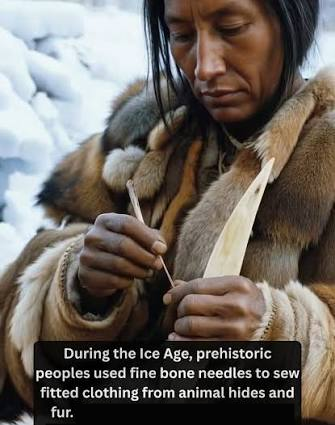
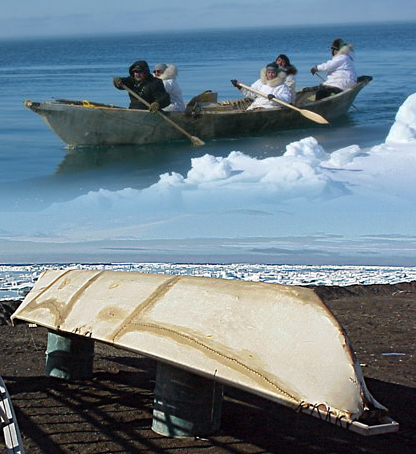
Tailored Animal-Skin Clothing:

Crafted using bone needles and sinew thread to create fitted furs and hides that trapped body heat.

Boats and Watercraft:

Constructed simple dugout canoes or hide-covered boats to navigate coastlines and access ocean resources.

Controlled Use of Fire:

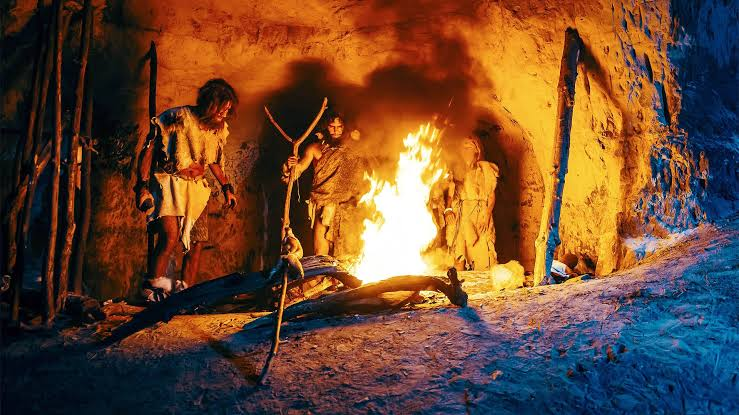
Provided warmth, light, a method to cook meats, and defense against predators.

Specialized Large-Game Hunting Tools:

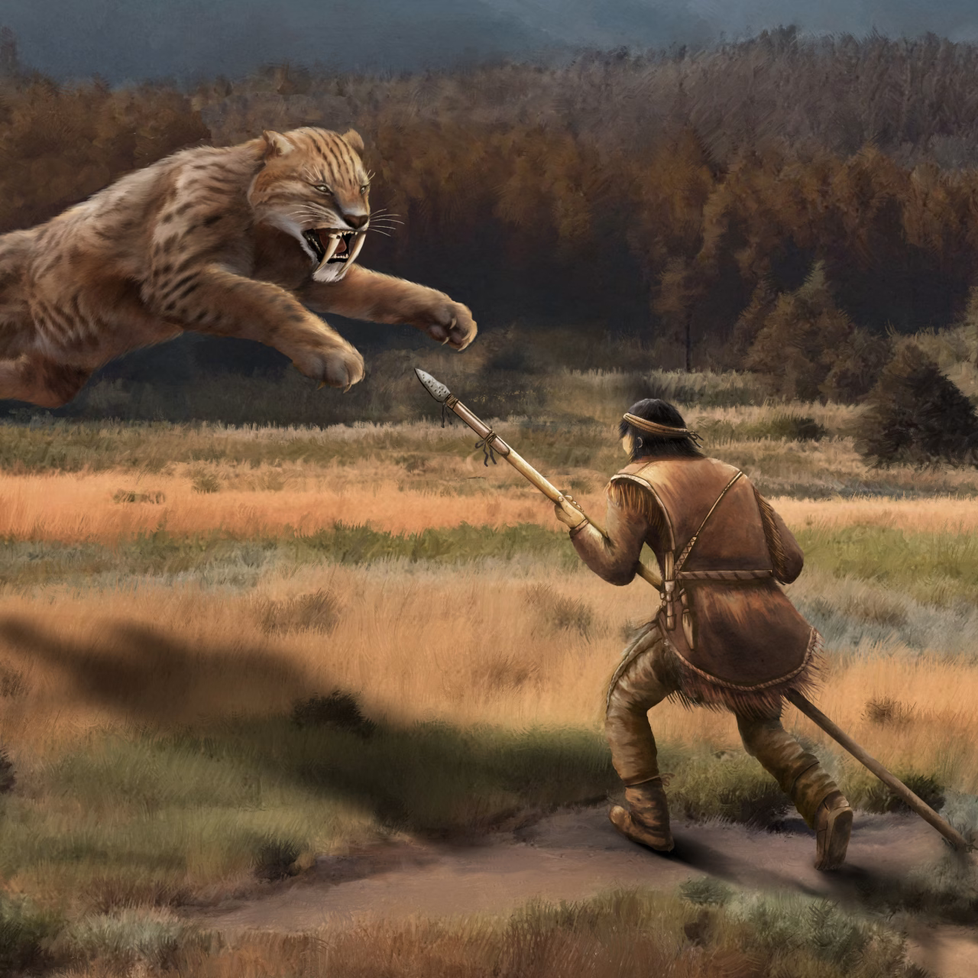
Developed composite tools like spear-throwers (atlatls), bone-tipped harpoons, simple sturdy pikes, and sharp stone blades to hunt megafauna (such as mammoths, bison, and reindeer) where plant foraging was scarce.

Asemmisa {{asɛmmisaAhyɛnsode}}
10.

Answer the question below using C.E.R. (Claim, Evidence, Reasoning). Write at least 3 complete sentences.

Identify a specific technological developments created by early hunter-gatherers during their migrations. Then, explain how the development helped humans adapt to and survive in colder climates.