1
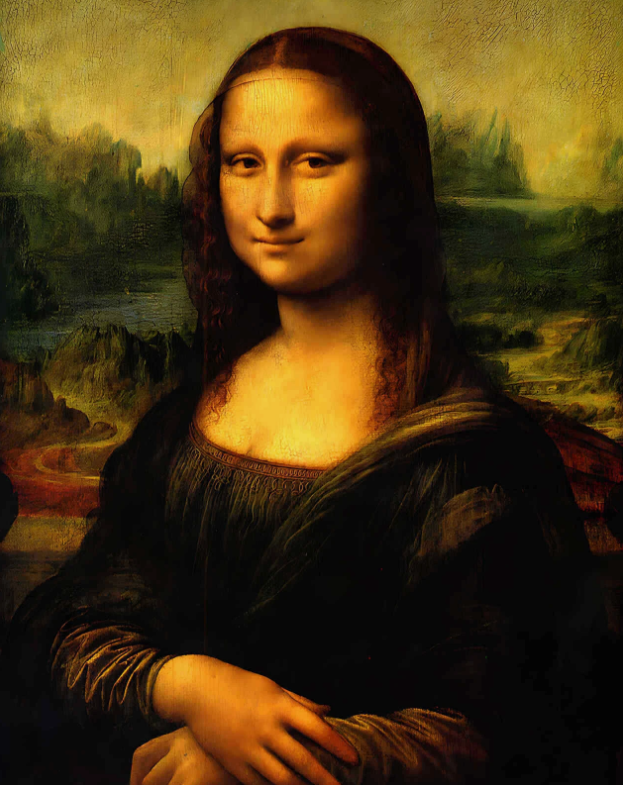
Look carefully at the artwork. Which feature would BEST help show that this artwork is associated with the Renaissance?
Look carefully at the artwork. Which feature would BEST help show that this artwork is associated with the Renaissance?
Look carefully at the artwork. Which feature would BEST help show that this artwork is associated with the Renaissance?
Renaissance thinkers were influenced by ideas from which earlier civilizations?
Source 2 — Niccolò Machiavelli, The Prince
“It is much safer for a ruler to be feared than loved if he cannot be both. A ruler must be willing to make difficult choices to protect his state and keep control.”
Adapted from The Prince, 1513
What is Machiavelli mainly discussing in this passage?
According to Machiavelli, what is one thing a successful ruler should be willing to do?
Source 3 — The Printing Revolution
The first modern printing press was invented in Europe in the 1450s by Johannes Gutenberg. It used movable metal type to make books more quickly.
Before the printing press, books were copied by hand. They were expensive, and there were not many of them. The printing press made books cheaper and allowed more people to read.
Printed books also helped new ideas spread across Europe. People could share ideas about science, religion, politics, and art more quickly than before. The Catholic Church tried to stop some ideas by banning books, but many ideas continued to spread.
Adapted from The Printing Revolution in Renaissance Europe, World History Encyclopedia/Newsela.
What was one major effect of the printing press?
Explain one way the printing press helped new ideas spread.
Source 4 — Martin Luther’s 95 Theses
“Christians should be taught that the forgiveness of sins comes from God. People should not be made to believe that they can simply buy forgiveness.”
Adapted from Martin Luther’s 95 Theses, 1517
What Church practice was Luther criticizing?
What does this passage tell you about why Luther disagreed with the Catholic Church?
Source 5A — France
“I am the state. A king must have the authority to make decisions for his country. A strong ruler must be able to control the government and make important decisions.”
Adapted from ideas associated with Louis XIV of France.
Source 5B — England
“The king cannot simply make every decision by himself. Parliament has an important role in making laws. The ruler must follow the laws of the country.”
Adapted from ideas about the English limited monarchy.
Which type of government is described in Source 5A?
Source 6 — A Boy's Journey on a Slave Ship
Olaudah Equiano was born in West Africa around 1745. When he was eleven years old, he was kidnapped from his village and forced onto a slave ship bound for the Americas.
The moment Equiano was dragged aboard the ship, he was overcome with terror. He was surrounded by people whose language and customs were unfamiliar to him. He feared what would happen to him.
Conditions below deck were horrifying. Hundreds of captives were chained together in a space with barely any air to breathe. Disease spread quickly, and many people died from illness, malnutrition, or the brutality of their confinement.
Years later, after purchasing his freedom, Equiano wrote about what he had experienced.
“Such were the horrors of my views and fears at the moment.”
Adapted from The Interesting Narrative of the Life of Olaudah Equiano, 1789.
Why is Equiano’s account especially valuable to historians?
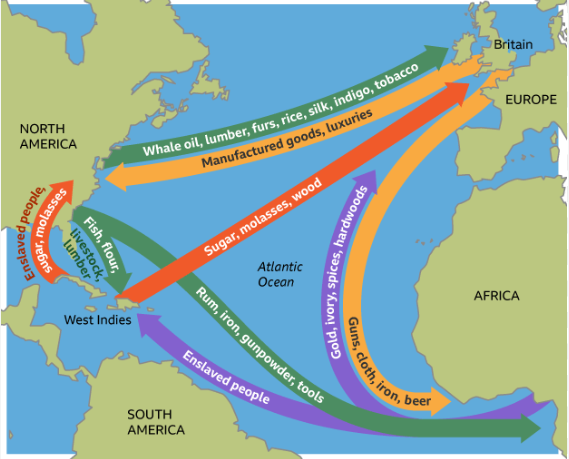
Which ocean did ships cross during the Triangular Trade
Use the map to identify one thing transported along each route.
Europe → West Africa:
Source 7 — The Columbian Exchange
After Europeans reached the Americas, plants, animals, people, and diseases moved between the Americas and Europe, Africa, and Asia. Europeans brought animals such as horses and cattle to the Americas. Foods such as corn, potatoes, and tomatoes traveled from the Americas to other parts of the world.
Which of the following was part of the Columbian Exchange?
European countries wanted to increase their wealth and power. Colonies could provide valuable raw materials and could also buy goods made by the European country that controlled them. Governments tried to control trade in order to increase their country’s wealth.
Why were colonies and trade important to European countries during this period? Use information from the source.
Machiavelli’s ideas are an example of Renaissance thinking because they:
Why did the Catholic Church try to ban some books?
Which development helped Luther’s ideas spread throughout Europe?
What was one major impact of the Protestant Reformation?
Which type of government is described in Source 5B?
Why did European rulers work to create stronger, more centralized states?
What can you infer about why small children faced the greatest danger below deck?
Some captives chose to risk death rather than remain captive. What does this reveal about how severely they were being treated?
Which technology helped sailors navigate long ocean voyages?
West Africa → Americas:
Americas → Europe: