Jobs vs. Professions: What's the Difference?
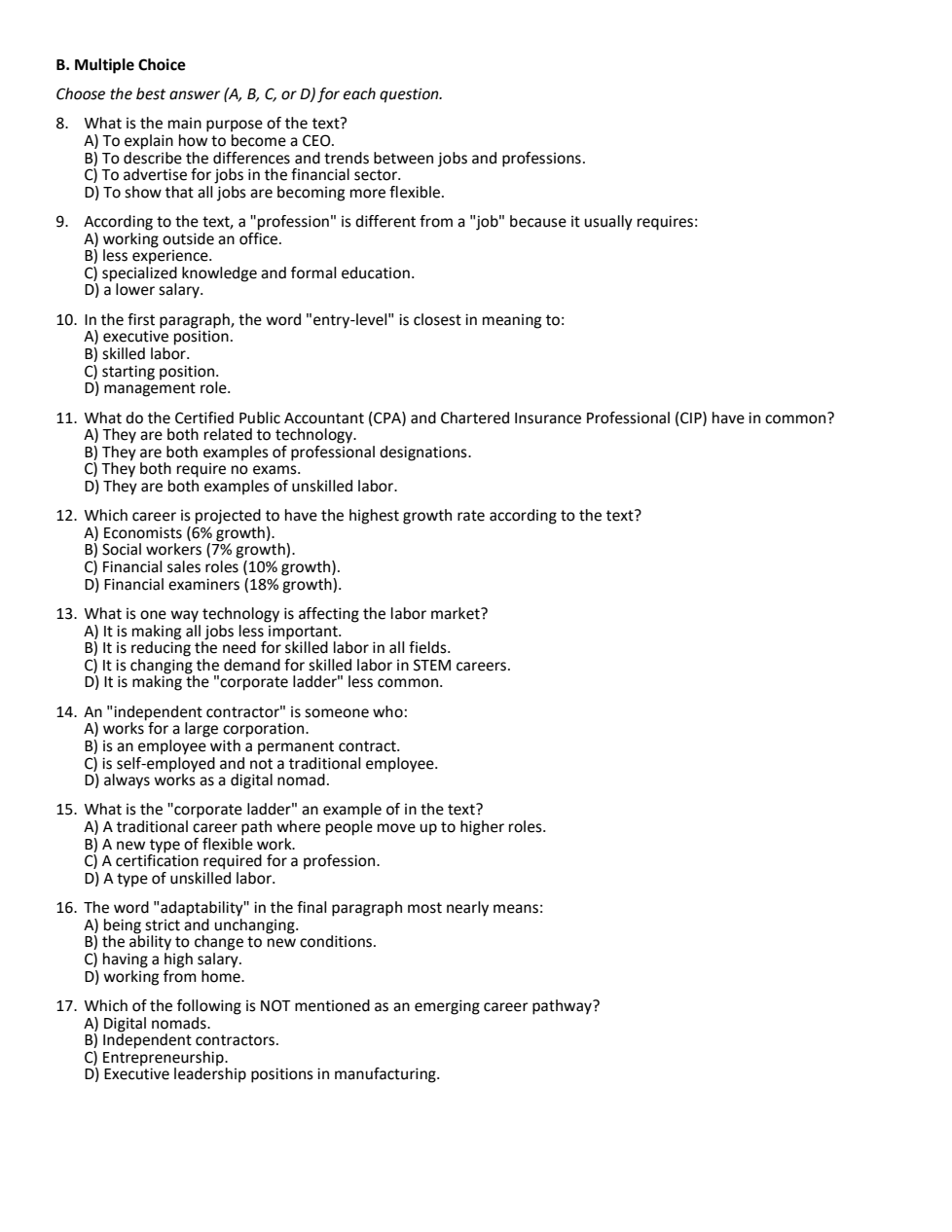
Jobs are specific positions where individuals perform tasks in exchange for pay. These can range from entry-level roles to executive leadership positions and may require varying levels of education or training. For example, in the corporate hierarchy, employees move from lower-level roles to management and executive positions as they advance up the “corporate ladder.” In financial markets, entry-level roles such as analysts may progress to associates and eventually to executive leadership positions.
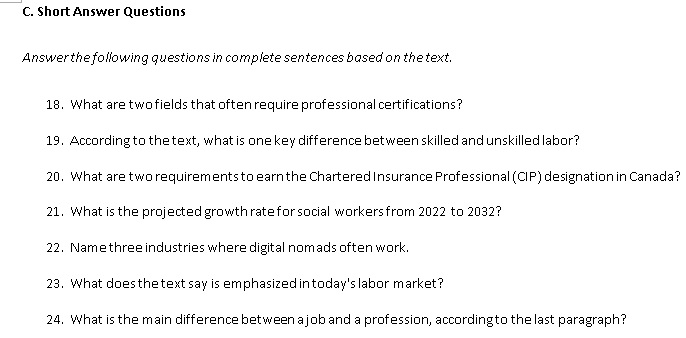
A profession, by contrast, usually involves specialized knowledge, formal education, and adherence to recognized standards or ethics. Fields like accounting, law, insurance, and finance often require certifications and professional designations. For example, advanced accounting roles are typically performed by individuals holding credentials such as Certified Public Accountant (CPA) or similar professional designations. Organizations like the CFA Institute require candidates to pass multiple levels of exams and meet experience requirements before earning a designation. Similarly, the Chartered Insurance Professional (CIP) designation in Canada requires coursework, exams, and industry experience.
One key difference between jobs and professions is the level of qualification and formal structure. Skilled labor involves specialized knowledge and training, whereas unskilled labor generally requires little formal education and often commands lower wages. Professions typically fall under skilled labor and may be governed by regulatory or professional bodies that set educational standards and codes of ethics.
Current Job and Career Trends

Based on recent projections and industry analysis:
· Financial and securities sales roles (including traders and brokers) are projected to grow about 10% from 2021 to 2031, faster than average, with strong median wages.
· Economists are projected to see about 6% growth from 2022 to 2032, while social workers are projected to grow about 7% over the same period.
· Financial examiners and fraud professionals may see particularly strong demand, with employment projected to increase 18% from 2020 to 2030 in roles related to compliance and regulatory oversight.
· Rapid advances in AI and technology are reshaping demand for skilled labor, especially in STEM-related careers.
· In executive technology roles, Chief Information Officers (CIOs) typically require advanced education and experience, with median annual compensation reaching into the hundreds of thousands of dollars as of 2025.
Emerging Career Pathways
Modern career paths are becoming more flexible. For example:
· Digital nomads work remotely across industries such as marketing, IT, design, and consulting, often combining freelance and contract work.
· Independent contractors operate as self-employed professionals rather than traditional employees, accepting both income flexibility and financial risk.
· Entrepreneurship allows individuals to build businesses rather than work traditional jobs, requiring risk tolerance and diverse skill sets.
In short, a job is the work you do for pay, while a profession is often a career built around specialized training, certification, and formal standards. Today’s labor market emphasizes adaptability, continuous skill development, and alignment with technological change.
A job is a position where people do tasks in exchange for money.
Professions do not require any special certifications or formal education.
The CFA Institute gives a designation after candidates pass just one exam.
Unskilled labor generally requires a lot of formal education.
The text says that employment for financial examiners is projected to increase by 18% from 2020 to 2030.
CIOs usually do not need a lot of education or experience for their jobs.
Digital nomads usually work in a traditional office every day.
Jobs vs. Professions: What's the Difference?
Jobs are specific positions where individuals perform tasks in exchange for pay. These can range from entry-level roles to executive leadership positions and may require varying levels of education or training. For example, in the corporate hierarchy, employees move from lower-level roles to management and executive positions as they advance up the “corporate ladder.” In financial markets, entry-level roles such as analysts may progress to associates and eventually to executive leadership positions.
A profession, by contrast, usually involves specialized knowledge, formal education, and adherence to recognized standards or ethics. Fields like accounting, law, insurance, and finance often require certifications and professional designations. For example, advanced accounting roles are typically performed by individuals holding credentials such as Certified Public Accountant (CPA) or similar professional designations. Organizations like the CFA Institute require candidates to pass multiple levels of exams and meet experience requirements before earning a designation. Similarly, the Chartered Insurance Professional (CIP) designation in Canada requires coursework, exams, and industry experience.
One key difference between jobs and professions is the level of qualification and formal structure. Skilled labor involves specialized knowledge and training, whereas unskilled labor generally requires little formal education and often commands lower wages. Professions typically fall under skilled labor and may be governed by regulatory or professional bodies that set educational standards and codes of ethics.
Current Job and Career Trends
Based on recent projections and industry analysis:
· Financial and securities sales roles (including traders and brokers) are projected to grow about 10% from 2021 to 2031, faster than average, with strong median wages.
· Economists are projected to see about 6% growth from 2022 to 2032, while social workers are projected to grow about 7% over the same period.
· Financial examiners and fraud professionals may see particularly strong demand, with employment projected to increase 18% from 2020 to 2030 in roles related to compliance and regulatory oversight.
· Rapid advances in AI and technology are reshaping demand for skilled labor, especially in STEM-related careers.
· In executive technology roles, Chief Information Officers (CIOs) typically require advanced education and experience, with median annual compensation reaching into the hundreds of thousands of dollars as of 2025.
Emerging Career Pathways
Modern career paths are becoming more flexible. For example:
· Digital nomads work remotely across industries such as marketing, IT, design, and consulting, often combining freelance and contract work.
· Independent contractors operate as self-employed professionals rather than traditional employees, accepting both income flexibility and financial risk.
· Entrepreneurship allows individuals to build businesses rather than work traditional jobs, requiring risk tolerance and diverse skill sets.
In short, a job is the work you do for pay, while a profession is often a career built around specialized training, certification, and formal standards. Today’s labor market emphasizes adaptability, continuous skill development, and alignment with technological change.