Algebra 2 5-6 Complete Lesson: The Fundamental Theorem of Algebra

Last updated almost 4 years ago
18 questions
Note from the author:
A complete formative lesson with embedded slideshow, mini lecture screencasts, checks for understanding, practice items, mixed review, and reflection. I create these assignments to supplement each lesson of Pearson's Common Core Edition Algebra 1, Algebra 2, and Geometry courses. See also mathquest.net and twitter.com/mathquestEDU.

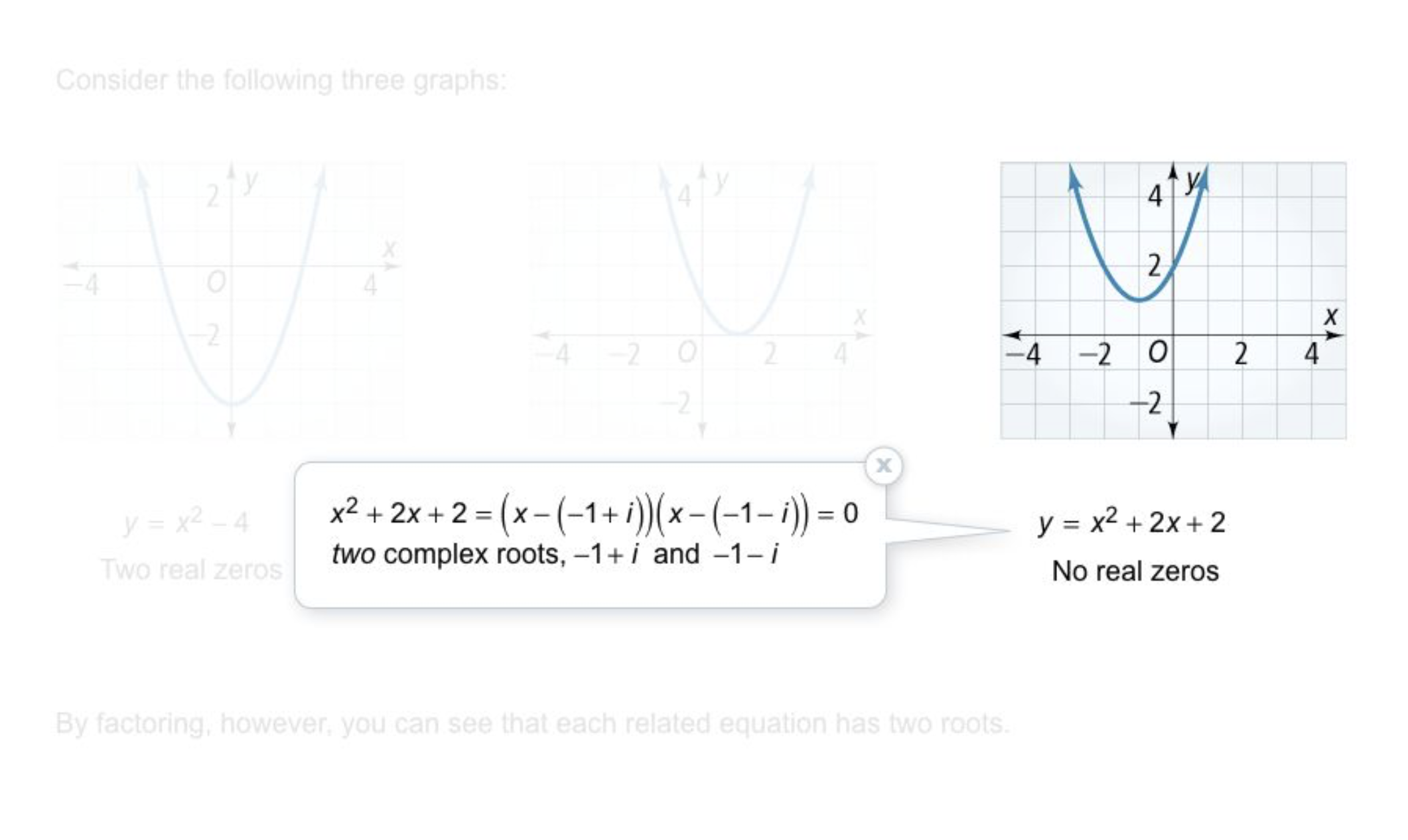
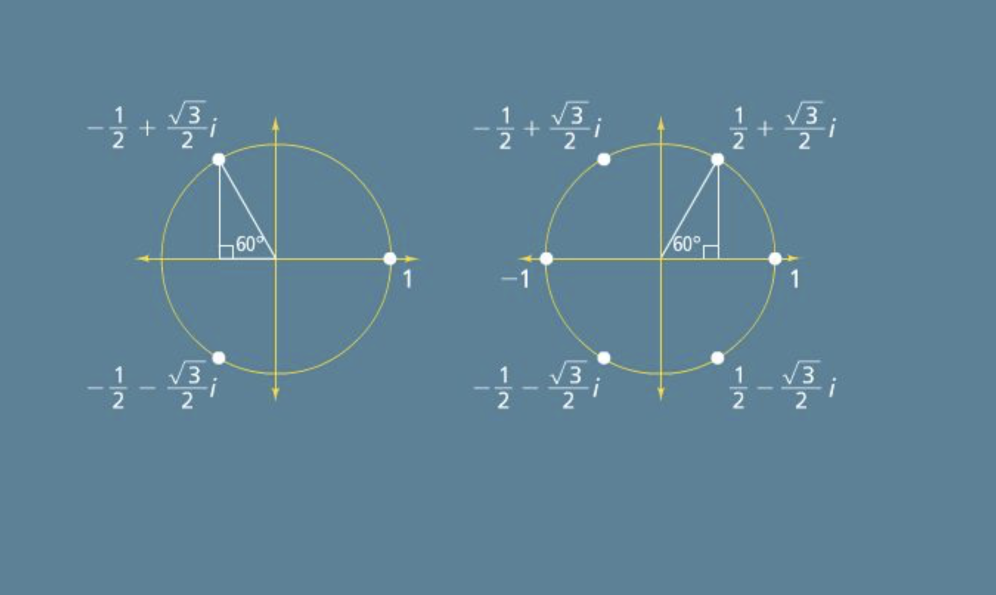
Solve It! The first graph shows the three complex number solutions of the equation:

The second graph shows the six solutions of the equation:
10

Solve It: How many complex number solutions does this equation have?

10

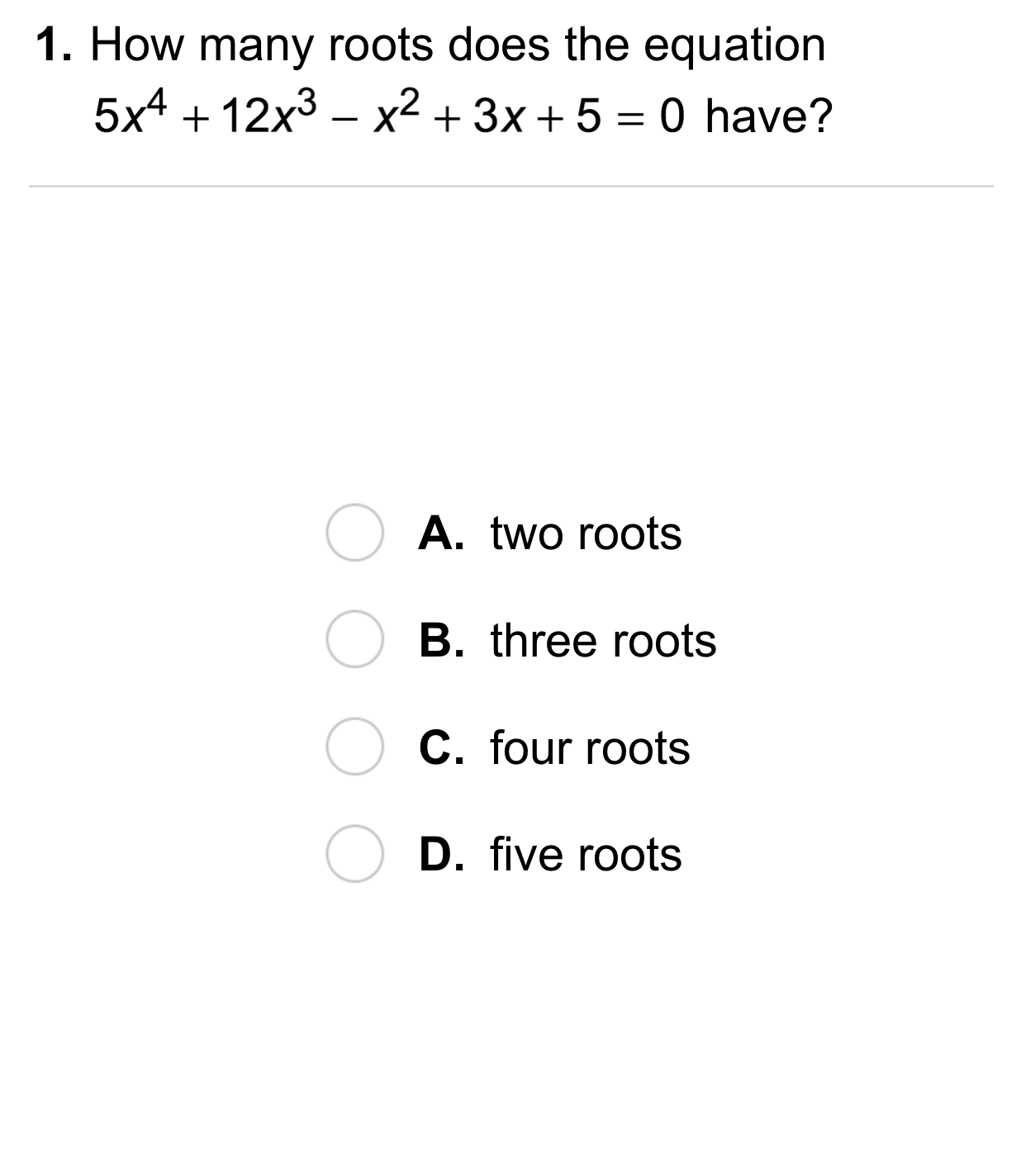
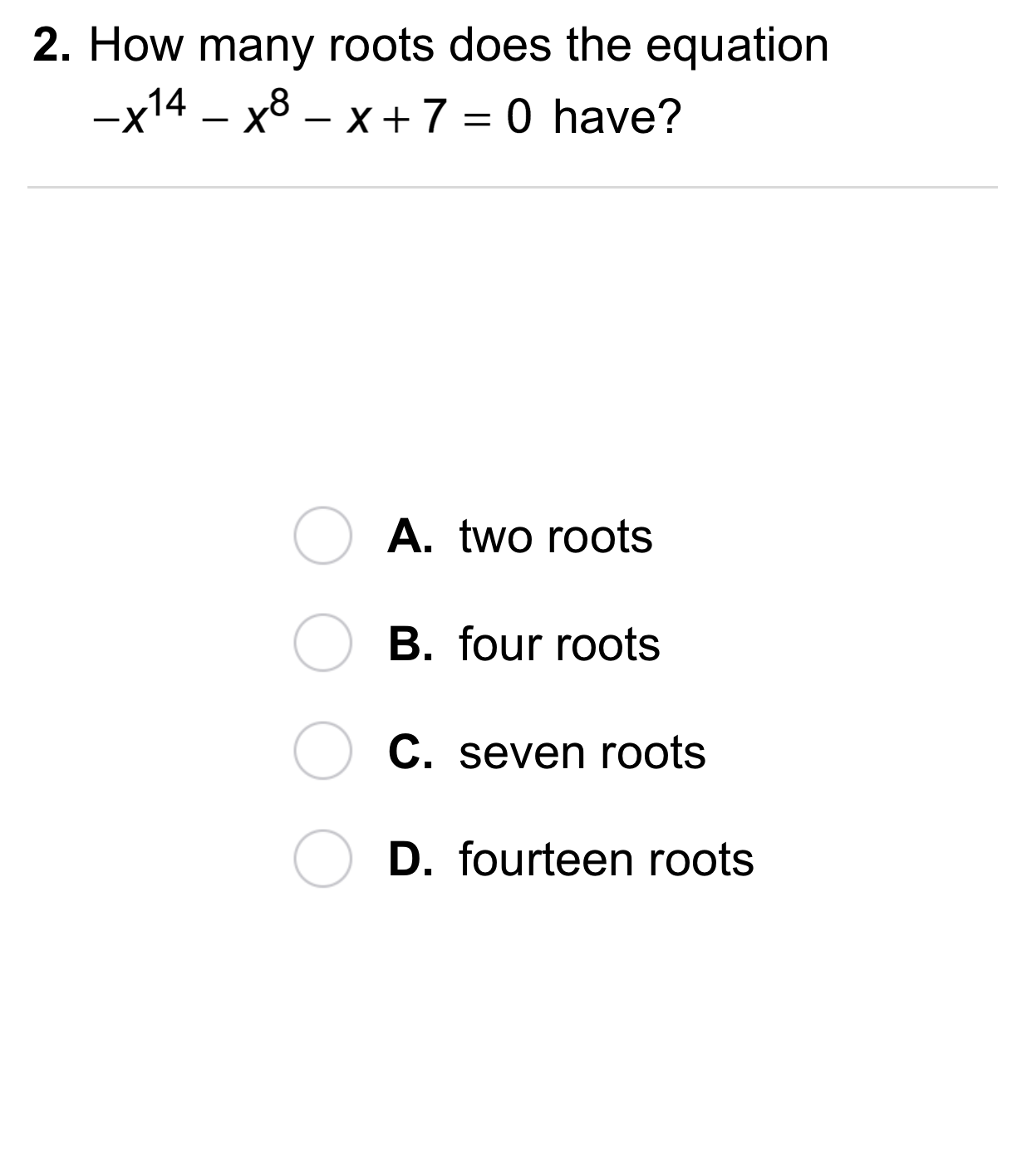
Problem 1 Got It?

10

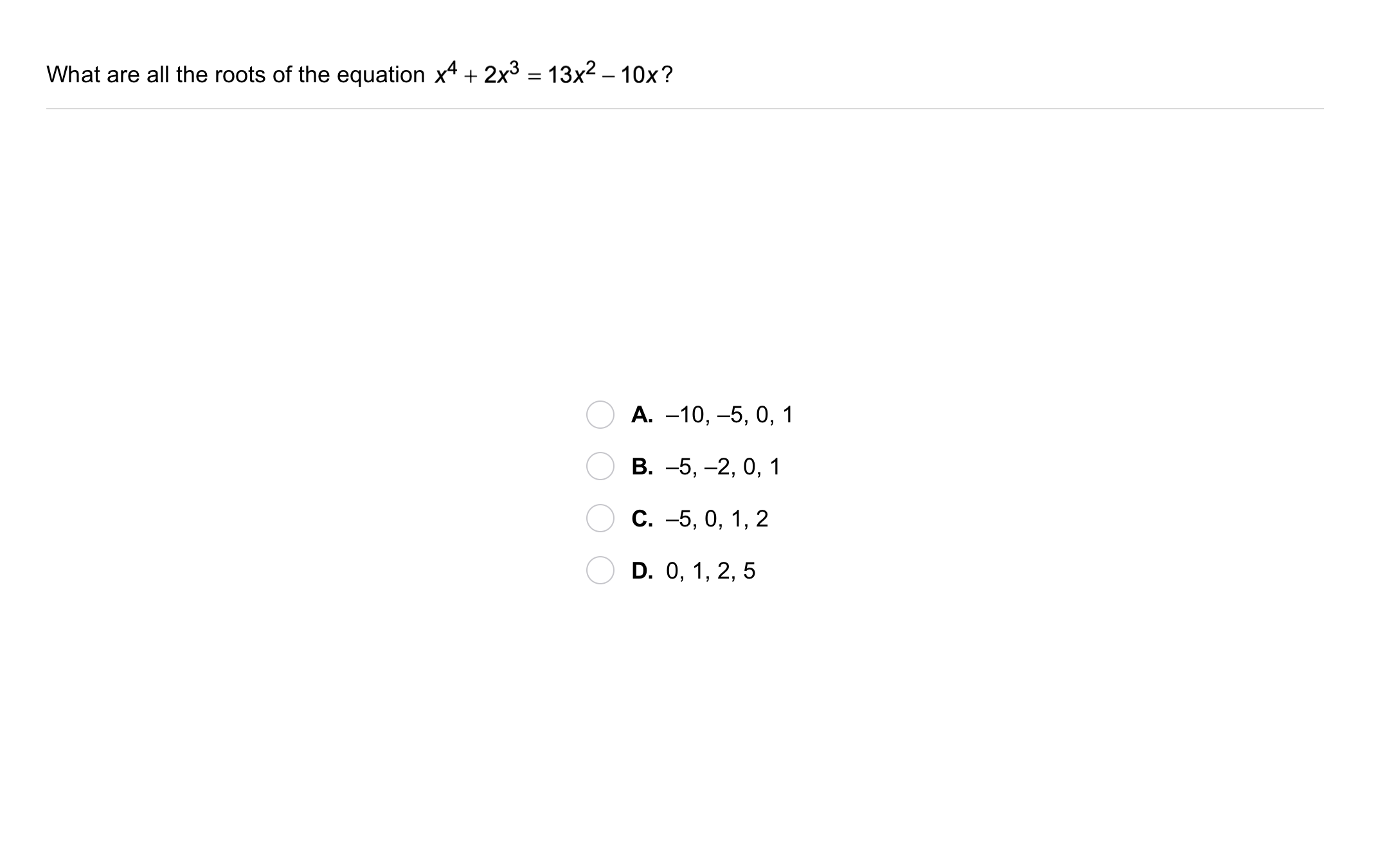
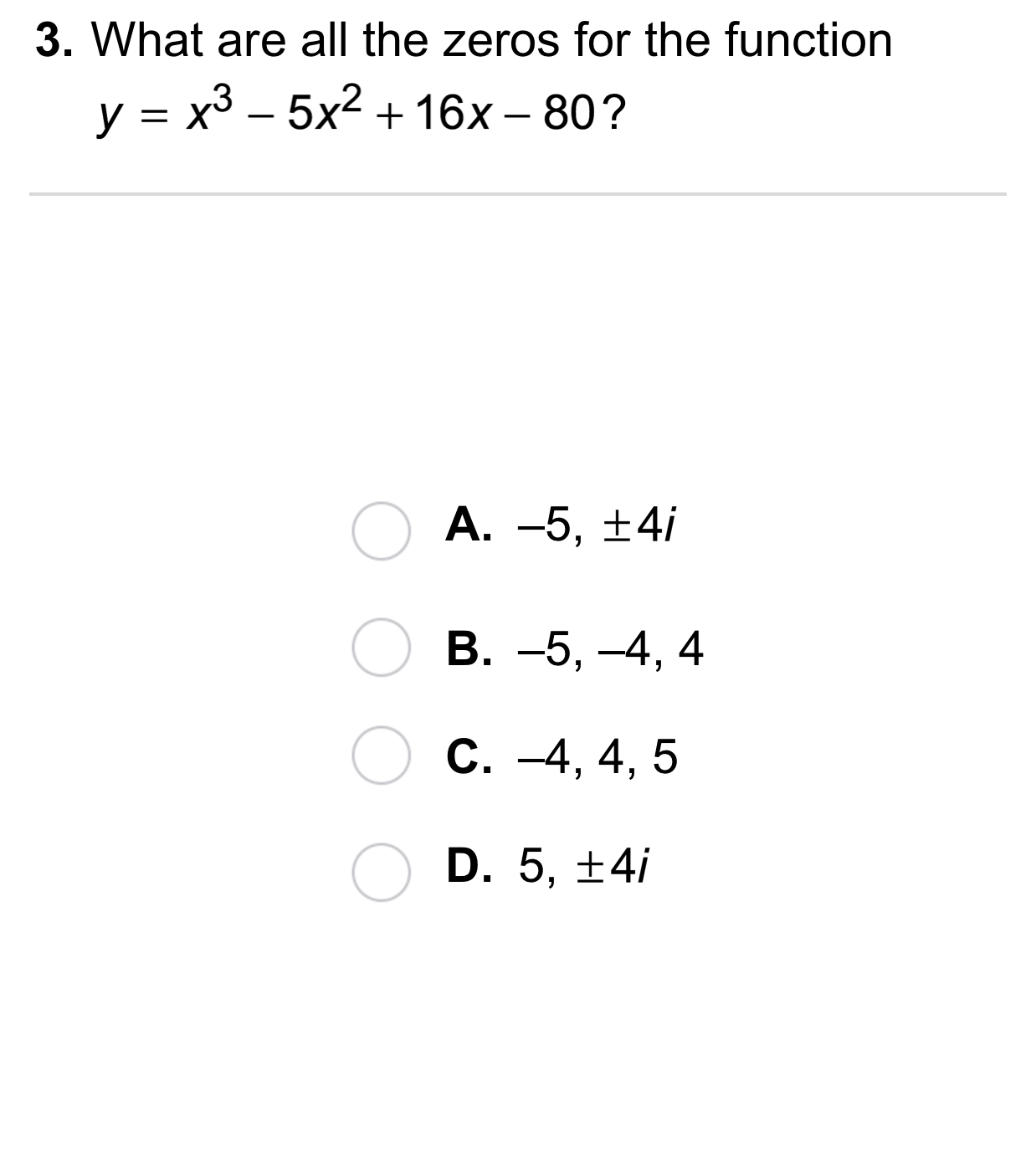
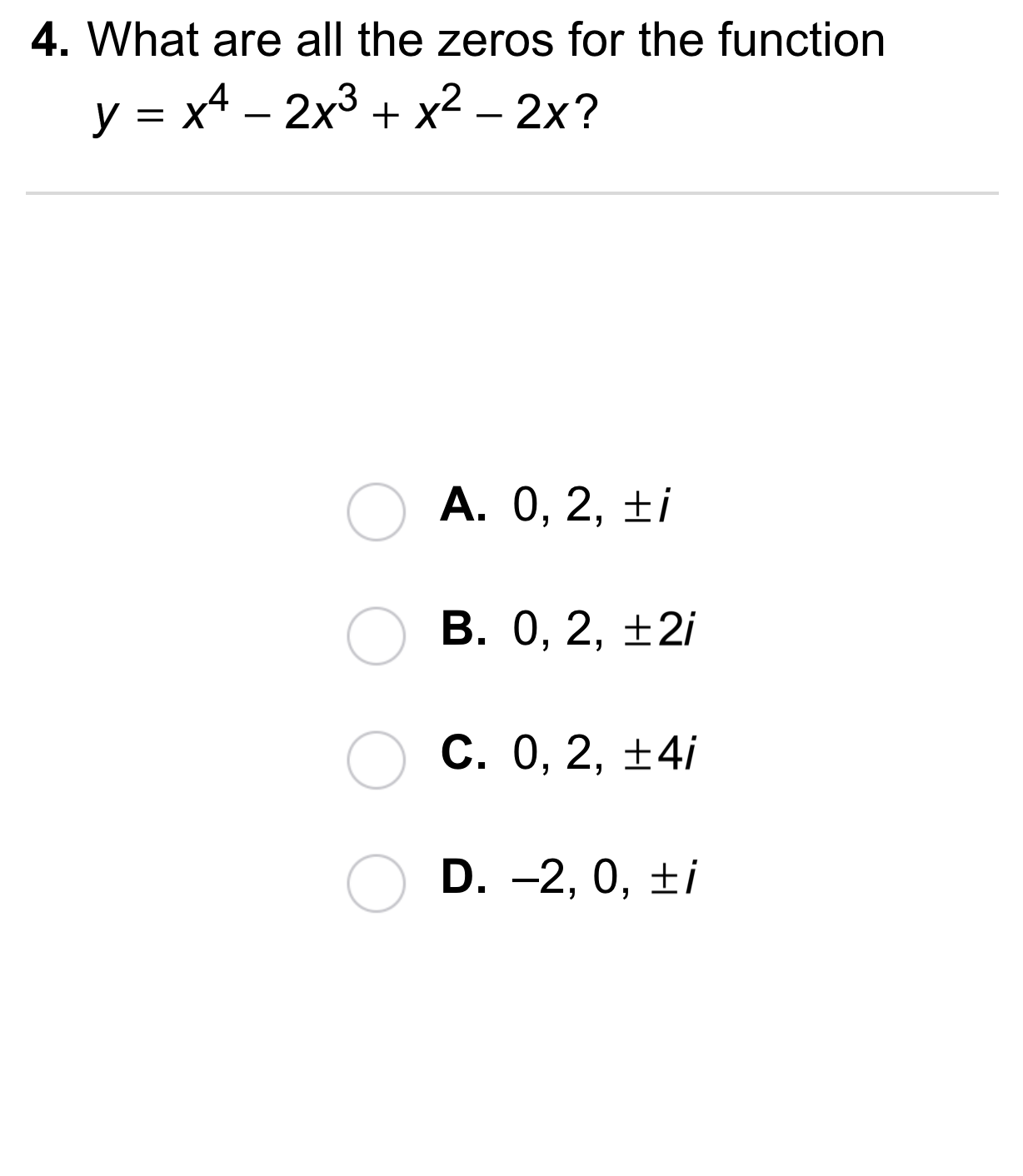
Problem 2 Got It? What are all the zeros of the function?
Select all that apply.

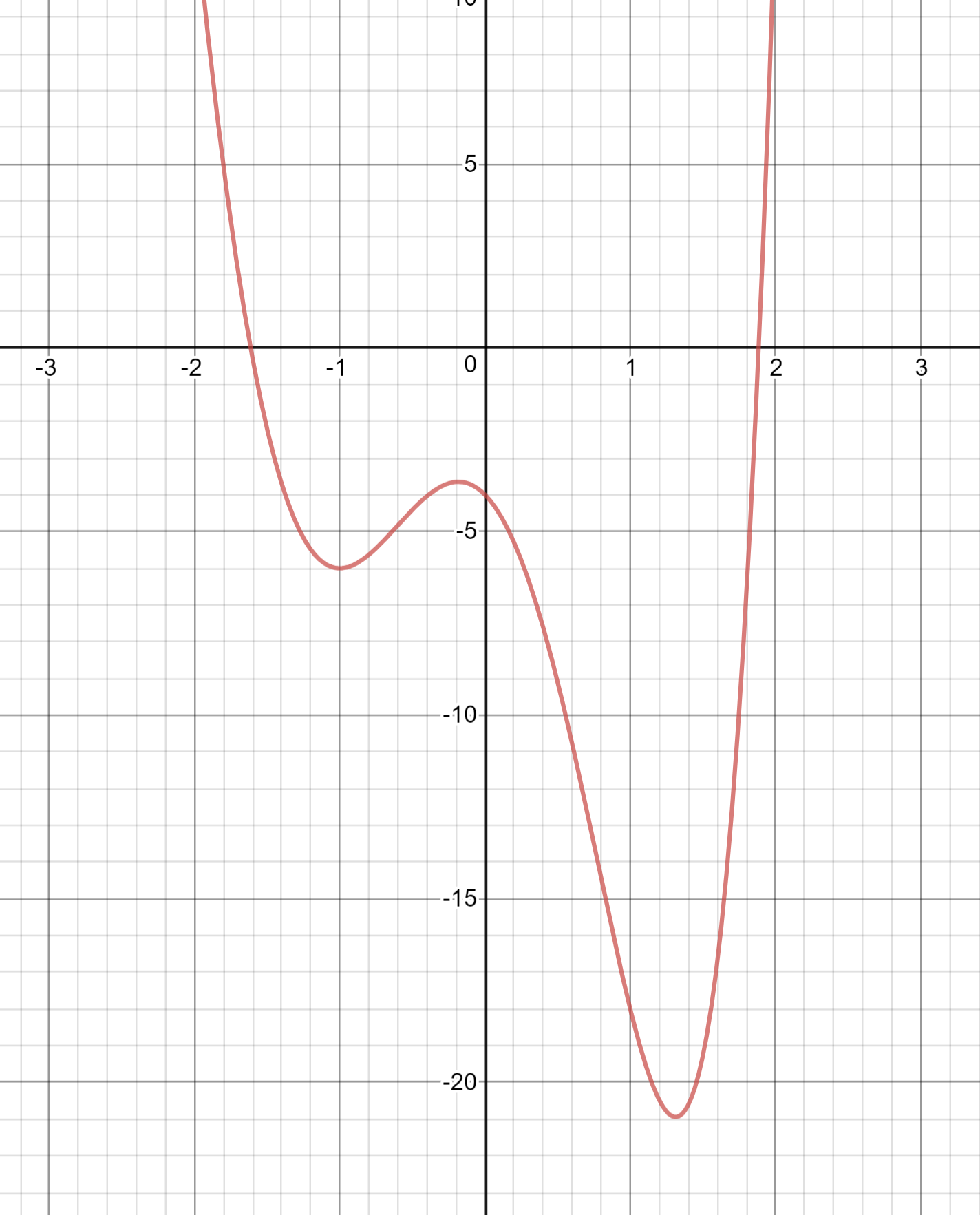
Problem 2 Got It? The graph of f(x) is shown.
10

Problem 2 Got It? Use turning points to explain why the graph does not show all of the real zeros of the function.

10
10
10
10
10

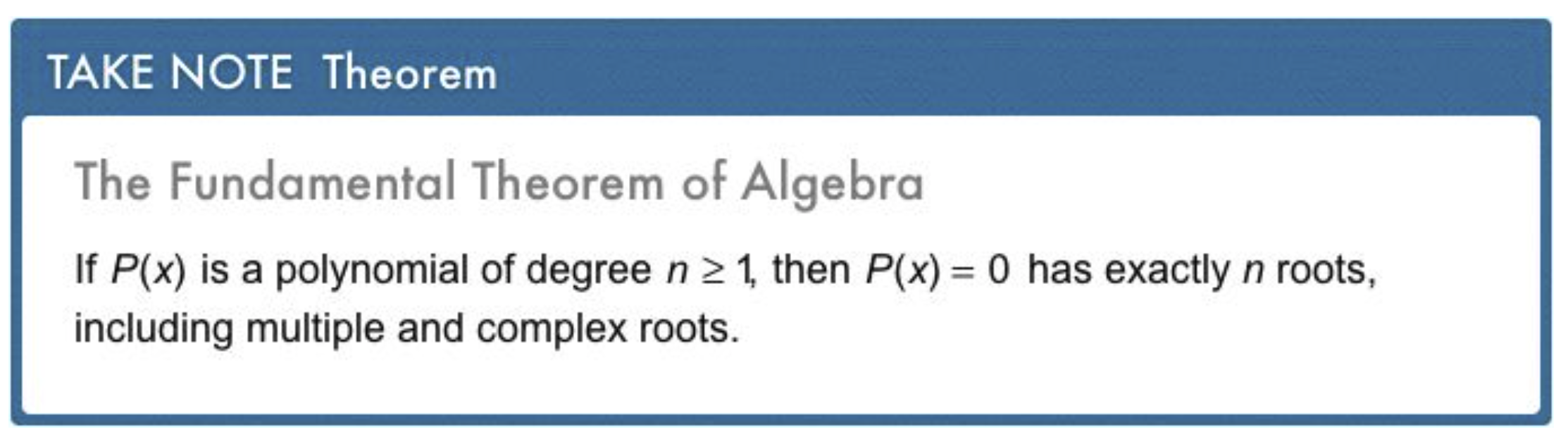
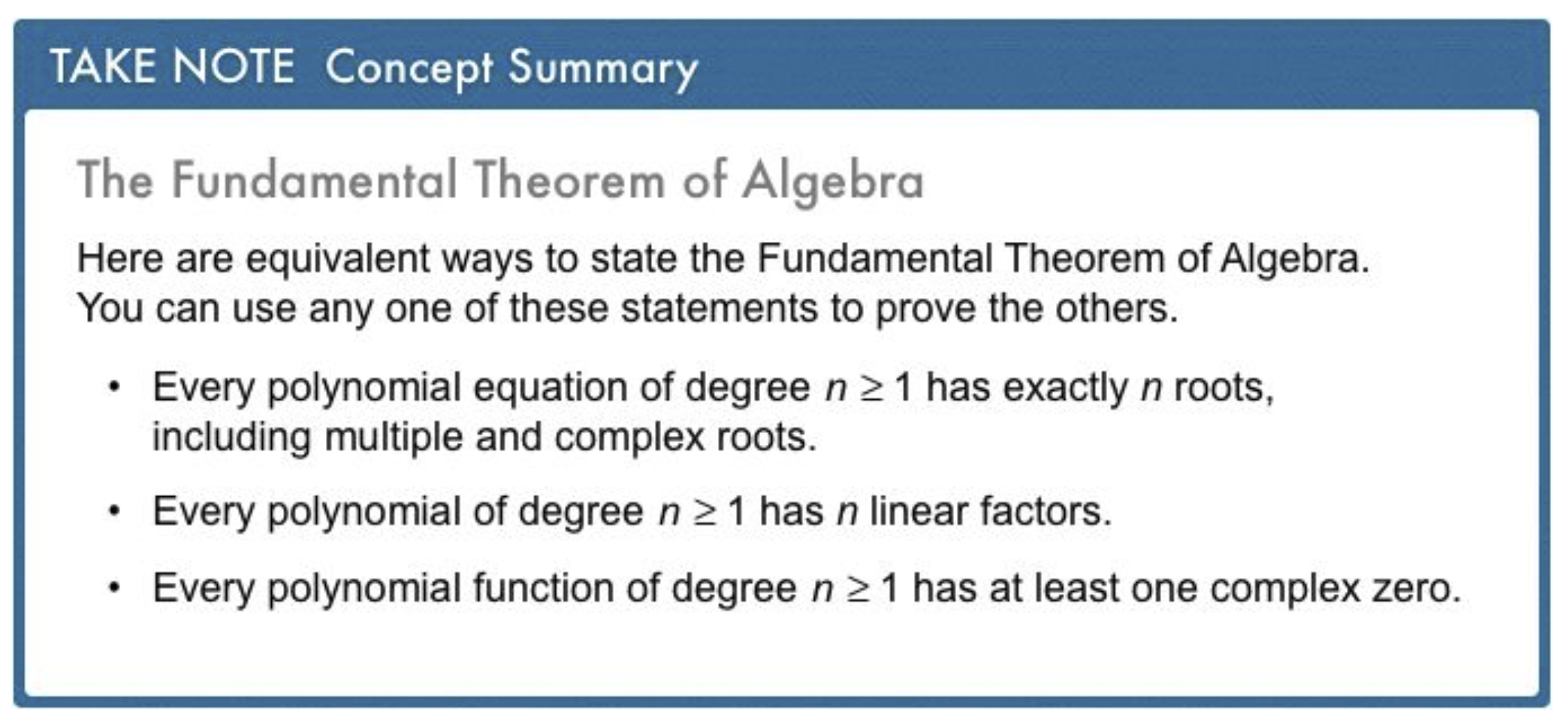
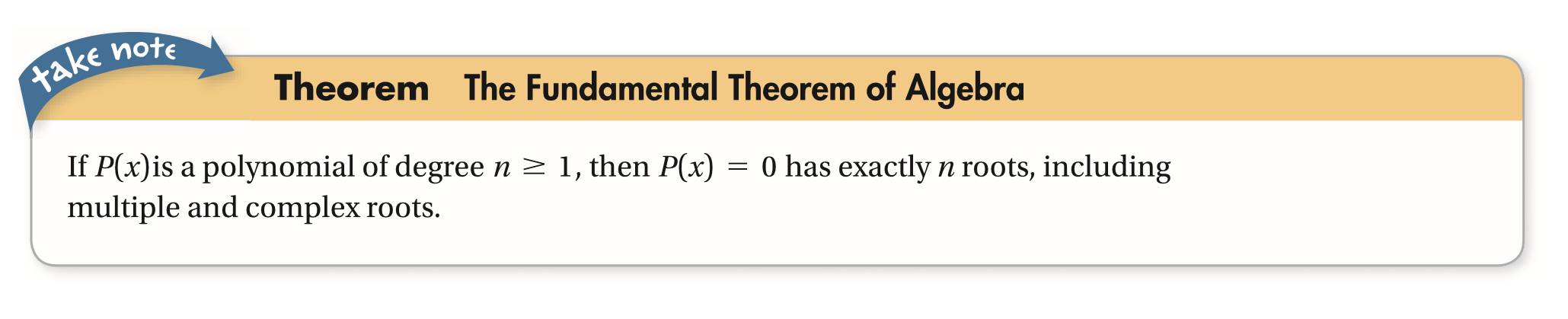
Vocabulary: Given a polynomial equation of degree n, explain how you determine the number of roots of the equation.

10

Open-Ended: Write a polynomial function of degree 4 with rational coefficients and two complex zeros of multiplicity 2.

10

Writing: Describe when to use synthetic division and when to use the Quadratic Formula to determine the linear factors of a polynomial.

30

Review Lesson 4-3:
1. Create a table and plot the points.
2. Create and graph a quadratic regression model for the data.
Recall Desmos' quadratic regression notation: y1~ax1^2+bx1+c
3. Determine whether the quadratic regression model is appropriate for the data.
4. If the quadratic regression model is not appropriate, remove it. Otherwise, leave it on your graph.
5. Zoom and pan your graph to establish an appropriate viewing window.

30

Review Lesson 4-3:
1. Create a table and plot the points.
2. Create and graph a quadratic regression model for the data.
Recall Desmos' quadratic regression notation: y1~ax1^2+bx1+c
3. Determine whether the quadratic regression model is appropriate for the data.
4. If the quadratic regression model is not appropriate, remove it. Otherwise, leave it on your graph.
5. Zoom and pan your graph to establish an appropriate viewing window.

10

Review Lesson 4-2: Match each polynomial in factored form on the left with it's standard form on the right.

10

Vocabulary Review: Classify each expression based on whether or not it is a trinomial.

  • Trinomial
  • NOT a trinomial
10

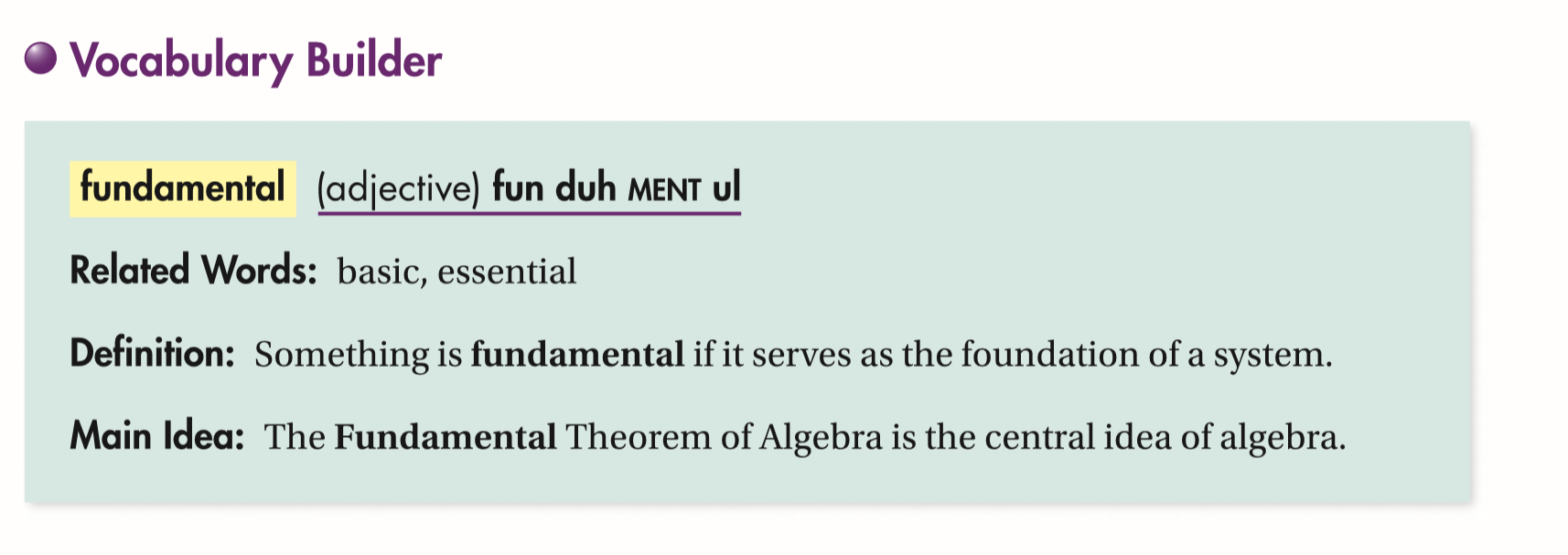
Use Your Vocabulary: Classify each statement as true or false.

  • The fundamental idea of geometry is the study the provable properties of shapes.
  • A fundamental idea in the Declaration of Independence is that all people have the right to life, liberty, and the pursuit of happiness.
  • A fundamental rule of history is that kings are always right.
  • True
  • False
100

Notes: Take a clear picture or screenshot of your Cornell notes for this lesson. Upload it to the canvas. Zoom and pan as needed.

For a refresher on the Cornell note-taking system, click here.

10

Reflection: Math Success