Log in
Sign up for FREE
arrow_back
Library

Algebra 2 4-7 Complete Lesson: The Quadratic Formula

star
star
star
star
star
Last updated about 4 years ago
26 questions
Note from the author:
10
F.IF.7.a
10
A.REI.4.b
10
A.REI.4.b
10
A.REI.4.b
20
A.SSE.3.b
10
10
N.RN.2
10
10
A.REI.4.b
10
A.REI.4.b
100
10
A.REI.4.b
A complete formative lesson with embedded slideshow, mini lecture screencasts, checks for understanding, practice items, mixed review, and reflection. I create these assignments to supplement each lesson of Pearson's Common Core Edition Algebra 1, Algebra 2, and Geometry courses. See also mathquest.net and twitter.com/mathquestEDU.

Question 1
1.

Solve It! On this happy face, what quadratic functions have graphs that meet the following conditions? Consider only the domain 2 ≤ x ≤ 6.

â—† crosses the x-axis twice
â—† touches the x-axis only once
â—† misses the x axis completely

  • crosses the x-axis twice
10
Question 2
2.

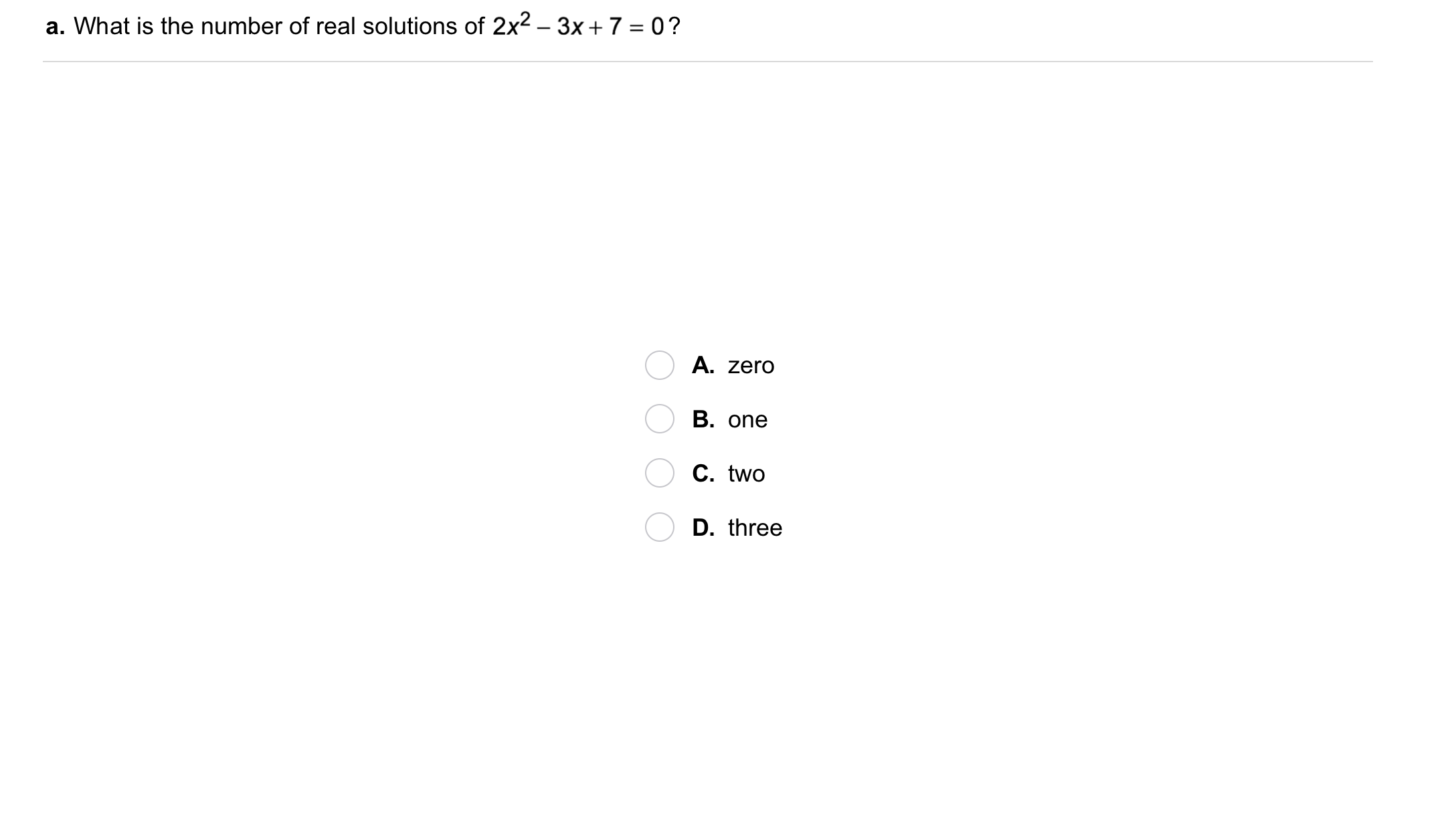
Problem 1 Got It?

A.REI.4.b
10
Question 3
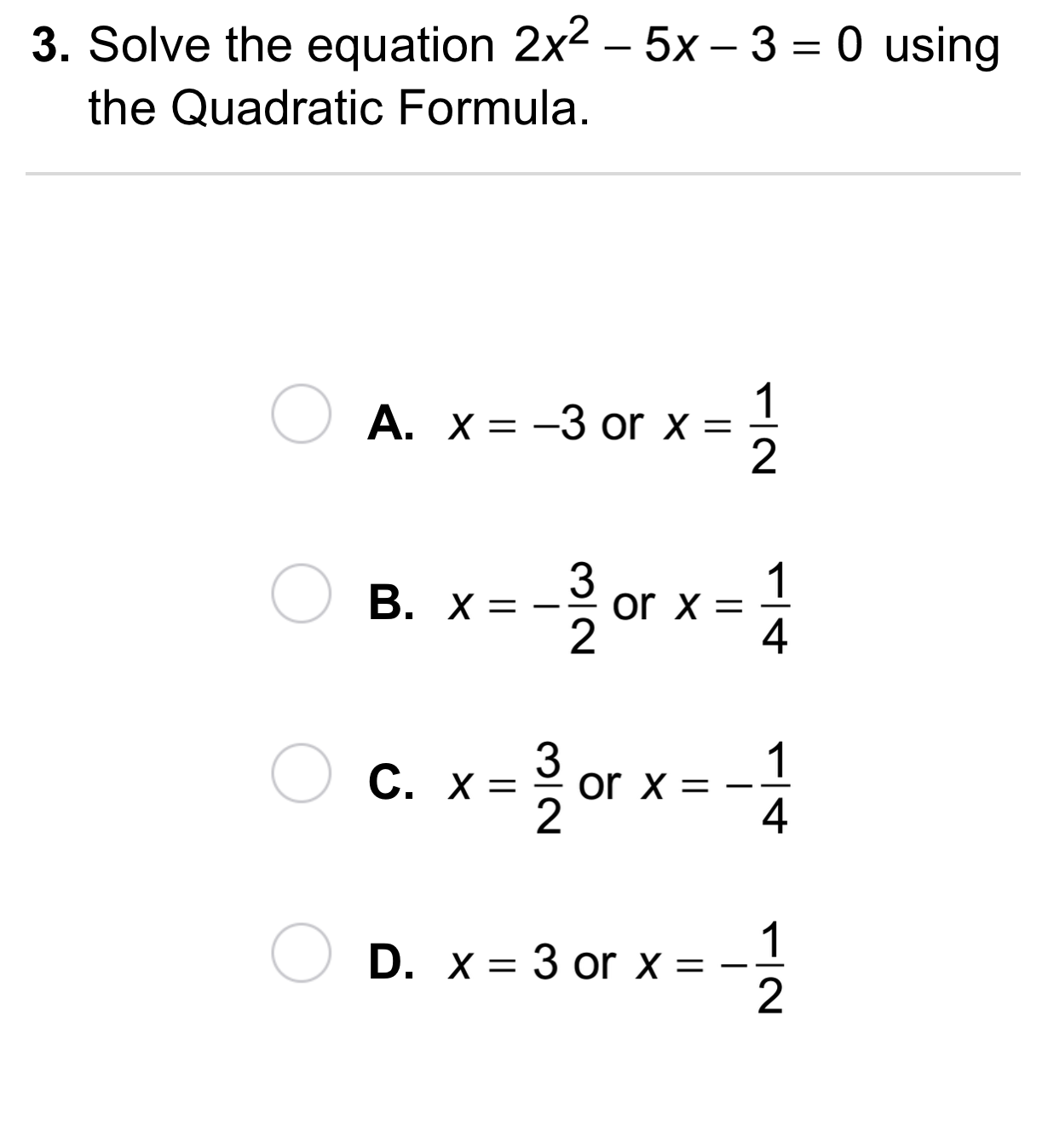
3.

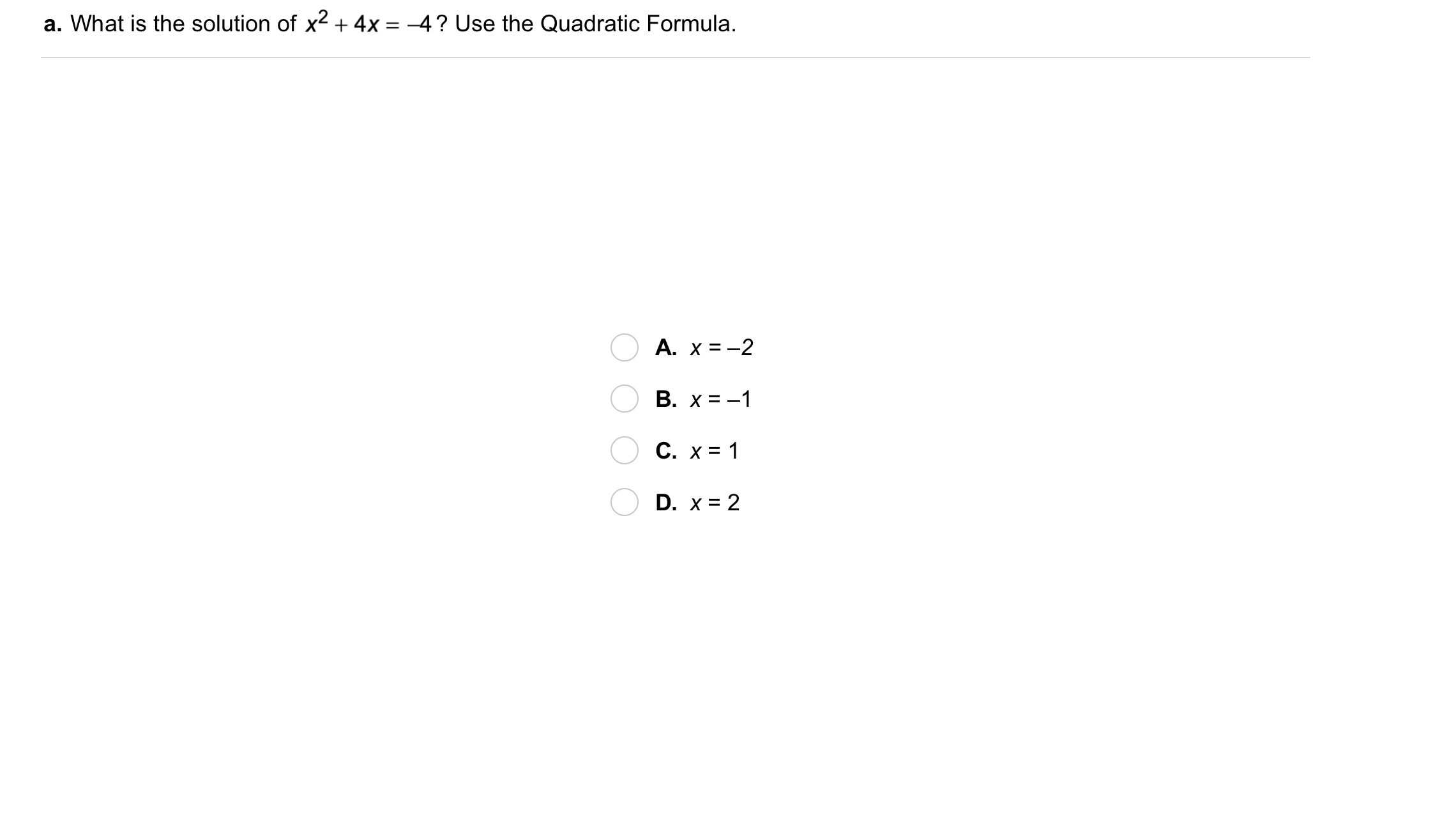
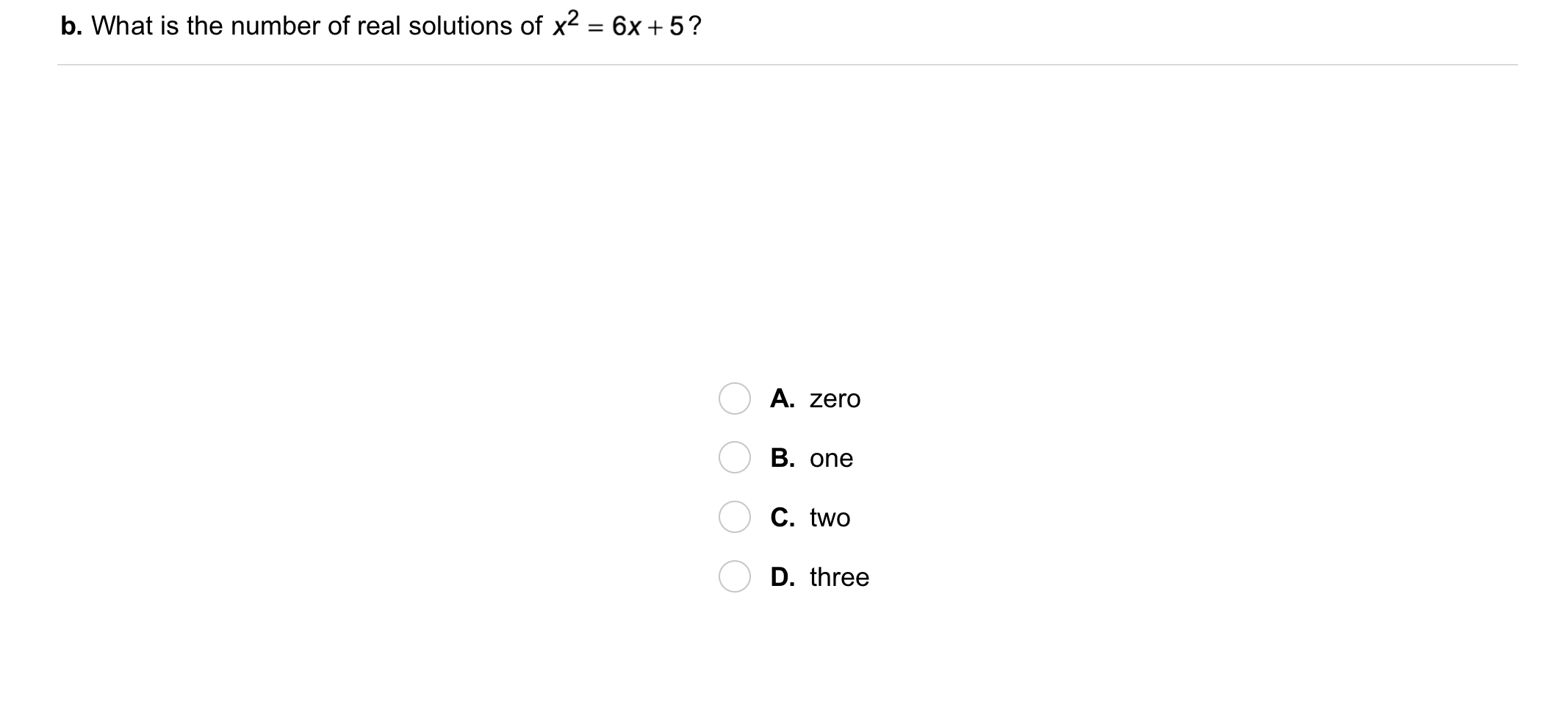
Problem 1 Got It?

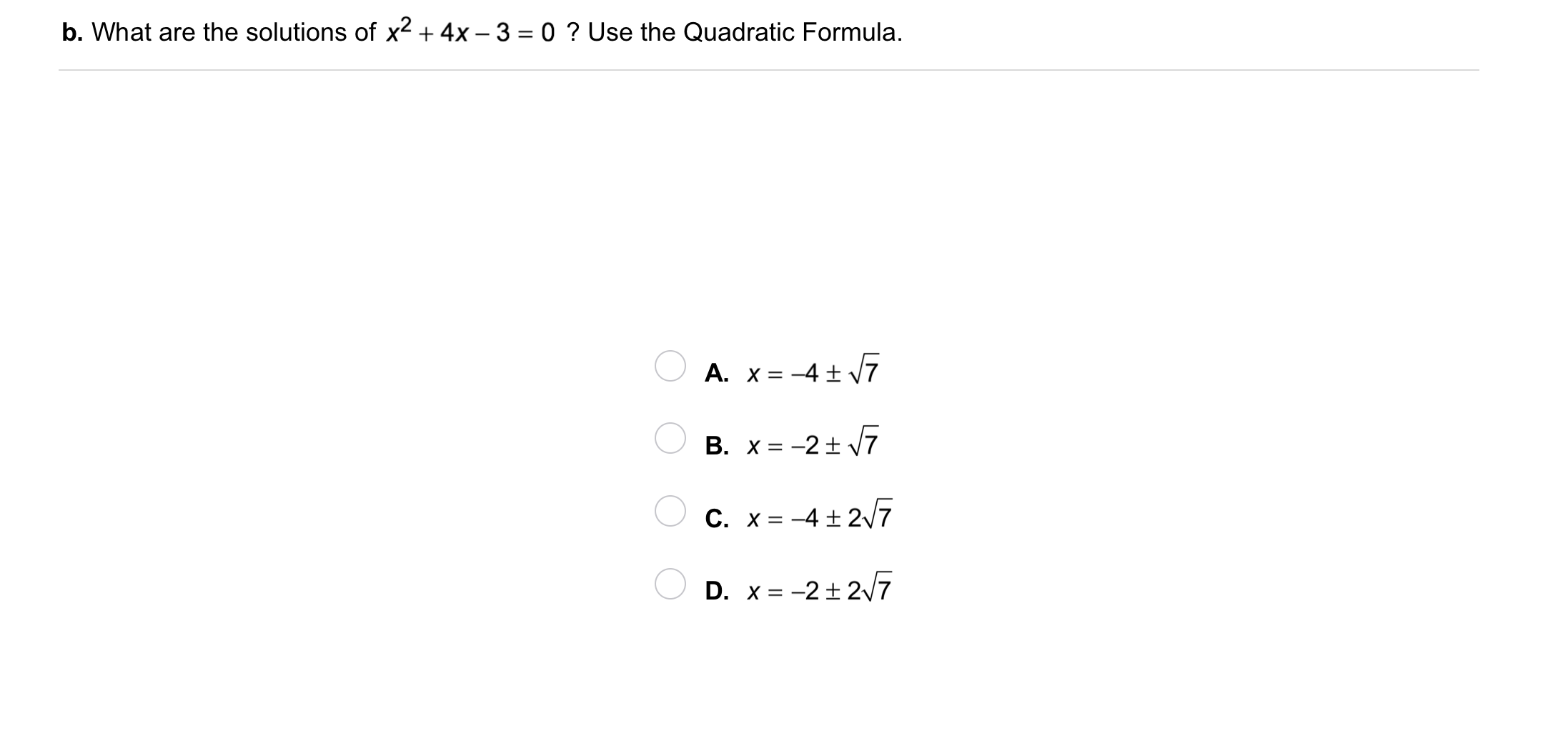
A.REI.4.b
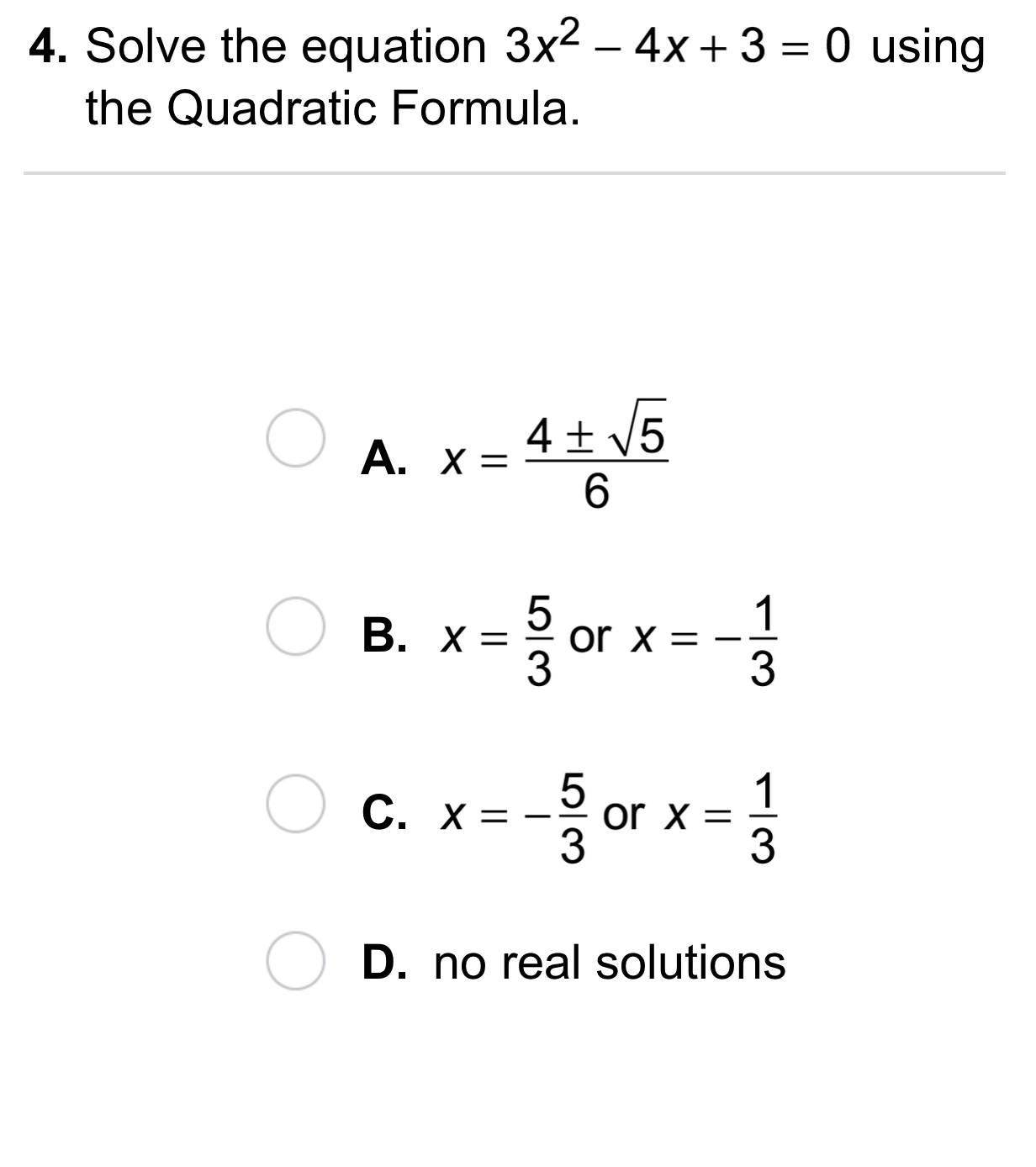
10
A.REI.4.b
10
Question 5
5.

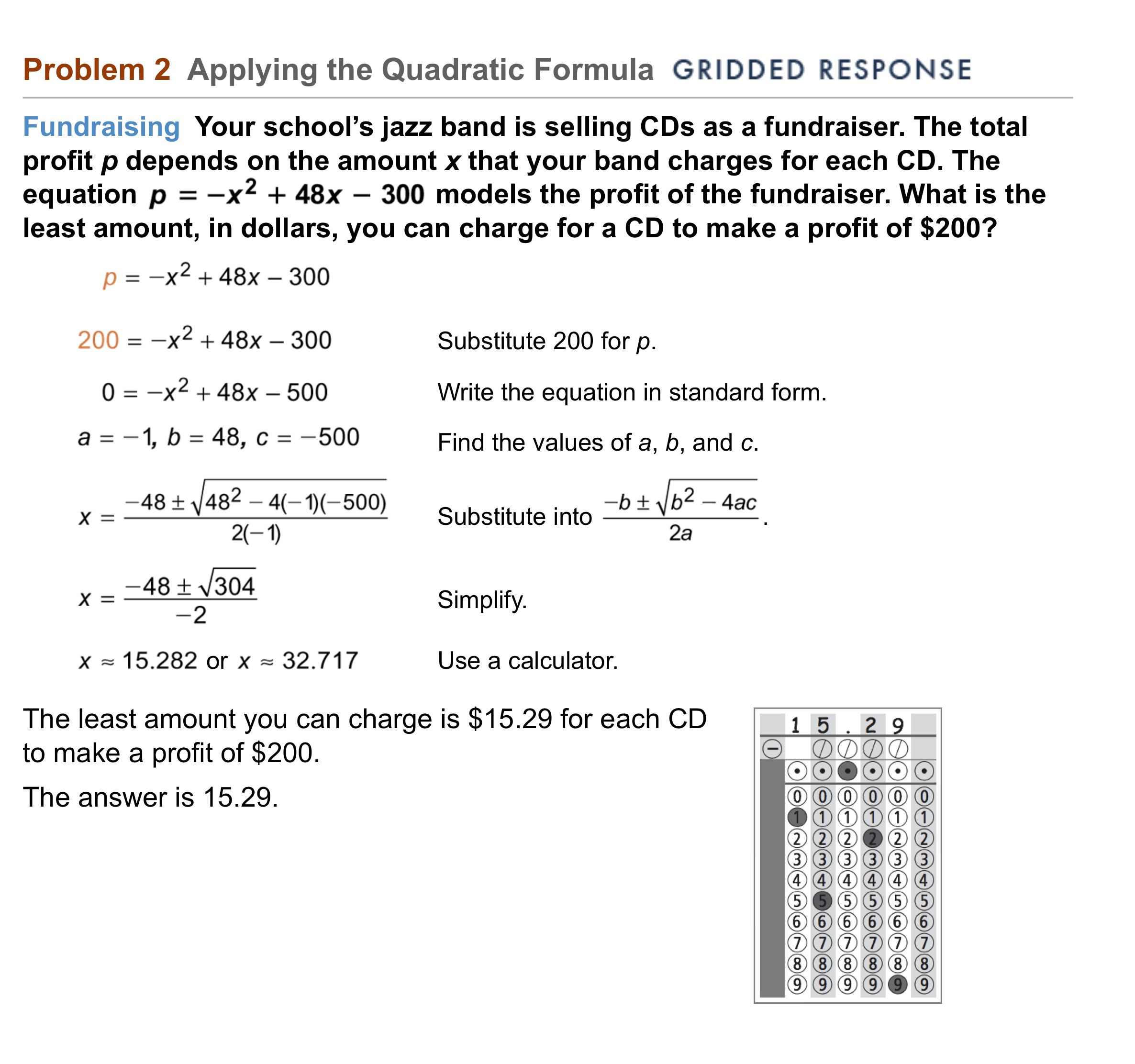
Problem 2 Got It? Reasoning: Would a negative profit make sense in Problem 2? Explain.

A.REI.4.b
10
Question 6
6.

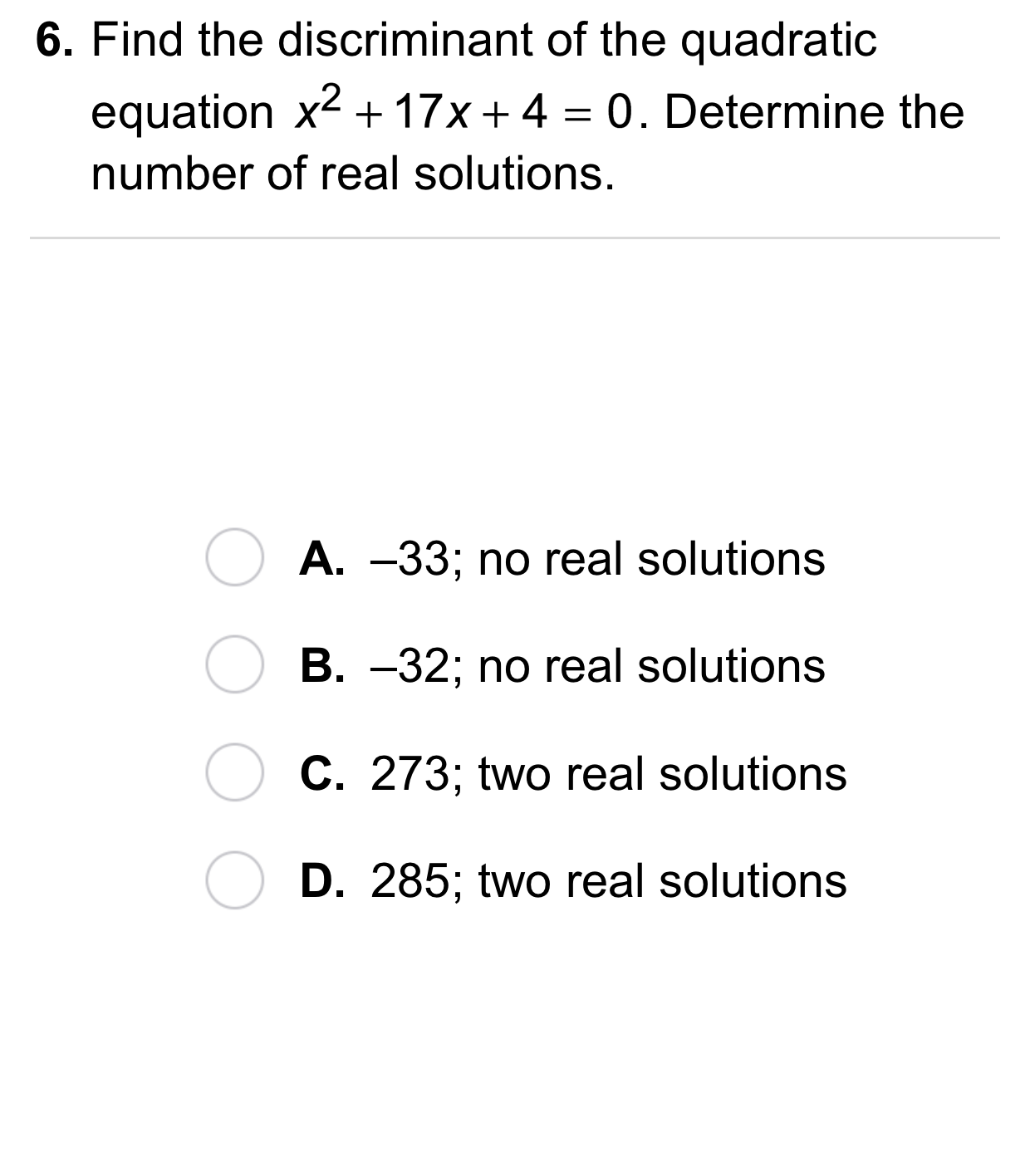
Problem 3 Got It?

A.REI.4.b
10
Question 7
7.

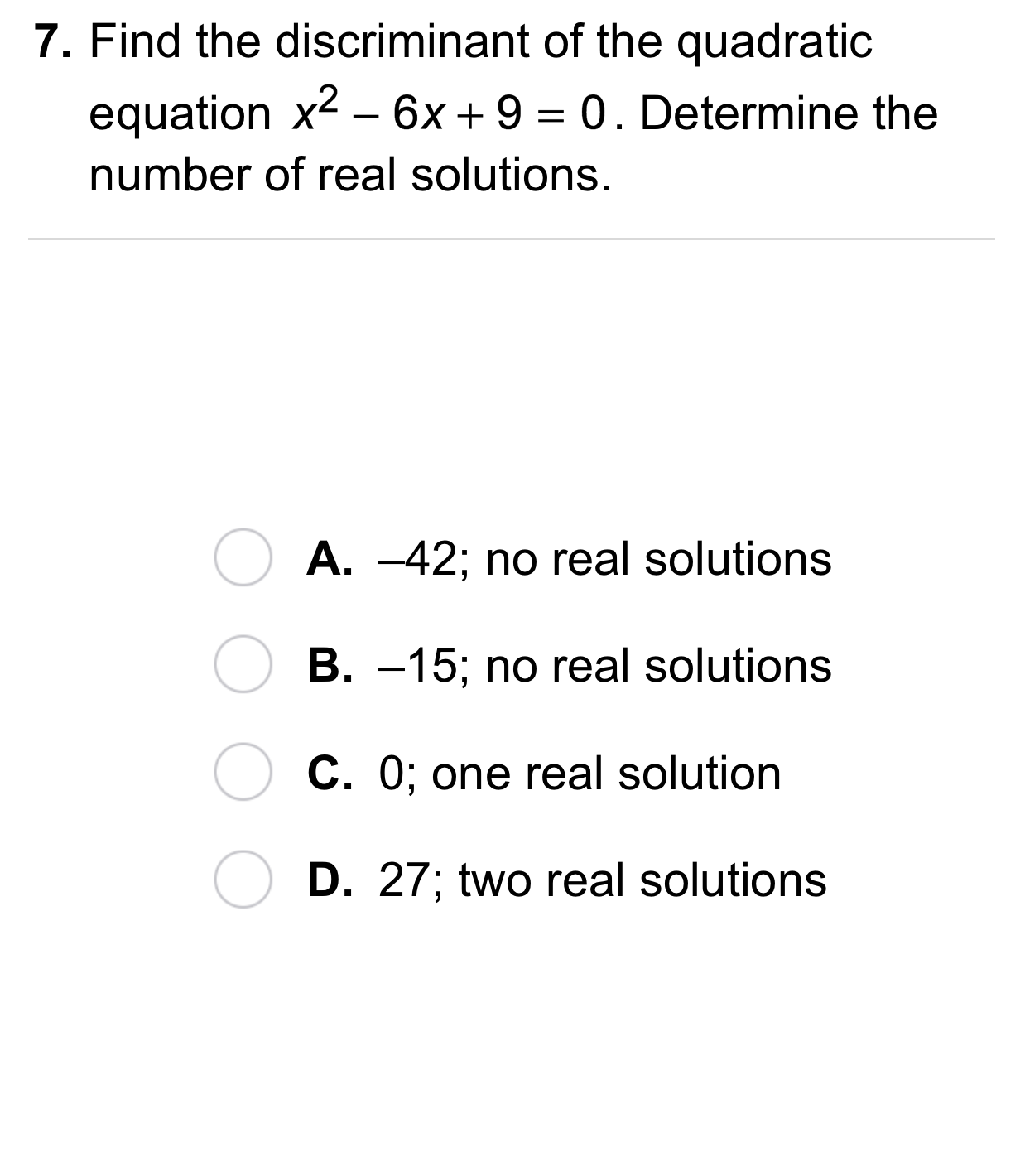
Problem 3 Got It?

A.REI.4.b
10
Question 8
8.

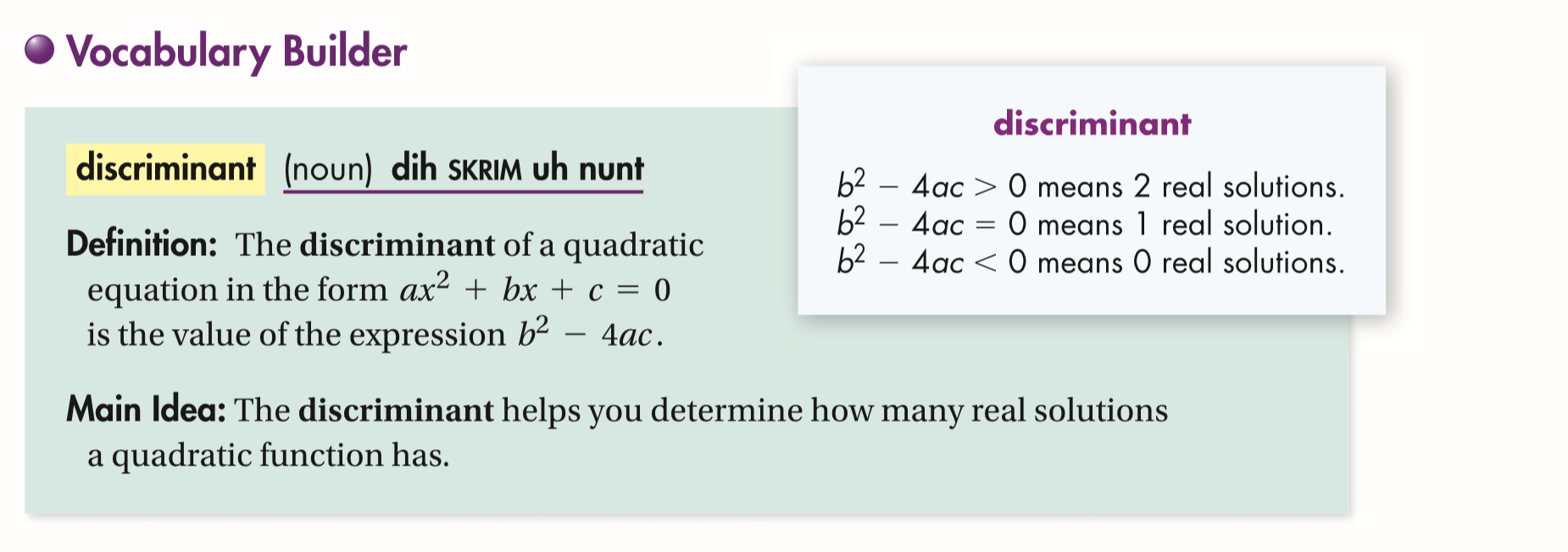
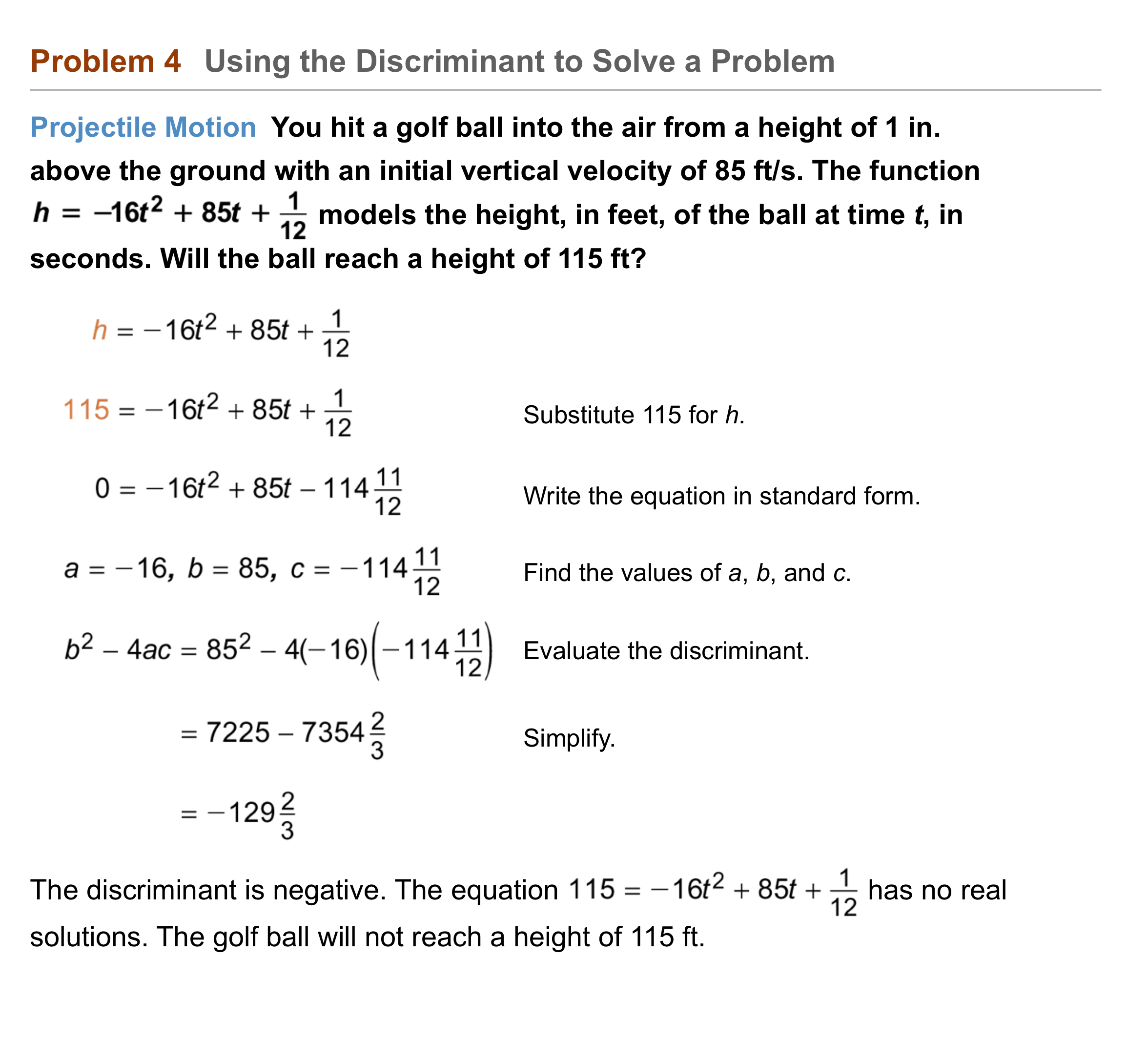
Problem 4 Got It? Reasoning: Will the golf ball in Problem 4 ever reach a height of 110 ft? Use the discriminant to explain your answer.

A.REI.4.b
10
Question 9
9.
A.REI.4.b
10
Question 10
10.
A.REI.4.b
10
Question 11
11.
A.REI.4.b
10
Question 12
12.
A.REI.4.b
10
Question 13
13.
A.REI.4.b
10
Question 14
14.
A.REI.4.b
10
Question 15
15.
A.REI.4.b
Question 16
16.

Reasoning: For what value(s) of k does the equation below have one real solution? two real solutions?

  • k = 6
  • k > 6
  • k < 6
  • The equation has one real solution for the following value(s) of k.
  • The equation has two real solutions for the following value(s) of k.
Question 17
17.

Error Analysis: Your friend concluded that because two discriminants are equal, the solutions to the two equations are the same. Explain your friend's error. Give an example of two quadratic equations that disprove this conclusion.

Question 18
18.

Reasoning: If one quadratic equation has a positive discriminant, and another quadratic equation has a discriminant equal to 0, can the two quadratic equations share a solution? Explain why or why not. If so, give two quadratic equations that meet this criterion.

Question 19
19.

Review Lesson 4-6: Solve the equation by completing the square. Show your work on the canvas.

Question 20
20.

Review Lesson 1-3: Simplify by combining like terms. Match each expression on the left with its simplified form on the right.

  • 9x² + 4x + 4y
  • 9x² + 3y
  • 4x² - 8x - 2y
Question 21
21.

Review Radical Expressions: Match each radical expression on the left with its simplified form on the right.

Question 22
22.

Vocabulary Review: Match each formula with its description.

  • area of a square
  • area of a circle
Question 23
23.

Use Your Vocabulary: Identify the discriminant of the equation.

Question 24
24.

Use Your Vocabulary: Identify the discriminant of the equation.

Question 25
25.

Notes: Take a clear picture or screenshot of your Cornell notes for this lesson. Upload it to the canvas. Zoom and pan as needed.

For a refresher on the Cornell note-taking system, click here.

Question 26
26.

Reflection: Math Success

touches the x-axis only once
misses the x axis completely
A
B
C
D
A
B
C
D
Question 4
4.

Problem 2 Got It? In Problem 2, what is the least amount you can charge for a CD to make a $100 profit?

Yes; A negative profit means that more money was spent than earned.
A
B
C
D
A
B
C
D
C
D
C
D
C
D
C
D
C
D
C
D
C
D
circumference of a circle
perimeter of a rectangle