
1
What is the name of a sticky fluid, collects dust, germs and other matter that has invaded the lungs.
What is the name of a sticky fluid, collects dust, germs and other matter that has invaded the lungs.
What is the name of a sticky fluid, collects dust, germs and other matter that has invaded the lungs.
filters the air that is inhaled (number)
bronchi (number)
A dome-shaped muscle at the bottom of the lungs, controls breathing and separates the chest cavity from the abdominal cavity (number)
Walls are extremely thin (about 0.2 micrometers). These walls are composed of a single layer of tissues called epithelial cells and tiny blood vessels called pulmonary capillaries (number)

Blood flowing from the body into the lungs
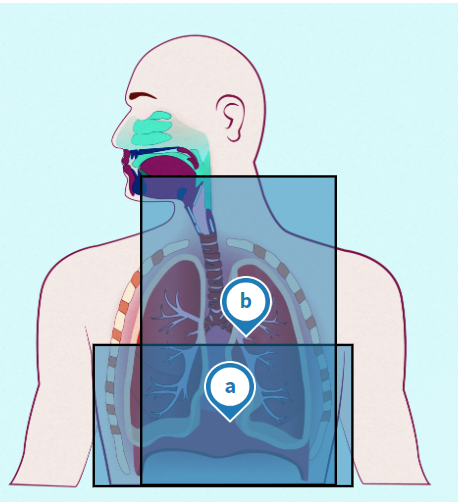
Area A is the
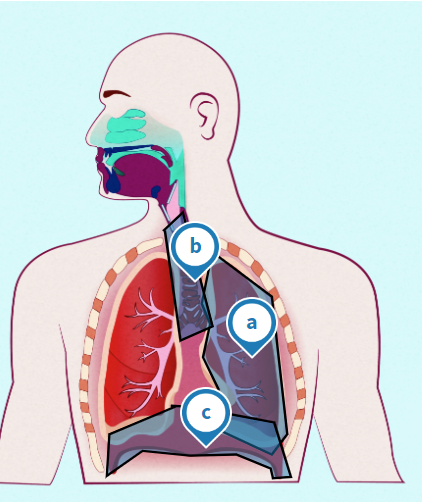
Structure A is
Place the sequence of events in order to show what occurs after contraction of the diaphragm.
The diaphragm relaxes.
Oxygen is pulled into the upper respiratory tract.
Oxygen enters the bronchial tubes.
Oxygen enters the alveoli.
Carbon dioxide moves from the bloodstream into the alveoli through the capillaries.
Oxygen passes into the bloodstream through the capillaries.
Oxygen moves into the lower respiratory tract.
Carbon dioxide moves from the lower respiratory tract into the upper respiratory tract, and exits the body.
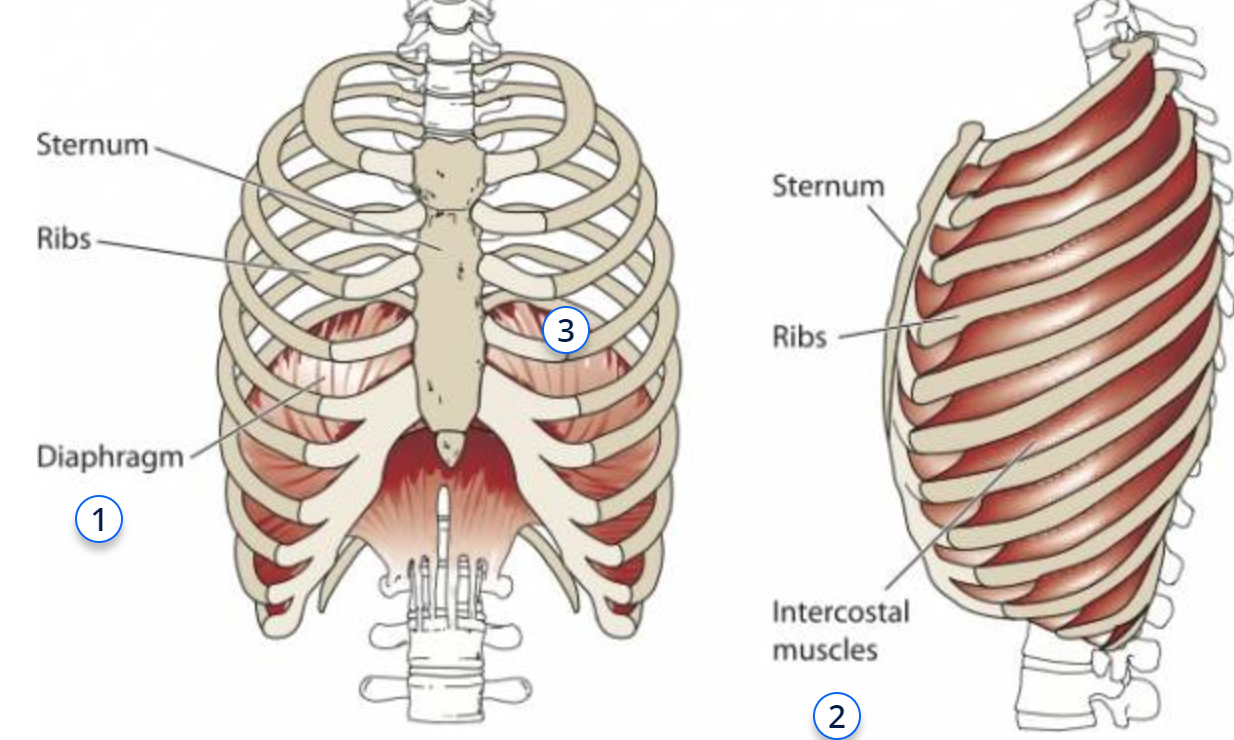
When inhalation occurs, the diaphragm
The intercostal muscles
Structure 3
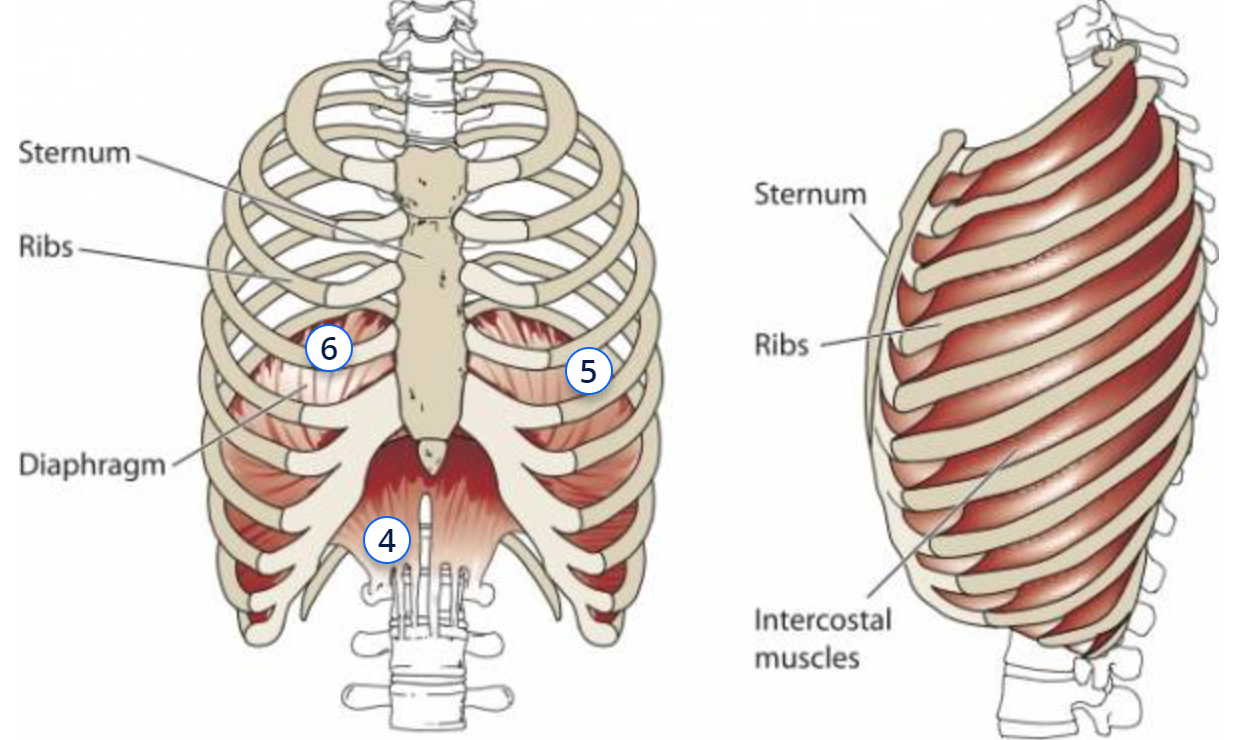
The diaphragm relaxes and moves
The intercostal muscles
As the space in the chest cavity gets smaller during exhalation, air rich in
The device used to measure lung capacity is called a(n)
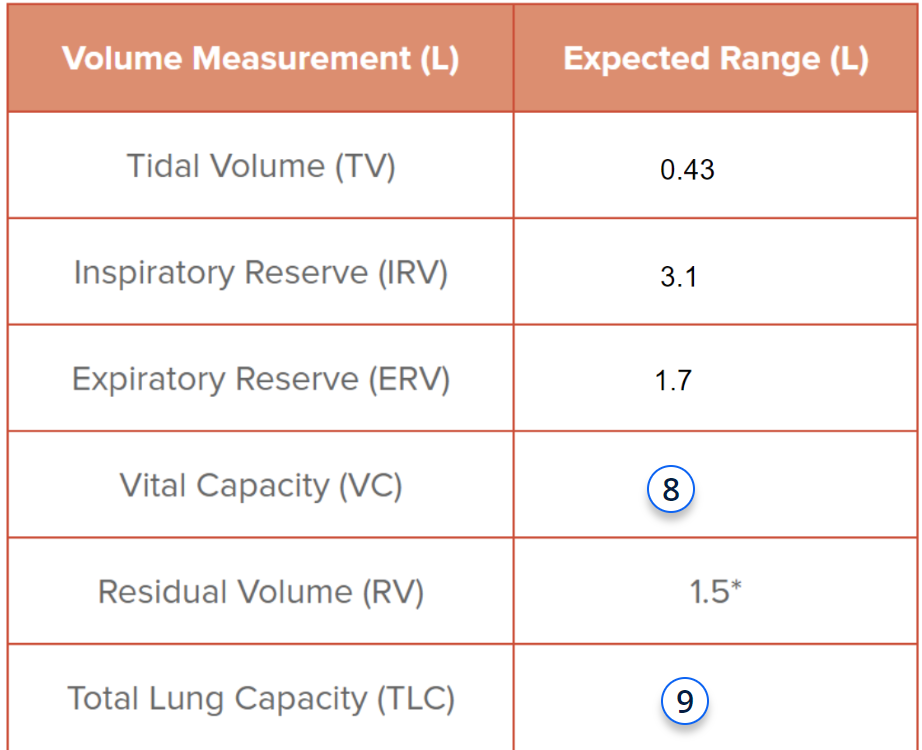
What is the vital capacity of this person?
What is the total lung capacity of this person?
Which of the following will occur in alveoli?
Which of the following are true of the alveoli?
Structure B is
Structure C is