Algebra 2 4-1 Complete Lesson: Quadratic Functions and Transformations

Last updated almost 4 years ago
25 questions
Note from the author:
A complete formative lesson with embedded slideshow, mini lecture screencasts, checks for understanding, practice items, mixed review, and reflection. I create these assignments to supplement each lesson of Pearson's Common Core Edition Algebra 1, Algebra 2, and Geometry courses. See also mathquest.net and twitter.com/mathquestEDU.

Solve It! In the computer game Steeplechase, you press the "jump" button and the horse makes the jump shown. The highest part of the jump must be directly above the fence or you lose time.
10

Solve It! Where should this horse be when you press "jump"?

20

Problem 1 Got It? What is the graph of the function? Complete the table of values and graph the function on the canvas. Use colors other than black.

10

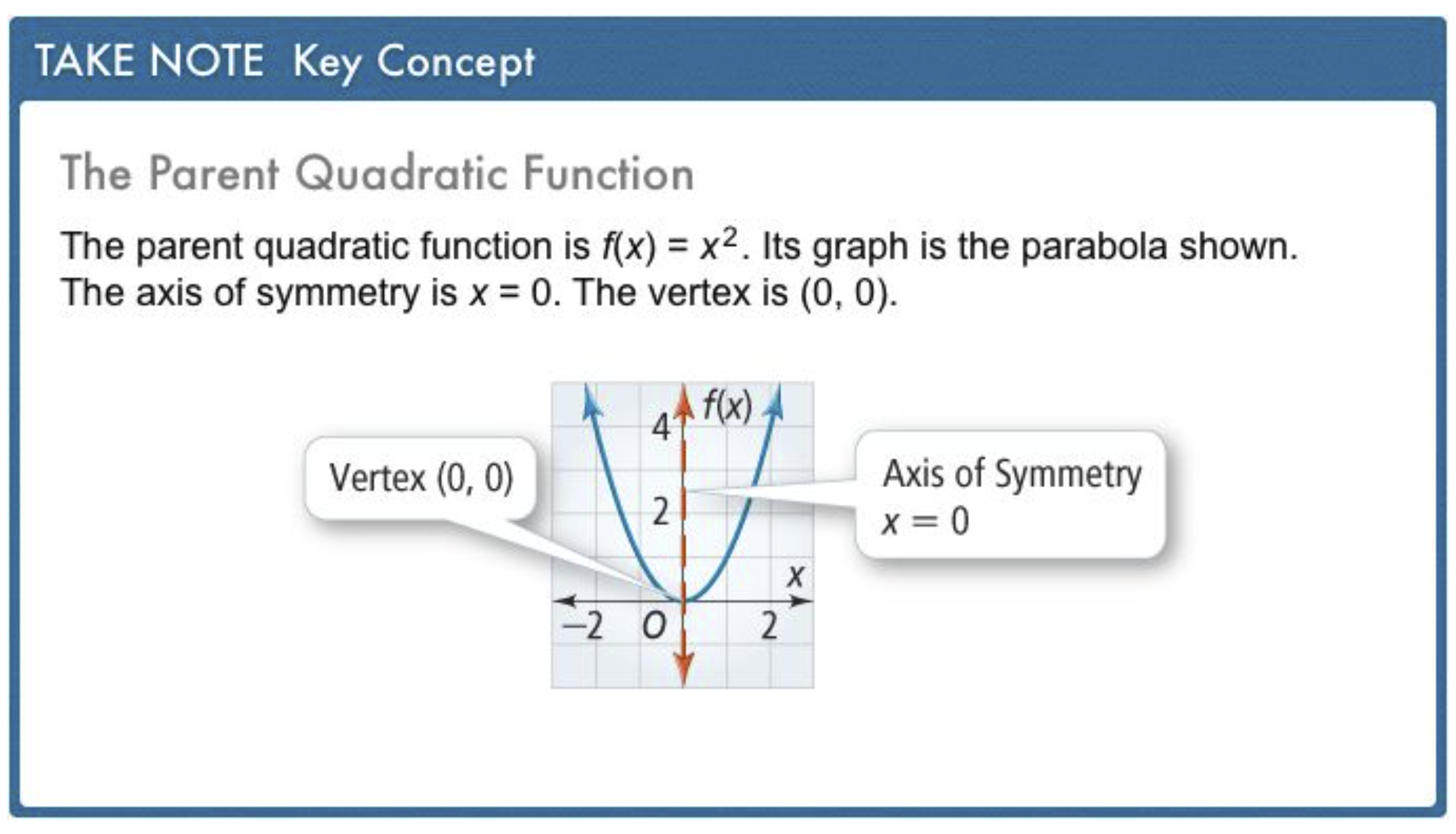
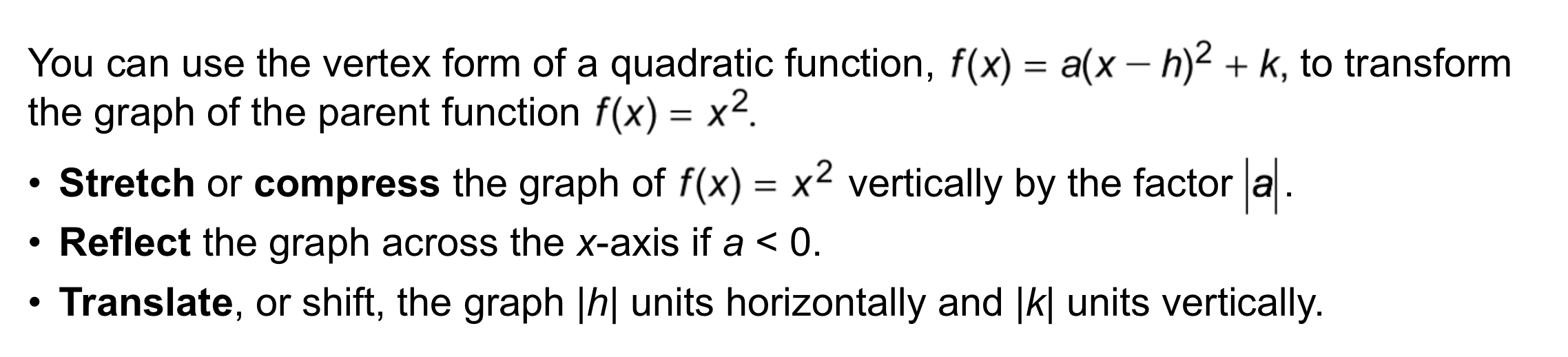
Problem 1 Got It? Graph the parent quadratic function and its transformation on the same plane. Zoom and pan your graph to establish an appropriate viewing window. Consider the relationship between the two functions.
After graphing with the Desmos utility, you may edit your response to the previous item if needed.

10

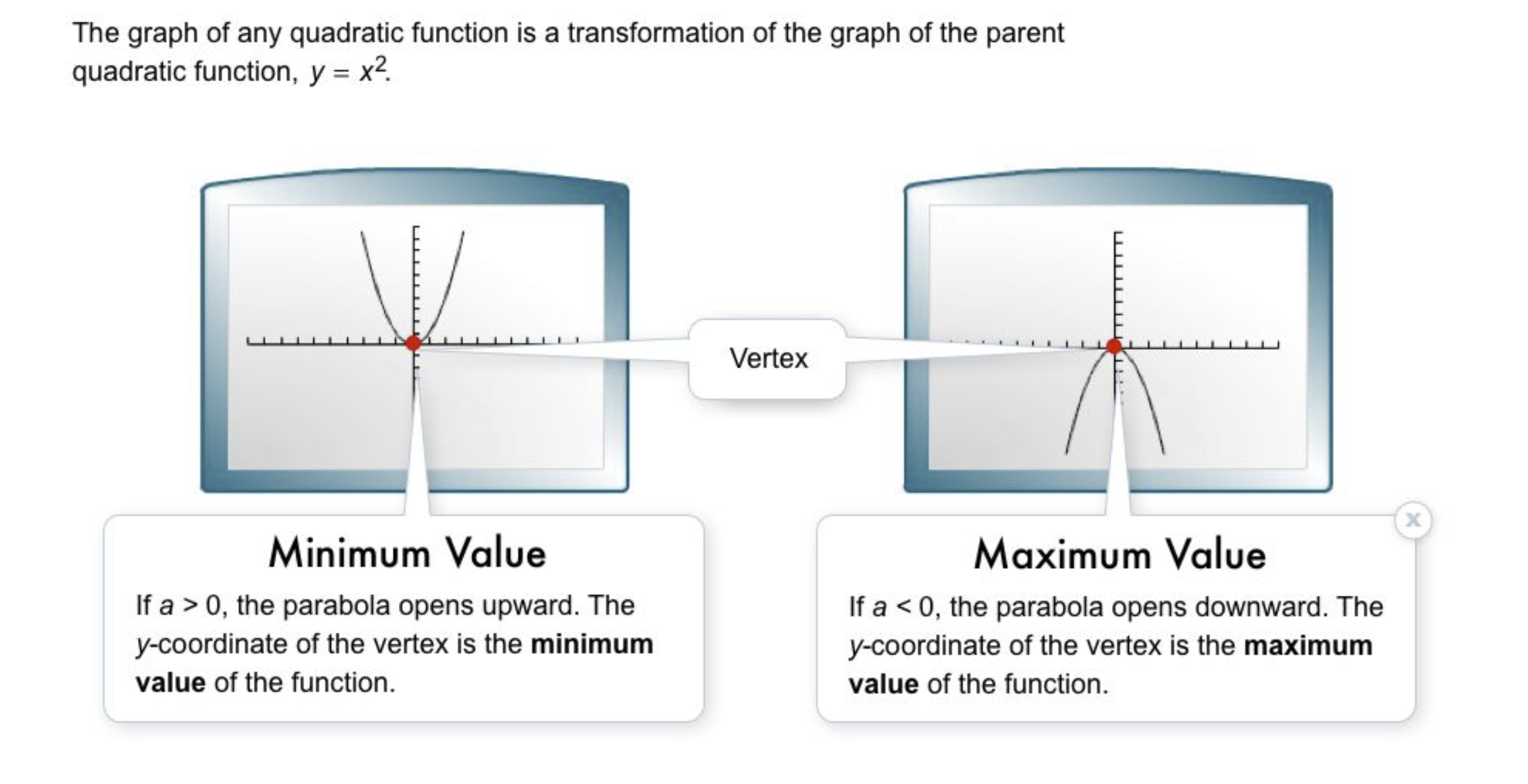
Problem 1 Got It? Reasoning: What can you say about the graph of the function below if a is a negative number?

20

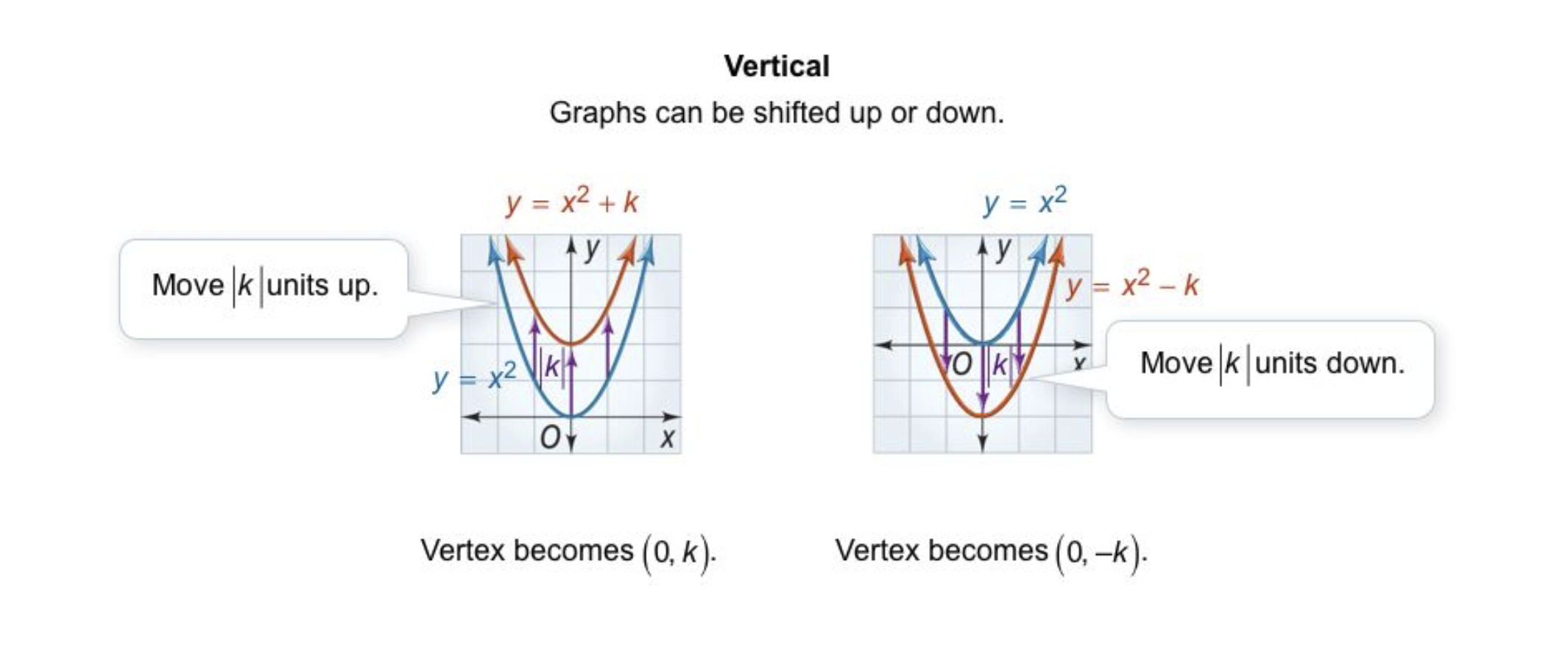
Problem 2 Got It? Sketch a graph the function on the canvas. Include relevant graph detail: label axes, indicate units and scale on both axes, and use arrows to represent end behavior as appropriate.

10

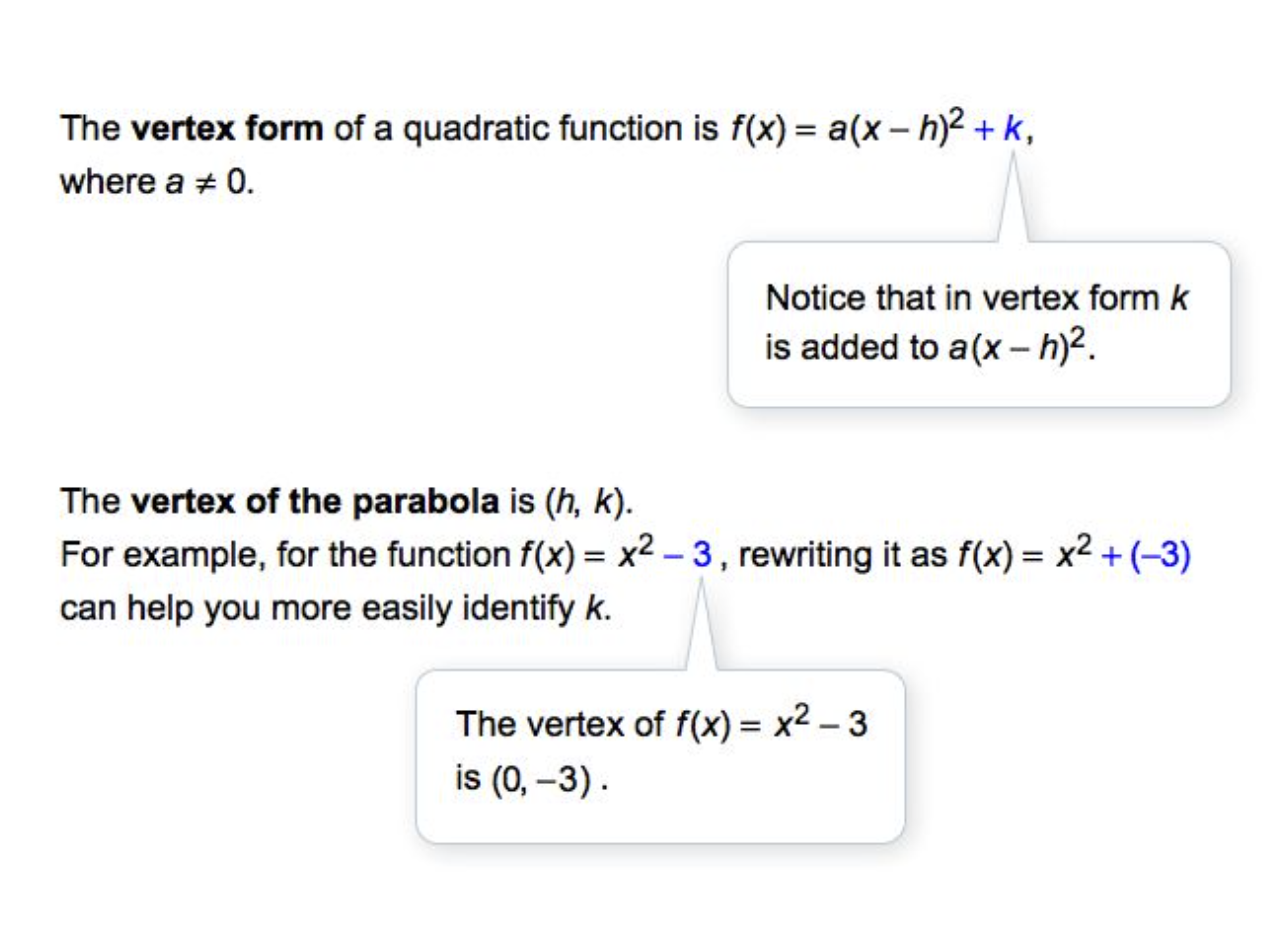
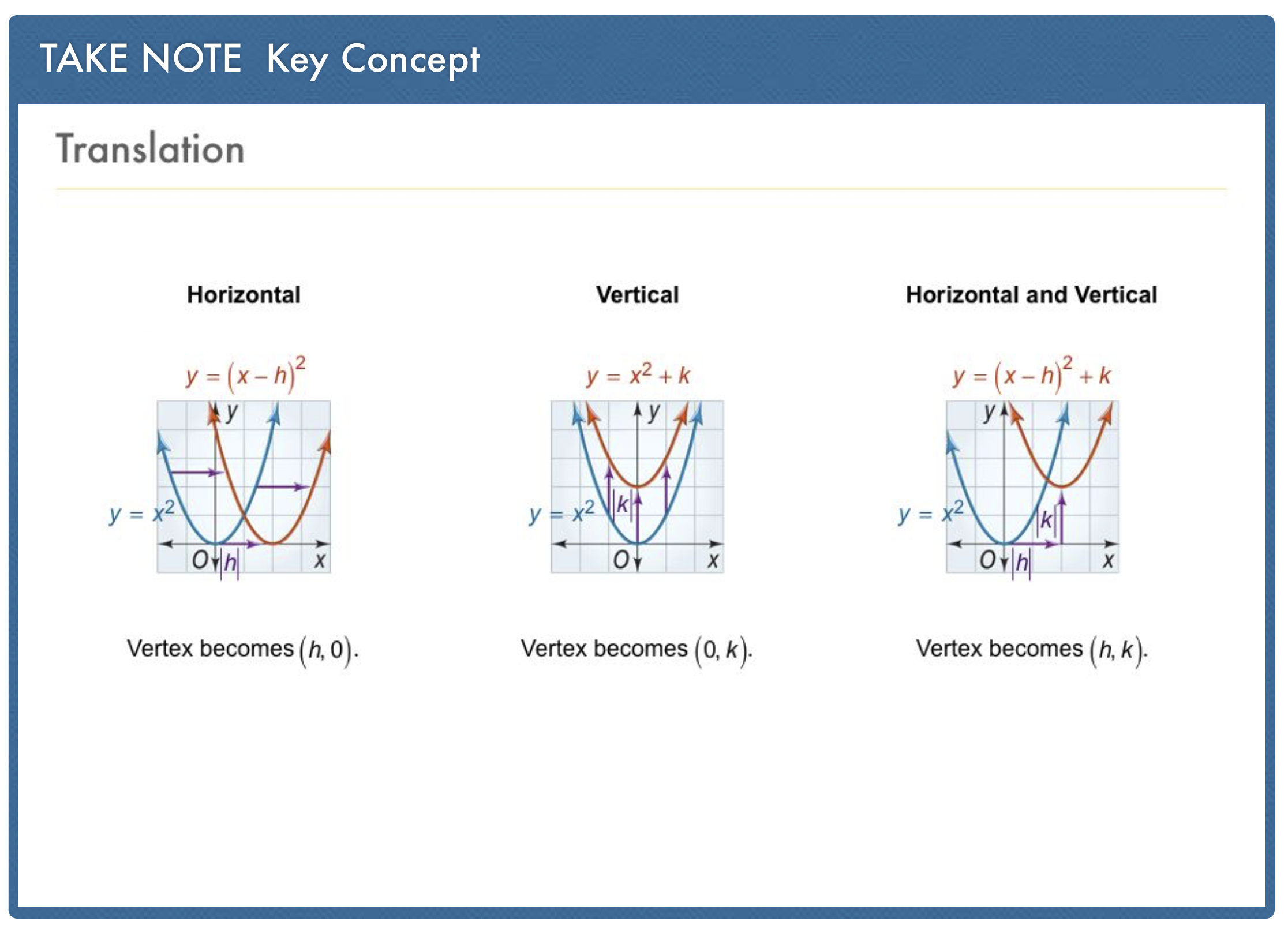
Problem 2 Got It? How is the graph of g(x) = + 3 in the previous item a translation of the parent function f(x) = ?

20

Problem 2 Got It? Sketch a graph the function on the canvas. Include relevant graph detail: label axes, indicate units and scale on both axes, and use arrows to represent end behavior as appropriate.

10

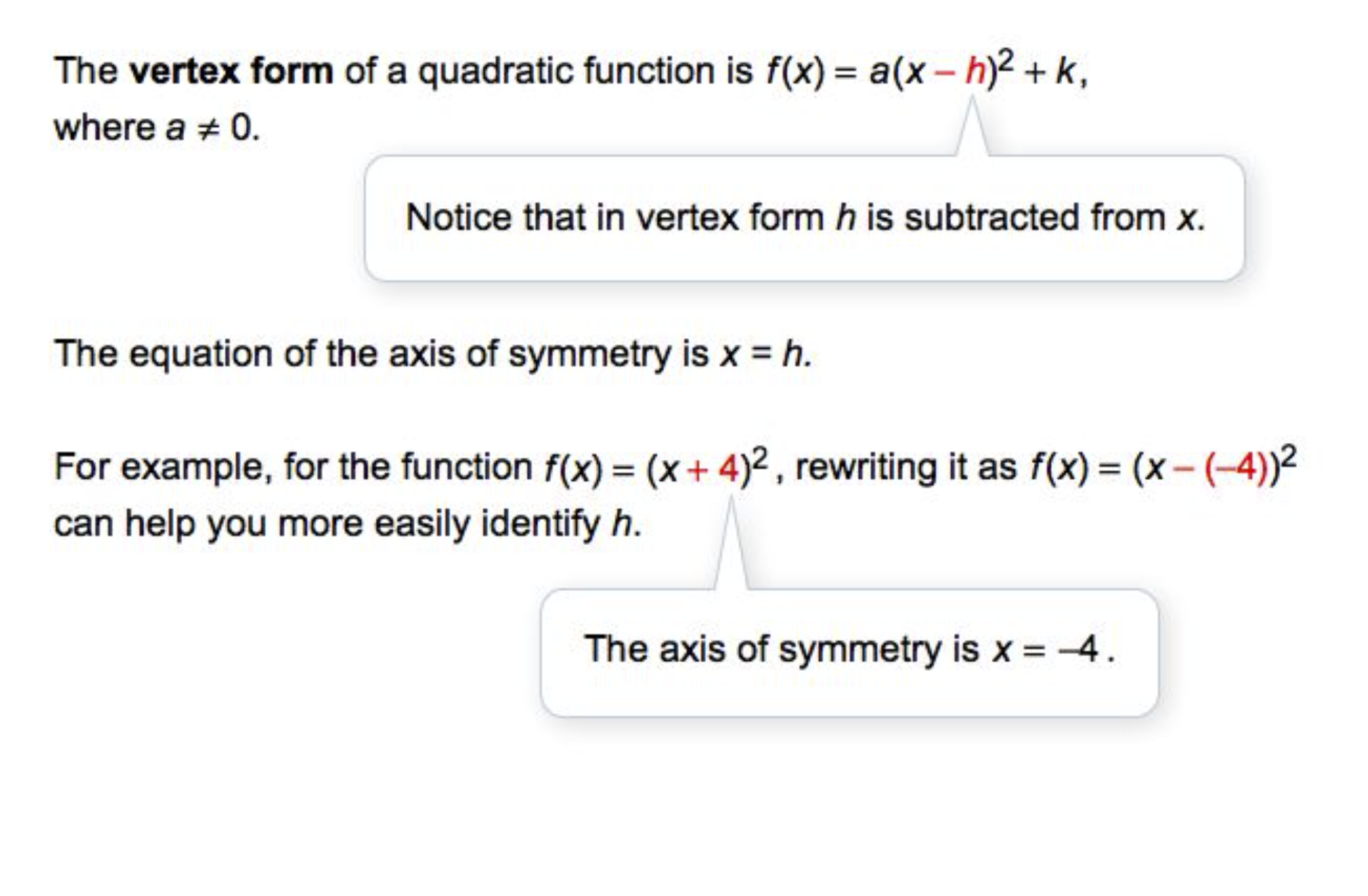
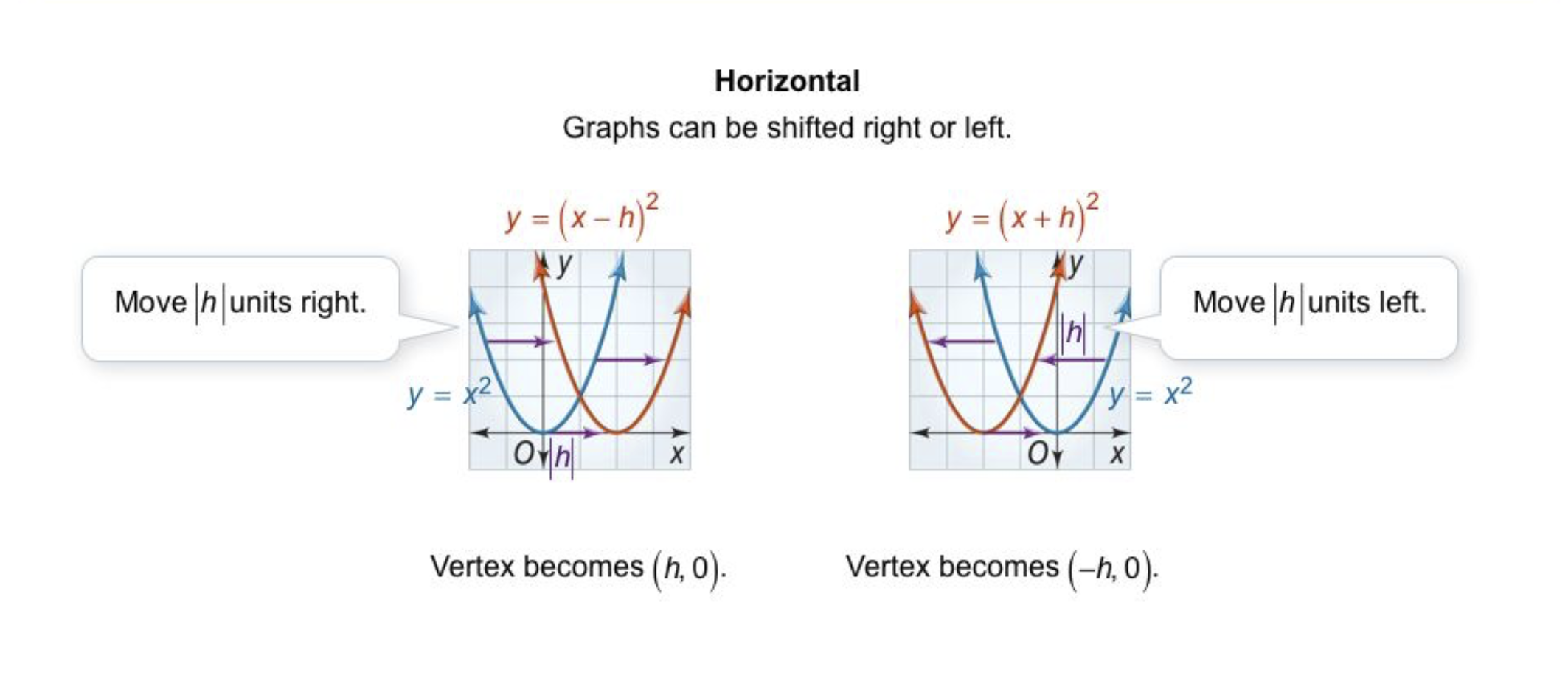
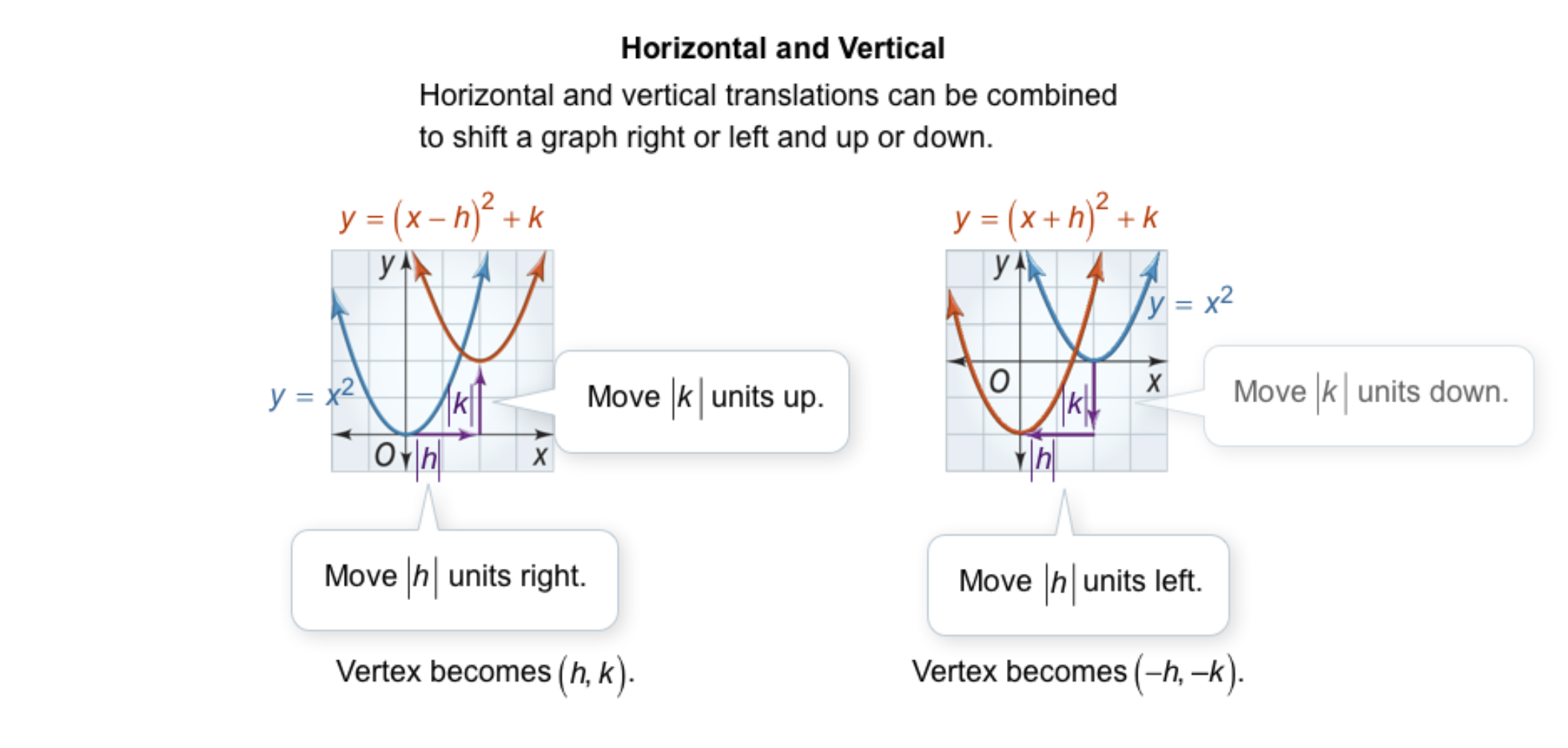
Problem 2 Got It? How is the graph of h(x) = (x + 1)² in the previous item a translation of the parent function f(x) = ?

10

Problem 3 Got It?

10

Problem 4 Got It?

10

Problem 5 Got It? Suppose the path of the jump changes so that the axis of symmetry becomes x = 2 and the height stays the same, 7. If the path of the jump also passes through the point (5, 5), what quaratic function would model this path?

20

Graphing: Sketch a graph of the function on the canvas. Include relevant graph details.

10

Analysis: Determine whether the function has a maximum or a minimum value. First complete without using graphing, but you may check your response on the embedded Desmos calculator.

10

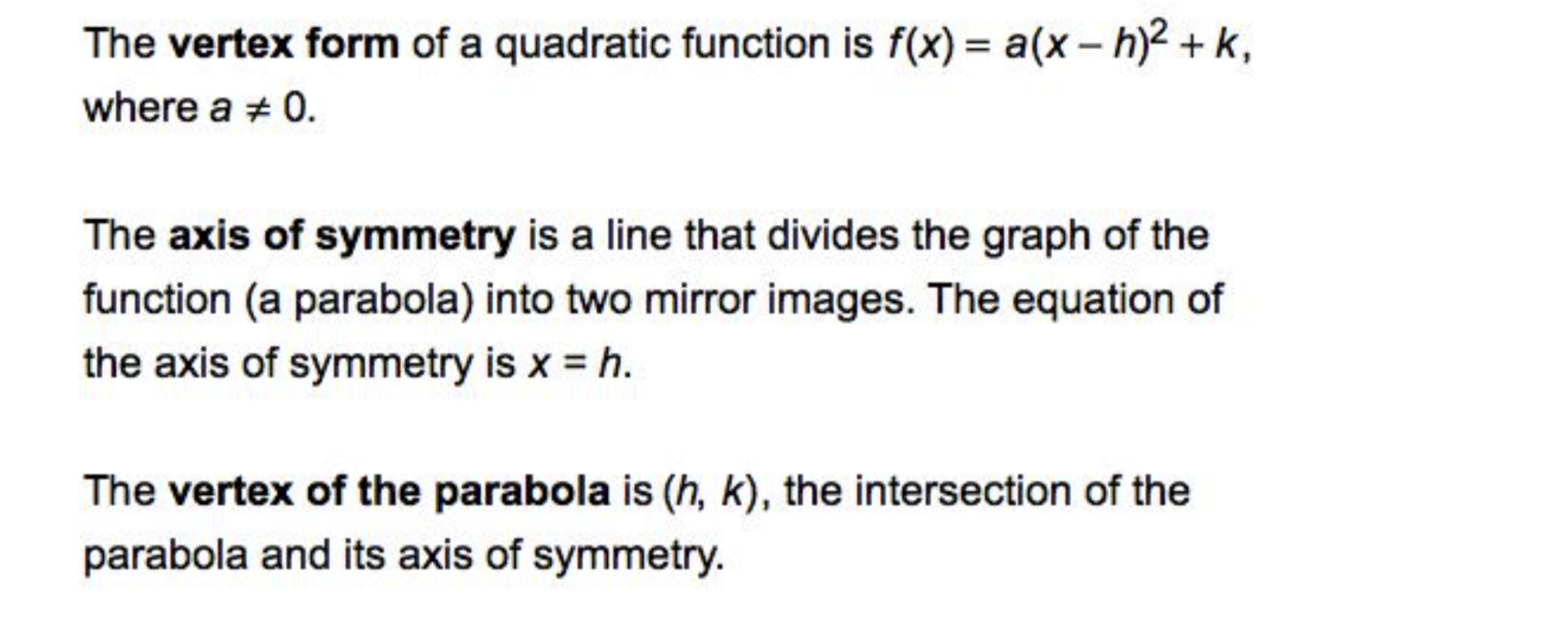
Conversion: Rewrite the equation in vertex form.

10
10

Reasoning: Is the equation a quadratic function? Explain.

10

Compare and Contrast: Describe the differences between the graphs of these functions.

10

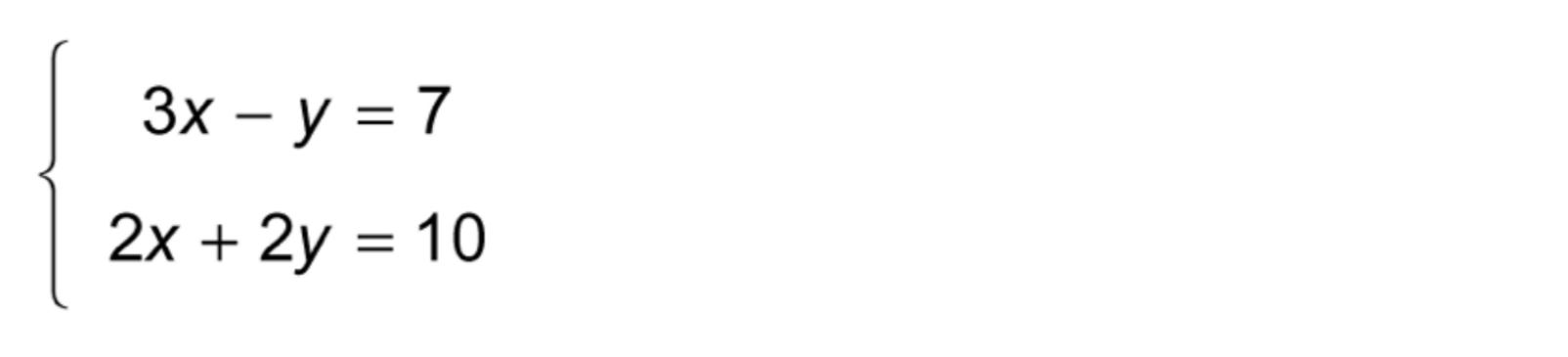
Review Lesson 3-6: Solve the system of equations using a matrix. Show your steps (row operations) and identify the solution on the canvas. You may use rectangles as matrix frames for convenience. The first frame is created for you.

10

Review Lesson 4-2: Graph the following absolute value functions on the same plane. Zoom and pan your graph to establish an appropriate viewing window.

10

Review Lesson 4-2: Match the absolute value function with its vertex.

  • (5, 0)
  • (0, 0)
  • (-1, 0)
10

Vocabulary Review: Circle the vertex of each absolute value graph. Use contrasting colors.

10

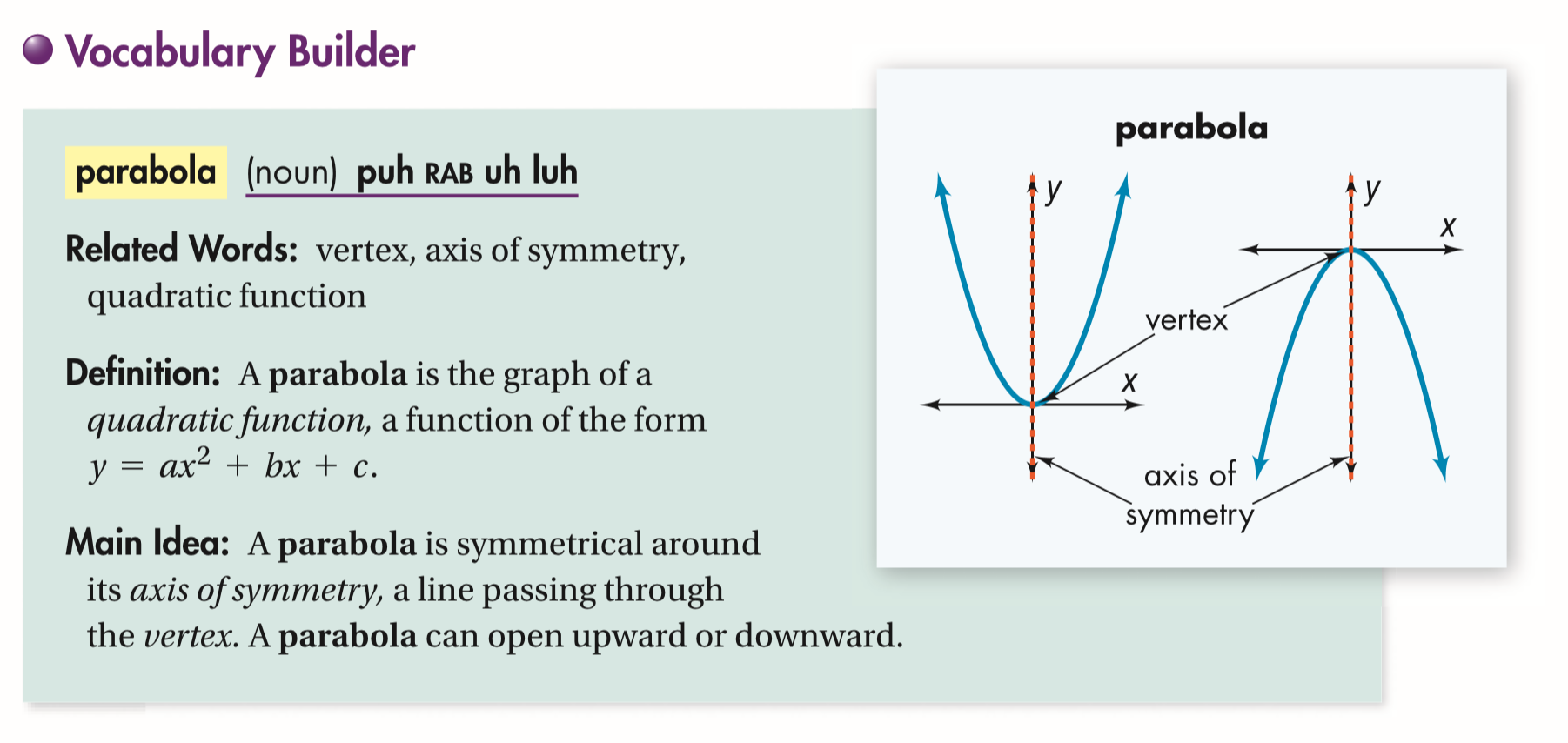
Use Your Vocabulary: Categorize each function based on whether or not its graph is a parabola.

  • Graph is a parablola
  • Graph is NOT a parabola
10

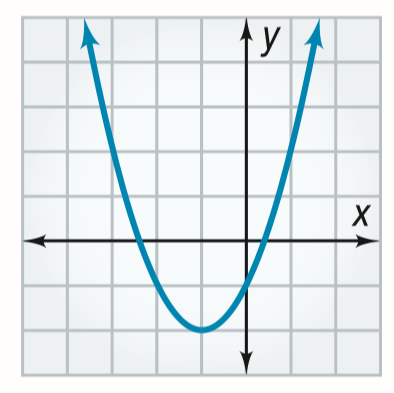
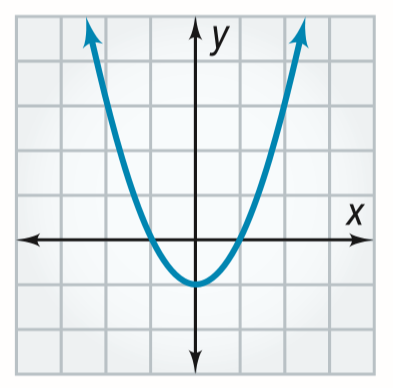
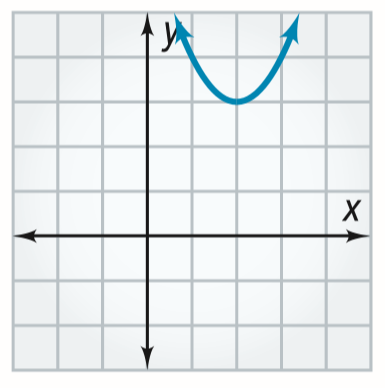
Translations: Match each parabola with its function. Assume that each grid line represents 1 unit.

  • y = x² - 1
  • y = (x + 1)² - 2
  • y = (x - 2)² + 3
100

Notes: Take a clear picture or screenshot of your Cornell notes for this lesson. Upload it to the canvas. Zoom and pan as needed.

For a refresher on the Cornell note-taking system, click here.

10

Reflection: Math Success