Tour the Basics
star
star
star
star
star
Last updated over 8 years ago
27 Nsɛmmisa
Hyɛ no nsow a efi ɔkyerɛwfo no hɔ:
Heredity Basics
1
1
1
1
1
1
1
1
1
1
1
1
1
1
1
1
1
1
1
1
1
1
1
1
1
1
1
Heredity Basics
Visit http://learn.genetics.utah.edu/content/basics/oldtour/ . Explore this activity to find the answers to the questions below.
NOTE: THE ACTIVITY AND THE SEQUENCE YOU SEE HERE ARE DIFFERENT! MAKE SURE YOU GO IN THE CORRECT ORDER.
I highly recommend that open the link in a new window and follow along in a side by side manner.
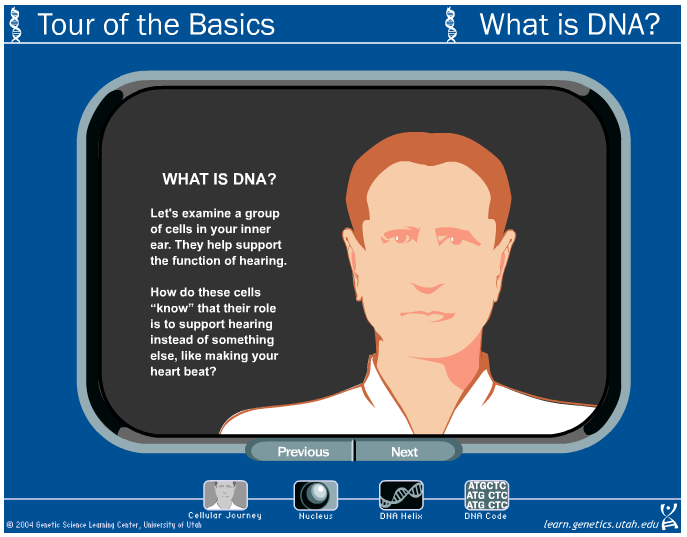
What is DNA?
What does “DNA” stand for?
What is the four-letter DNA alphabet and what are the special rules by which the alphabet pieces bond together?
What is a gene?
What are genes made of?
How many genes do humans have?
Genes contain the instructions for building what kind of molecules?
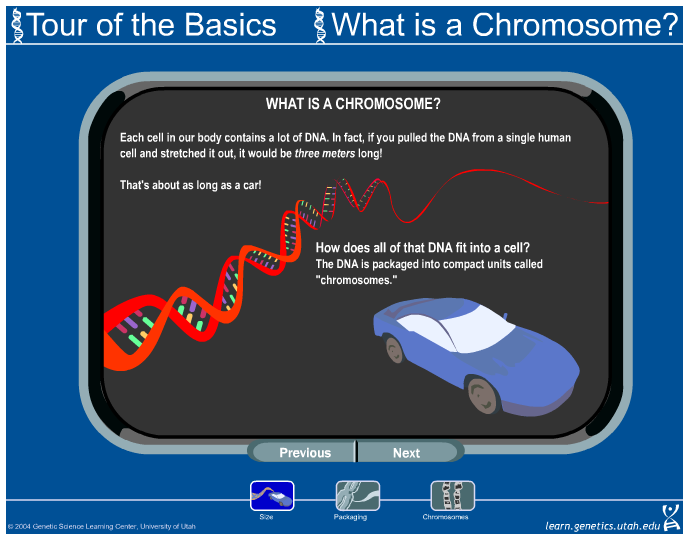
What is a chromosome?
How many chromosomes does a human cell hold? (please write a number)
How are the human sex chromosomes labeled?
How many different kinds of proteins does one cell contain?
Why do scientists use computer programs to model protein structure and function?
What provides the “blueprint” for making a protein?
Which organelle is responsible for actually making proteins?
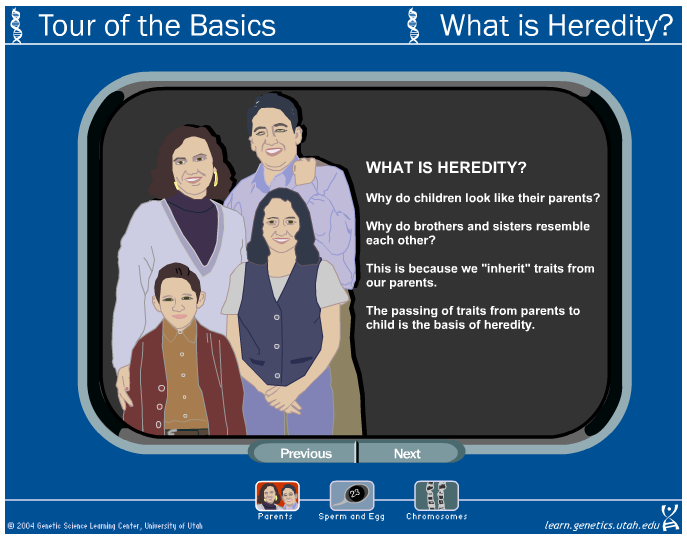
What is heredity?
Why aren’t children identical to either one of their parents?
In humans, how many chromosomes does each parent pass on to their offspring?
The second baby in the “What is Heredity?” animation inherited the exact same chromosomes as the first?
Both babies have a complete set.
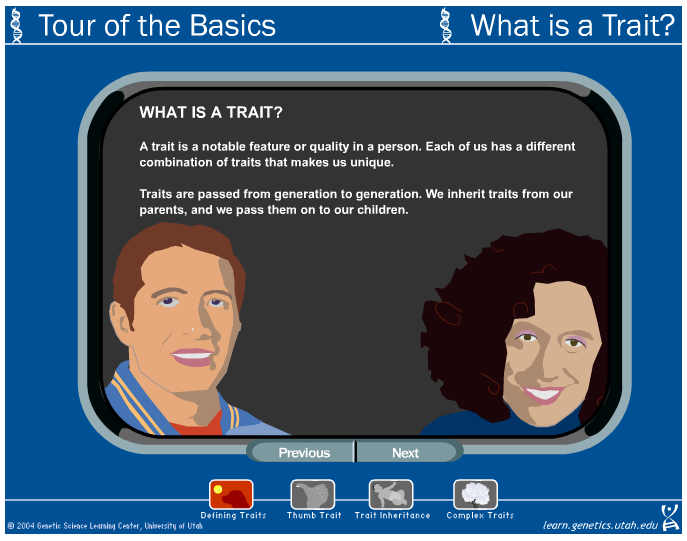
What is a trait?
Select the three types of traits
Give an example of how environmental factors can influence a trait.
What is an allele?
What does the term homozygous mean?
What happens when two different alleles are present?
What does the term heterozygous mean?
All humans share 99.9% identical DNA