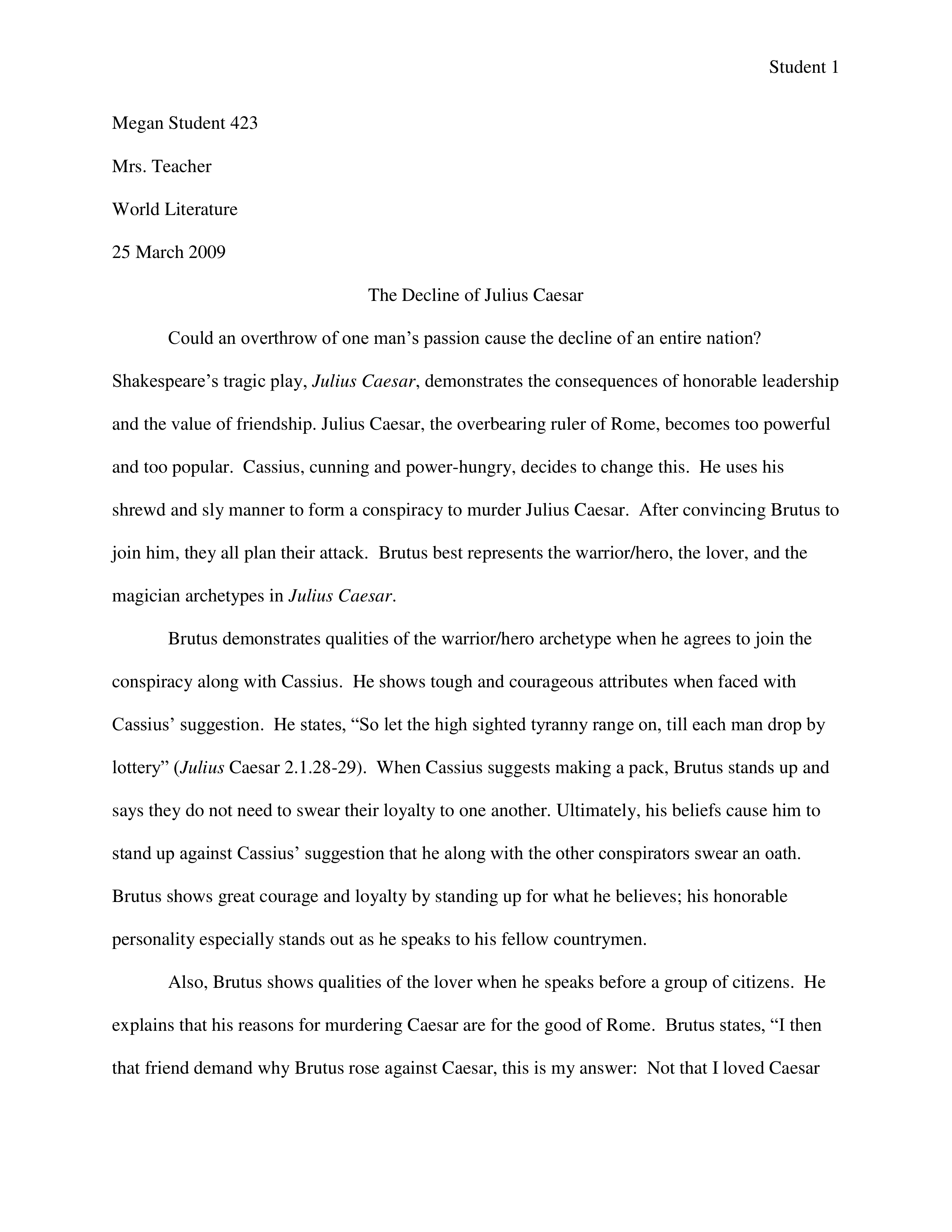
ALL of the following describe either the purpose of a lead-in or what a lead-in is EXCEPT:
Question 2
2.
According to the essay pictured, which of the following are lead-ins the writer uses?
I. The argument continues . . .
II. According to the text . . .
III. He states . . .
IV. As the quarrel escalates Cassius states . . .
Question 3
3.
To demonstrate that a writer knows how to effectively use a lead-in, the writer must do all of the following EXCEPT:
It is a dependent clause.
It helps contextualize the quotation.
It usually comes before the actual quotation.
It provides the reader with information regarding the source.
I, III, and IV
Before the lead-in, provide the reader with a brief summary of what was going on in the text before the quoted material is inserted. This is known as the set-up sentence.
Immediately after the lead-in, provide the citation.
After the quotation, place quotation marks to show where the quotations ends.
After the citation, place the end punctuation (i.e. period, question mark, etc.)
In the sentence following the lead-in, quotation, and citation (or documentation), elaborate and explain how the quotation supports the writer's claim or thesis.