Vanity & Self-Love -- Narcissus Myth
star
star
star
star
star
Last updated over 7 years ago
12 Nsɛmmisa
3
3
3
3
3
3
4
5
2
2
2
5
PART I - Directions: Read the information below and then answer the questions that follow.
Myths as Examinations of Human Nature Many Greek myths use storytelling to explain truths about human by exposing flaws that we all possess (Do not take the human in human nature too literally. More often than not, it is the gods who are demonstrating human flaws.). Who can say that he or she has never been vain like Narcissus or foolish like Echo? In order to make the criticism as clear as possible, the characters always take these flaws to extremes --- Narcissus is incredibly vain, and Echo is incredibly foolish. The myths also warn the audience to avoid the behaviors that lead the characters into so much trouble. Echo, who prattles on endlessly, loses her voice. Narcissus, who callously breaks the heart of everyone else, accidentally breaks his own. By reading about the fates of these fictional characters, the audience learns from the characters’ mistakes but is spared the pain of going through the situation themselves. This is one of the many great uses of literature. Out of the many character flaws outlined by the myths, the most common is hubris. Over the years hubris, which used to be a generic word for crime, came to mean “overweening or excessive pride.” Most Greek tragedies – plays that tell of the downfall of a noble character – preach against the dangers of putting oneself above the gods, the most extreme case of hubris. Time and time again, characters in Greek mythology suffer because of their pride. Narcissus’ excessive pride comes from his looks, and eventually those he has callously wronged call on the gods to cut him down to size. The Greek goddess Nemesis is just the god for the job. Nemesis was inescapable – she always got her man (or woman as the case may be). She was the personification of divine retribution, a force that made those who committed the crime of hubris wish they had never been born.
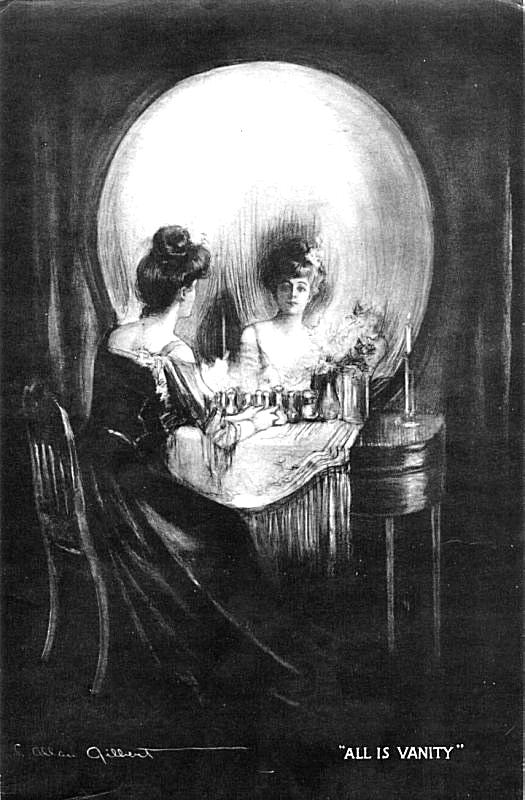
Take a careful look at the painting/drawing below (titled "All is Vanity"). What is the optical illusion trying to say about vanity or “self-love”?
How does Narcissus commit the crime of hubris? Explain carefully.
Where do you see the dividing line between narcissism and self-esteem? Explain.
What famous person (or film/TV character)—living or dead—might be a somatic narcissist? Explain.
(Somatic narcissists derive their excessive pride from their appearance, their physical beauty, and their ability to attract admirers.)
What famous person (or film/TV character)—living or dead—might be a cerebral narcissist? Explain.
(Cerebral narcissists derive their excessive pride from their intellect and their academic achievements.)
Do you notice narcissism in one sex more than the other? Explain.
In Greek society male beauty was highly prized. If this story were set in your society today, would Narcissus be a man or a woman? Give a detailed explanation.
Does Narcissus get what he deserves? Does Echo? Explain.
Grandiose narcissism includes traits like...
Narcissistic Personality Disorder is...
Problems that can occur with narcissistic leaders include... (select ALL that apply)
How do you see narcissism play out on social media? Do you think people who act in a narcissistic way on social media know how others see them? Explain.