Log in
Sign up for FREE
arrow_back
Library
Unit 1 Introduction to Anatomy and Physiology
By Terri Randall
star
star
star
star
star
Share
share
Last updated over 7 years ago
14 questions
Add this activity
Note from the author:
Intro to Anatomy and Physiology
zoom_in
zoom_in
1
zoom_in
1
Question 1
1.
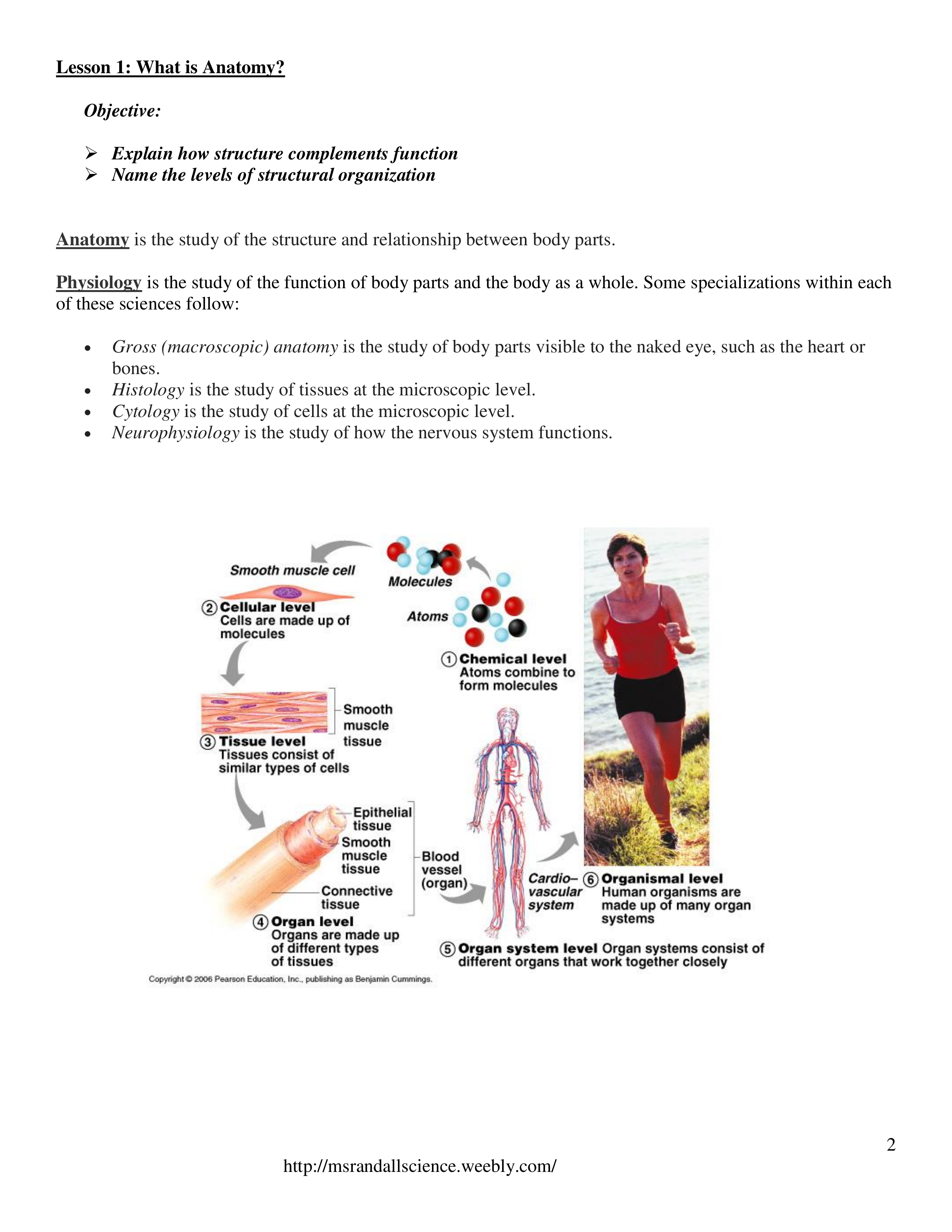
At what level of structural organization are atoms and molecules?
A. chemical
B. particle
C. elemental
D. tissue
2
3
zoom_in
1
1
zoom_in
4
5
zoom_in
1
1
zoom_in
6
zoom_in
1
Question 6
6.
In a feedback loop, effectors
A. receive information from stimuli.
B. receive information from the control center.
C. receive information from receptors.
D. send information to the control center.
7
8
9
zoom_in
1
1
1
10
11
zoom_in
1
1
zoom_in
zoom_in
12
zoom_in
1
Question 12
12.
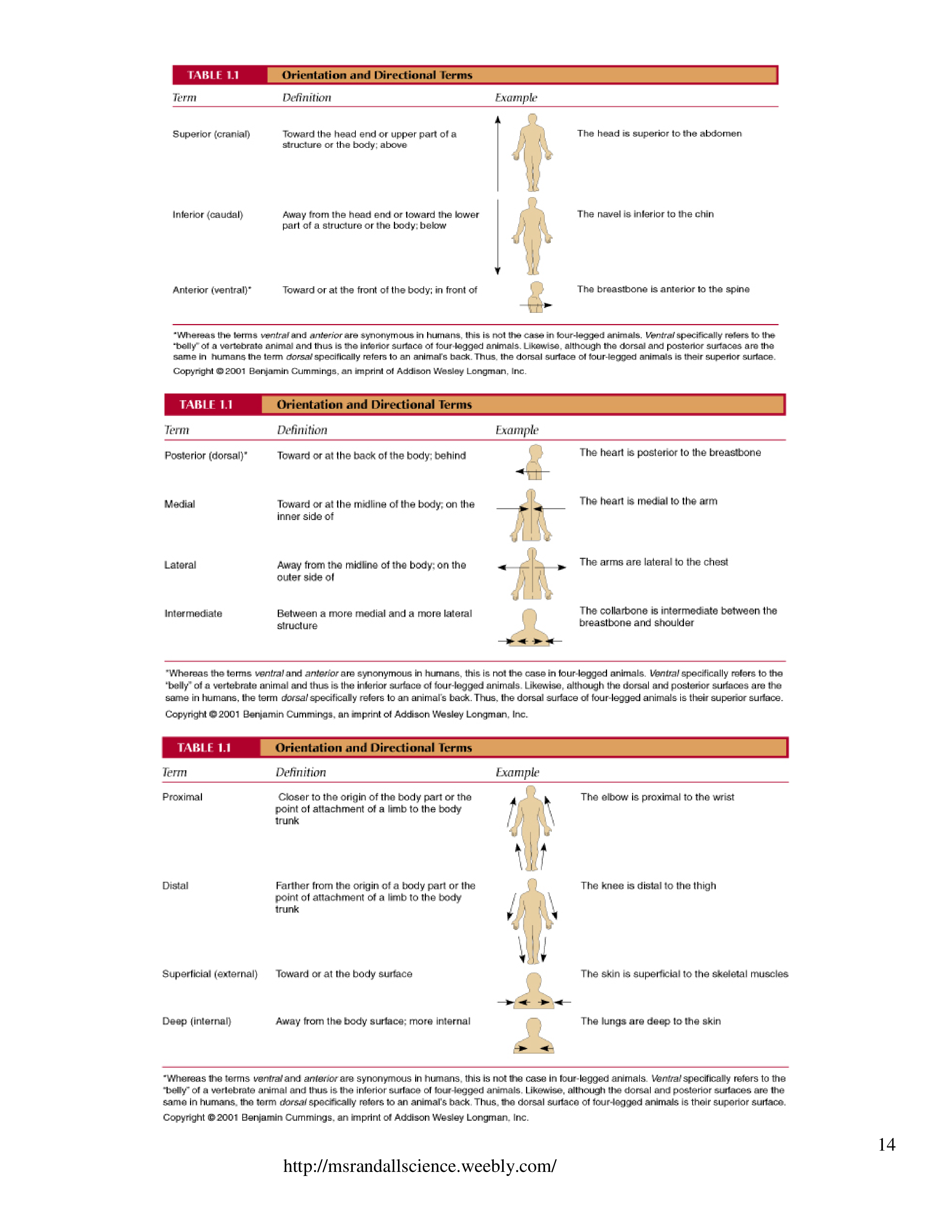
Which of the following regions of the lower limb is most proximally located?
A. ankle
B. thigh
C. knee
D. toe
zoom_in
13
zoom_in
1
Question 13
13.
In the anatomical position, the right thumb is ___ to the right index finger.
A. medial
B. lateral
C. superior
D. distal
14
zoom_in
1
Question 14
14.
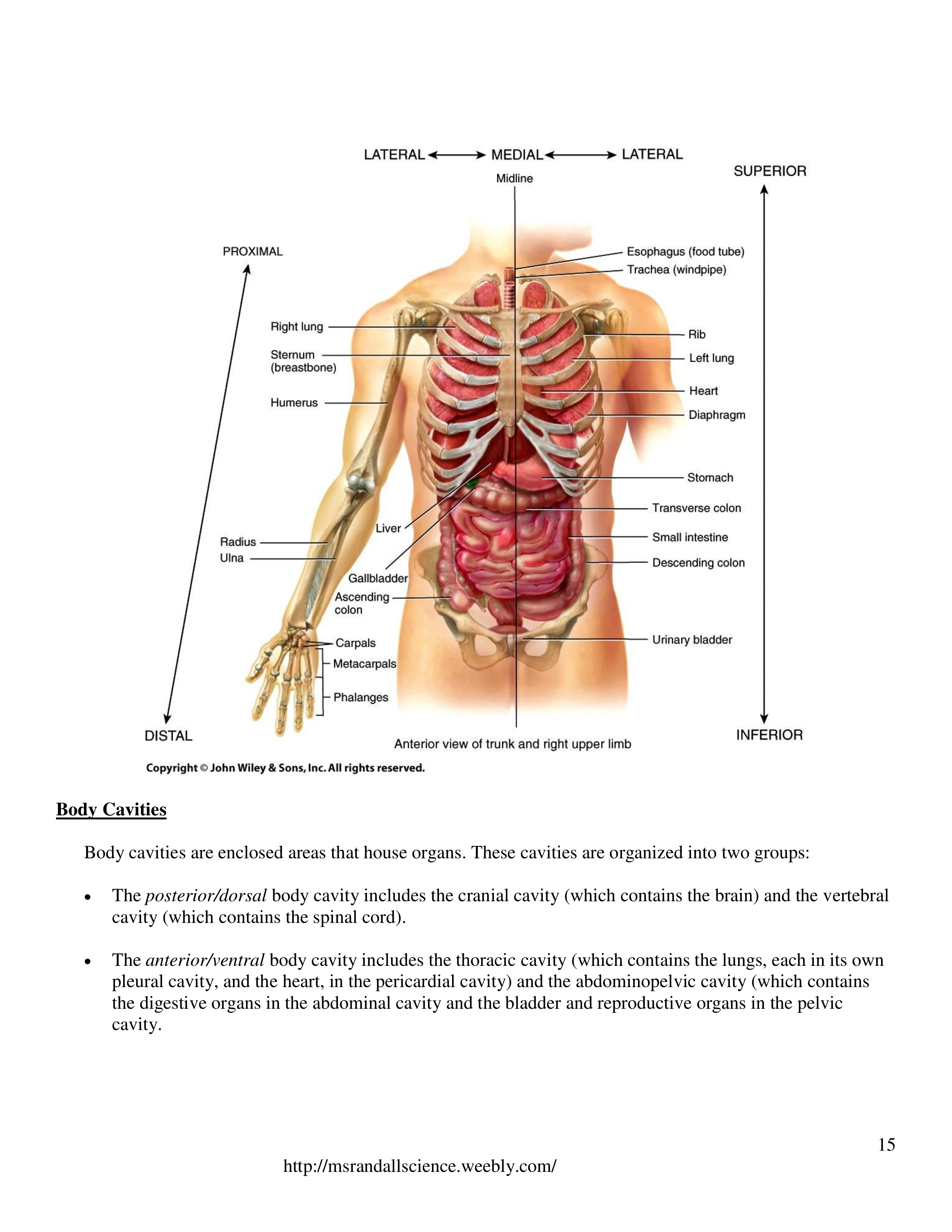
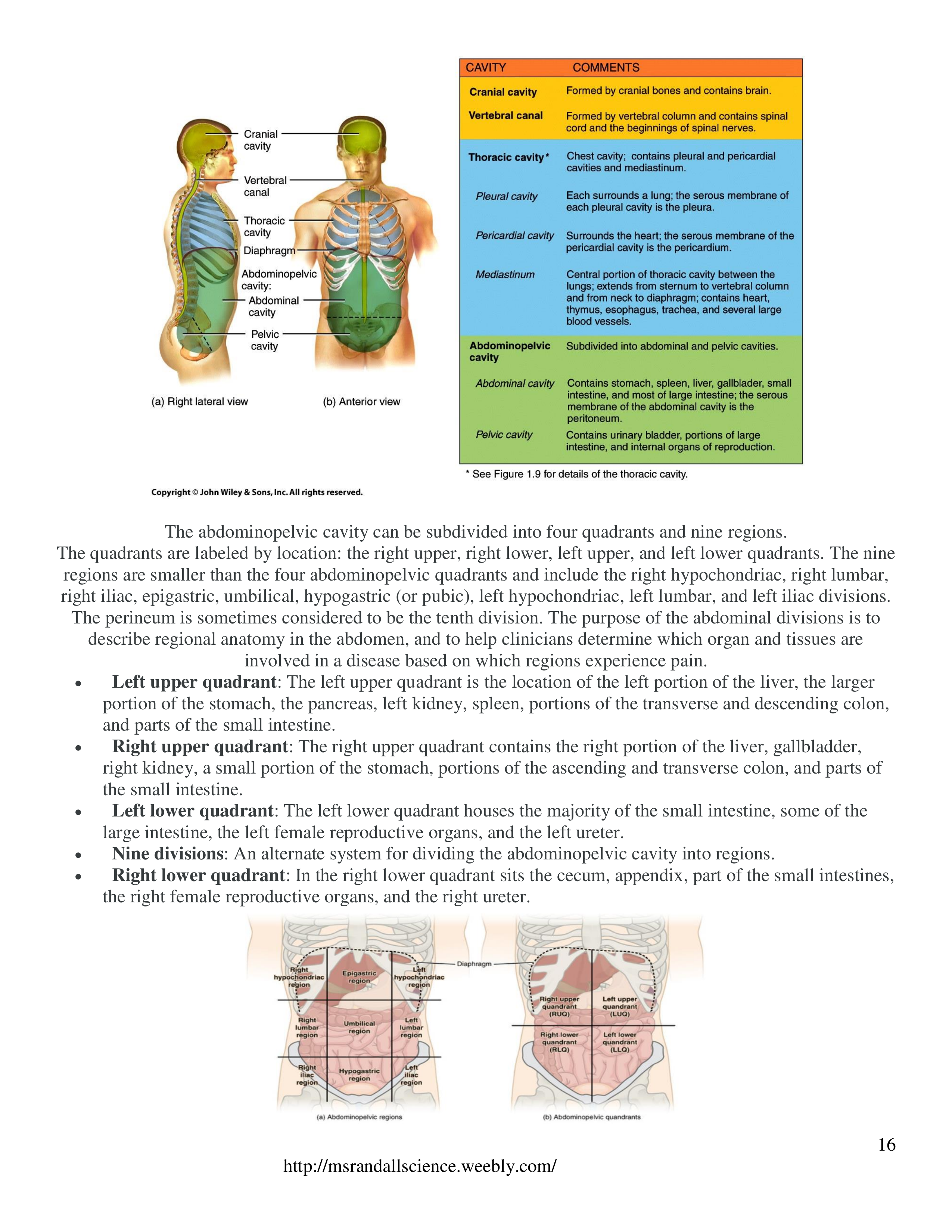
The cranial cavity contains the
A. organs of the reproductive system.
B. heart
C. brain
D. organs of the digestive system
Question 2
2.
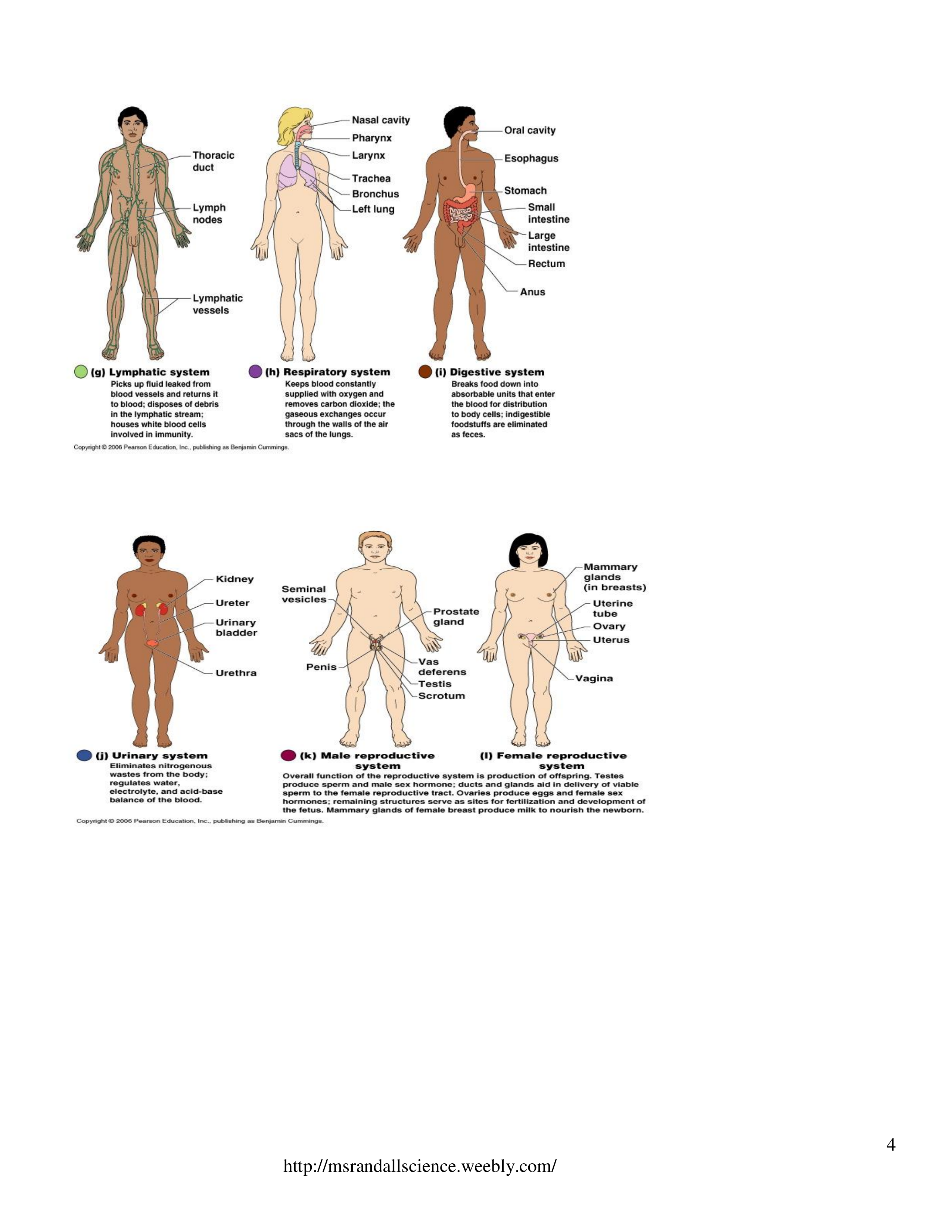
The uptake of oxygen and elimination of carbon dioxide in the lungs is a function of the
A. Digestive system
B. Circulatory system
C. Respiratory system
D. Excretory system
Question 3
3.
Which system is most involved in regulating body temperature?
A. Urinary system
B. Integumetary system
C. Respiratory system
D. Digestive system
Question 4
4.
1. One characteristic of living things is responsiveness. This term is defined as
A. An intentional change in an organism’s position.
B. The changing of absorbed substances into usable forms.
C. An increase in the number and/or size of cells as the organisms eat more food.
D. The ability to detect and respond to changes in its internal or external environment.
Question 5
5.
What systems of the body control homeostasis by regulating body activities?
A. respiratory and digestive
B. skeletal and muscular
C. urinary and reproductive
D. nervous and endocrine
Question 7
7.
In a negative feedback system, when blood pressure increases slightly, the body will respond by causing a number of changes that tend to
A. lower blood pressure to the previous stable level.
B. lower blood pressure continually.
C. raise blood pressure to a higher stable level.
D. raise blood pressure continually.
Question 8
8.
In a feedback system, the ___ monitors changes in a controlled condition and sends input to the ___.
A. control center; receptor
B. control center; effector
C. receptor; effector
D.receptor; control center
Question 9
9.
A positive feedback system is one in which
A. the response reverses the original stimulus.
B. the responses enhance the original stimulus
C. the responses are advantageous to the body for a long time
D. the responses correct all the negative changes to the body
Question 10
10.
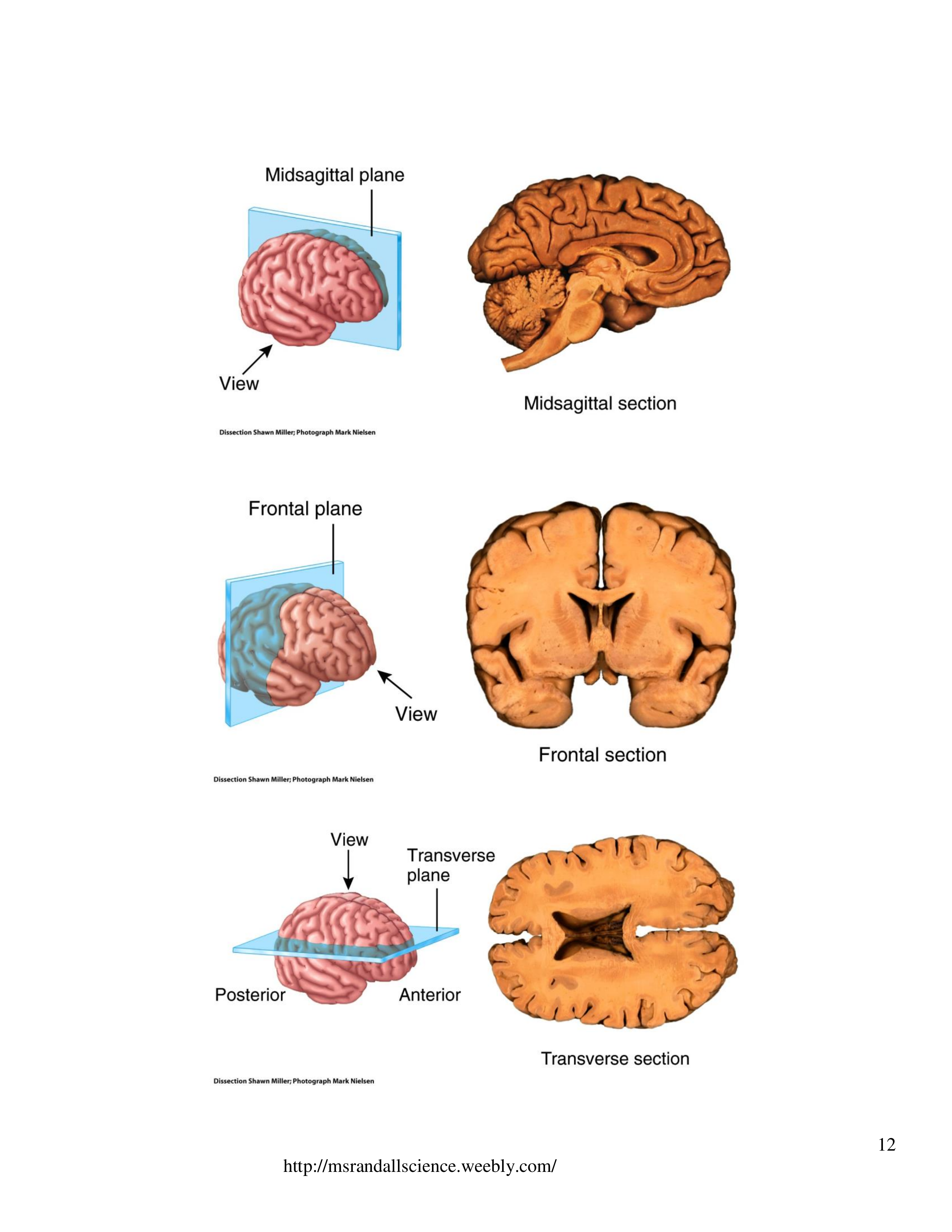
A frontal section would divide the body into
A. superior and inferior portions.
B. equal right and left portions
C. anterior and posterior portions.
D. right and left portions.
Question 11
11.
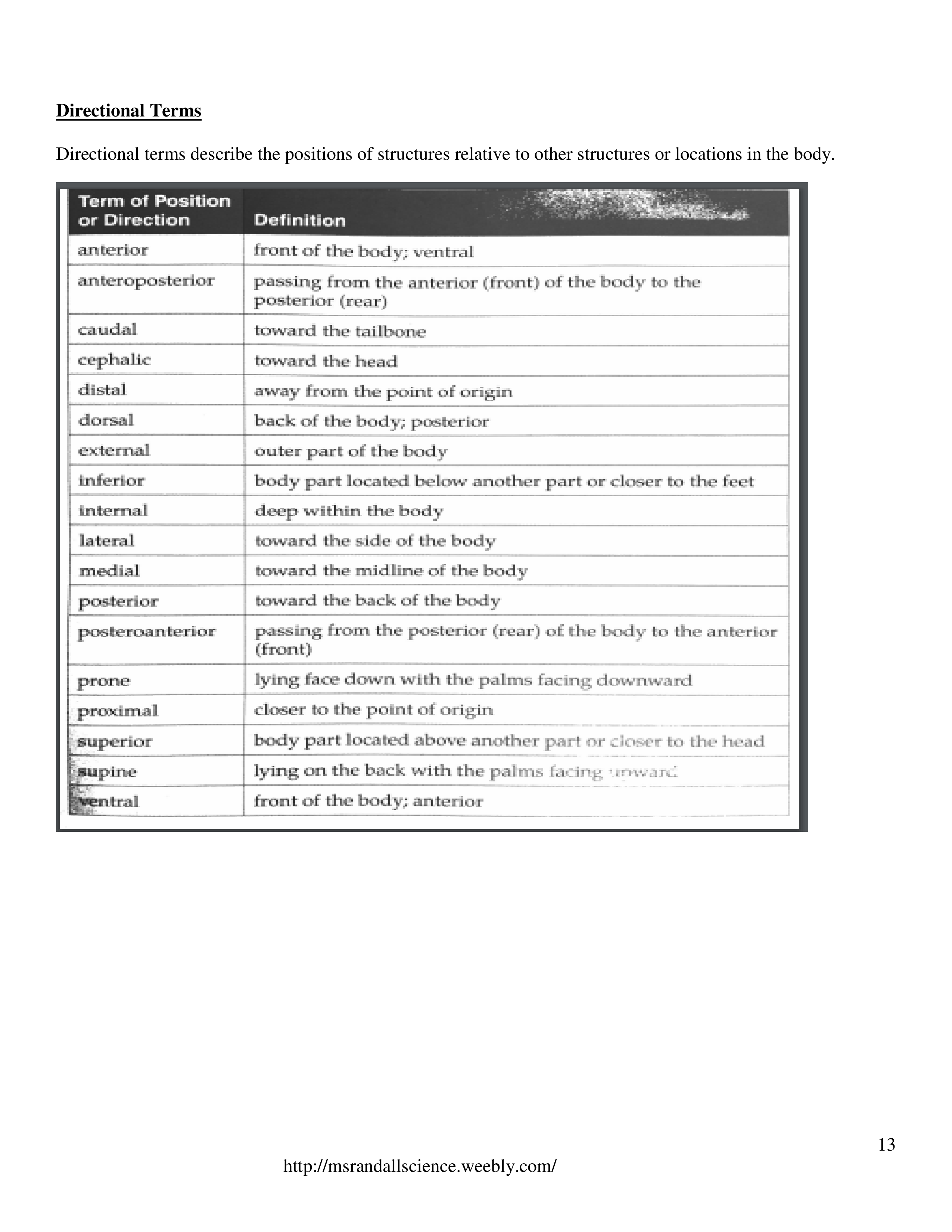
In the anatomical position, the body is
A. prone, face down, palms facing superior.
B. seated, arms extended, palms facing inferior
C. standing erect, arms at the sides, palms facing anterior
D. supine, face up, palms facing posterior.