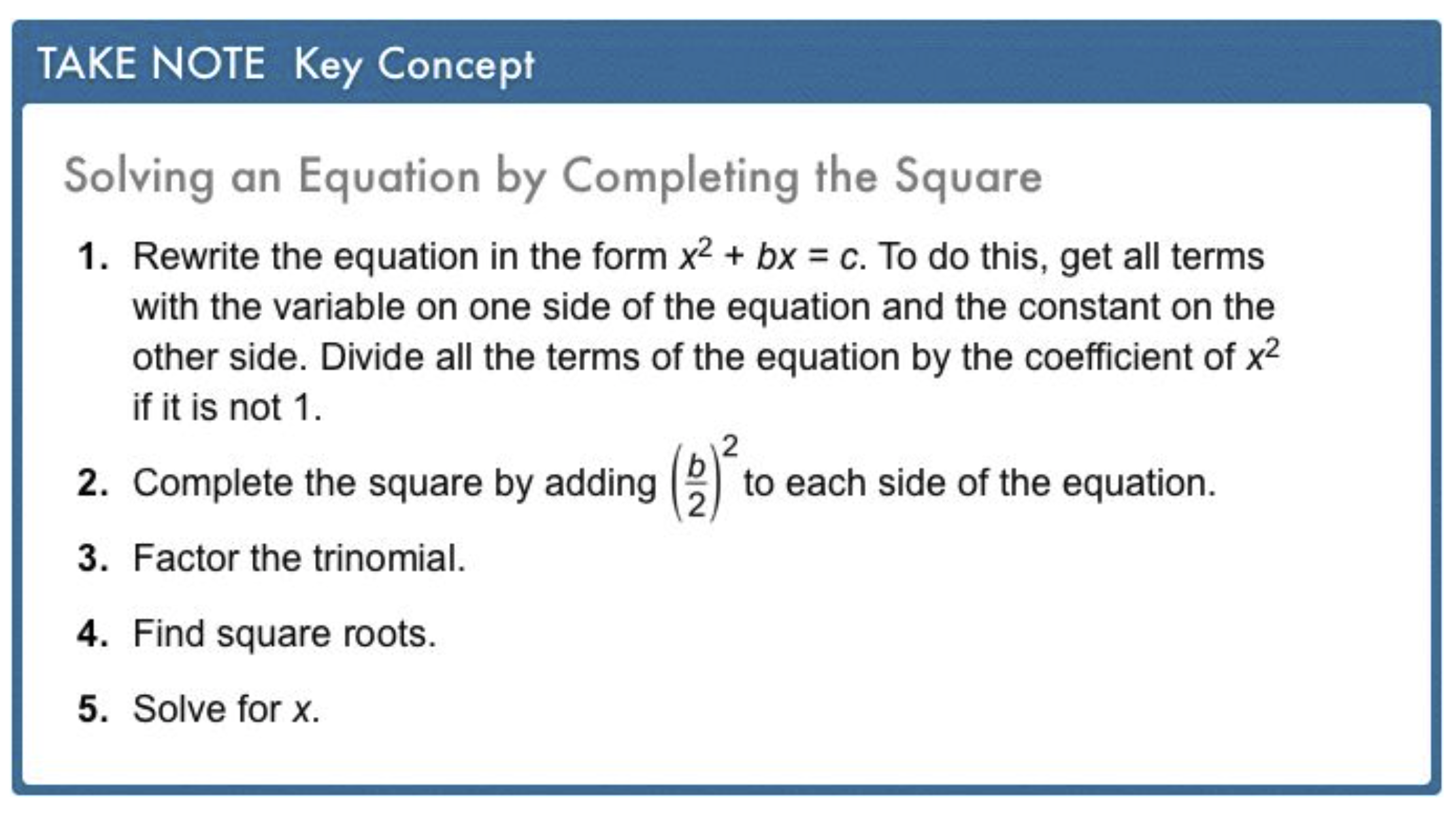
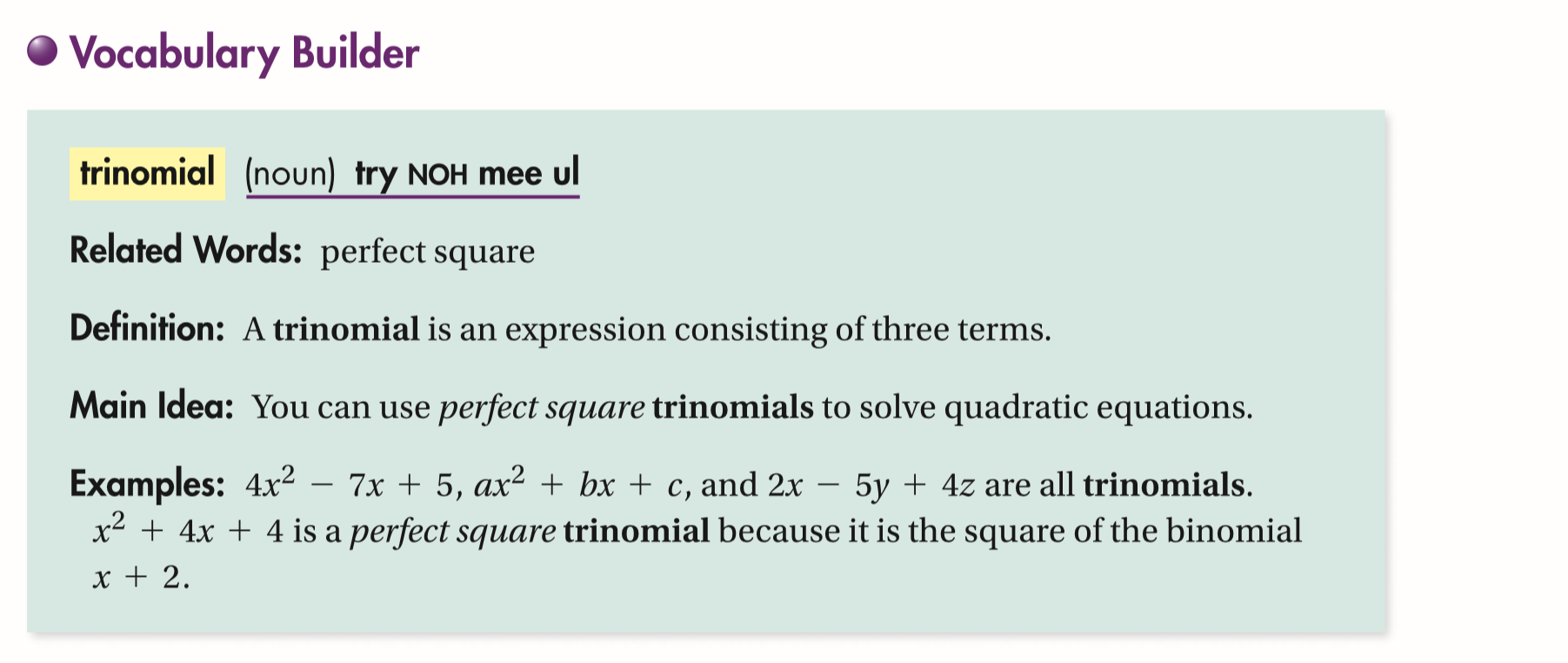
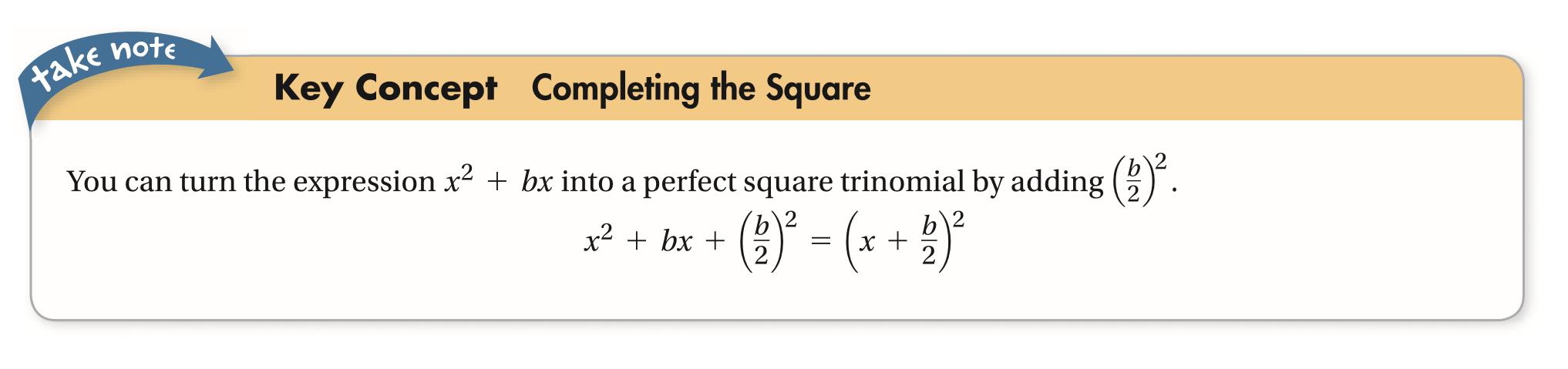
A complete formative lesson with embedded slideshow, mini lecture screencasts, checks for understanding, practice items, mixed review, and reflection. I create these assignments to supplement each lesson of Pearson's Common Core Edition Algebra 1, Algebra 2, and Geometry courses. See also mathquest.net and twitter.com/mathquestEDU.


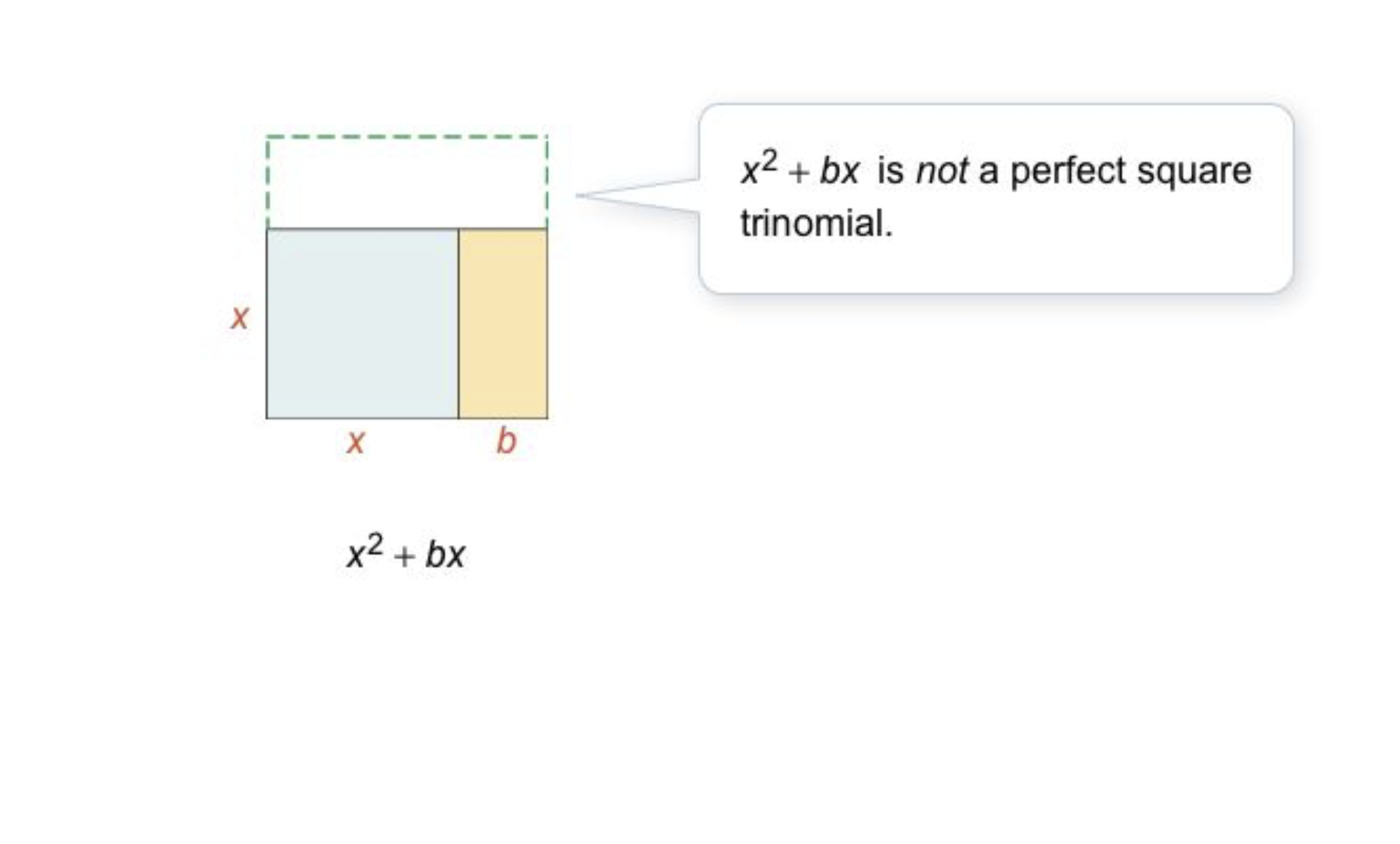
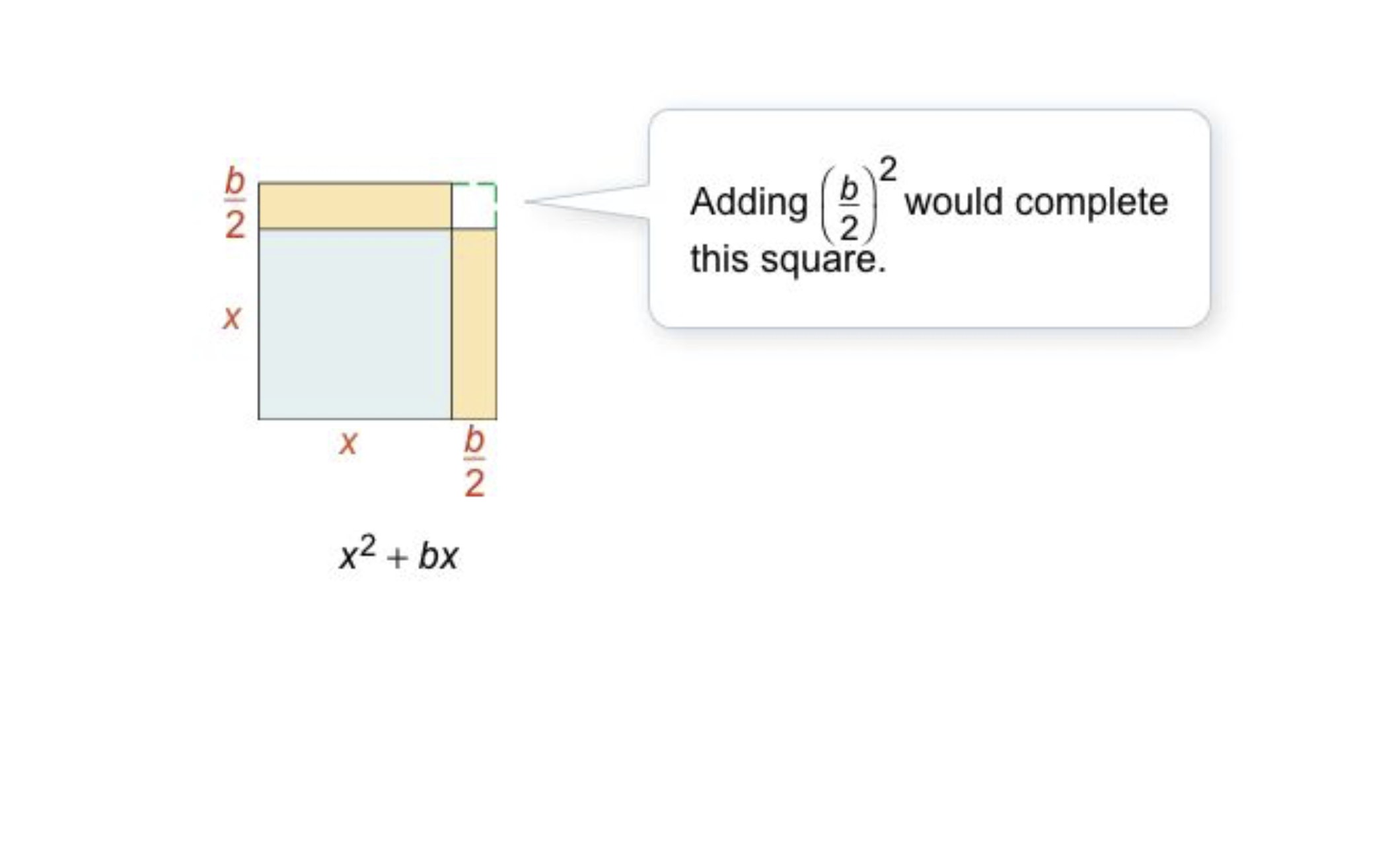
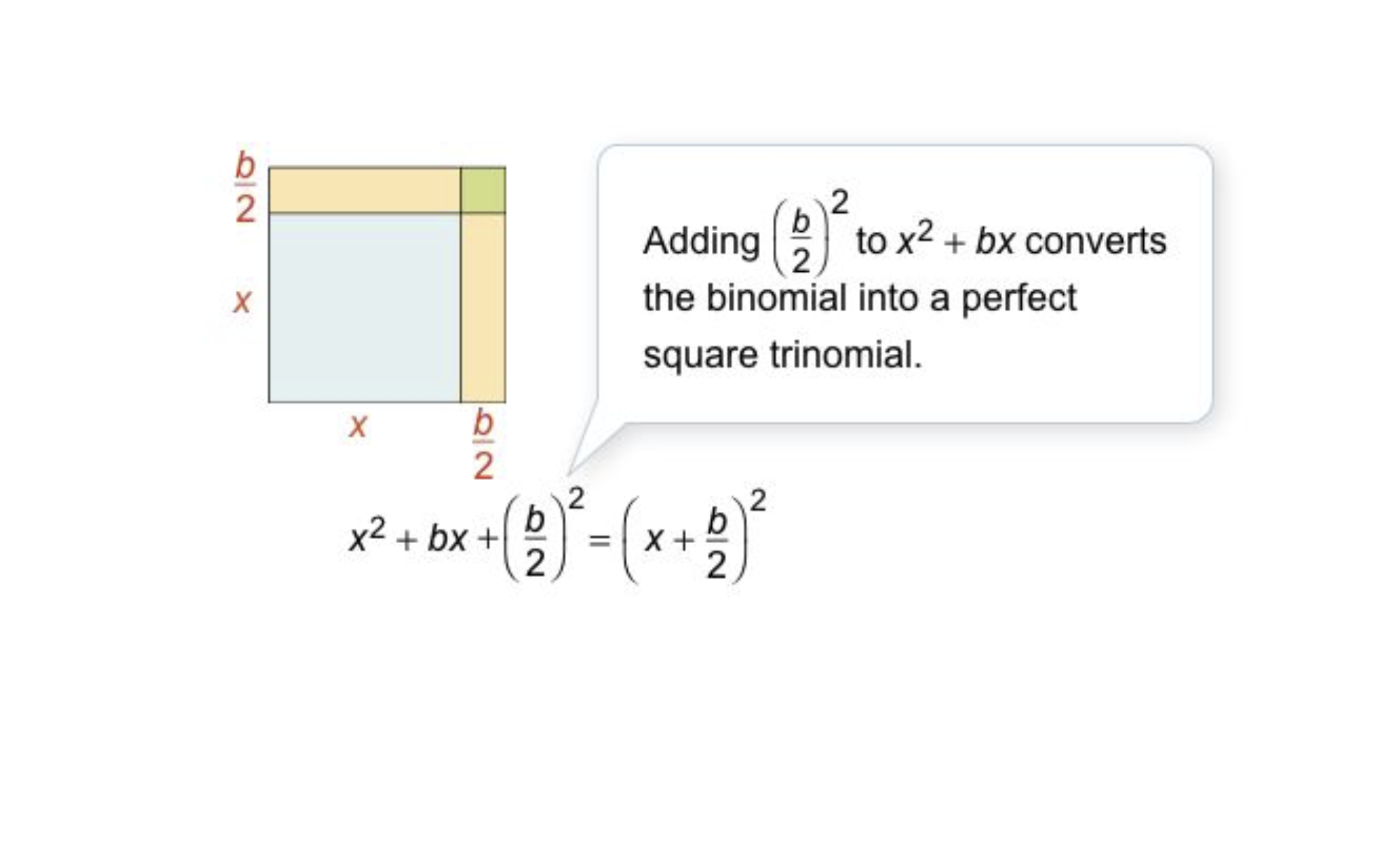
Solve It! How can you use pieces like these to form a square with side length x + 3 (and no overlapping pieces)? Show a sketch of your solution on the canvas. Use bright contrasting colors.
You may also create a copy of this Google Drawing and use it for your model. If you do, upload a screenshot to the canvas.

Problem 1 Got It?

Problem 1 Got It?

Problem 2 Got It? The lengths of the sides of a rectangular window have the ratio 1.6 to 1. The area of the window is 2822.4 in.². What are the window dimensions?

Problem 3 Got It?
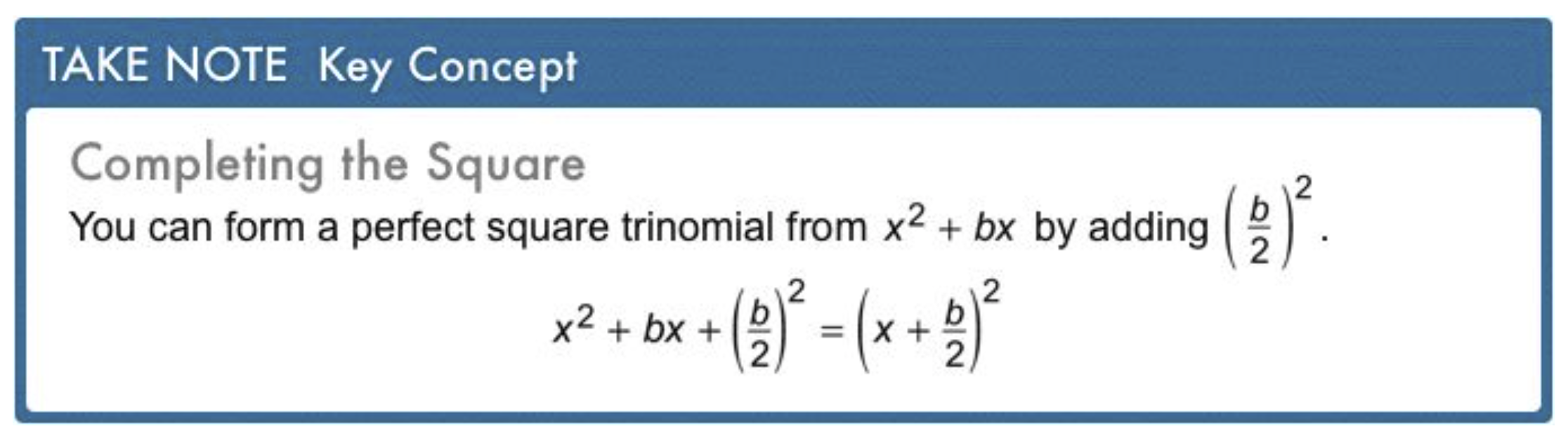
Problem 4 Got It? What value completes the square for the expression?
Problem 4 Got It: Reasoning: Is it possible for more than one value to complete the square for an expression? Explain.

Problem 5 Got It?

Problem 6 Got It?


How can you rewrite the equation below so the left side of the equation is in the form of the expression below?
Hints: Consider how you would solve this equation. a is a real number.

Error Analysis: Your friend completed the square and wrote the expression shown. Explain your friend's error and write the expression correctly.
Hint: Was it necessary to add 49 to achieve a perfect square trinomial?
You may use ^ to represent exponents. i.e. x^2 represents x².
Review Lesson 4-5: Identify the factors, and solution(s) of the quadratic equation.
no solution
already in factored form
(2x - 1)
x = 1
(x - 1)
x = -3
(x + 3)
x = ½
Factors
Solution(s)
Review Lesson 4-3: Graph the points using a table then find a quadratic regression model for the data. Click on the vertex of the parabola to show its coordinates. Leave the vertex coordinates showing. Zoom and pan your graph to establish an appropriate viewing window.
Recall Desmos' quadratic regression notation: y1~ax1^2+bx1+c.
Review Lesson 1-3: Evaluate the expression for the given values of the variables.
Enter only a number.
Review Lesson 1-3: Evaluate the expression for the given values of the variables.
Enter only a number.
Vocabulary Review: Match each expression with its square root.
25x²
x² + 4x + 4
36x² + 36x + 9
4x² -20xy + 25y²
x + 2
6x - 3
2x - 5y
±5x
Use Your Vocabulary: Identify the number of terms in each expression. Tag each espression as monomial, binomial, or trinomial.
0 terms
1 term
2 terms
3 terms
4 terms
monomial
binomial
trinomial
x + 1
t² - 2t - 6
y³
Use Your Vocabulary: Classify each expression based on whether or not it is a perfect square trinomial.
x² + 2x + 1
g³ + g - 4
x² + 2x + 5
x² - 4x
Perfect square trinomial
NOT a perfect square trinomial
Notes: Take a clear picture or screenshot of your Cornell notes for this lesson. Upload it to the canvas. Zoom and pan as needed.
For a refresher on the Cornell note-taking system, click here.
Reflection: Math Success