Algebra 2 6-6 Complete Lesson: Function Operations

Last updated almost 4 years ago
25 questions
Note from the author:
A complete formative lesson with embedded slideshow, mini lecture screencasts, checks for understanding, practice items, mixed review, and reflection. I create these assignments to supplement each lesson of Pearson's Common Core Edition Algebra 1, Algebra 2, and Geometry courses. See also mathquest.net and twitter.com/mathquestEDU.

10

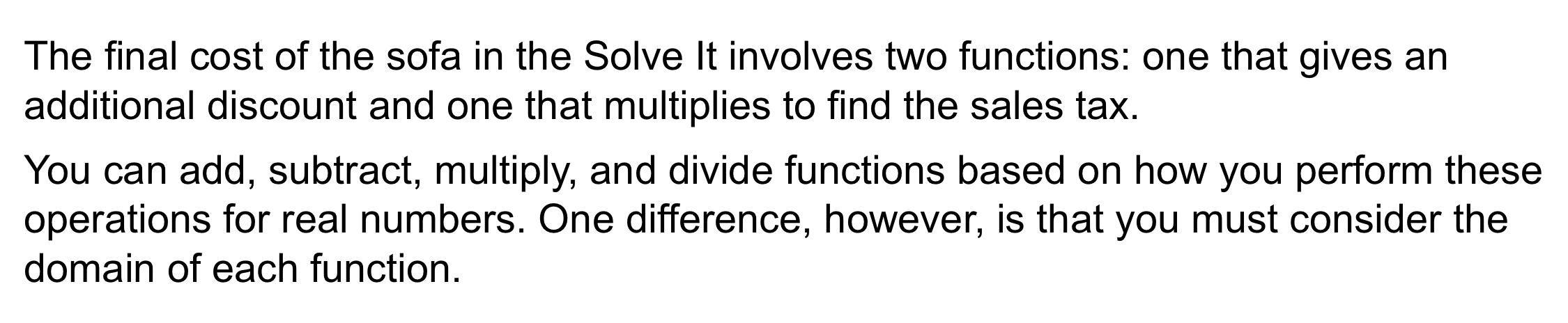
Solve It! You want to buy a sofa that was marked down by $100 before the clearance discount was applied.

The furniture store may add the 5% sales tax before applying the additional discount, or it may add the sales tax after applying the additional discount. Which way is better for you, the customer?

10

Solve It! In the above item, how much do you save by choosing the less expensive option?
Enter your response in this format: $12.30

10

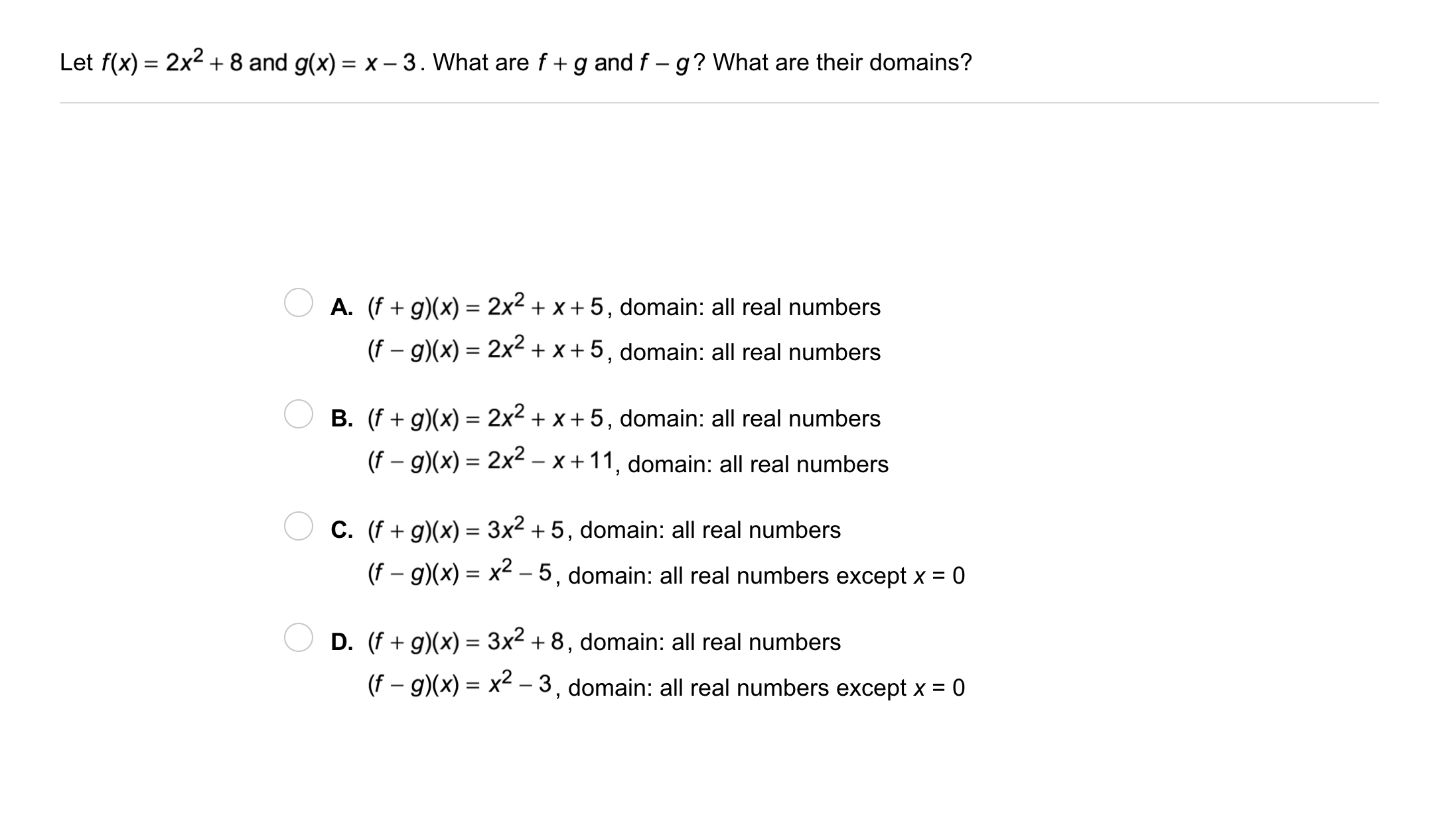
Problem 1 Got It?

10

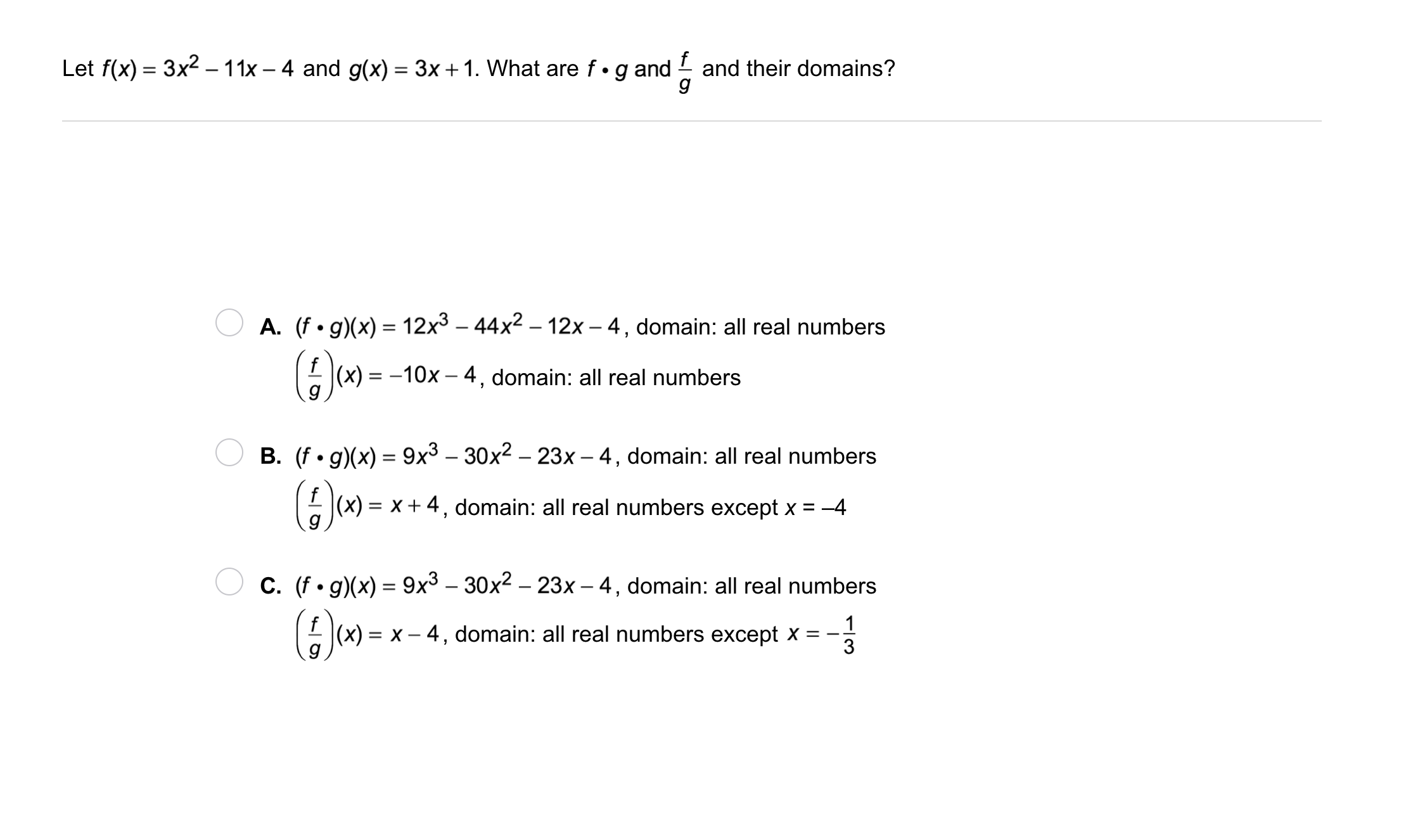
Problem 2 Got It?

10

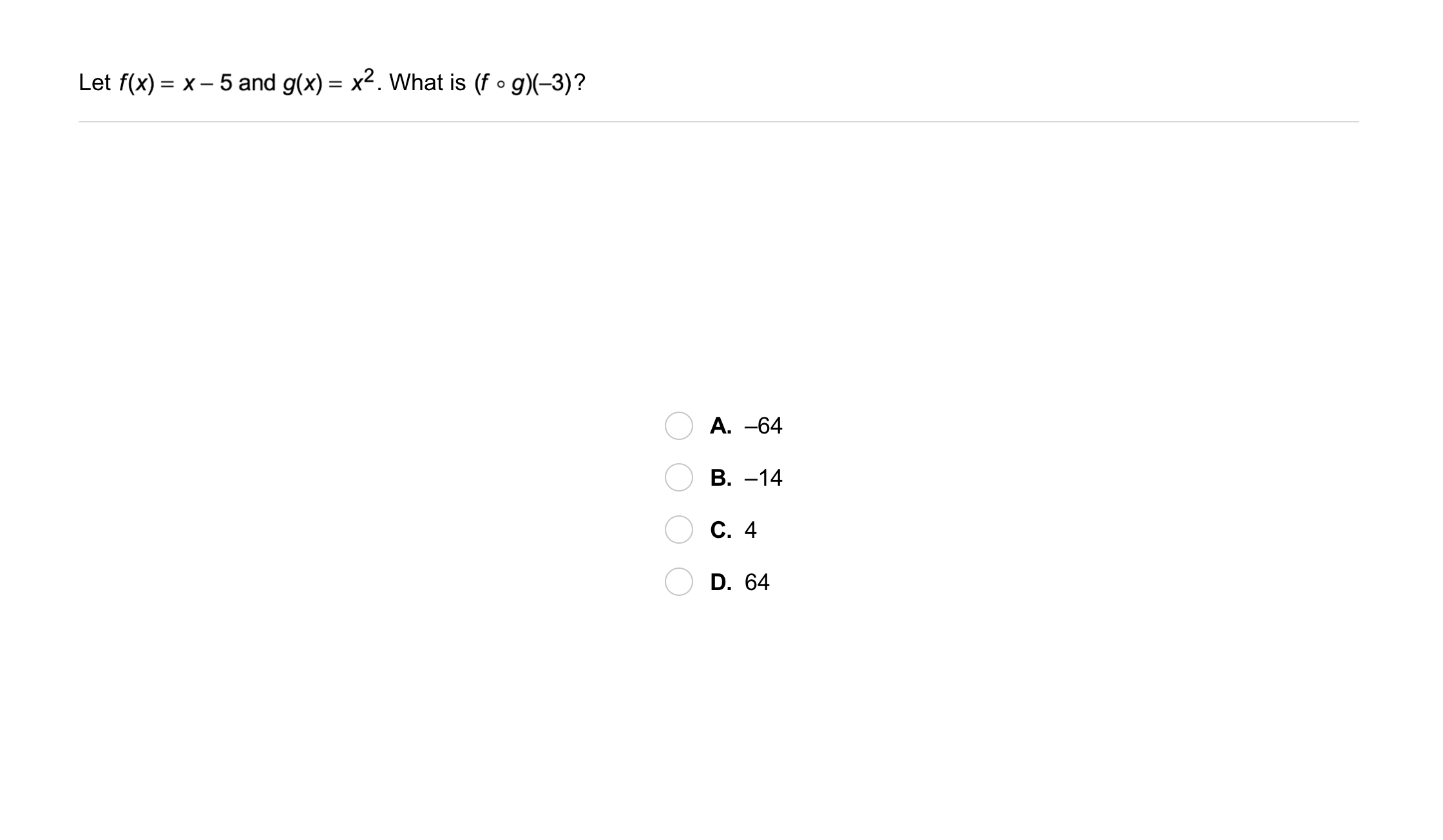
Problem 3 Got It?

10

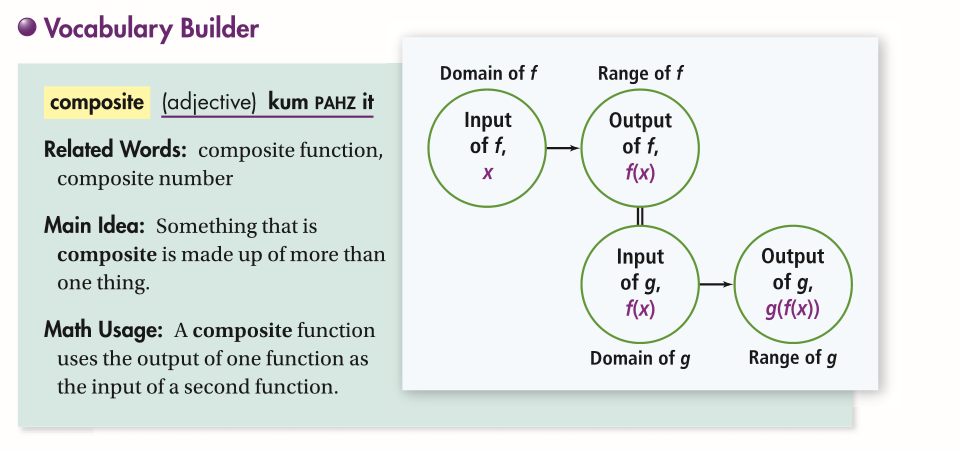
Problem 4 Got It? A store is offering a 15% discount on all items. Also, employees get a 20% discount (20% off original price(s)). Write a composite function to model taking the 15% discount and then the 20% discount.

10

Problem 4 Got It? A store is offering a 15% discount on all items. Also, employees get a 20% discount (20% off original price(s)). Write a composite function to model taking the 20% discount and then the 15% discount.

10

Problem 4 Got It? Reasoning: In the scenario above, which order of discounts results in a lower cost to the employee?

10
10
10
10
10
10
10
50

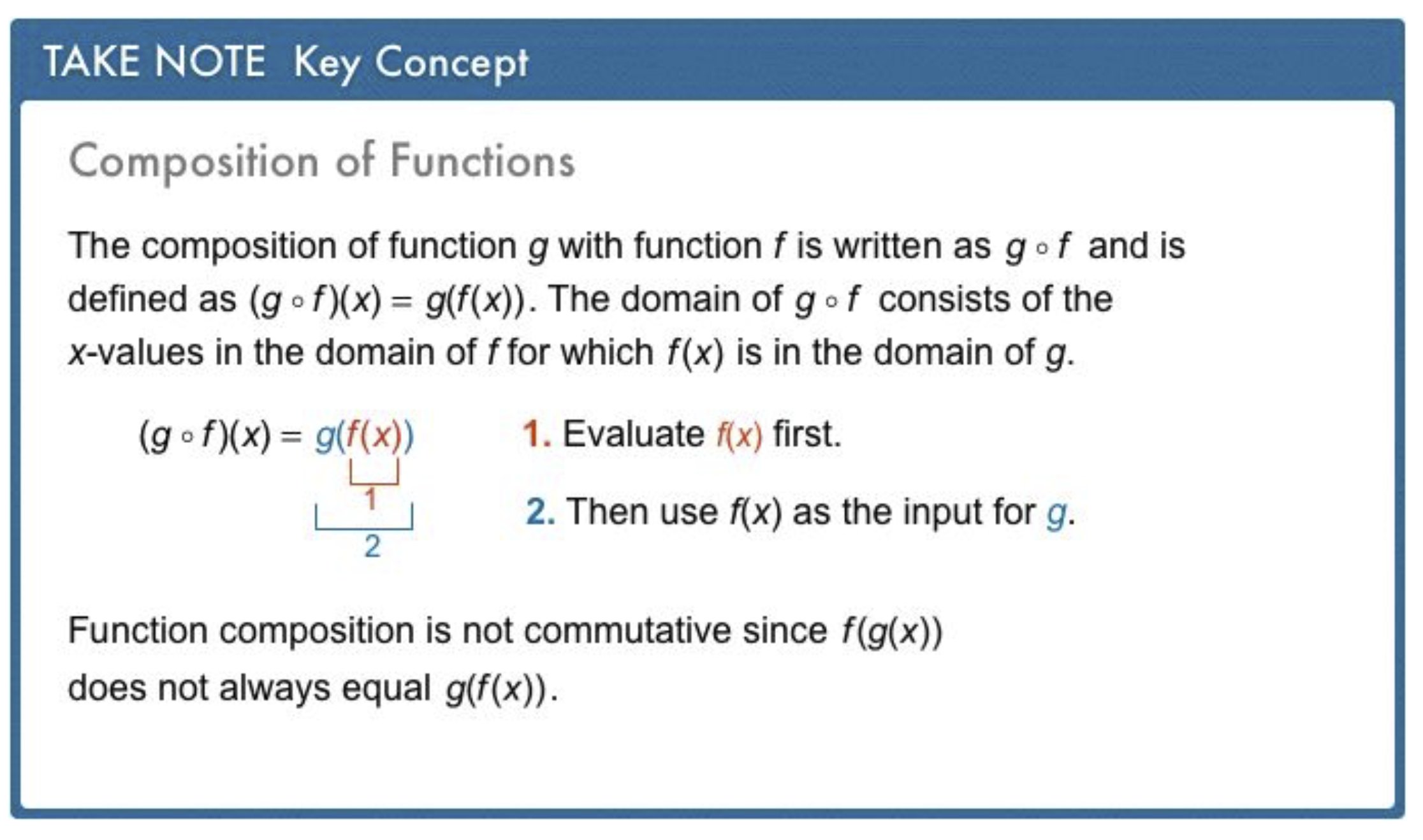
Error Analysis: Your friend used some simple functions and found the following to be true for particular functions f and g and concluded that function composition is commutative.

Give an example to show that your friend is mistaken.
Define each of the following in your counterargument:
f(x)
g(x)
(f °g)(x)
(g ° f)(x)
Note: To form a counterexample, (f °g)(x) should not equal (g ° f)(x).

10

Open-Ended: Find two functions f and g such that, for all real numbers x

10

Review Lesson 6-5: Identify the solution(s) to each equation on the right. Be sure to check for extraneous solutions.

  • -2
  • 0
  • 1
  • 2
  • 3
30

Review Lesson 5-7: Expand the binomial. Respond with a polynomial in standard form.
Recall the Binomial Theorem and Pascal's triangle.
Do not use commas in coeffients.

10

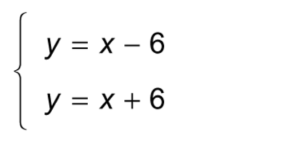
Review Lesson 3-1: Graph the system. Take note of the solution(s). Zoom and pan your graph to establish and appropriate viewing window.

10

Review Lesson 3-1: Graph the system. Take note of the solution(s). Zoom and pan your graph to establish and appropriate viewing window.

10

Vocabulary Review: Identify the item(s) from the left that match the categories on the right. (Each category will contain a single item from the left.)

  • input
  • output
  • Represents function notation and can be read "g of x"
  • Shows a function rule
  • The function rule below represents the cost of a number of tons f wheat t.
    The number of tons of wheat is the __?__ of the function.
10

Use Your Vocabulary: Complete each sentence with the correct form of the word composite.

  • composite
  • composition
  • compose
  • VERB: The musician worked to __?__ a new piece of music.
  • ADJECTIVE: A __?__ number has more than two factors.
  • NOUN: The poster was a __?__ of photos and famous quotes.
100

Notes: Take a clear picture or screenshot of your Cornell notes for this lesson. Upload it to the canvas. Zoom and pan as needed.

For a refresher on the Cornell note-taking system, click here.

10

Reflection: Math Success