Reporting Category 2 Questions: Part 1
star
star
star
star
star
Last updated over 8 years ago
22 Nsɛmmisa
1
1
1
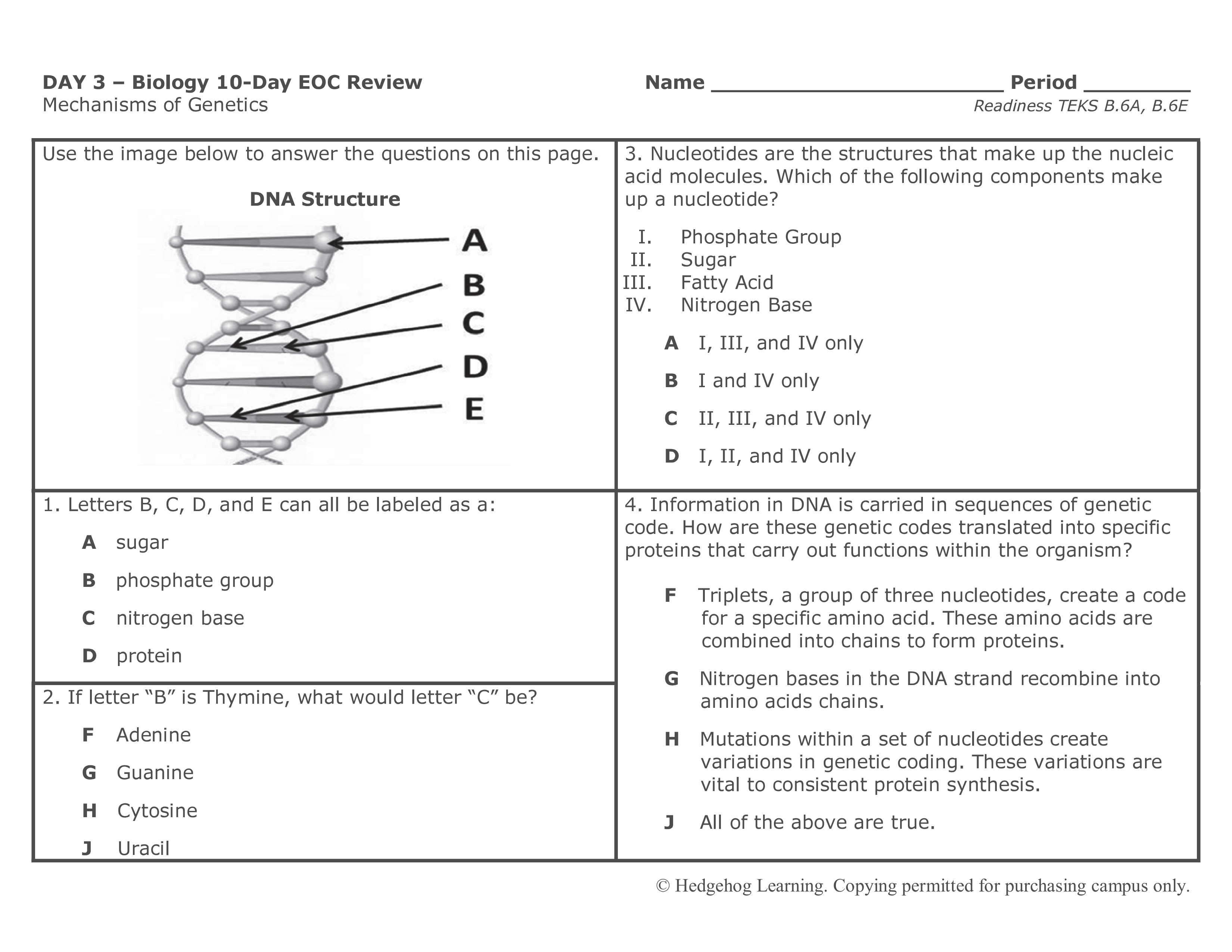
Letters B, C, D, and E can all be labeled as a:
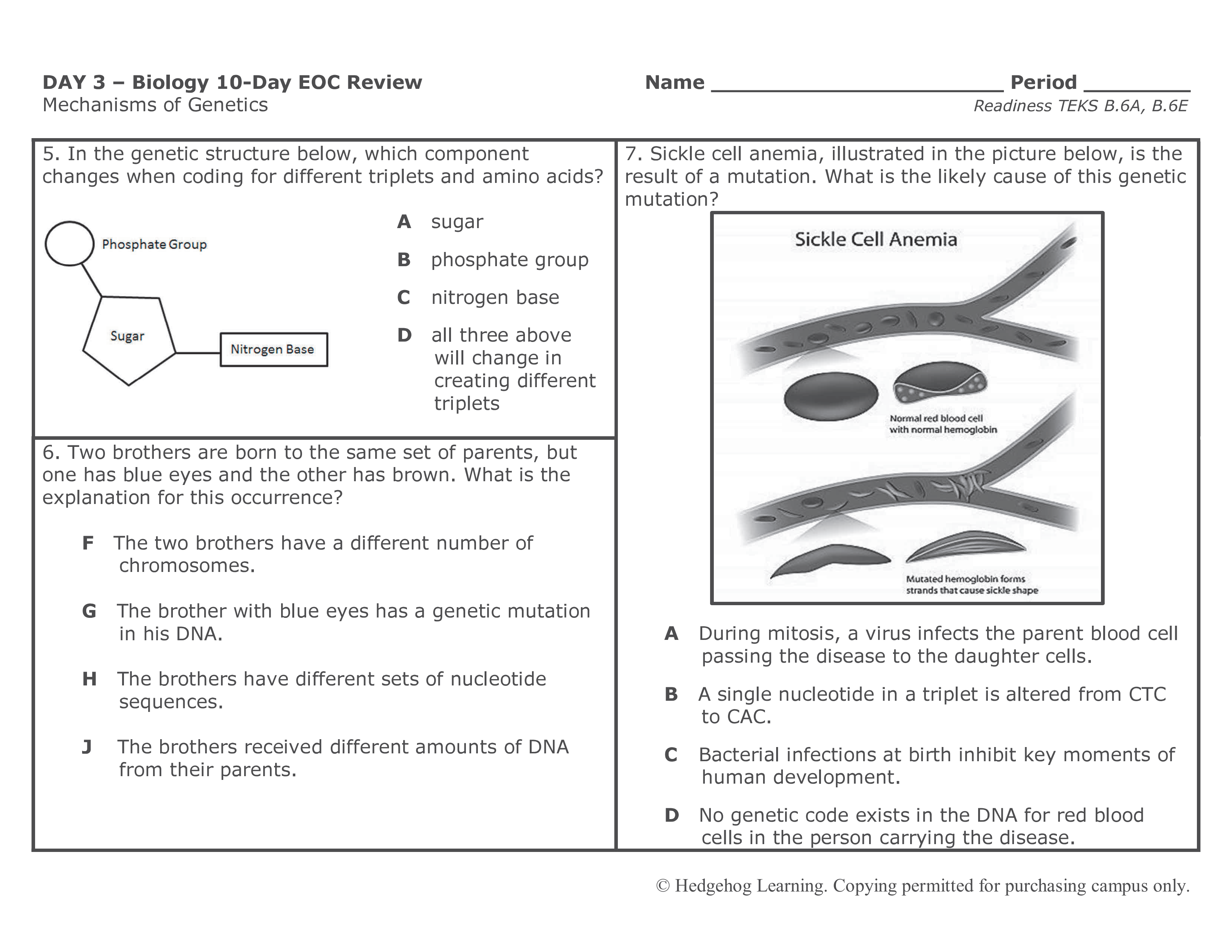
In the genetic structure below, which component changes when coding for different triplets and amino acids?
Two brothers are born to the exact same set of parents, but one has blue eyes and the other has brown. What is the explanation for this occurance?
Sickle cell anemia, illustrated in the picture below, is the result of a mutation. What is the likely cause of the genetic mutation.
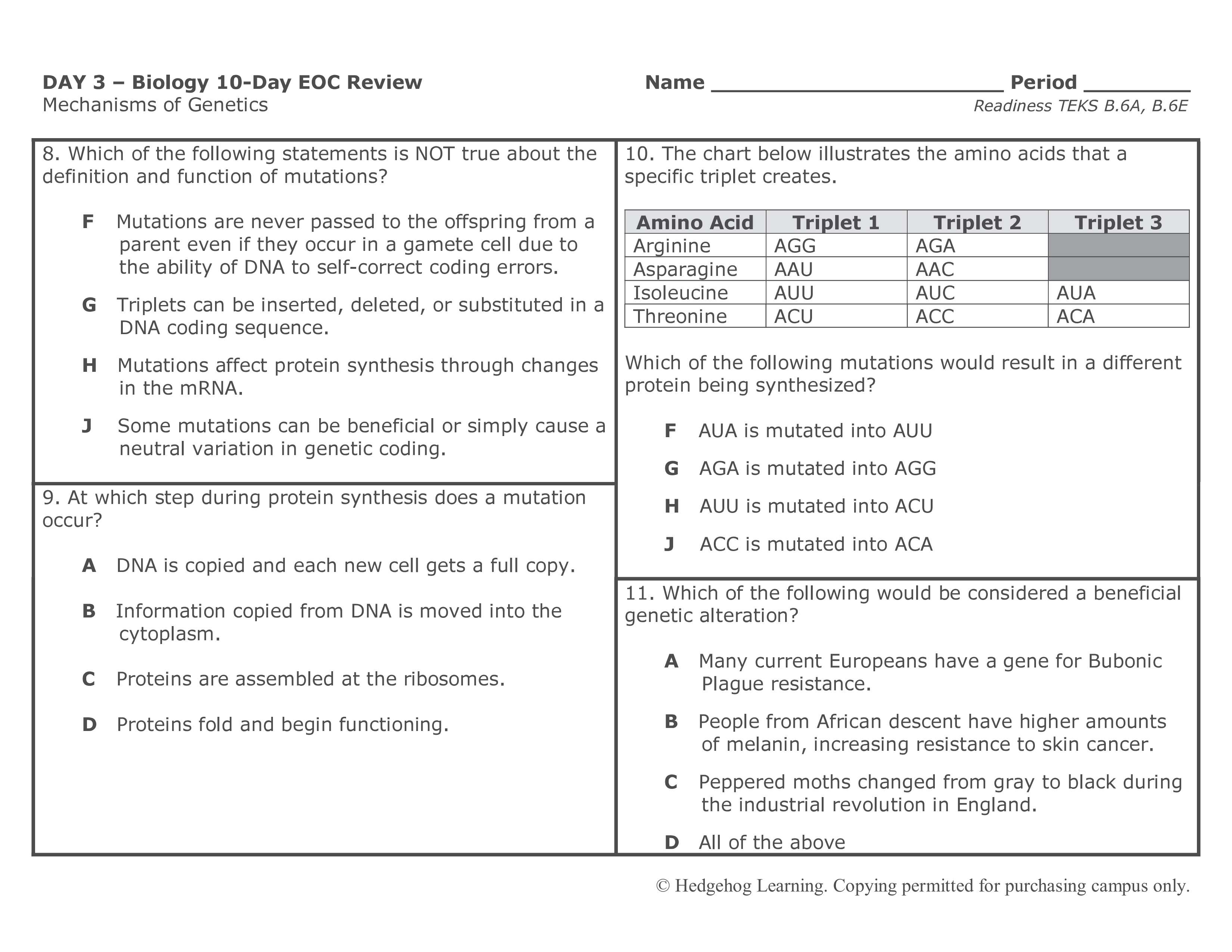
At which step during protein synthesis does a mutation occur?
If letter "B" is Thymine, what would letter "C" be?
Nucleotides are structures that make up the nucleic acid molecules. Which of the following ocmponents make up a nucleotide?
I. Phosphate Group
II. Sugar
III. Fatty Acid
IV. Nitrogen Base
Information in DNA is carried in sequences of genetic code. How are these genetic codes translated into specific proteins that carry out functions within the organism?
Which of the following statements is NOT true about the definition and function of mutations?
The chart below illustrates the amino acids that a specific triplet creates. Which of the following mutations would result in a different protein being synthesized?
Which of the following would be considered a beneficial genetic alteration?
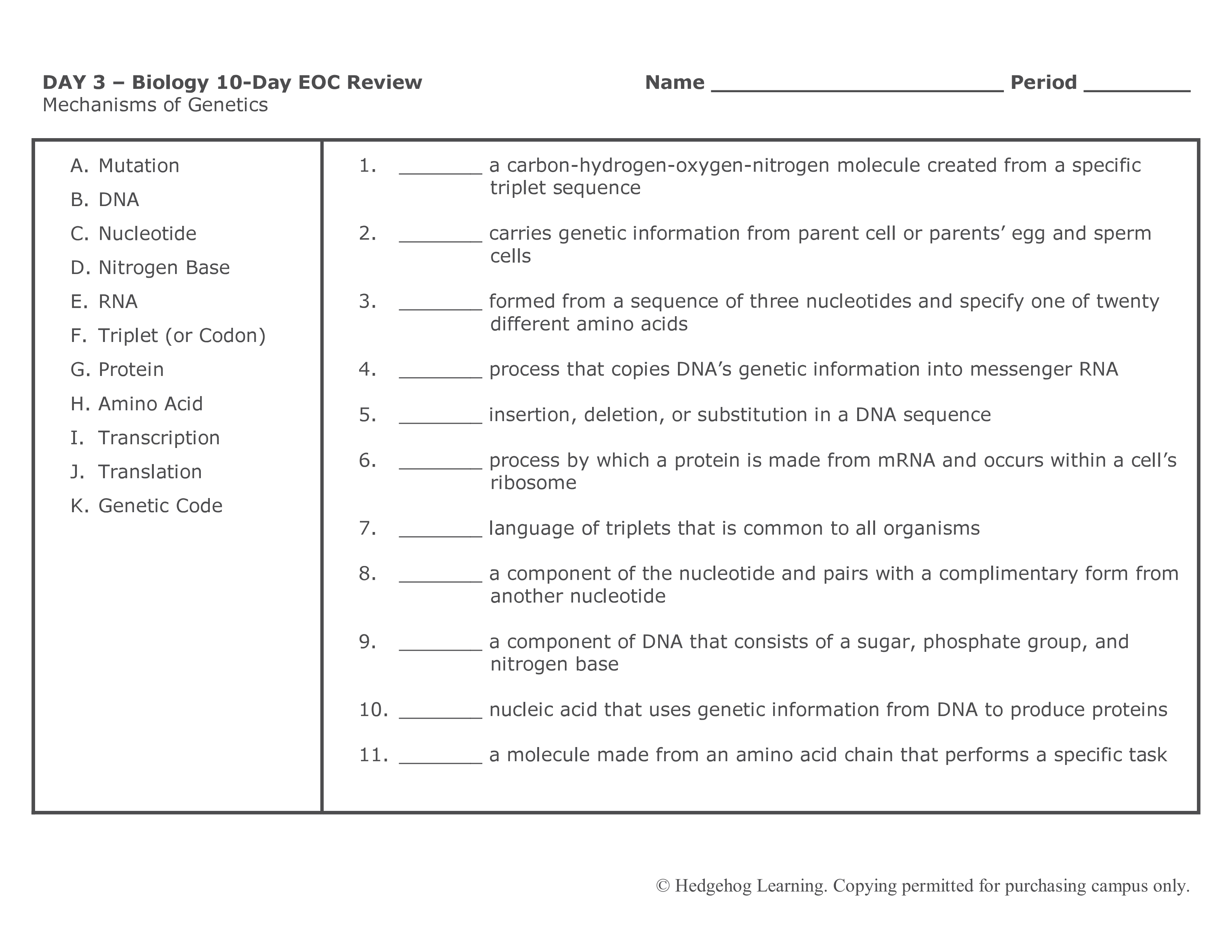
a carbon-hydrogen-oxygen-nitrogen molecule created from a specific triplet sequence
carried genetic information from parent cell or parents' egg and sperm cells
formed from a sequence of three nucleotides and specify one of twenty different amino acids
process that copies DNA's genetic information into messenger RNA
insertion, deletion, or substitution in a DNA sequence
process by which a protein is made from mRNA and occurs within a cell's ribosome
language of triplets that is common to all organisms
a component of the nucleotide and pairs with a complimentaty from from another nucleotide
a component of DNA that consists of a sugar, phosphate group, and nitrogen base
nucleic acid that uses genetic infromation from DNA to produce proteins
a molecule made from an amino acid chain that performs a specific task