Log in
Sign up for FREE
arrow_back
Library

Algebra 2 6-2 Complete Lesson: Multiplying and Dividing Radical Expressions

star
star
star
star
star
Last updated about 4 years ago
27 questions
Note from the author:
A complete formative lesson with embedded slideshow, mini lecture screencasts, checks for understanding, practice items, mixed review, and reflection. I create these assignments to supplement each lesson of Pearson's Common Core Edition Algebra 1, Algebra 2, and Geometry courses. See also mathquest.net and twitter.com/mathquestEDU.

10
10
10
10
10
10
10
30
10
10
10
10
10
100
10
10
Question 1
1.

Solve It! You can cut the 36-square into four 9-squares or nine 4-squares. Which other n-square can you cut into sets of smaller squares in two ways?

10
Question 3
3.

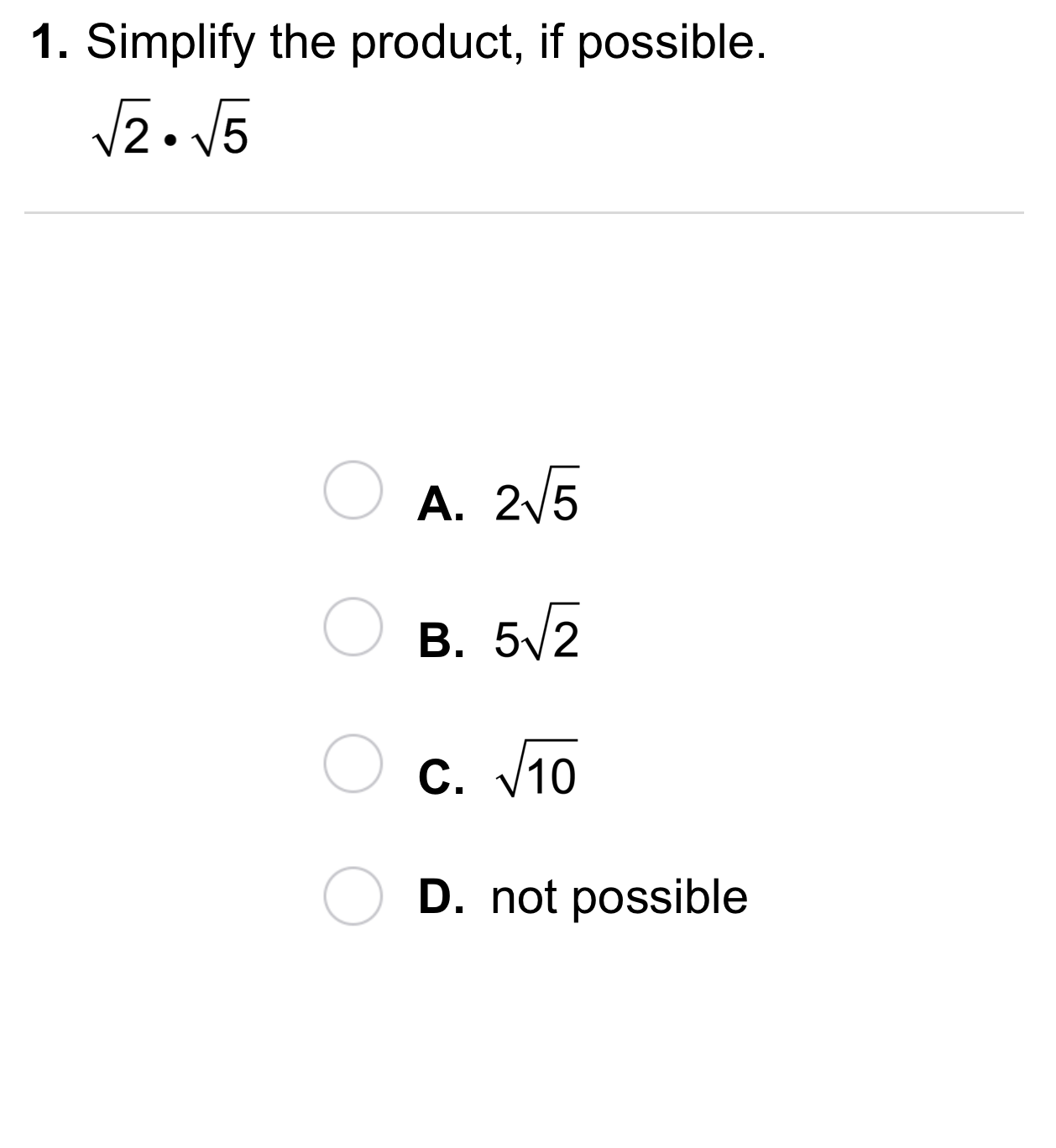
Problem 1 Got It? Can you simplify the expression? If so, simplify. If not, explain why not.

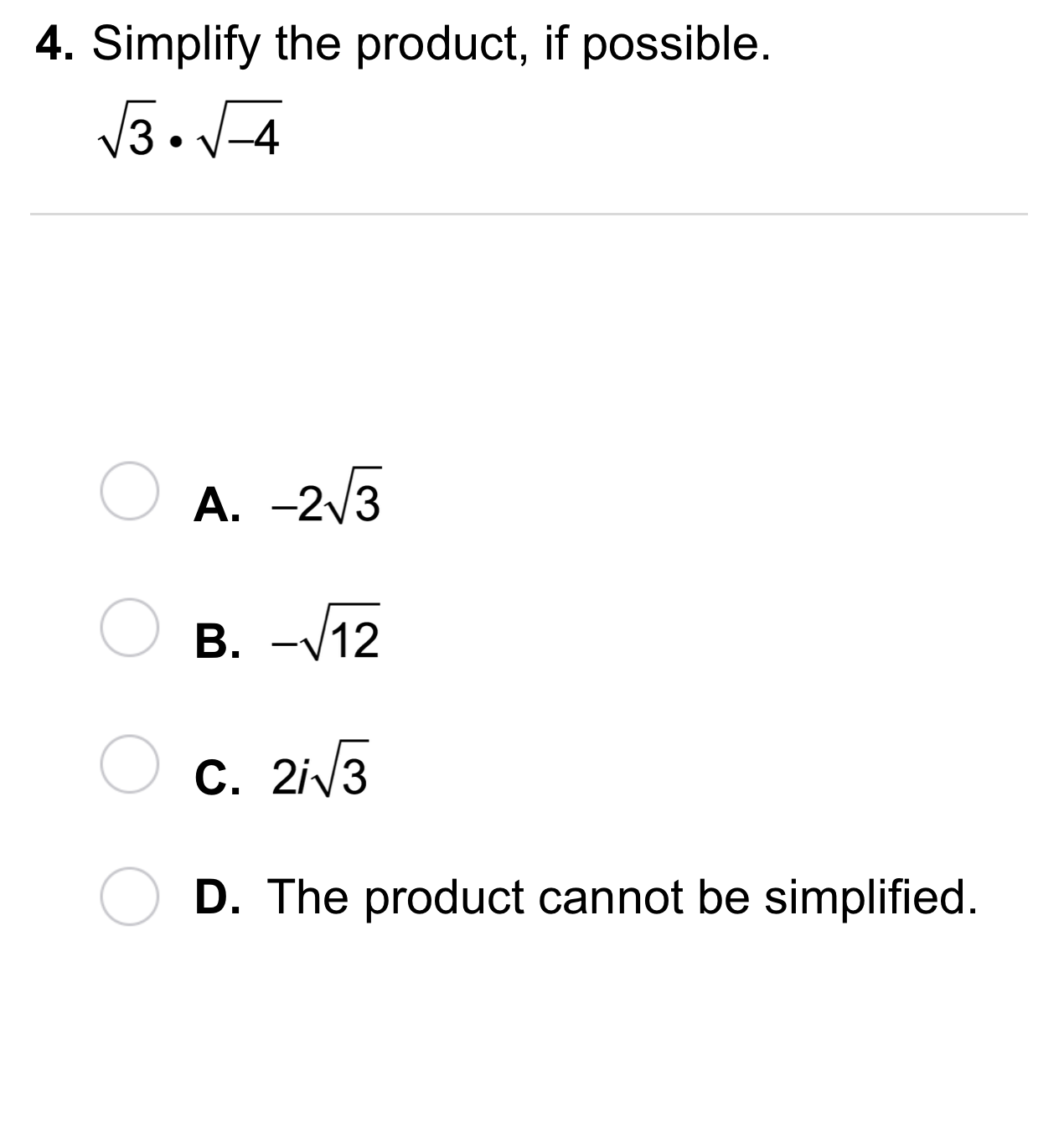
Question 4
4.

Problem 1 Got It? Can you simplify the expression? If so, simplify. If not, explain why not.

10
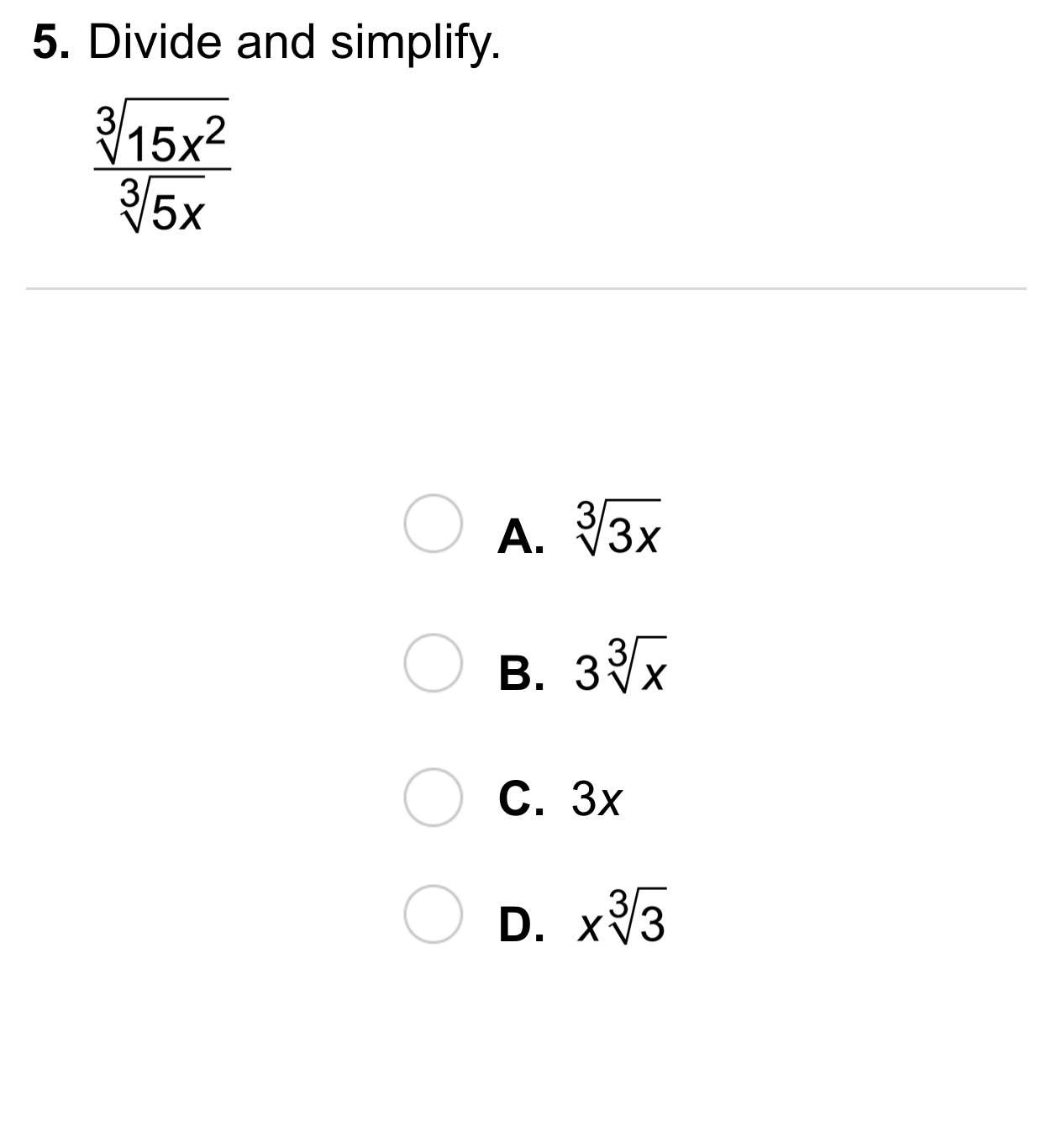
Question 5
5.

Problem 2 Got It?

10
Question 6
6.

Problem 3 Got It?

Question 7
7.

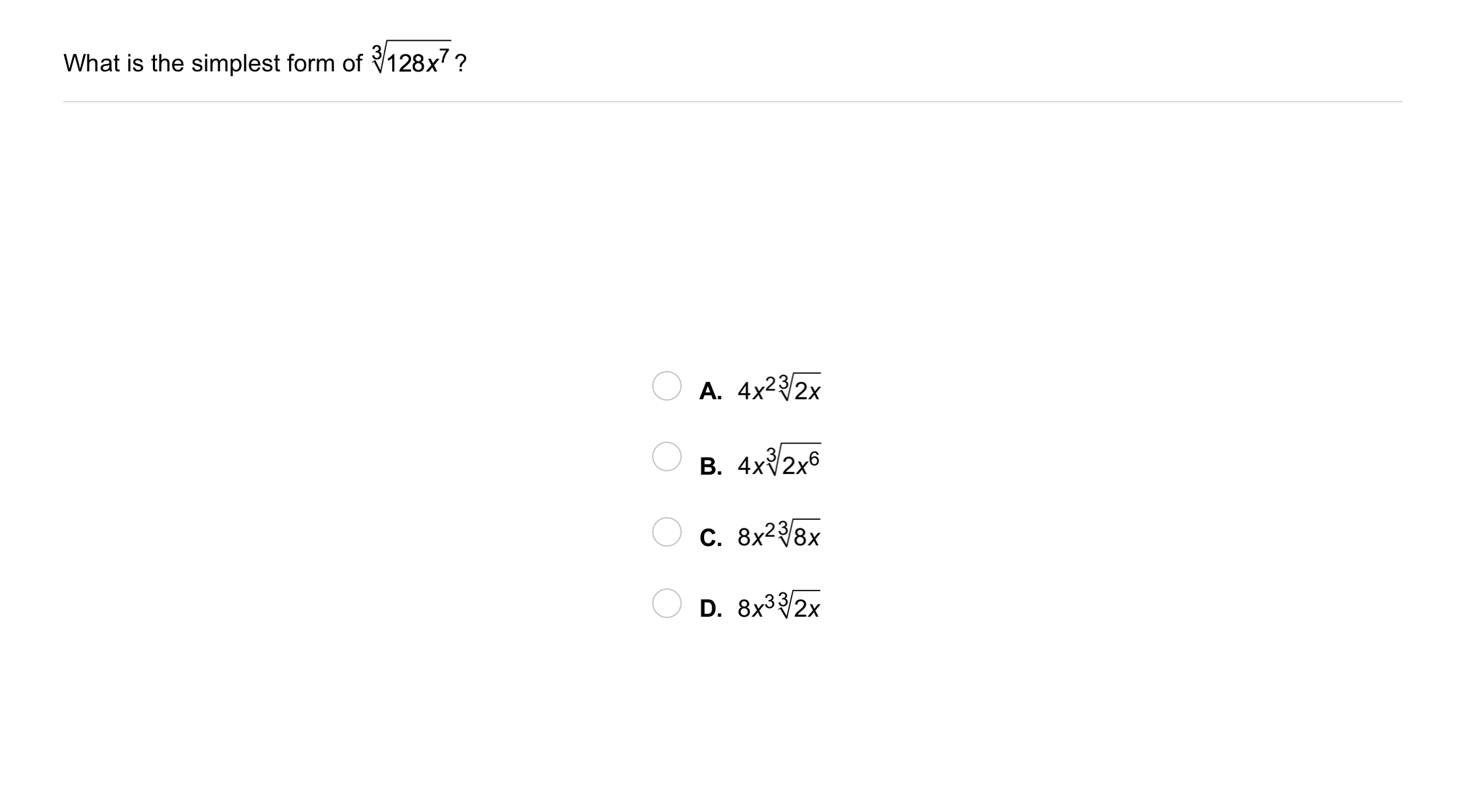
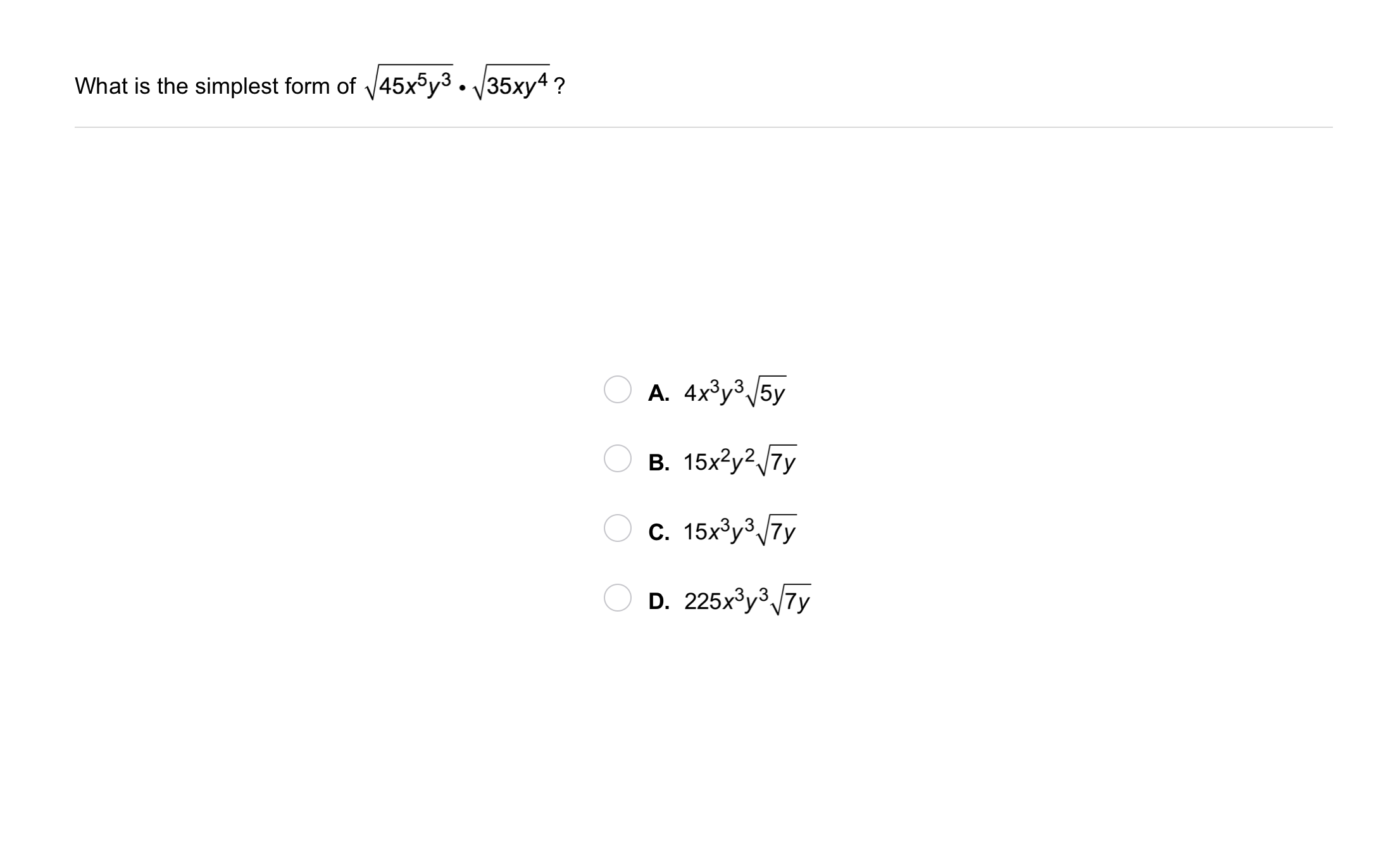
Problem 4 Got It? What is the simplest form of the expression?

Question 8
8.

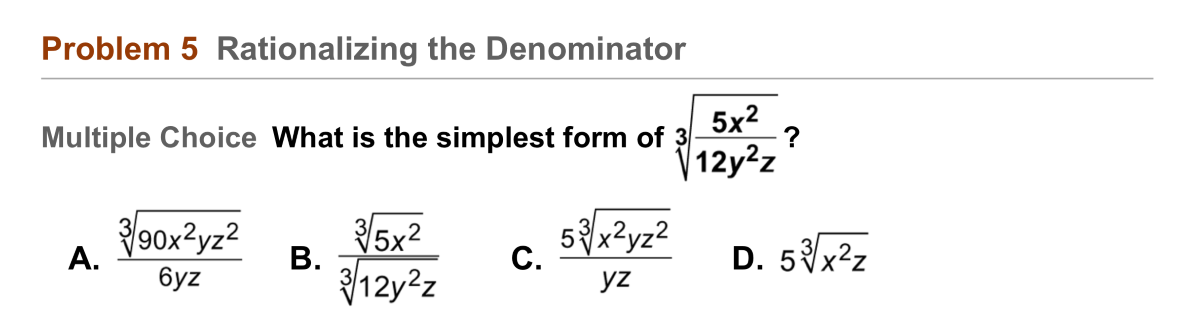
Problem 5 Got It? What is the simplest form of the expression?

10
10
Question 10
10.
10
Question 11
11.
10
Question 12
12.
10
Question 13
13.
10
Question 14
14.
10
Question 15
15.
Question 16
16.

Vocabulary: Write the simplest form of the expression.

10
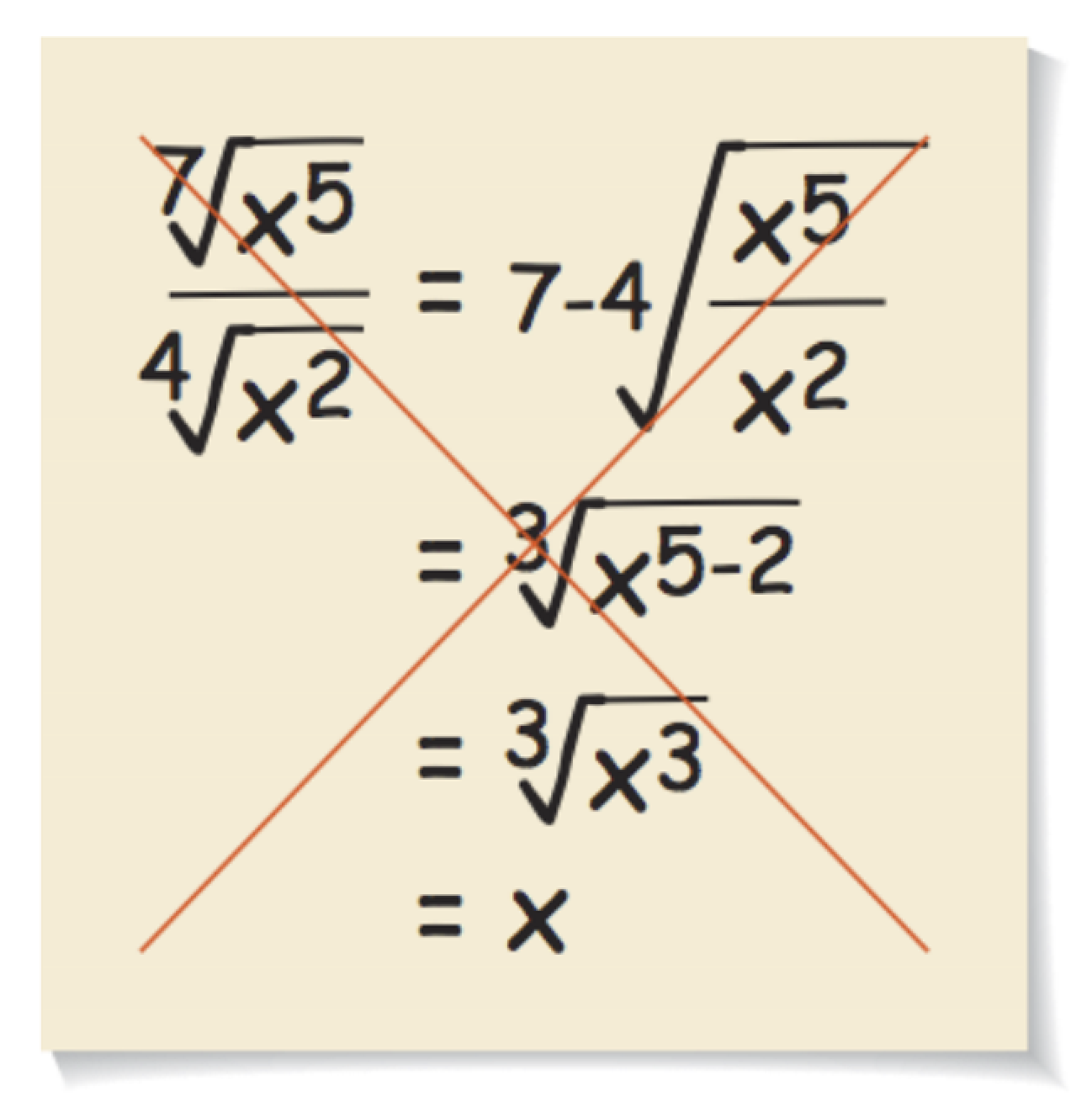
Question 18
18.

Error Analysis: Explain the error in this simiplification of radical expressions.

Question 19
19.

Review Lesson 6-1: Simplify the radical expression. Use absolute value symbols when needed.

Question 20
20.

Review Lesson 5-4: Divide using synthetic division. Show each step.

Question 21
21.

Review Lesson 4-6: Complete each square.

  • 16
  • 25
  • 4
  • x² + 10x + __?__
  • x² - 10x + __?__
  • x² + 4x + __?__
  • x² + 8x + __?__
Question 22
22.

Review Lesson 4-8: Write the quotient as a complex number in the form a ± bi.

Question 23
23.

Vocabulary Review: Categorize each statement as true or false.

  • All mathematical expressions can be written as an equivalent expression with a denominator of 1.
  • An real number can have a denominator equal to 0.
  • The expression above a fraction bar is called the denominator.
  • Multiplying both the numerator and denominator by the same nonzero number results in an equivalent fraction.
  • True
  • False
Question 24
24.

Vocabulary Review: Consider the three rational expressions below.
Drag and drop the expressions on the left to identify them as a numerator or denominator.

  • 5
  • 6
  • -5r²
  • 16
  • r² + s²
  • c - 16
  • Numerators
  • Denominators
Question 25
25.

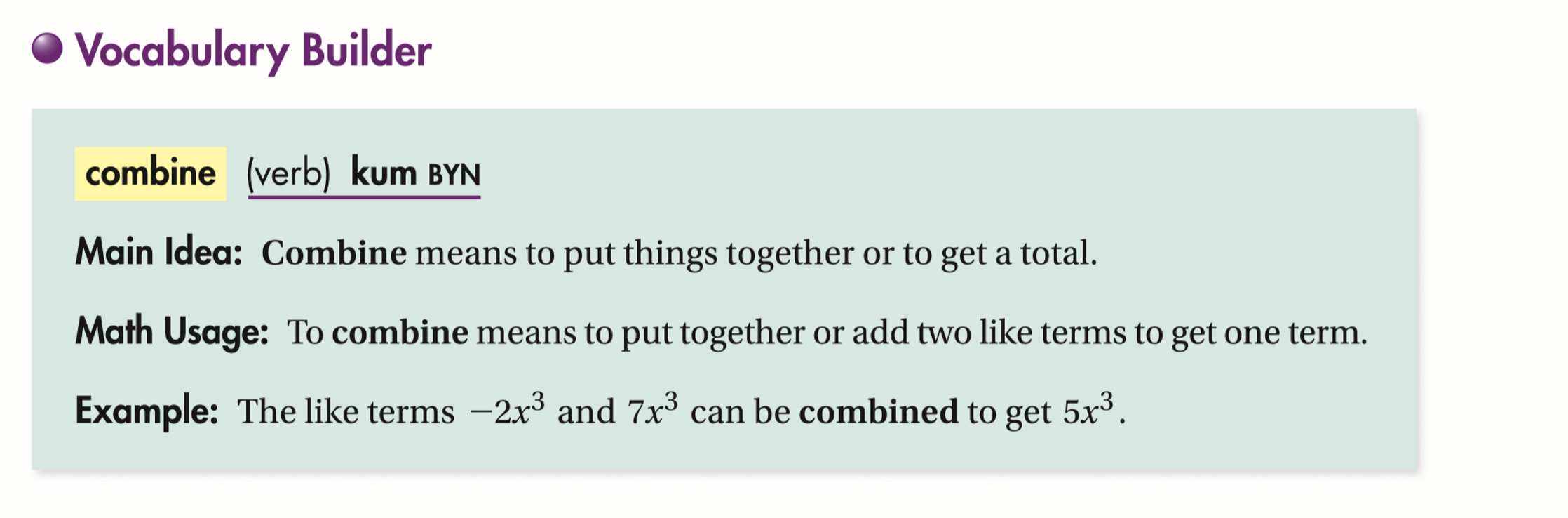
Use Your Vocabulary: Which expression shows the expression below with like terms combined ?

Question 26
26.

Notes: Take a clear picture or screenshot of your Cornell notes for this lesson. Upload it to the canvas. Zoom and pan as needed.

For a refresher on the Cornell note-taking system, click here.

Question 27
27.

Reflection: Math Success

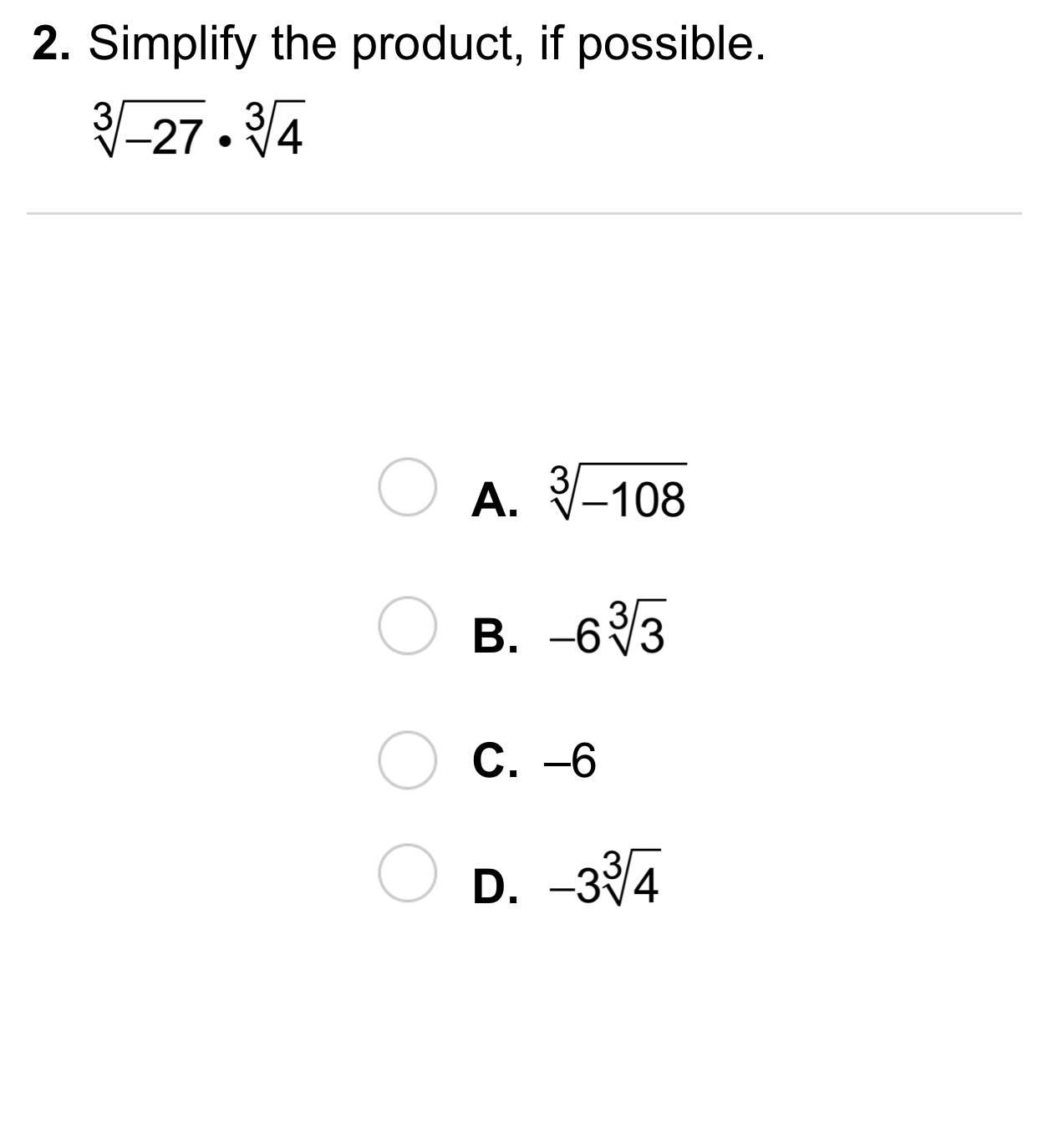
Question 2
2.

Solve It! Is there a square you can cut into smaller squares in three ways? Explain.

Question 9
9.

Problem 5 Got It? Which answer choices in Problem 5 could have been eliminated immediately? Explain. Select all that apply.