Energy Flow and Succession in an Ecosystem
star
star
star
star
star
Last updated over 8 years ago
20 Nsɛmmisa
5
5
5
5

5

5

5
5
5
5
5
5
5
5
5
5
5
5
5
5
An ecosystem contains organisms interacting with each other and their physical environment. Which of these is the BEST indicator of a healthy ecosystem?
What is an abiotic factor found in a Desert Ecosystem?
Which of the following is a biotic part of the forest?
The graph below shows the number of organisms in an ecosystem over time. Which biological concept is BEST illustrated by the graph?
Consider the graph below. Which statement below BEST explains what is occurring during section II in the population graph?
Ecosystems are made up of both living organisms and non-living things. The picture below shows some of the living organisms and the nonliving things in a desert ecosystem. A.) Identify one living organism in the ecosystem. B.) Identify one non-living thing in this ecosystem with which the living organism you named in PART A interacts. C.) Explain why it is important for the living organism to interact with the nonliving thing you identified in Part B.
Suppose an oil tanker ran aground and broke apart near the mouth of the Mississippi River and millions of gallons of crude oil and spilled out of the ship. DESCRIBE TWO effects this would likely have on the ecosystem in the surrounding environments.
________ is the source of energy for almost all living things.
Abiotic are all of the _____________ components in an ecosystem.
Moose are grazing animals. They eat grass. If there were too many moose in an area, there would probably be
What is the definition of carrying capacity?
The plant a ladybug lives on, the aphids that the ladybug eats, and the birds that eat the ladybugs are all
When a population grows larger than its carrying capacity, limiting factors in the environment cause the population to
A population that has reached the largest number of individuals that the environment can support over a long period of time
Limiting factors such as landslides, forest fires, floods and extreme weather are all
What is an ecosystem?
Which type of succession begins with rock, which causes growth to take longer?
Which scenario would be considered an example of Secondary Succession?
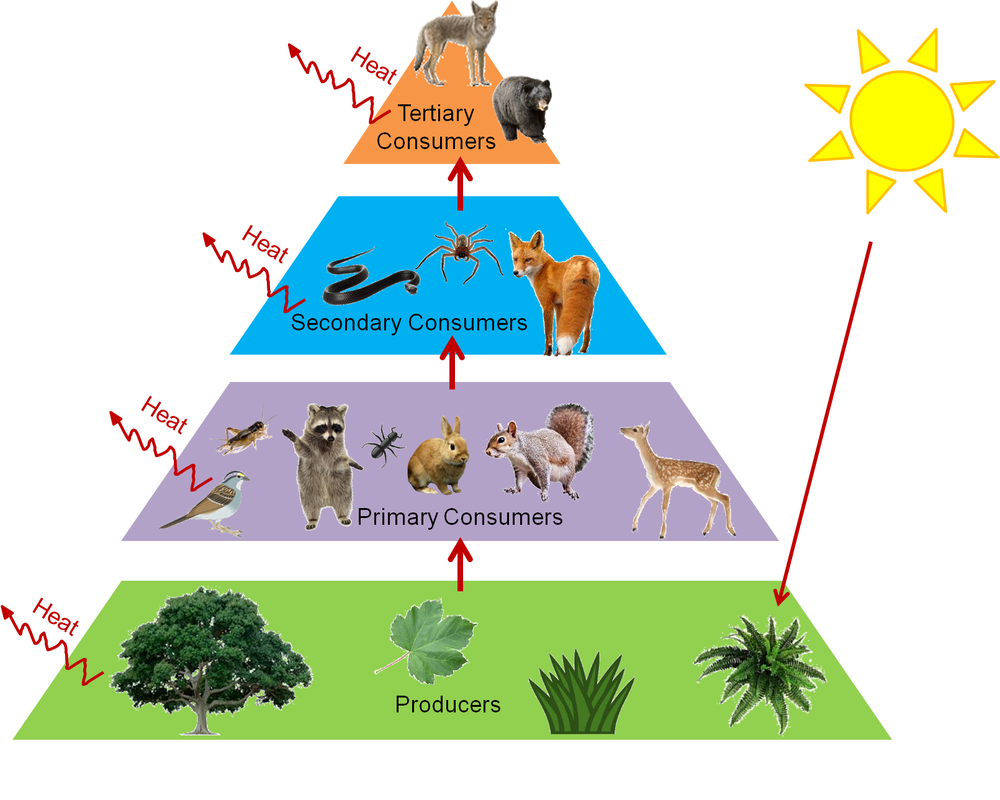
Using the energy pyramid above, which level gets the most energy directly from the producers?
Using the energy pyramid above, which level would store the most energy?