Year 7 GL Practice Test
star
star
star
star
star
Last updated over 8 years ago
50 Nsɛmmisa
1
1
1
1
1
1
1
1
1
1
1
1
1
1
1
1
1
1
1
1
1
1
1
1
1
1
1
1
1
1
1
1
1
1
1
1
1
1
1
1
1
1
1
1
1
1
1
1
1
1
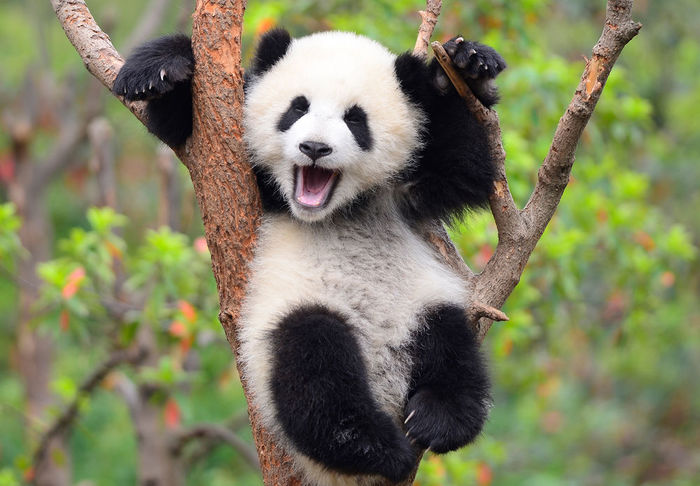
Cuteness coming to an IMAX screen soon with the "Pandas"
By Smithsonian.com
It's hard to resist a baby panda. Perhaps it’s the waddling walk or the chubbiness of their cheeks. Maybe it’s their love of climbing, which often ends in a fall – or a faceplant. Whatever it is, they always bring a squeal of delight from onlookers.
Behind those cute charms is a species that has spent decades clawing its way back from near extinction in the wild. For more than 10 years, researchers have attempted to strengthen wild panda populations by releasing captive creatures. Now, a new IMAX documentary movie, "Pandas," shows the challenging but adorable journey of a panda named Qian Qian (pronounced Chen Chen).
Directed by David Douglas and Drew Fellman, the film follows Qian Qian, who was selected from a group of baby pandas for her independence and affectionate nature. The movie shows sweeping views of the forested mountain region in China’s Sichuan province. There, some of the world’s last populations of wild giant pandas chomp bamboo, clinging to life in the face of huge construction projects.
The film follows the work of Jake Owens, a wildlife biologist at the Chengdu Research Base of Giant Panda Breeding in China, and his Chinese colleague Bi Wen Lei. They were tasked with raising Qian Qian and preparing her for a wild adventure.
Why do pandas bring a squeal of delight from onlookers?
What had inspired the researchers to create this documentary?
Choose the incorrect option: Qian Qian is NOT:
Which one of these is NOT mentioned in the story?
How does the fact that the pandas are suffering extinction make the researchers feel?
Why was Qian Qian chosen for this documentary?
What was the purpose of documenting Qian Qian's life?
Which one of these words best describes how the biologist and his colleague felt about the adventure?
Which of these words is closest in meaning to "delight"?
What is meant by the word "faceplant"?
What is meant by "sweeping views"?
"...releasing captive creatures."
What literary device is used here?
What part of speech is "wild"?
"It's hard to resist a baby panda."
Which one of the words above is a verb?
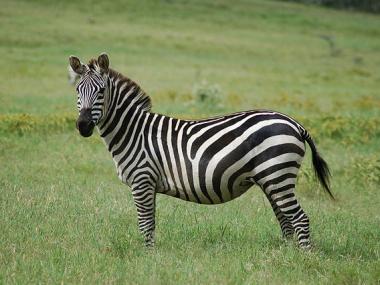
The Zebra Storyteller
By Spencer Holst
Once upon a time there was a Siamese cat who pretended to be a lion and spoke inappropriate Zebraic - the language whinnied by the race of striped horses in Africa.
Here now: An innocent zebra is walking in a jungle, and approaching from another direction is the little cat; they meet. “Hello there!” says the Siamese cat in perfectly pronounced Zebraic. “It certainly is a pleasant day, isn’t it? The sun is shining, the birds are singing, isn’t the world a lovely place to live today!” The zebra is so astonished at hearing a Siamese cat speaking like a zebra that he can’t move. So the little cat quickly ties him up, kills him, and drags the better parts of the carcass back to his den.
The cat successfully hunted zebras many months in this manner, dining on filet of zebra every night, and from the better hides he made bow neckties and wide belts after the fashion of the decadent princes of the Old Siamese court.
He began boasting to his friends he was a lion, and he gave them as proof the fact that he hunted zebras. The delicate noses of the zebras told them there was really no lion in the neighbourhood. The zebra deaths caused many to avoid the region. Superstitious, they decided the woods were haunted by the ghost of a lion.
One day the storyteller of the zebras was ambling, and through his mind ran plots for stories to amuse the other zebras, when suddenly his eyes brightened, and he said, “That’s it! I’ll tell a story about a Siamese cat who learns to speak our language! What an idea! That’ll make ’em laugh!”
Just then the Siamese cat appeared before him, and said, “Hello there! Pleasant day today, isn’t it!” He took a good look at the cat, and he didn’t know why, but there was something about his looks he didn’t like, so he kicked him with a hoof and killed him.
What is "Zebraic"?
Which of these animals are not mentioned in the story?
How do you think the cat felt after tricking the zebra?
Which word best describes the character of the cat?
Why does the cat ask "It certainly is a pleasant day, isn't it?" (line 4)
Which of these words best describes the storyteller?
What kind of mood is created in the last paragraph?
What kind of text is this?
What is meant by the word "astonished"?
Which of these words is closest in meaning to the word "ambling"?
Which of these words mean the opposite of "perfectly"?
"so he kicked him with a hoof and killed him."
Which of the words in this sentence is a conjunction?
"the language whinnied by the race of striped horses in Africa."
What literary device is used here?
What parts of speech are these:
Cat; Friends; Region; Noses
The spelling mistake is in:
The spelling mistake is in:
The spelling mistake is in:
The spelling mistake is in:
The spelling mistake is in:
The spelling mistake is in:
The punctuation mistake is in:
The punctuation mistake is in:
The punctuation mistake is in:
The punctuation mistake is in:
The punctuation mistake is in:
The punctuation mistake is in:
Colombia boasts the greatest number of bird types ____ the planet: 1,920, or 19 percent of those on the planet. It's practically a paradise for birders.
Ten-year-old Juan David Camacho's goal is to photograph all of _____.
His father first _____ him bird-watching three years ago.
It's a hobby that now rivals his love of soccer, or football as it's _____ in his native Colombia.
"We leave very early with our cameras, binoculars and tripods and we watch the birds until around noon, _____ silence", says the young boy.
He continues to scan the area to make sure he ______ miss a rare bird perched on a branch in the forests near Cali.
Juan David has already ____ 491 birds, capturing 200 of them in photos.
Though Colombia is a bird kingdom, bird-watching tourism ____ poorly developed.
In the future, the government's tourism ministry projects nearly 15,000 observers might flock ____ the Latin American country per year to bird-watch, bringing in $9 million.
Most birders traveling to Colombia currently originate ____ the United States, Canada, Argentina and the United Kingdom.