Cell Signaling Part 1 Concept Review
star
star
star
star
star
Last updated about 8 years ago
10 Nsɛmmisa
Hyɛ no nsow a efi ɔkyerɛwfo no hɔ:
An assignment to insure understanding of key concept concerning cell signaling.
1
1
1
1
1
1
1
1
1
1
An assignment to insure understanding of key concept concerning cell signaling.
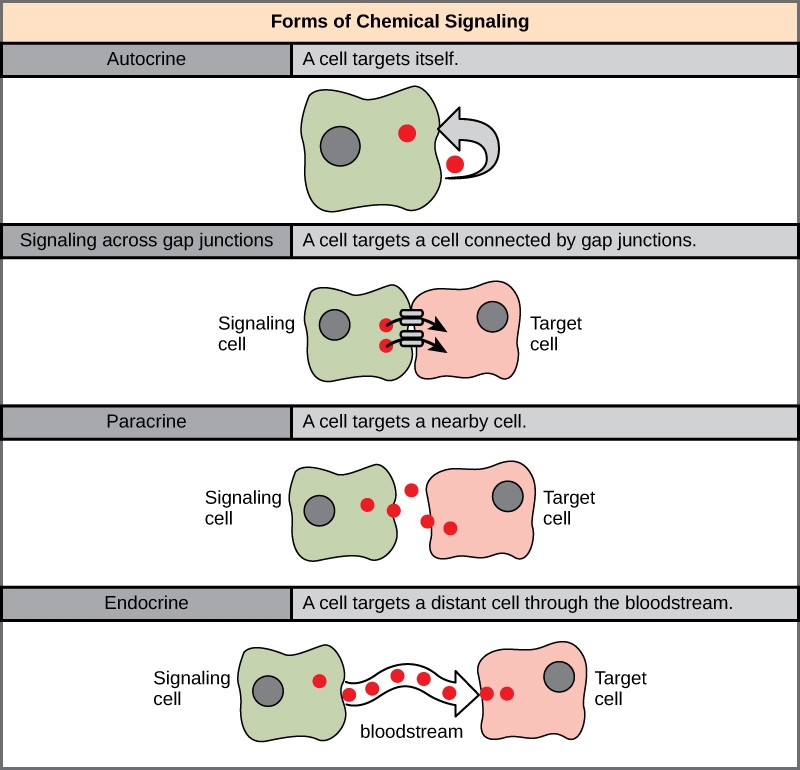
Above is shown the 4 major types of cell communication. Match the following Biological events with the type of cell signaling that BEST matches what is happening in the organism.
Chemical Signals regulating rhythmic muscle contraction are propagated down the length of cardiac muscle fibers from one cell to the next.
T cells responding to the activated version of the antigun they produced and being stimulated to divide and reproduce more of the activated antigen type.
Mast cell in the respiratory system releasing histamine in response to the presence of an aborigine.
Bovine growth Hormone is released during development of a young calf.
autocrine signal
endocrine signal
paracrine signal
intercellular signaling
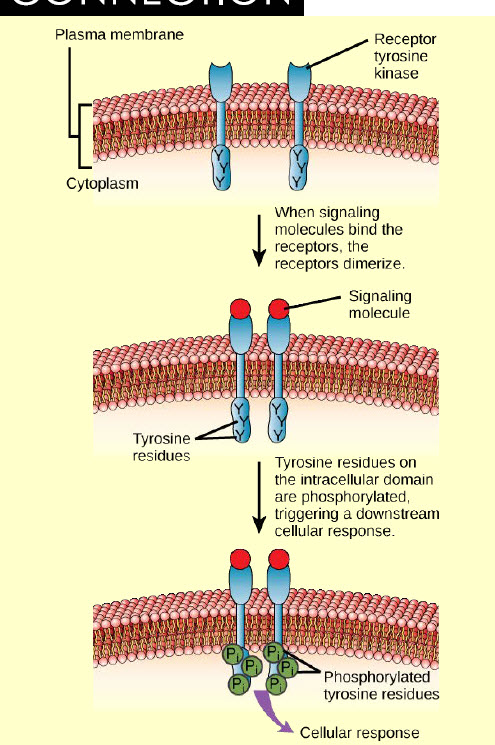
Figure 9.8 A receptor tyrosine kinase is an enzyme-linked receptor with a single transmembrane region, and
extracellular and intracellular domains. Binding of a signaling molecule to the extracellular domain causes the
receptor to dimerize. Tyrosine residues on the intracellular domain are then autophosphorylated, triggering a
downstream cellular response. The signal is terminated by a phosphatase that removes the phosphates from the
phosphotyrosine residues.
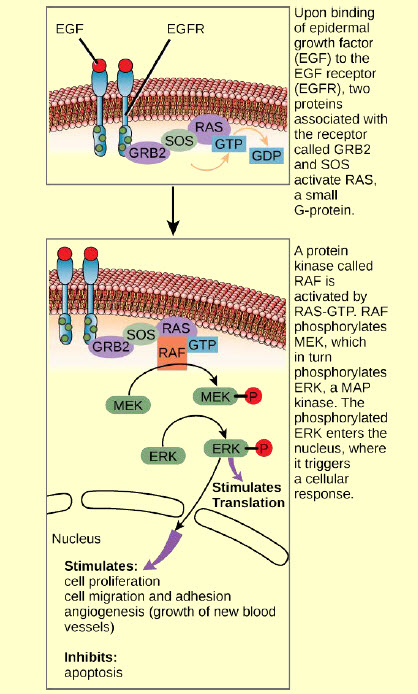
Figure 9.10 The epidermal growth factor (EGF) receptor (EGFR) is a receptor tyrosine kinase involved in
the regulation of cell growth, wound healing, and tissue repair. When EGF binds to the EGFR, a cascade of
downstream events causes the cell to grow and divide. If EGFR is activated at inappropriate times, uncontrolled
cell growth (cancer) may occur.
What property prevents the ligands of cell-surface
receptors from entering the cell?
The secretion of hormones by the pituitary gland is an
example of _______________.
Why are ion channels necessary to transport ions into or
out of a cell?
Endocrine signals are transmitted more slowly than
paracrine signals because ___________.
What is the function of a phosphatase?