Log in
Sign up for FREE
arrow_back
Library

DNA/Protein Synthesis/Cell Cycle HN

star
star
star
star
star
Last updated about 7 years ago
31 questions
2
2
2
2
2
2
2
2
2
2
2
2
2
2
2
2
2
2
2
These questions will cover material from prior units, and are similar to questions that are likely to appear on the SOL.
2
3
2
3
2
2
Respond to all open-ended questions as completely as possible. Full sentences are encouraged, but not required.
1
1
4
6
5
6
Question 1
1.

Question 2
2.

Question 3
3.

Refer to this diagramme for #4.
Question 4
4.

Question 5
5.

Question 6
6.

Question 7
7.

Question 8
8.

Question 9
9.

Question 10
10.

Refer to this diagramme for #11.
Question 11
11.

Question 12
12.

Refer to this diagramme for #13.
Question 13
13.

Refer to this diagramme for #14 and #15.
Question 14
14.

Question 15
15.

Refer to this diagramme for #16.
Question 16
16.

Refer to this diagramme for #17.
Question 17
17.

Question 18
18.

Question 19
19.

Review Questions
Question 20
20.

Refer to this diagramme for #21.
Question 21
21.

Refer to this diagramme for #22.
Question 22
22.

Refer to this diagramme for #23.
Question 23
23.

Refer to this diagramme for #24.
Question 24
24.

Refer to this diagramme for #25.
Question 25
25.

Short Answer
Question 26
26.

During which phase of the cell cycle does DNA replication take place? Be specific! (1)

Question 27
27.

Why does DNA replication take place? (1)

Question 28
28.

Draw and label the DNA nucleotide. (4)Use the largest text possible.

Question 29
29.

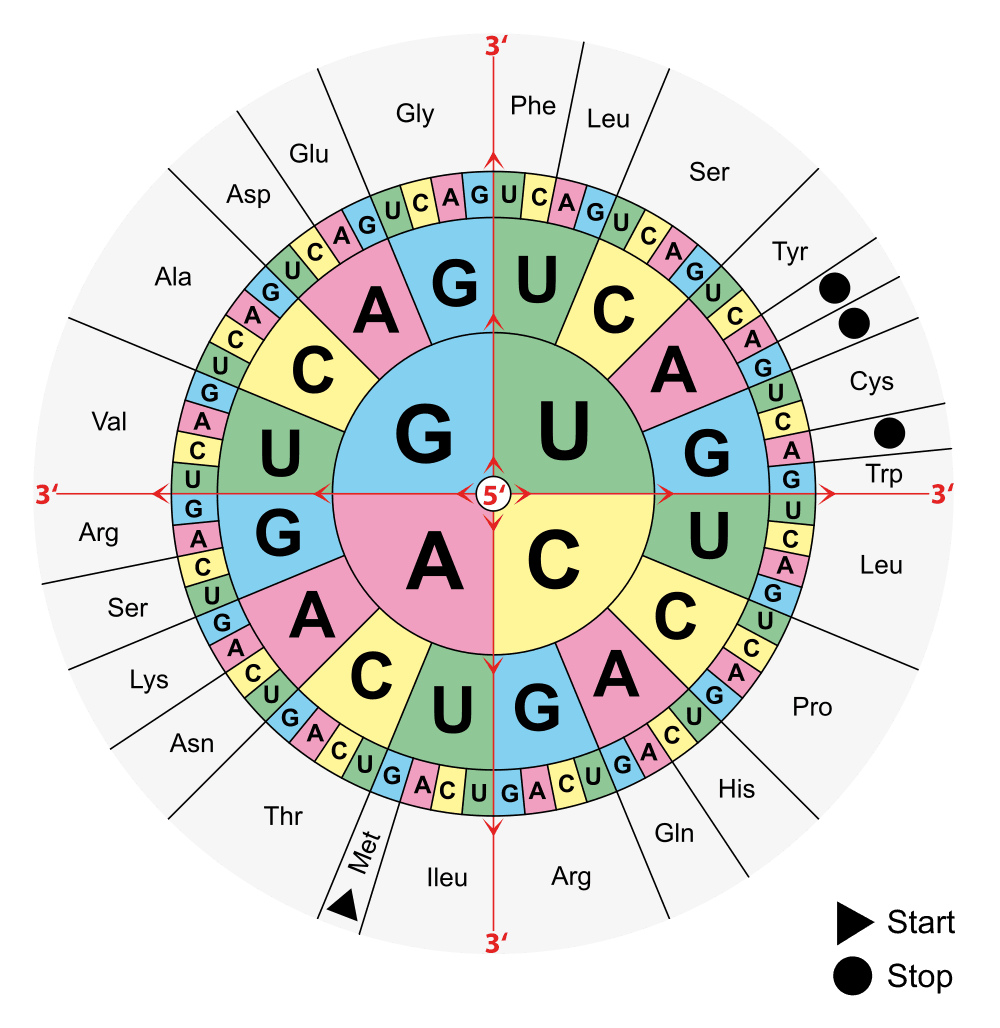
Complete the chart below for Transcription and Translation. (6)Use the largest text possible.

Refer to this diagramme for #29.
Question 30
30.

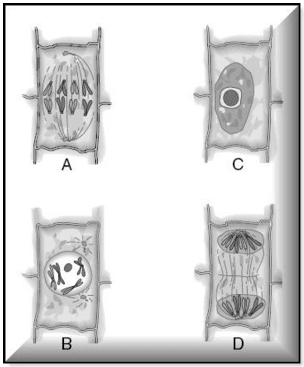
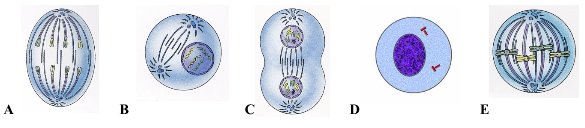
Beginning with Cell D, write the correct order for the cells above that are going through mitosis. (5)

Question 31
31.

In the Venn diagramme below, compare and contrast mitosis and meiosis. Include the processes as well as the end products of each. (6)Use the largest text possible.

A large molecule of DNA is composed of smaller molecules called:
Glucose
Amino acids
Fatty Acids
Nucleotides
Which one of the following nucleotide base pairs would be found in a DNA molecule?
cytosine – uracil
adenine – guanine
guanine – cytosine
adenine – cytosine
A DNA nucleotide may be made up of a phosphate group, along with:
Deoxyribose sugar and thymine
Ribose sugar and cytosine
Deoxyribose sugar and uracil
Ribose sugar and adenine
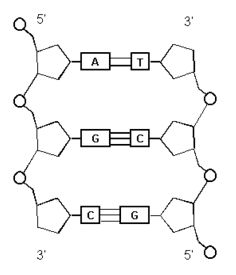
What part of a nucleotide is labeled “A” on the DNA molecule above?
Nitrogenous base
Deoxyribose
Ribose
Phosphate group
In a portion of a gene, the nitrogenous base sequence is T-C-G-A-A-T. What is the complementary DNA sequence that normally bonds to this section of the gene?
A-G-C-T-T-A
U-G-C-A-A-U
A-C-G-T-A-A
A-C-G-U-U-A
Watson and Crick described the DNA molecule as a:
Double helix
Straight chain
Single strand
Branching chain
The process of DNA replication is necessary before a cell:
Makes a protein.
Codes for RNA molecules.
Divides its nucleus into two.
Modifies lysosome enzymes.
The process by which a DNA molecule is copied is called:
Binary fission
Replication
Mitosis
Translation
DNA replication results in:
A single identical double-stranded molecule.
Two different double-stranded molecules.
A single different double-stranded molecule.
Two identical double-stranded molecules.
Which of these is responsible for carrying coded information from the nucleus?
mRNA
Ribosomes
Cell membrane
ATP
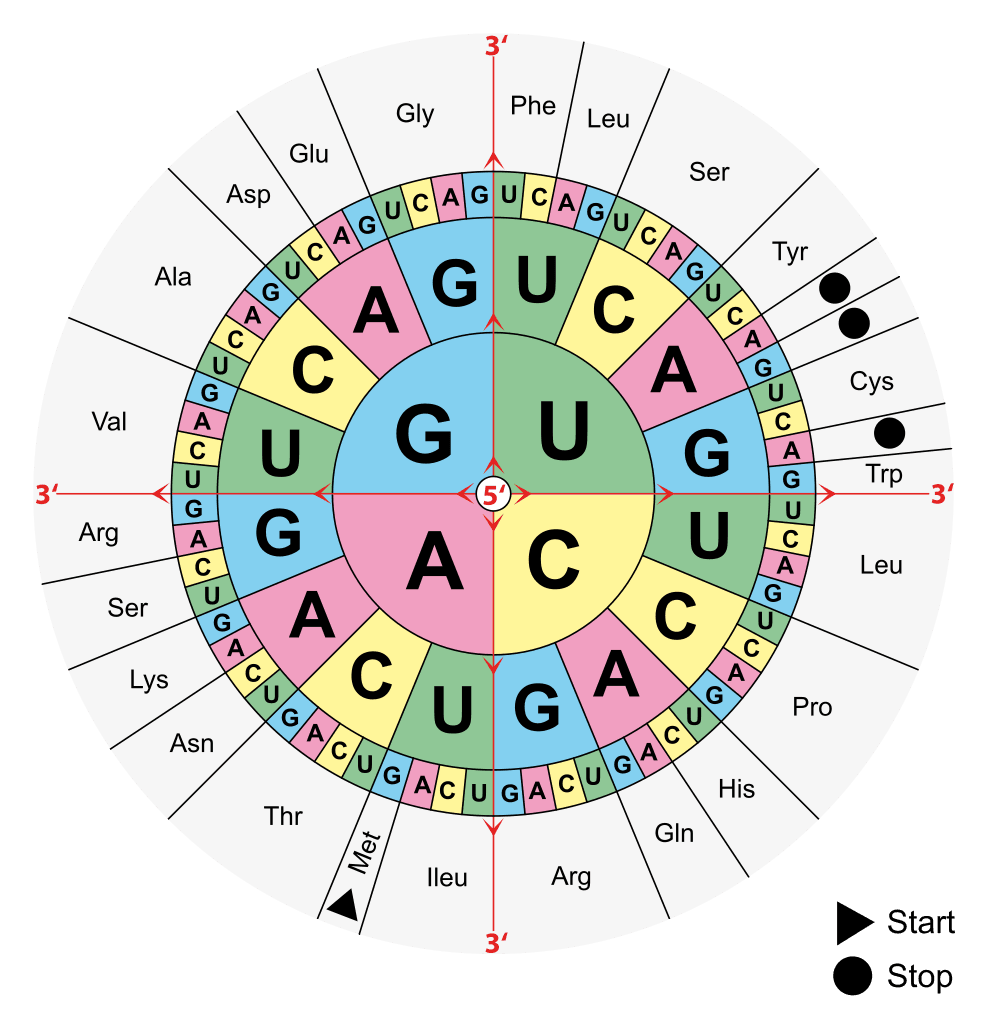
Use the codon chart supplied to you to answer this question. Determine the correct polypeptide strand if the mRNA strand contains the following code: UGC AGG CAU CGA
cys arg his arg
gin asp glu stop
thr ser val ala
leu pro arg gly
A scientist compared the genes and proteins from a root cell and a leaf cell of a single apple tree. What will the scientist observe about the cells?
They have the same set of genes but different sets of proteins.
They have the same set of genes and the same set of proteins.
They have different sets of genes but the same set of proteins.
They have different sets of genes and different sets of proteins.
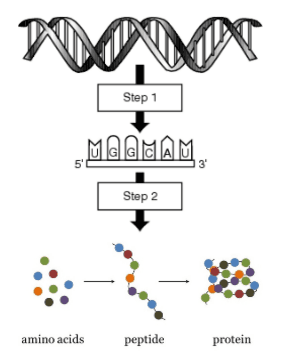
The diagram above shows the steps in producing a protein. Where in the cell does step 2 occur?
Nucleus
Ribosome
Lysosome
Golgi body
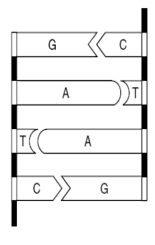
The diagramme above represents a portion of a type of organic molecule present in all cells of all organisms. What will most likely happen if there is a change in the base sequence of this molecule?
The molecule will be converted into an inorganic compound.
The amino acid sequence may be altered during protein synthesis.
The chromosome number will decrease in future generations.
The chromosome number may increase within the organism.
How do cells use the genetic information within this molecule?
DNA is broken down and used by mitochondria to manufacture ATP.
DNA is transcribed into RNA, which is used to manufacture proteins.
DNA is copied and used by chloroplasts to manufacture glucose.
DNA is translated and used to manufacture cell organelles.
Use the codon table supplied to you to answer this question. A normal portion of a gene in DNA reads AAA/TGT/CGA/CCA. The DNA is exposed to chemicals that cause mutations. Which of the DNA mutations shown below will cause a change in the amino acid sequence?
AAA to AAG
TGT to TGG
CCA to CAA
CGA to CGG
Which of the following is the correct sequence for plant cell mitosis in the diagram above?
A B C D
B C A D
C B A D
D A B C
Although mitosis ends with two identical diploid cells, meiosis ends with:
Four identical diploid cells.
Four genetically different diploid cells.
Four identical haploid cells.
Four genetically different haploid cells.
Meiosis occurs during the production of:
Reproductive cells
Skin cells
Muscle cells
Somatic cells
Orchids were studied to determine if the amount of humidity affected the flowering of these plants. Which of these was the independent variable in this study?
The amount watered.
The percentage of humidity.
The length of time required for flowering.
The number of flowers on each plant.
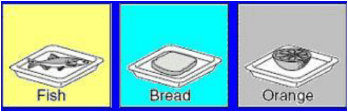
The picture shows some containers of different foods that were left in the open for 2 days. Which question could most realistically be answered by this experiment?
How does a fly digest different foods?
How much energy do flies get from different foods?
Which food attracts flies from the greatest distance?
Which food attracts the most flies?
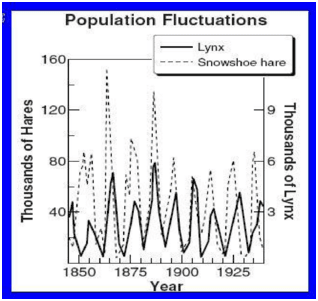
This graph shows the sizes of lynx (large predatory cat) and hare (similar to a rabbit) populations between the years of 1845 and 1940. If a predator of the lynx enters the food chain, you might expect the number of...
lynx and hares to become equal.
lynx to increase.
hares to increase.
hares and lynx to decrease.
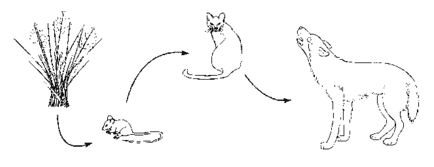
In this figure, as matter and energy move from grasses to coyotes, the amount of available energy:
Increases.
Decreases.
Decreases then increases.
Increases or decreases, but population size remains the same.
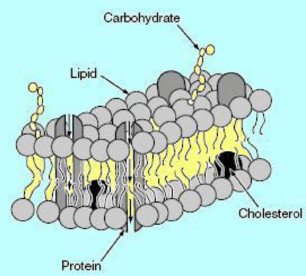
In the cell membrane model shown above, the molecules which move large molecules into and out of the cell are known as:
Cholesterol
Proteins
Lipids
Carbohydrates
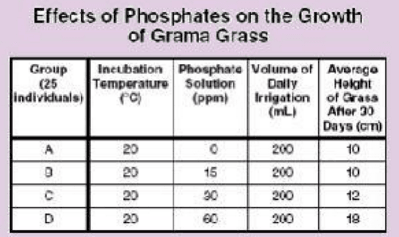
Which factor would need to be known before a valid conclusion could be based upon the data shown above?
The length of the study period.
The original average height of grass.
The density of the phosphate solutions
The mineral content of the potting soil.