Mutation Problems
star
star
star
star
star
Last updated about 7 years ago
17 Nsɛmmisa
1
1
1
1
1
1
1
1
1
1
1
1
1
1
1
1
1
Transcribe the following DNA:TAC AAA TAT CGG TTT CCG CAA TCG ATA AGG GGG GCA This represents the normal mRNA.
Translate the mRNA in your answer above into a protein sequence. (spell each amino acid correctly and put a dash and no spaces between each).This represents the normal protein.
Compare this new mRNA to the normal mRNA in question #1. How many mistakes were made during transcription?
Translate the mRNA above into a protein sequence. (spell each amino acid correctly and put a dash and no spaces between each).
Were any amino acids changed due to any mistakes? If so, which ones?
What group of mutation is this?
What type of mutation is this?
Translate the mRNA above into a protein sequence. (spell each amino acid correctly and put a dash and no spaces between each).
How many amino acids changed due to any mistakes?
What group of mutation is this?
What type of mutation is this?
Which of the two types of mutations had the greatest effect on the protein?
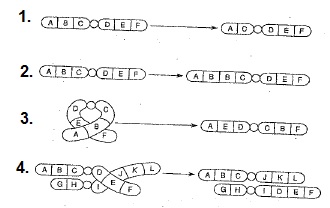
What group of mutations do the diagrams above belong to?
What type of mutation is #1 in the diagram above?
What type of mutation is #2 in the diagram above?
What type of mutation is #3 in the diagram above?
What type of mutation is #4 in the diagram above?