Twa kɔ nsɛm atitiriw so
Log in
Sign up for FREE
arrow_back
Laabri

Chapter 2 Test

star
star
star
star
star
Last updated over 5 years ago
50 Nsɛmmisa

MULTIPLE CHOICE

-Complete the following questions by clicking on the correct answer. Only one answer is correct. (2 pts. each)
2
2
2
2
2
2
2
2
2
2
2
2
2
2
2
2
2
2
2
2
2
2
2
2
2

COMPLETION

-Complete the following questions by selecting the correct answer from the word bank. Misspelled words will be marked as incorrect. Some answers may be used more than once, others may not be used at all. (2 pts. each)

weight, density, physical change, chemical change, physical, mass, volume, inertia, chemical, property, change, milliliters, kilogram,

2

weight, density, physical change, chemical change, physical, mass, volume, inertia, chemical, property, change, milliliters, kilogram,

2

weight, density, physical change, chemical change, physical, mass, volume, inertia, chemical, property, change, milliliters, kilogram,

2

weight, density, physical change, chemical change, physical, mass, volume, inertia, chemical, property, change, milliliters, kilogram,

2

weight, density, physical change, chemical change, physical, mass, volume, inertia, chemical, property, change, milliliters, kilogram,

2

weight, density, physical change, chemical change, physical, mass, volume, inertia, chemical, property, change, milliliters, kilogram,

2

weight, density, physical change, chemical change, physical, mass, volume, inertia, chemical, property, change, milliliters, kilogram,

2

weight, density, physical change, chemical change, physical, mass, volume, inertia, chemical, property, change, milliliters, kilogram,

2

weight, density, physical change, chemical change, physical, mass, volume, inertia, chemical, property, change, milliliters, kilogram,

2

weight, density, physical change, chemical change, physical, mass, volume, inertia, chemical, property, change, milliliters, kilogram,

2

MATCHING

-Complete the following matching questions by clicking on the correct answer. Only one answer is correct. (2 pts. each)
2
2
2
2
2
2
2
2
2
2

SHORT ANSWER

-Write in complete sentences to answer the following questions. One or two word responses will earn NO credit. Logically connect your thoughts and answer the question that is asked, not the question you think has been asked! (2 pts. each)

2
2
2
2
2

Do NOT forget to turn in this assignment on Google Classroom after you have submitted it here! No credit will be awarded for unsubmitted assignments.

Asemmisa {{asɛmmisaAhyɛnsode}}
1.

Which of the following statements is true about an object's weight but NOT about its mass?

Asemmisa {{asɛmmisaAhyɛnsode}}
2.

What kinds of changes in substances are always physical changes?

Asemmisa {{asɛmmisaAhyɛnsode}}
3.

Why are chemical properties harder to observe than physical properties?

Asemmisa {{asɛmmisaAhyɛnsode}}
4.

What is the BEST way to tell if a chemical change has taken place?

Asemmisa {{asɛmmisaAhyɛnsode}}
5.

Which of the following is NOT the result of a chemical change?

Asemmisa {{asɛmmisaAhyɛnsode}}
6.

Which of the following is a chemical property of matter?

Asemmisa {{asɛmmisaAhyɛnsode}}
7.

What makes characteristic properties useful to scientists?

Asemmisa {{asɛmmisaAhyɛnsode}}
8.

Melting crayons is an example of a

Asemmisa {{asɛmmisaAhyɛnsode}}
9.

Which of the following units would be best for describing the volume of mercury (Hg) liquid used in an experiment?

Asemmisa {{asɛmmisaAhyɛnsode}}
10.

Which of the following events is NOT a common sign that a chemical change has taken place?

Asemmisa {{asɛmmisaAhyɛnsode}}
11.

What unit of density would be appropriate to describe a solid bar of silver?

Asemmisa {{asɛmmisaAhyɛnsode}}
12.

Which physical property of matter describes the relationship between mass & volume?

Asemmisa {{asɛmmisaAhyɛnsode}}
13.

Malleability is an example of a

Asemmisa {{asɛmmisaAhyɛnsode}}
14.

Which of the following is NOT a physical property of matter?

Asemmisa {{asɛmmisaAhyɛnsode}}
15.

During physical changes, matter always retains its

Asemmisa {{asɛmmisaAhyɛnsode}}
16.

Which of the following signs does NOT indicate that a chemical change has happened?

Asemmisa {{asɛmmisaAhyɛnsode}}
17.

What units would you use to measure solid volume in an experiment?

Asemmisa {{asɛmmisaAhyɛnsode}}
18.

Which of these phrases describes the results of a chemical change?

Asemmisa {{asɛmmisaAhyɛnsode}}
19.

Why would dissolving salt in water be considered a physical change?

Asemmisa {{asɛmmisaAhyɛnsode}}
20.

How can you tell that baking a cake produces a chemical change?

Asemmisa {{asɛmmisaAhyɛnsode}}
21.

How can you tell that the electrolysis of water produces a chemical change?

Asemmisa {{asɛmmisaAhyɛnsode}}
22.

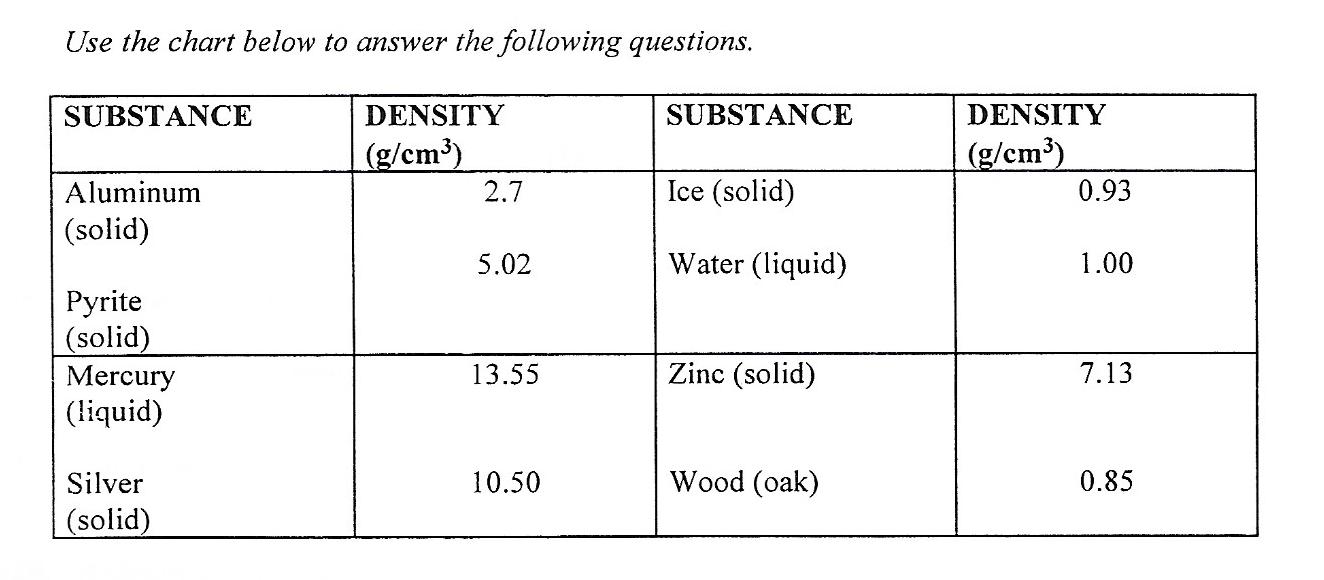
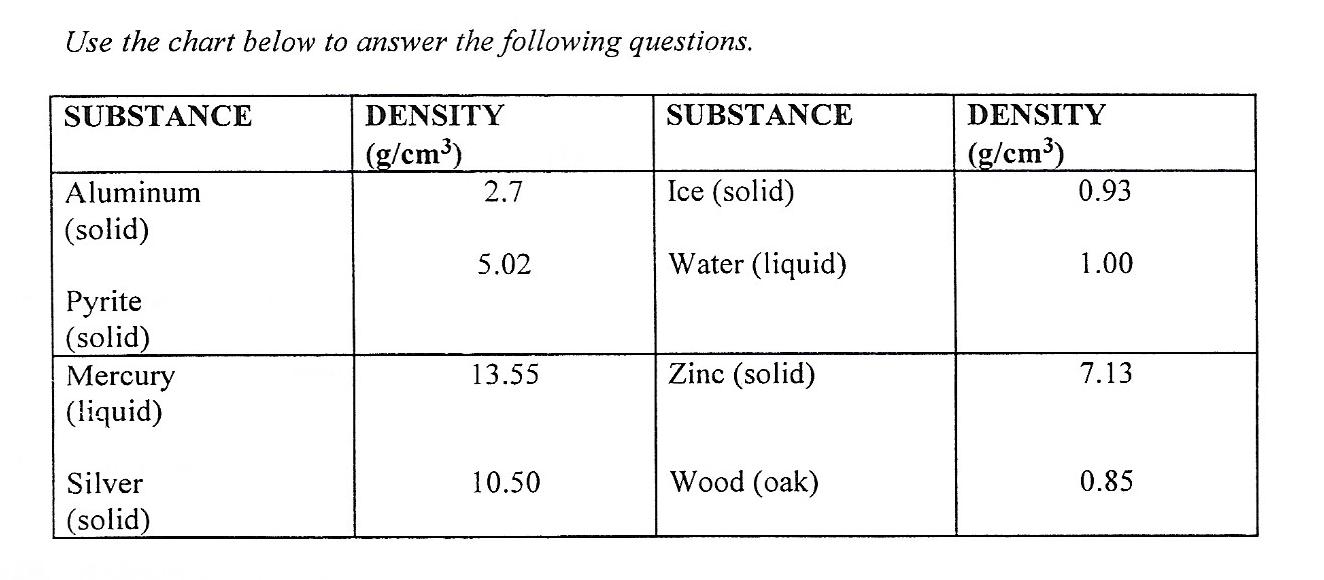
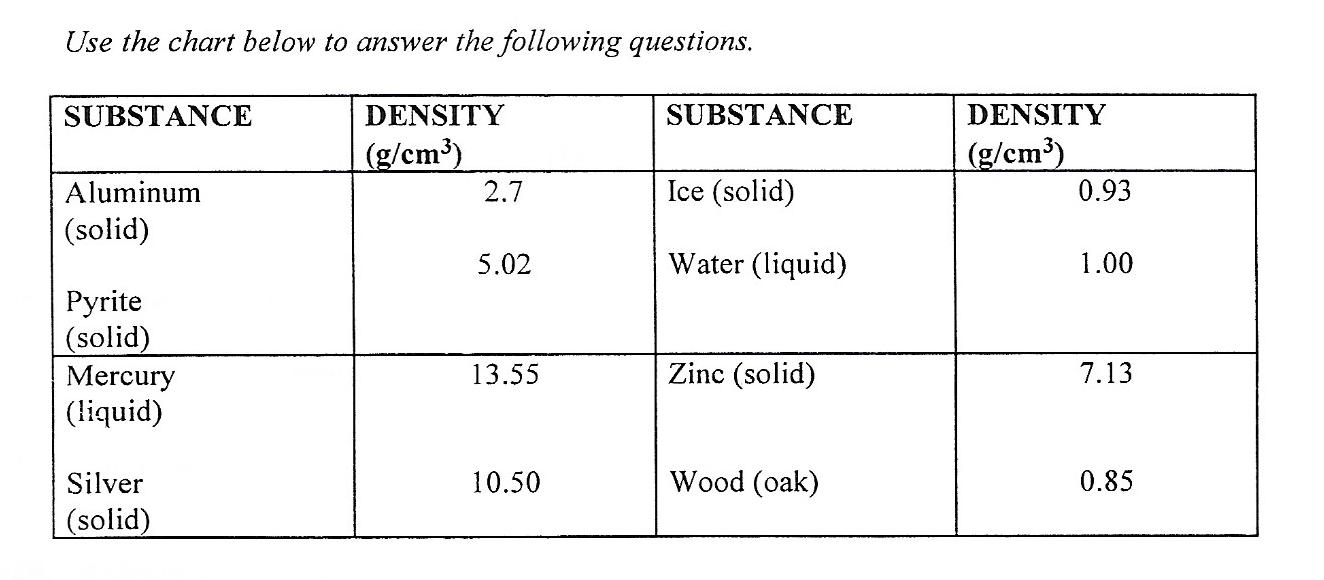
A cube has a density of 2.7 g/cm3. What substance is the cube made of?

Asemmisa {{asɛmmisaAhyɛnsode}}
23.

What substance has a density more than 13 times greater than water?

Asemmisa {{asɛmmisaAhyɛnsode}}
24.

Why will ice float on top of liquid water?

Asemmisa {{asɛmmisaAhyɛnsode}}
25.

What is the densest solid shown in the table?

Asemmisa {{asɛmmisaAhyɛnsode}}
26.

Because of __________________, all objects tend to resist a change in motion.

Asemmisa {{asɛmmisaAhyɛnsode}}
27.

The physical property of matter that describes the relationship between mass & volume is ______________________.

Asemmisa {{asɛmmisaAhyɛnsode}}
28.

One way to learn about the _______________________ properties of a substance is to observe what new substances form during a reaction.

Asemmisa {{asɛmmisaAhyɛnsode}}
29.

Things with ___________________ cannot share the same place at the same time.

Asemmisa {{asɛmmisaAhyɛnsode}}
30.

A chemical _________________________ describes which changes are possible for a substance.

Asemmisa {{asɛmmisaAhyɛnsode}}
31.

The amount of matter in an object is its ___________________.

Asemmisa {{asɛmmisaAhyɛnsode}}
32.

The S.I. unit for mass is the _________________________.

Asemmisa {{asɛmmisaAhyɛnsode}}
33.

If you know an object's mass, you can figure out its _______________________ on Earth.

Asemmisa {{asɛmmisaAhyɛnsode}}
34.

The tendency of an object to resist a change in its motion is ___________________________.

Asemmisa {{asɛmmisaAhyɛnsode}}
35.

You could use ________________________ to measure the volume of a soft drink can.

Asemmisa {{asɛmmisaAhyɛnsode}}
36.

The ability of a substance to burn.

Asemmisa {{asɛmmisaAhyɛnsode}}
37.

Changes in matter that do not change the composition of the substance.

Asemmisa {{asɛmmisaAhyɛnsode}}
38.

The ability of two or more substances to combine to form other substances.

Asemmisa {{asɛmmisaAhyɛnsode}}
39.

The saltiness of seawater is the result of this property.

Asemmisa {{asɛmmisaAhyɛnsode}}
40.

This is the mass per unit of volume of any substance.

Asemmisa {{asɛmmisaAhyɛnsode}}
41.

This is the physical form in which a substance exists.

Asemmisa {{asɛmmisaAhyɛnsode}}
42.

This is the type of matter that makes up an object and the way it is arranged.

Asemmisa {{asɛmmisaAhyɛnsode}}
43.

The breakdown of water to form two gases is the result of this process.

Asemmisa {{asɛmmisaAhyɛnsode}}
44.

This is the tendency of a substance to resist changes in its motion.

Asemmisa {{asɛmmisaAhyɛnsode}}
45.

This is the rate at which a substance conducts heat.

Asemmisa {{asɛmmisaAhyɛnsode}}
46.

Explain why volume & mass are NOT characteristic properties of matter.

Asemmisa {{asɛmmisaAhyɛnsode}}
47.

Explain how you would measure the volume of an irregular solid such as a rock. Be Specific and detailed. Do NOT simply name the procedeure!

Asemmisa {{asɛmmisaAhyɛnsode}}
48.

Suppose you had two bricks with exactly the same volume, one made from clay and the other made from plastic foam (painted to look like stone). Explain how you could use inertia to tell which brick has the most mass.

Asemmisa {{asɛmmisaAhyɛnsode}}
49.

Describe two physical and two chemical properties of an ice cube.

Asemmisa {{asɛmmisaAhyɛnsode}}
50.

What physical property do a wood block, copper tubing, an ice cube, a bar of silver, and a lead fishing weight have in common? What physical property of matter could you use to tell them apart?