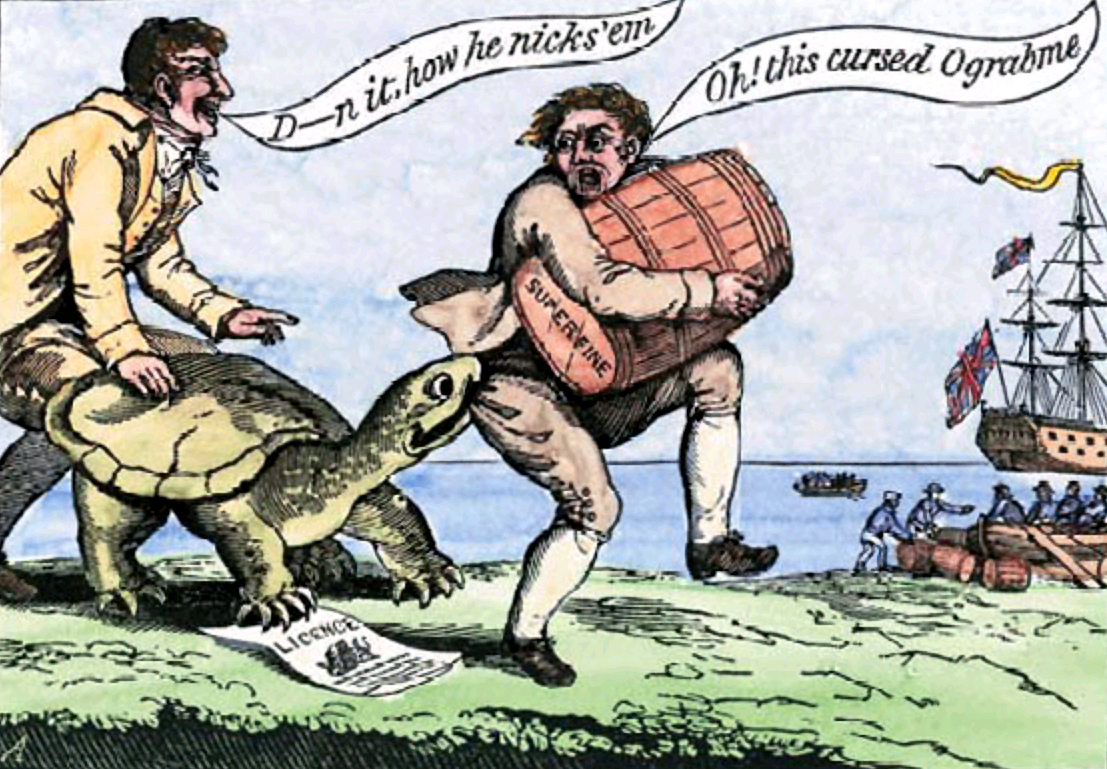
Tačno
Netačno
A) The United States standing up for its rights.
B) Establishing new trade agreements with Great Britain.
C) The weaknesses of the U.S. government in the early 1800s.
D) Helping the U.S. become a world power.
A) They believed President Madison was using the war to guarantee his re-election.
B) Many Federalists believed that the British had not done anything wrong.
C) Federalists felt war would ruin any peace agreements they made with local tribes.
D) It hurt U.S. trade, which was how many Federalists made their living.
A) the XYZ Affair
B) the split of the Federalist party
C) the Kentucky and Virginia Resolutions
D) Madison vs. Marbury
A) conquest of Canada
B) increased trade with Britain
C) greater security for Americans
D) end of impressment
A) a farmer in Tennessee
B) a merchant from New Hampshire
C) a soldier in Indiana
D) a War Hawk from North Carolina
A) he helped to repeal the Sedition Act
B) he strengthened the law
C) he had hundreds of people arrested
D) he replaced the Sedition Act with the Alien Act
A) Spain
B) France
C) England
D) Haiti
A) he did not have the constitutional power to buy land from another country.
B) he worried about angering farmers who shipped their crops to New Orleans.
C) he did not trust Monroe and Livingston to make a favorable deal.
D) he worried that the land in the territory would be of poor quality.
A) France
B) England
C) Spain
D) Barbary States
A) Congress votes to approve a Supreme Court appointment.
B) A newspaper editorial criticizes a Supreme Court decision.
C) A decision by a lower court is appealed to the Supreme Court.
D) The Supreme Court rules that a new law violates the Constitution.
A) was a barrier protecting them from Native American attacks.
B) allowed them to ship their crops to market in New Orleans.
C) blocked the westward expansion of the United States.
D) provided a water route to the Pacific.
A) Great Britain
B) Russia
D) France
A) He asked Congress to pass the Embargo Act of 1807.
B) The United States paid tribute to the Barbary States.
C) The United States joined France in its war against Britain.
D) The United States joined Britain in its war against France.
A) Adventure Express
B) Explorers of the West
C) Marine Corps
D) Corps of Discovery
A) The group had a record of mostly peaceful relationships with all of the native groups they encountered.
B) Lewis and Clark argued and fought about leadership constantly, leading the Corps to divide into two groups.
C) The group fought many battles with Native Americans.
D) The trip did not have the full support of the president.
A) They would have a lot of goods to trade
B) That she had been kidnapped by the group
C) They should fear the white man coming west
D) The Lewis & Clark group was peaceful and meant no harm
A) Make peace with the Indian tribes
B) Create maps of the newly purchased land
C) Document new animals and plants they discovered
D) Find a water route to the Pacific Ocean
E) All of the above were goals of the Lewis and Clark expedition
A) John Marshall
B) Zebulon Pike
C) James Madison
D) Andrew Jackson
A) Dolly Madison
B) Abigail Adams
C) Martha Jefferson
D) Sally Hemmings
A) The Native Americans gained much of their old land back
B) little territory changed hands
C) Canada became part of the U.S.
D) New England states left the Union
A) Jefferson
B) Adams
C) Washington
D) Madison
A) Pocahontas
B) Tecumseh
C) Sacagawea
D) Squanto
A) he was the first Supreme Court Justice
B) he presided over many landmarks cases that set legal precedent, such as Marbury vs. Madison
C) he negotiated a treaty to buy Florida
D) he was a war hero in the War of 1812
A) Dartmouth vs. Woodward
B) McCulloch vs. Maryland
C) Gibbons vs. Ogden
D) Marbury vs. Madison
A) writ of mandamus
B) impeachment of officials
C) judicial review
D) declaring war
A) St. Louis
B) Chicago
C) Denver
D) St. Paul
A) No major battles took place west of New York
B) The British won major victories at the battles shown
C) Each side suffered a major loss at one of the battles shown
D) The United States won victories at the battles shown
A) The battles were long and difficult
B) The battles ensured British control of the Northwest Territory
C) The battles were decisive for American control of the Northwest Territory
D) The battles were fought entirely on water
A) John Paul Jones
B) Francis Scott Key
C) Oliver Hazard Perry
D) Henry David Thoreau
A) Doves and Hawks
B) Blue Jays and Vultures
C) Cardinals and Eagles
D) Pigeons and Ravens
A) Stealing our ships
B) Interfering with our trade
C) Impressment of sailors
D) Blockading our coasts
A) Sequoyah
D) Little Turtle
A) The Southern States
B) The Middle States
C) New England
D) The Western States
A) in the Caribbean
B) in Southeast Asia
C) Northern Africa
D) the coast of Central America
A) States could make their own financial decisions
B) Federal power grew and the power of the states was weakened
C) Private business would have a more difficult time developing
D) Tariffs were raised on many goods and services
A) He agreed that the federal government had gone too far and allowed the nullification of the bill
B) Jackson threatened to send federal troops to South Carolina to force them to comply with the law
C) Congress voted that the state was operating within its rights, and Jackson couldn't do anything
D) Jackson charged the state's legislature with treason
A) North Carolina
B) Massachusetts
C) South Carolina
D) Pennsylvania
A) He won more electoral votes than any other candidate
B) He won more popular votes than any other candidate
C) Both A & B are correct
D) He wasn't outraged because he won the election
A) Battle of Bloody Marsh
B) Battle of Taliwa
C) Cherokee War
D) Trail of Tears
A) Clay convinced the House of Representatives to support Adams instead of Jackson and then was made the Secretary of State
B) Clay convinces America to buy Florida
C) Jackson convinced the House of Representatives to support Adams for the presidency and is made Secretary of War
D) Monroe convinces Congress to declare war on Britain
A) Isolationist foreign policy
B) Abolition of slavery
C) Expansion of states' rights
D) More power for the common man
A) Dartmouth College vs. Woodward
B) Marbuy vs. Madison
C) McCulloch vs. Maryland
D) Gibbons vs. Ogden
A) he opposed foreign trade
B) he did not want the United States to be dragged into war
C) France was too weak to aid the United States in battle
D) the British in the Northwest Territory were allies
A) belonged to the United States
B) was governed jointly by Britain and the United States
C) was granted to the British
D) was set aside for Native Americans
A) Americans won the War of 1812
B) Native American forces were defeated and pushed out of the Ohio Valley
C) Native Americans won a great victory
D) Tecumseh was killed
A) Battle of Detroit
B) Battle of New Orleans
C) Battle of Baltimore
D) Battle of the Thames
A) America the Beautiful
B) The Star-Spangled Banner
C) Battle Hymn of the Republic
D) The Pledge of Allegiance
A) treatment of Native Americans
B) Jay's treaty
C) the Alien and Sedition Acts
D) western expansion
A) He kept the National Bank open
B) He continued to pay off the national debt
C) He cut federal spending by cutting the size of the military
D) He allowed many Federalists to keep their government jobs
A) editorials in favor of France
B) bonds
C) more money
D) criticism of the government
A) They violated constitutional rights, especially the rights of speech and press guaranteed by the First Amendment
B) They placed the rights of states ahead of the authority of the federal government
C) They made it possible for members of foreign powers to be represented in Congress
D) They reduced the powers of the Supreme Court and disrupted the government's system of checks and balances
A) Treaty of Antwerp
B) Treaty of Ghent
C) Treaty of Belgium
D) Treaty of Paris
A) Henry Clay
B) Henry Harrison
C) Tecumseh
A) He didn't know what Western America was like
B) He had a strict view of the constitution
C) The expedition had not returned yet
D) He had a loose view of the constitution
A) He needed money to finance his wars in Europe
B) His soldiers did not reach America because they were fighting a slave rebellion n Haiti
C) The territory was surrounded by other world powers
D) All of the above were reasons Napoleon was willing to sell Louisiana
A) Kentucky and Virginia Resolution
B) The War of 1812
C) Embargo Act
D) Monroe Doctrine
A) A new country was created for Native Americans
B) Britain gained rights to navigate the Mississippi River
C) There was no official change in territory or policies
D) The United States gained ownership of Upper Canada
A) The United States had refused to pay its war debts from the American Revolution
B) The British were seizing American sailors and making them serve in the British Navy
C) The U.S., Great Britain, and France were all claiming ownership of the land that is currently Canada
D) Many of the European countries were still collecting illegal taxes from the American businesses
A) American's had to pay war debts to England
B) British stopped attacking American ships
C) France started attacking American ships
D) Spain started attacking American ships
A) British Tax on American trade with Europe
B) Impressment of Sailors
C) Pirates capturing ships
D) They were America's enemies during the War of 1812
A) Federalists
B) Democratic Rupublican
B) Democratic Republican
A) the journey of Lewis and Clark
B) the journey of the Corps of Discovery
C) the journey of Zebulon Pike
D) the Trail of Tears
A) find a water route to the Pacific
B) understand the British battle plans for the War of 1812
C) deduce why this explorer might be arrested
D) see the importance of the Mississippi River on trade
benefited large states
was a compromise between free and slave states
allowed Illinois to become a free state
solved the issue of slavery
Missouri Compromise
Monroe Doctrine
Treaty of Ghent
American Defence Policy
Thomas Jefferson
John Adams
James Madison
Andrew Jackson
Embargo Act
War of 1812
Alien and Sedition Act
won in the War of 1812
Adam-Onis Treaty