edible trees

Last updated over 5 years ago
15 questions
10

Welk deel van de esdoorn eet hij?

Most of us know of, and greatly appreciate, the wild and cultivated fruits, nuts and berries that come from trees. However, few are aware of the edible yields (and great value) that several of our trees have to offer. Aside from producing delicious snacks, such as apples, cherries, walnuts and chestnuts, some trees provide other edible parts: bark, leaves, twigs, seeds, pollen, roots, new growth, flowers and, of course, sap used for syrup.
10

Wat betekent yield?

For example, did you know that the young leaves and even the seeds of many of our maple trees are edible? Maple trees provide more than the familiar delicious maple syrup! Also, did you know that the inner bark and young twigs of many of our birch trees are edible? Birch trees can also be tapped for a sweetish sap/syrup. Then, there are the immensely valuable pines, with their edible inner bark, seeds and so much more.
10

Welke 2 bomen worden hier genoemd?

The American beech, F. grandifolia, is an exceptional, magnificent and majestic shade tree that definitely deserves to be grown more often in the landscape. A slow-growing native of eastern North America, the tree can grow to about 100 feet tall, often with a nearly equal spread. It has grayish bark and dark green foliage that turns golden bronze in autumn. The small, edible nuts are very tasty but not that well known. Young leaves can be cooked as a green in spring. The inner bark, after drying and pulverizing, can be made into bread flour, though this is probably best considered as a survival food.
10

Welke delen van de beuk zijn eetbaar?

The birch species are well known, especially the strikingly beautiful white-barked varieties. The inner bark of birches is edible, making it an important survival food. Many have kept from starving by knowing this. Native peoples and pioneers dried and ground the inner bark into flour for bread. You can also cut the bark into strips and boil like noodles to add to soups and stews or simply eat it raw. In spring you can drink the tree’s sap directly from the tree, or boil it down into a slightly sweet syrup.
10

Geef minimaal 4 manieren waarop je de berk kunt eten?

The linden (or basswood) is often a well-shaped tall tree, with grey fissured bark. The young leaves in spring are pleasant to eat raw or lightly cooked. The flowers are often made into a soothing, tasty tea.
10

Wat betekent fissured?

The sugar maple, A. saccharum, is a beautifully formed tree. It provides us with some of the best and intense autumn foliage color, ranging from brilliant orange to yellow to bright reds.

Sugar maples have distinctive, slightly notched, three-lobed leaves, whereas those of the black maple, A. nigrum, are more shallowly notched. The bark of the black maple is almost black in color. The five-lobed leaves of the silver maple, A. saccharinum, have narrow and deep indentations between the lobes. The undersides of its leaves are notably silvery-white in color.

10

Waarom heet de zwarte esdoorn zo?

The sugar maple is famous for the deliciously sweet syrup you can make from its sap. But, few are aware that many other species of the larger maple trees can also be tapped for an edible sap. Among these include: the black maple, whose sap tastes almost identical to that of the sugar maple; and the silver maple, also providing an equally sweet-flavored sap. The syrup you can make from other maples varies considerably in flavor and quality, but feel free to experiment. Native peoples and pioneers drank the fresh sap from maples in spring, as a refreshing drink.

The inner bark of maples can be eaten raw or cooked — another survival food source! Even the seeds and young leaves are edible. Native peoples hulled the larger seeds and then boiled them.

10

Alleen de suiker esdoorn is geschikt voor het produceren van maple syrup.

MULBERRY, MORUS

The mulberry, M. alba and M. rubra, are mediumsized, fruit-bearing trees, with a short trunk and a rounded crown. The twigs, when tender in spring, are somewhat sweet, edible either raw or boiled.

WALNUTS, JUGLANS

All Juglans species can be tapped for sweet-tasting syrup, particularly black walnut and butternut.

OAKS, QUERCUS

The oaks are mentioned here, for it is not that well known that the acorns are edible. All acorns are good to eat, though some are less sweet than others. Some, like red oak, Q. rubra, are bitter tasting, while others like white oak, Q. alba, sometimes have sweet nuts. The bur oak, Q. macrocarpa, often bears chestnut-like flavored acorns.

10

Wat is een acorn?

POPLAR, POPULUS

The Populus genus includes aspens and poplars. Their somewhat sweet, starchy inner bark is edible both raw and cooked. You can also cut this into strips and grind into flour as a carbohydrate source. Quaking aspen, P. tremuloides, catkins can also be eaten.

10

Voor welke voedingstof is de populier een goede bron

SASSAFRAS, SASSAFRAS
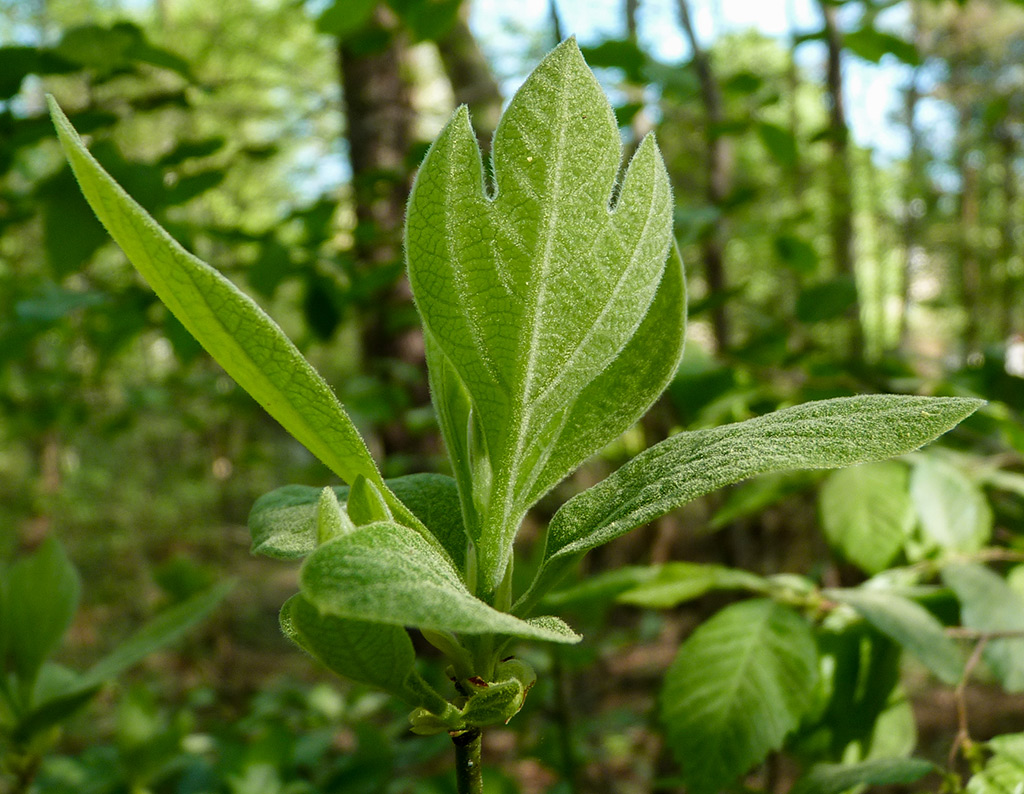
The green buds and leaves of a sassafras (Sassafras albidum). Credit: Matt Jones via Flickr.

Sassafras tea (mainly from the young roots) is well known, and its pleasantly fragrant aroma is unmistakeable. The young, green-barked, mucilaginous twigs of this small- to medium-sized tree, when chewed, are delicious to many. The green buds and young leaves are also delicious. Try them in salads! Soups and stews can be thickened and flavored with the dried leaves (but, remove the veins and hard portions first).
10

Wat is de Nederlandse vertaling voor Sassafras?

ELM, ULMUS RUBRA

This medium-sized tree is well known for its many herbal medicine uses. The thick and fragrant inner bark is extremely sticky, but provides nourishment, either raw or boiled.

WILLOW, SALIX

The inner bark of the willows can be scraped off and eaten raw, cooked in strips like spaghetti or dried and ground into flour. Young willow leaves are often too bitter, but can be eaten in an emergency — it is a survival food!

10

Waarom worden de bladeren van de wilg "survival food" genoemd?

Conifers (in particular, The Pine Family, Pinaceae)

The entire pine family comprises one of the most vitally important groups of wild edibles in the world, particularly for wildlife. The inner bark and sap is very high in vitamins C and A, plus many other nutrients. And, when eaten raw or cooked, its bark has saved many from starvation and scurvy. You can cut the inner bark into strips and cook like spaghetti, or dry and ground into flour for bread and thickening soups and stews. The sap in spring can be tapped and drunk as a tea.

Even pine needles, when young and starchy, are rich in nutrients, like vitamin C, and are reasonably tasty. These are not usually eaten, but rather chewed upon for about five minutes, swallowing only the juices. Perhaps a better alternative is to make a tea with the needles. Pine or fir needles make a fine tea in winter.

10

Which parts of a conifer are not mentioned as edible?

Then, there are the edible cones, seeds and pollen of the Pinus genus. The woody cones that produce seeds within their framework are female. These are delicious when shelled and roasted. Nutritious pine nuts are often not considered for food because they are too tiny and hard to get at (a hammer or rock will be needed). However, there are a few pine species that provide delectable pine nuts (seeds) that can be as large as sunflower seeds or larger. Here is a small selection of these: the Korean Pine, P. koraiensis; Italian Stone Pine, P. pinea; and Pinyon Pine, P. edulis.

The soft male cones and pollen are also edible, but the taste is very strong, so is better if used in cooking. In spring many of these male cones produce copious quantities of pollen, so much so, that you can practically scoop it up from the golden carpet it makes on the ground.

10

Pine seeds are often not considered as food because they are too small.

Sap, Syrups and Tapping

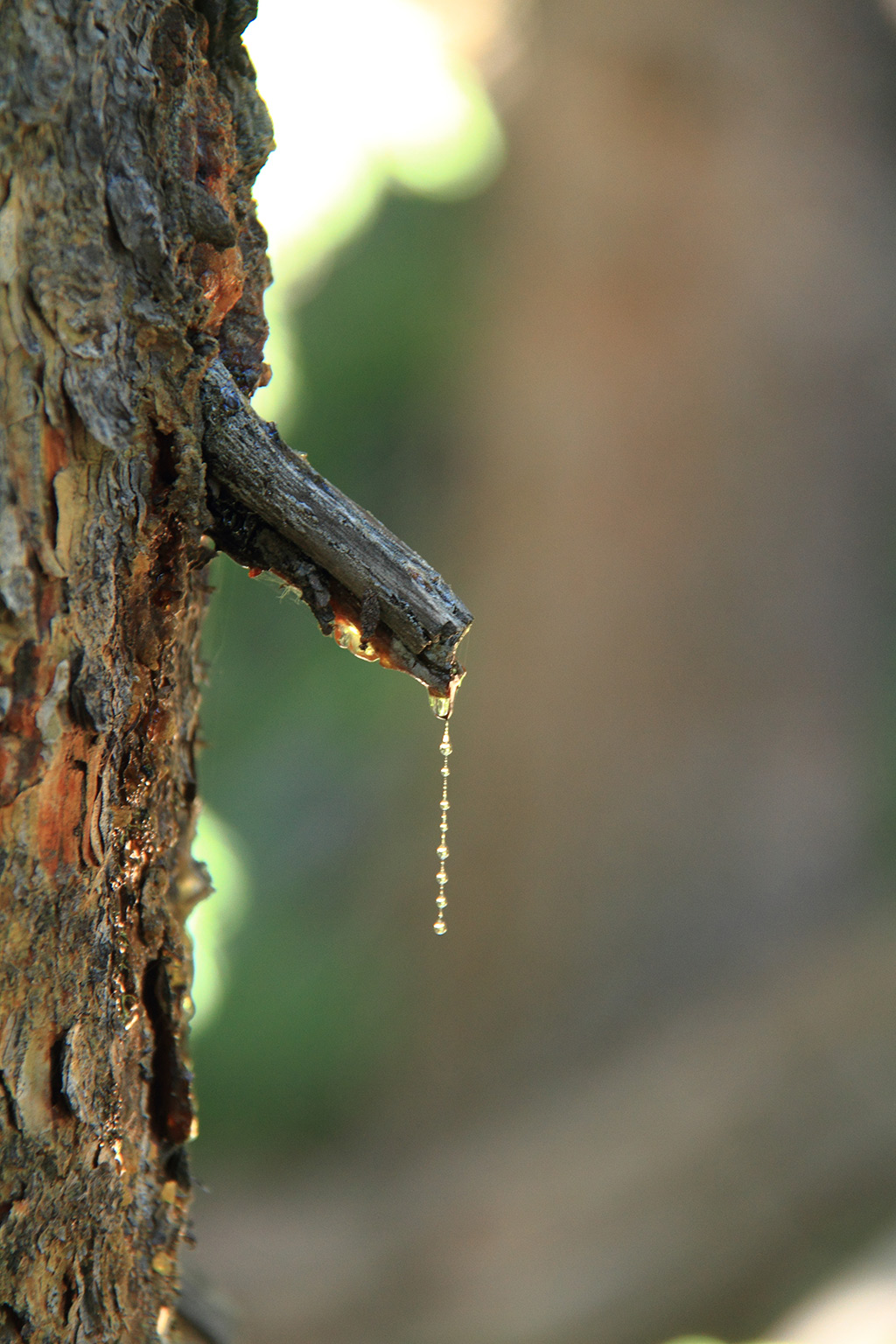
Properly selecting and tapping trees for syrup can be a detailed process. Credit: Alan Sheffield via Flickr.

There are a relatively surprising number of trees that can be tapped for their sap and syrup. However, be forewarned; many of these offer a bland, bitter or almost tasteless flavor and quality. For example, you will find that tapping a hickory tree will result in unsatisfactory tasting syrup. Whereas, tapping certain other nut trees, like butternut and black walnut, will provide you with quite a fine-tasting syrup. Also, the native peoples tapped the sycamore tree, Platanus acerifolia, but this syrup is considered much too dark and strong flavored by most people. The maple by far yields syrups of the best quality and taste, and the best of these is from the sugar maple, or black maple, and followed closely by the silver maple

10

Why are you warned about tapping trees for syrup?