Log in
Sign up for FREE
arrow_back
Library
Cellular Respiration Part 2 Concept Review
By John Lundy
star
star
star
star
star
Share
share
Last updated almost 8 years ago
10 questions
Add this activity
Note from the author:
1
1
1
1
1
1
1
1
1
1
A review assignment examining the electron transport chain, chemiosmotic gradients and anaerobic forms of respiration
Figure 7.11 ATP synthase is a complex, molecular machine that uses a proton (H+) gradient to form ATP from
ADP and inorganic phosphate (Pi). (Credit: modification of work by Klaus Hoffmeier)
Question 4
4.
Question 5
5.
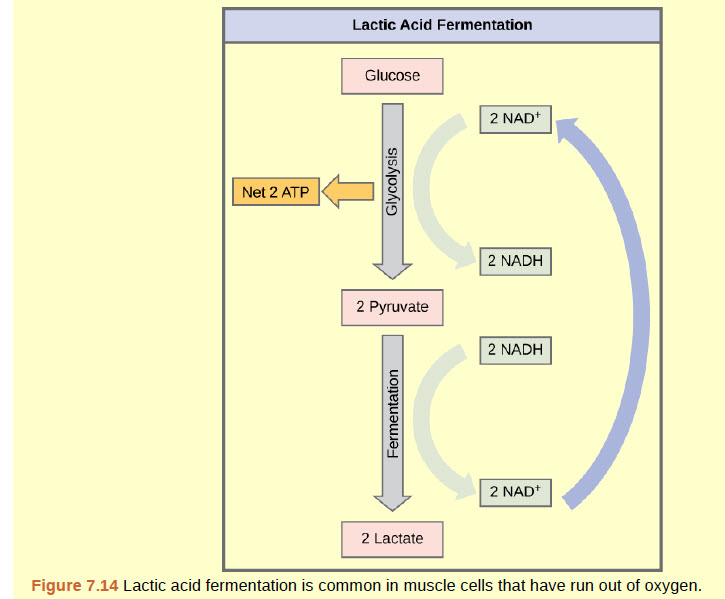
Which of the following fermentation methods can
occur in animal skeletal muscles?
a. lactic acid fermentation
b. alcohol fermentation
c. mixed acid fermentation
d. propionic fermentation
Question 6
6.
Beta-oxidation is ________.
a. the breakdown of sugars
b. the assembly of sugars
c. the breakdown of fatty acids
d. the removal of amino groups from amino acids
Question 7
7.
he control of which enzyme exerts the most control
on glycolysis?
a. hexokinase
b. phosphofructokinase
c. glucose-6-phosphatase
d. aldolase
Question 10
10.
Why might negative feedback mechanisms be more
common than positive feedback mechanisms in living
cells?
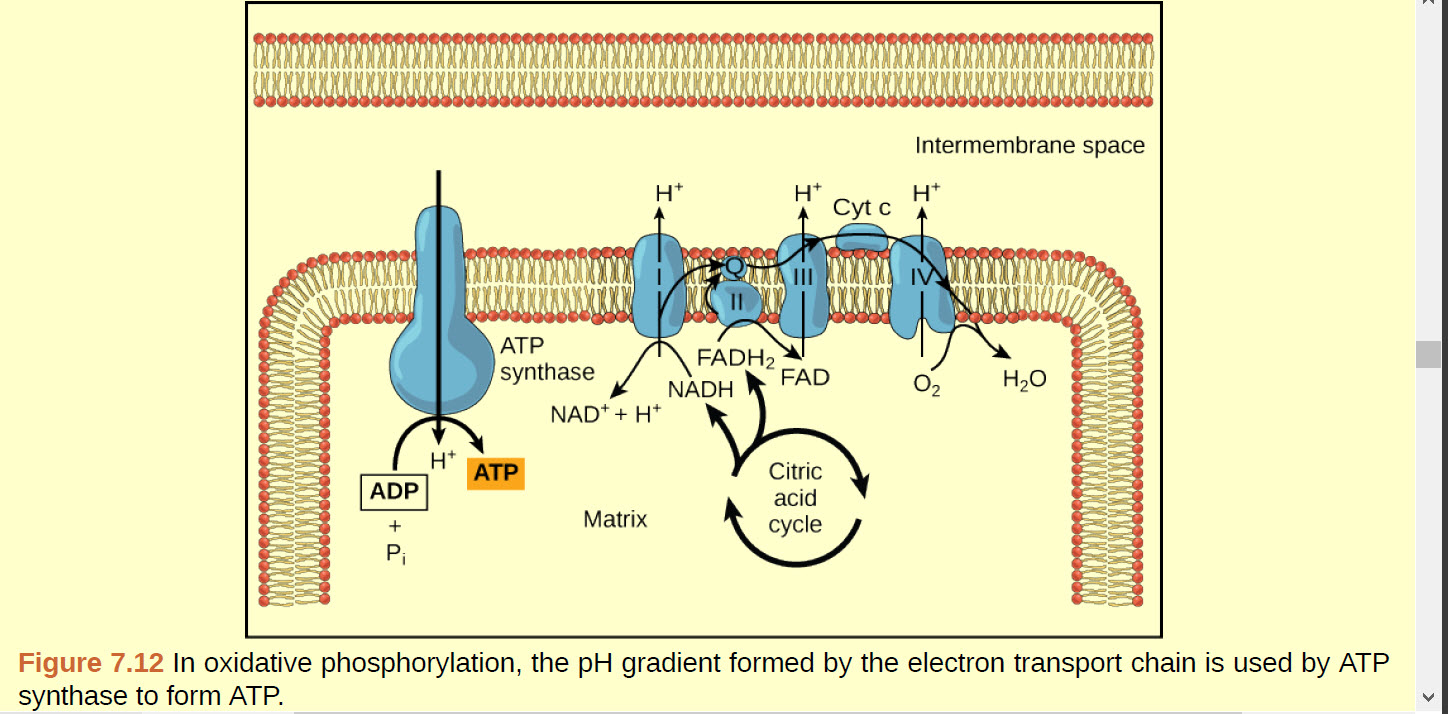
Chemiosmosis involves ________.
a. the movement of electrons across the cell
membrane
b. the movement of hydrogen atoms across a
mitochondrial membrane
c. the movement of hydrogen ions across a
mitochondrial membrane
d. the movement of glucose through the cell
membrane