Algebra 2 4-3 Complete Lesson: Modeling With Quadratic Functions
star
star
star
star
star
Last updated almost 4 years ago
20 questions
Note from the author:
A complete formative lesson with embedded slideshow, mini lecture screencasts, checks for understanding, practice items, mixed review, and reflection. I create these assignments to supplement each lesson of Pearson's Common Core Edition Algebra 1, Algebra 2, and Geometry courses. See also mathquest.net and twitter.com/mathquestEDU.

Solve It! You and a friend are tossing a ball back and forth. You each toss and catch the ball at waist level, 3 ft high.
10 points
10
Question 1
1.
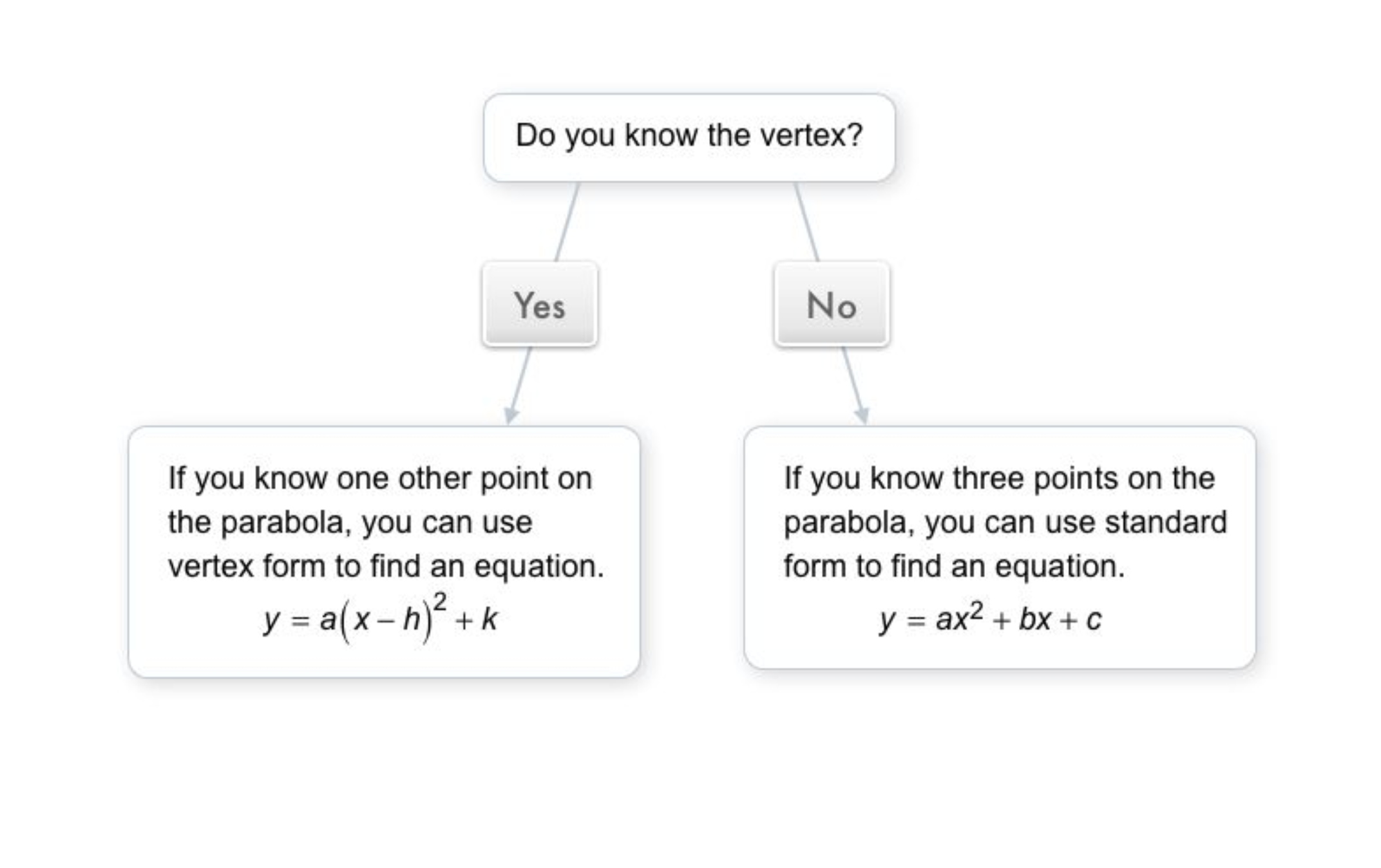
Solve It! What equation, in standard form, models the path of the ball? Hint: Let the x-axis model the horizontal line at waist level and use the x-intercepts.
10 points
10
Question 2
2.
Problem 1 Got It?
10 points
10
Question 3
3.
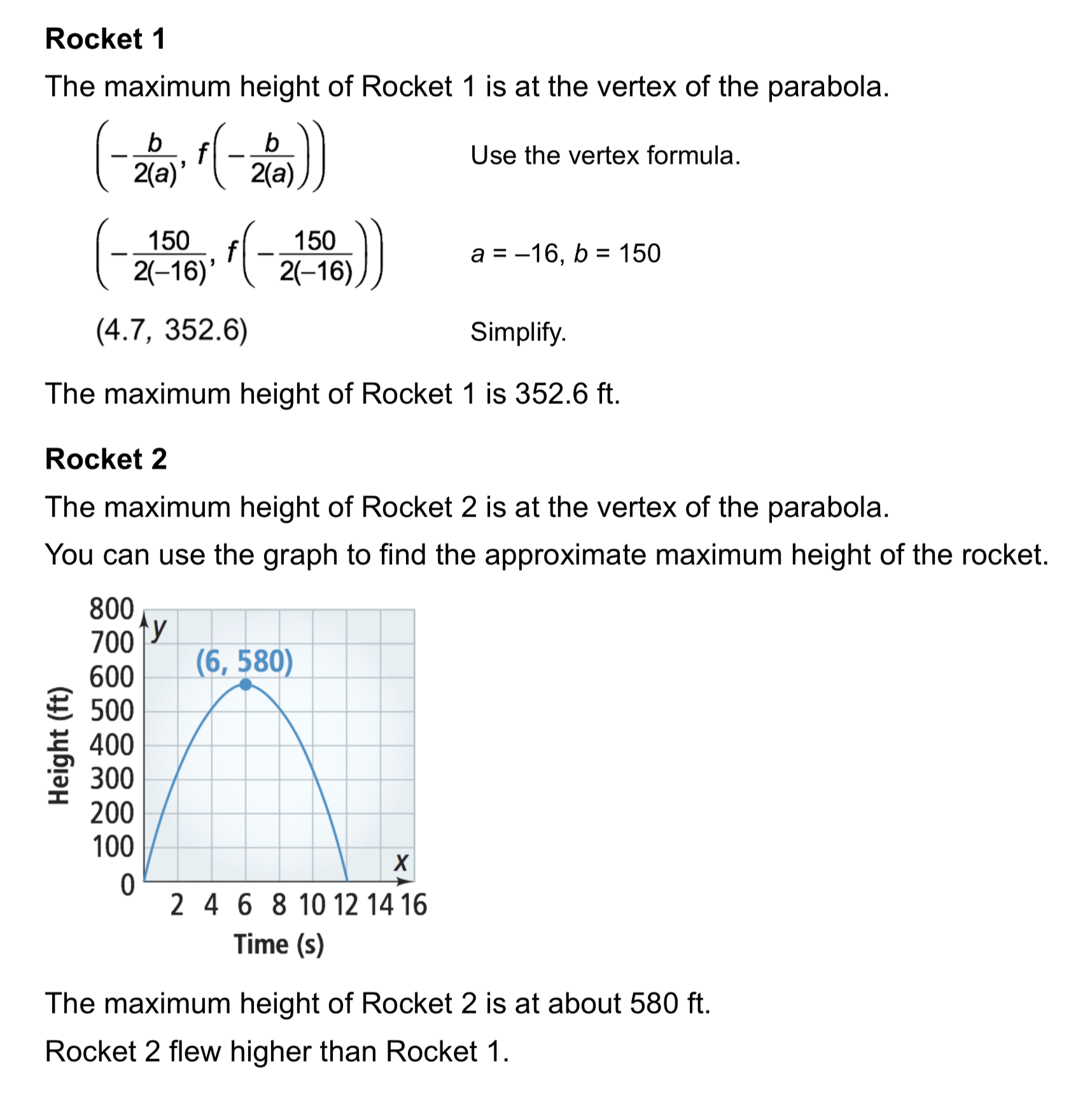
Problem 2 Got It? Refer to Rocket 1 and Rocket 2 from Problem 2, shown here. Which rocket stayed in the air longer?
10 points
10
Question 4
4.
Problem 2 Got It? What is a reasonable domain and range for each quadratic model?
R: 0≤h≤580
D: 0≤s≤9.4
R: 0≤t≤352.6
D: 0≤s≤12
Rocket 1
Rocket 2
10 points
10
Question 5
5.
Problem 2 Got It? Reasoning: Describe what the domains tell you about each of the models and why the domains for the models are different.
30 points
30
Question 6
6.
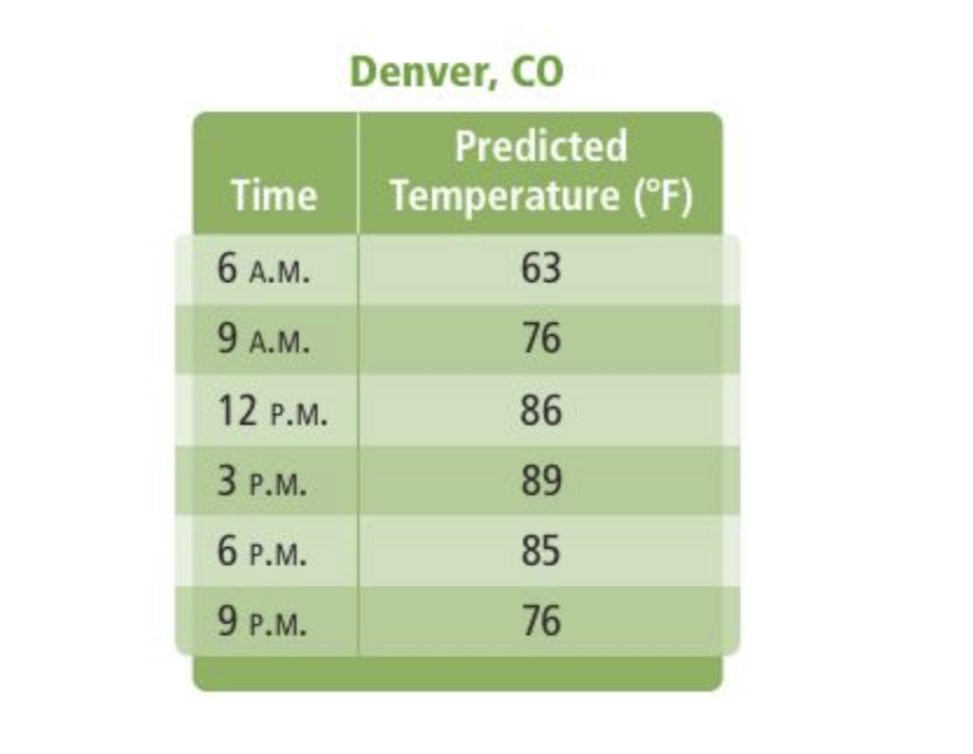
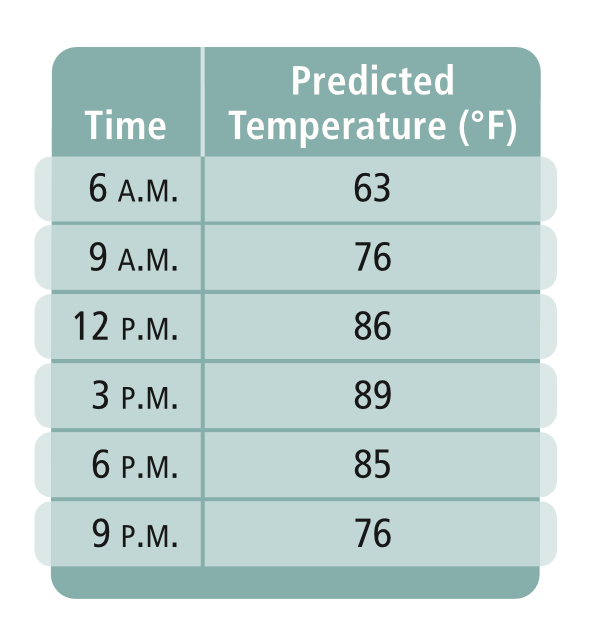
Problem 3 Got It? The table shows a meteorologist's predicted temperatures for a summer day in Denver, Colorado.
1. Add a table to the embedded Desmos graphing utility and plot the points from the meteorologist's table. As in Problem 3, use a 24-hour clock when entering times into the table. Zoom and pan your graph to establish an appropriate viewing window.
2. On the next Desmos row, add a quadratic regression function to model the data. Recall Desmos' regression notation: y₁ ~ ax₁² + bx₁ + c.
3. Use the model to predict the high temperature for the day. Click the parabola once to select it, then click at the point representing the high temperature (the vertex) of the quadratic model to add a label that identifies its coordinates. Be careful not to select the point from the table that is near to the vertex. Be sure the label is shown in the viewing window before moving on.
We have released a new and improved Graphing question type! Students will no longer be able to answer this question.
10 points
10
Question 7
7.
Find a quadratic function that includes the set of values (1, 0), (2, -3), and (3, -10).
10 points
10
Question 8
8.
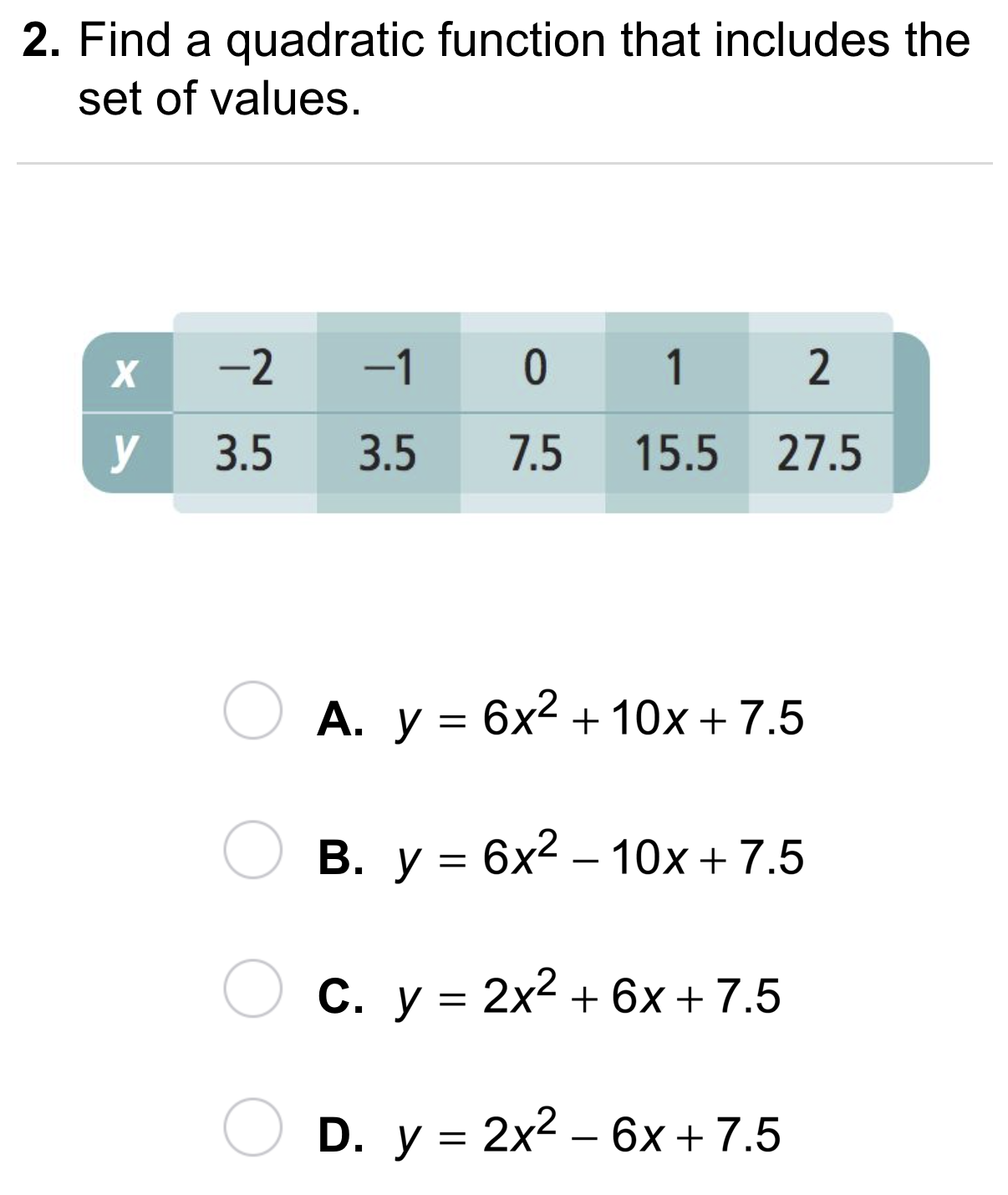
Find a quadratic function that includes the set of values.
10 points
10
Question 9
9.
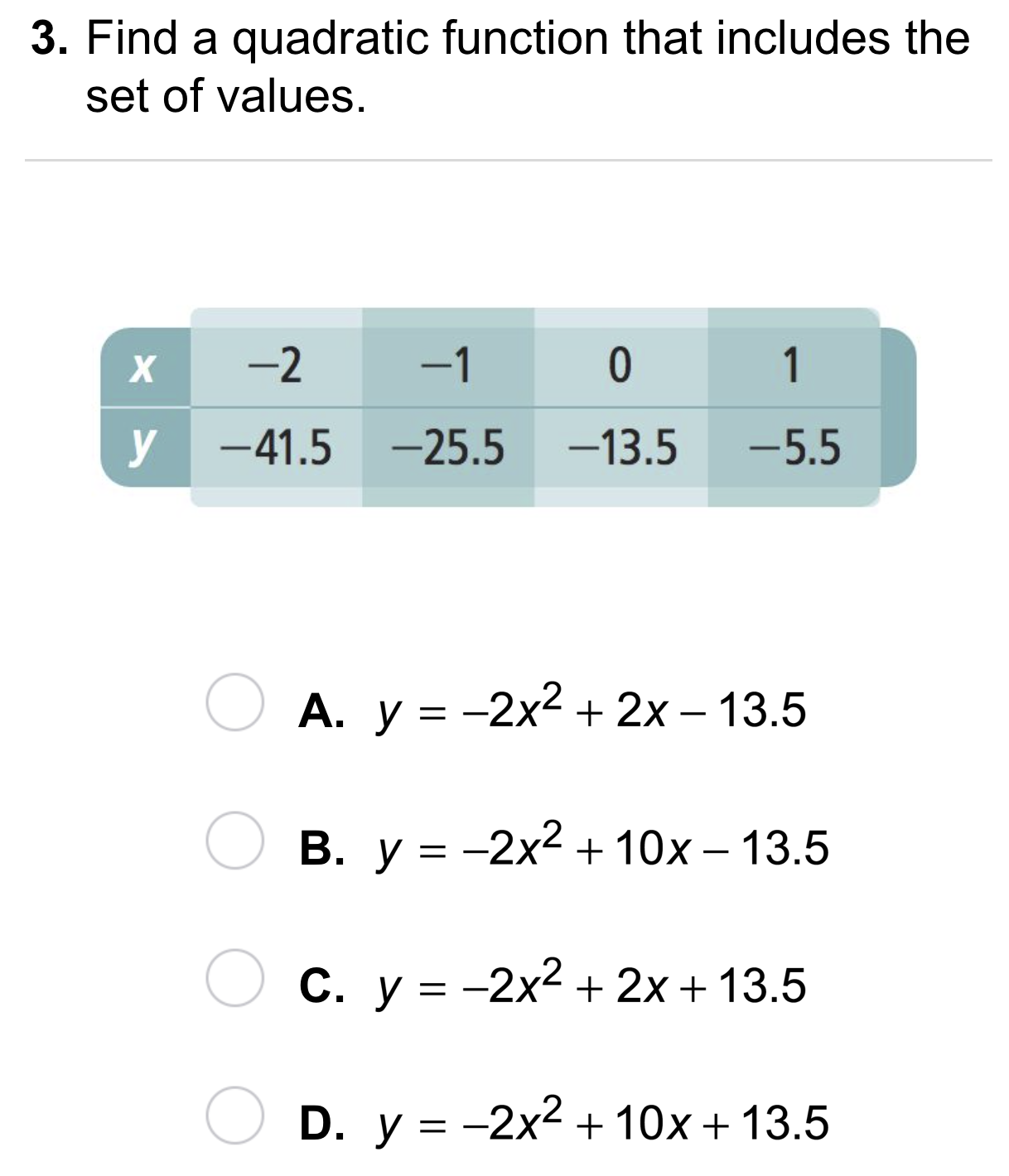
Find a quadratic function that includes the set of values.
10 points
10
10 points
10
Question 11
11.
Error Analysis: Your classmate says he can write the equation of a quadratic function that passes through the points (3, 4), (5, -2), and (3, 0). Explain his error.
10 points
10
Question 12
12.
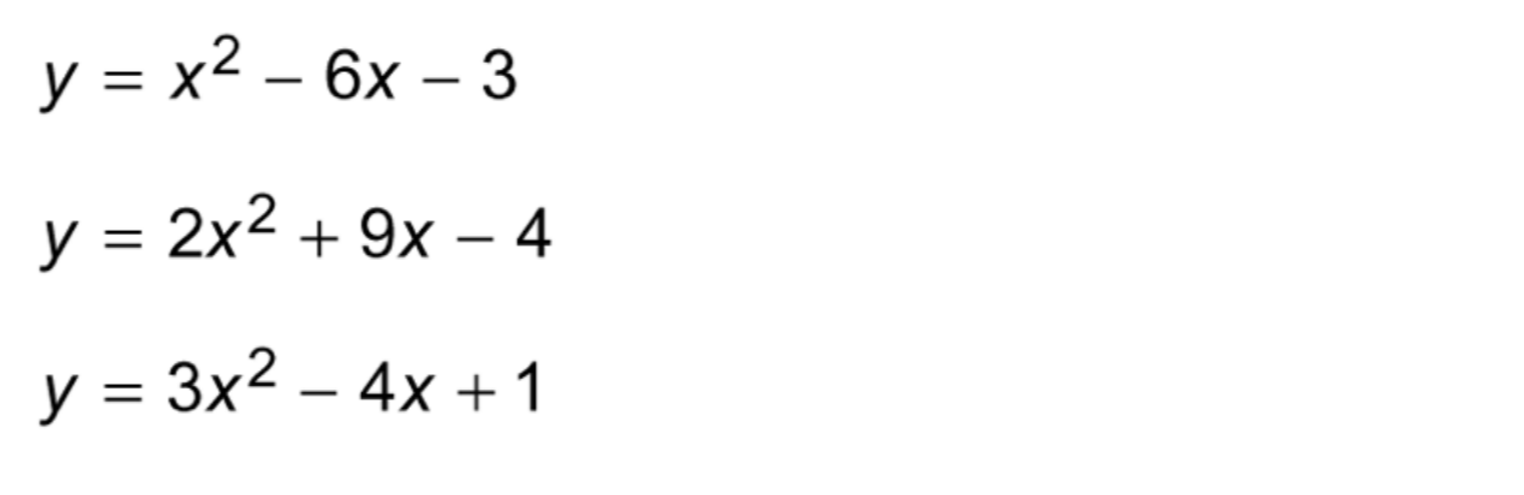
Review Lesson 4-2: Graph the functions on the same plane. Zoom and pan your graph to establish an appropriate viewing window.
We have released a new and improved Graphing question type! Students will no longer be able to answer this question.
10 points
10
Question 13
13.
Review Lesson 3-2: Solve the system by elimination on the canvas. Show each step and write the solution in the space provided.
10 points
10
Question 14
14.
Review Lesson 2-2:y varies directly with x. Match each direct variation with its solution.
If y = 2 when x = 5, find y when x = 2.
If y = -2 when x = 4, find y when x = 7.
2.5
0.8
-3.5
10 points
10
Question 15
15.
Review Lesson 1-3: Match each expression with its simpler form.
x² + x + 4x - 1
3x² + 3(2)x - 2 - 2x² - x + 1
x² - 2(2 - x ) + 3
x² + x - 1
x² + 5x - 1
10 points
10
Question 16
16.
Vocabulary Review: Identify the graphs that are NOT parabolas.
10 points
10
Question 17
17.
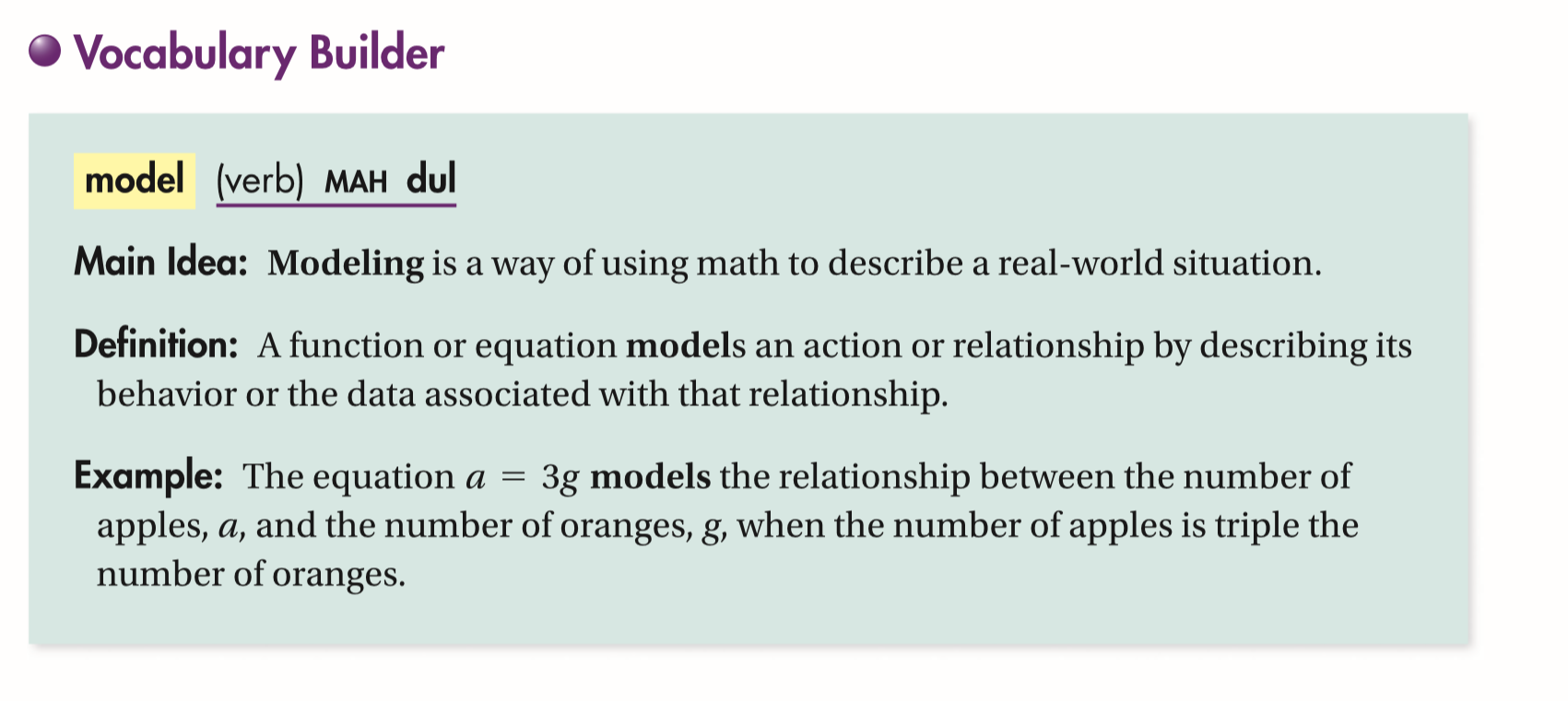
Use Your Vocabulary: Match each description on the left with the equation that models it on the right.
The string section of the orchestra has twice as many violins as cellos.
There are two eggs per person with one extra for good measure.
There were 100 shin guards in the closet, and each player took 2.
y = 2x + 1
y = 2x
y = 100 - 2x
10 points
10
Question 18
18.
Modeling: Consider the table showing a meteorologist's predicted temperatures for the day.
Which calculator screen below shows the correct data entry for a quadratic model?
100 points
100
Question 19
19.
Notes: Take a clear picture or screenshot of your Cornell notes for this lesson. Upload it to the canvas. Zoom and pan as needed.
For a refresher on the Cornell note-taking system, click here.