L 17: Pythagorean Proof
star
star
star
star
star
Last updated about 6 years ago
4 Nsɛmmisa
1
Explain how the following diagram demostrates the Pythagorean Theorem:
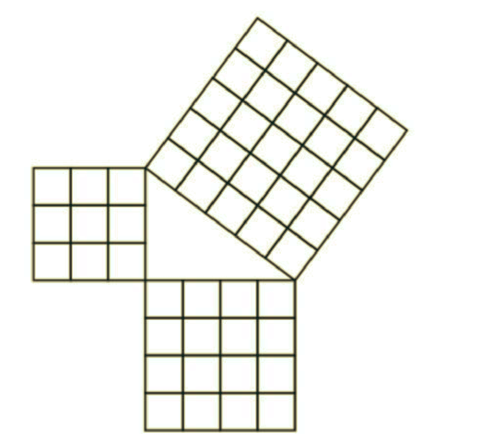
Explain how the following diagram demostrates the Pythagorean Theorem:
1
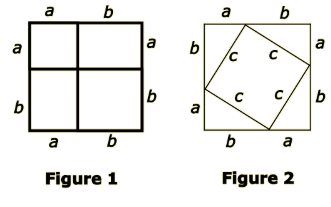
Consider the diagram of a square within a square shown below:
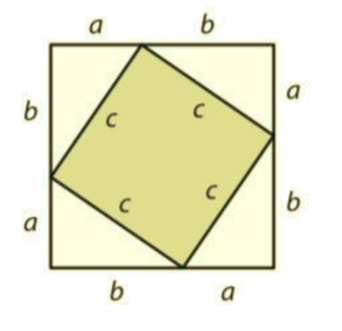
Write an expression using the lengths from the diagram for each of the following:
i. Area of the large square in terms of a and b:
ii. Area of the small square:
iii. Total area of the four triangles:
Consider the diagram of a square within a square shown below:
Write an expression using the lengths from the diagram for each of the following:
i. Area of the large square in terms of a and b:
ii. Area of the small square:
iii. Total area of the four triangles:
1
1